
Glossy chicken teriyaki is one of those dinners that disappears fast because it hits every note at once: salty, sweet, sticky, and just a little caramelized at the edges. The marinade does the heavy lifting here, giving the chicken time to soak up flavor before it ever touches the heat, and the glaze finishes the job with that lacquered look you want over a bowl of rice.
What makes this version work is balance. Mirin brings gentle sweetness and depth, brown sugar helps the sauce cling and caramelize, and a little honey gives the glaze that shiny finish without turning it into candy. The real trick is reserving some sauce before the chicken goes in, so you can safely simmer it down into a proper glaze instead of guessing whether the marinade is cooked through.
Below, I’ve included the small details that matter most: how long to marinate without making the chicken mushy, when to baste, and how to thicken the sauce if you want it spoon-coating and glossy instead of thin.
The marinade gave the chicken great flavor in just 30 minutes, and the reserved sauce thickened into that glossy teriyaki finish without getting sticky or burned.
Save this chicken teriyaki marinade for a glossy rice bowl dinner with caramelized edges and a sticky-sweet glaze.
The Part Where the Marinade Stops Being a Sauce and Starts Becoming Glaze
Chicken teriyaki goes wrong when the same liquid does two jobs at once. If you boil the whole batch after the chicken has sat in it, you’ve created a pot of marinade that touched raw meat, and if you skip reserving some sauce up front, you lose the cleanest way to build that glossy finish. The fix is simple: separate the basting sauce before the chicken goes in, then simmer that reserved portion on its own until it turns syrupy.
The other mistake is overcooking the glaze while the chicken still needs time on the grill or skillet. Sugar burns faster than people expect, especially once it’s on a hot surface, so basting works best in thin layers. You want the sauce to cling in shiny streaks, not sit on the chicken in a thick puddle.
What Each Ingredient Is Actually Doing in This Teriyaki Chicken
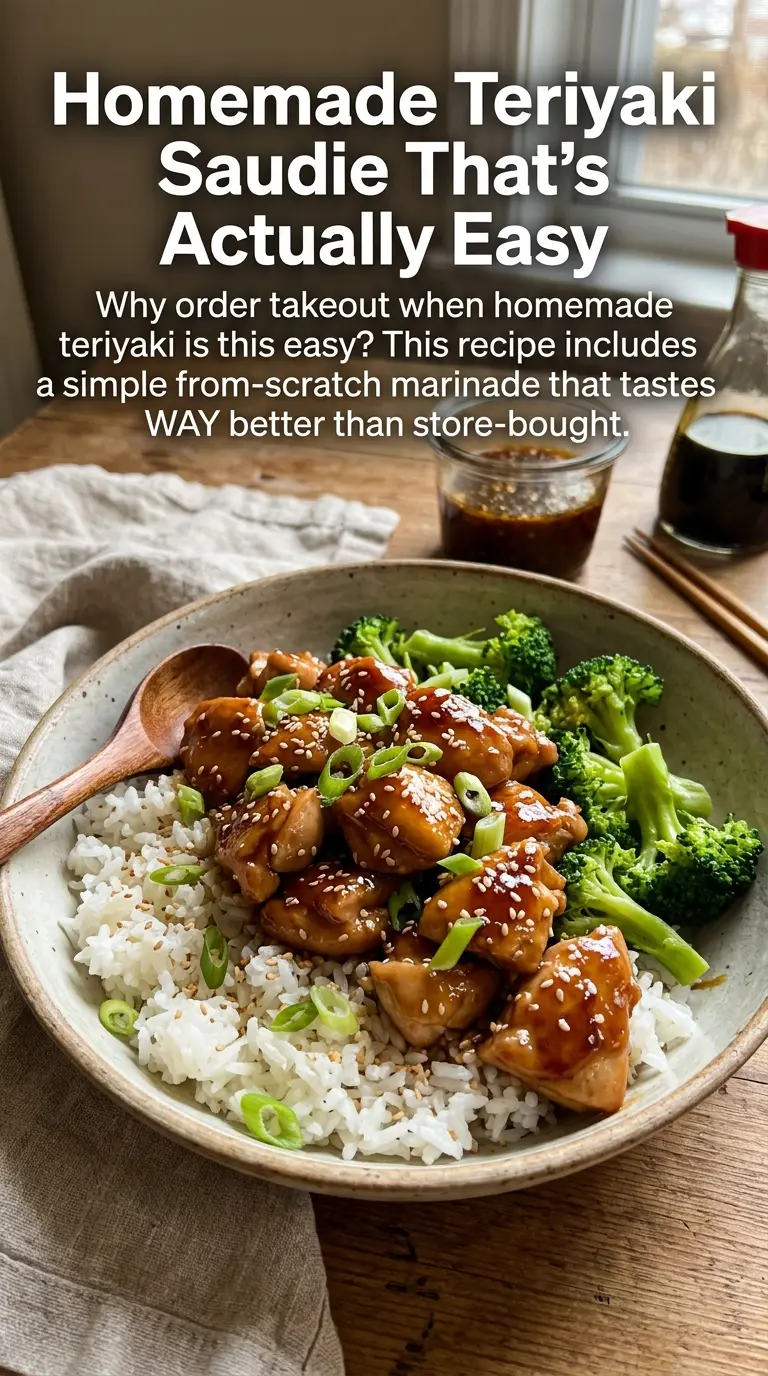
- Chicken thighs or breasts — Thighs stay juicier and forgive a little extra grill time, which makes them my first choice for teriyaki. Breasts work too, but they need closer attention so the edges don’t dry out before the glaze finishes.
- Soy sauce — This is the backbone of the dish. Use a regular all-purpose soy sauce for the best balance of salt and color; low-sodium works if that’s what you keep, but the glaze will need a touch more reduction to taste complete.
- Mirin — Mirin gives the sauce its classic sweet, rounded depth. If you use rice wine instead, the flavor gets sharper, so keep the brown sugar in place instead of trimming it back.
- Brown sugar and honey — These two are what make the glaze cling and caramelize. Sugar alone can taste flat, while honey adds a shinier finish and a softer sweetness that reads as teriyaki instead of just sweet soy chicken.
- Garlic and ginger — Fresh is worth it here. The marinade is short, so dried versions don’t have time to bloom and taste flat by the end.
- Cornstarch — Optional, but useful if you want the glaze to spoon over rice instead of running off the chicken. Whisk it into the reserved marinade while it’s still cold or room temperature, then simmer until the sauce turns glossy and lightly coats the back of a spoon.
Building the Shine Without Burning the Sugar
Mixing the Marinade
Stir the soy sauce, mirin, brown sugar, honey, garlic, and ginger until the sugar dissolves as much as it can. The marinade should look smooth and dark, not grainy at the bottom of the bowl. Pull off 1/4 cup before the chicken goes in and set it aside for basting and finishing.
Marinating the Chicken
Add the chicken to the remaining marinade and turn it so every piece is coated. Thirty minutes gives you enough flavor for a weeknight; two hours deepens it without changing the texture too much. If you leave chicken breasts in this marinade all day, the surface can turn a little mealy from the salt and acid, so don’t push the timing on those.
Grilling or Searing for Caramelized Edges
Cook the chicken over medium-high heat until the first side develops deep color and releases without sticking. Brush on the reserved sauce during the last few minutes, then turn and baste again so the glaze builds in thin layers. If the pan or grill is too hot, the sugar will scorch before the chicken cooks through, so lower the heat slightly if the glaze starts to blacken too fast.
Thickening the Glaze
If you want a thicker finish, simmer the reserved marinade with cornstarch until it goes from thin and glossy to spoon-coating. Keep the heat at a steady simmer, not a hard boil, or the sauce can turn lumpy and break. It should coat the back of a spoon and fall in a slow ribbon.
How to Adapt This for a Few Different Kitchens
Use chicken thighs for the juiciest result
Thighs handle the sweet glaze and higher heat better than breasts, and they stay tender even if you get a little extra color on the outside. If you swap them in, keep the same cook time as a starting point and go by the juices and internal temperature rather than the clock.
Make it gluten-free with tamari
Tamari gives you the same deep salty base without the wheat. The flavor stays close enough that the rest of the recipe doesn’t need adjusting, though you may want to taste the finished glaze before serving because some tamari brands run saltier than standard soy sauce.
Skip the honey if you want a more savory glaze
You can leave out the honey and lean on the brown sugar alone. The glaze will still thicken and caramelize, but it won’t have quite the same glossy sheen or floral sweetness, so it lands a little deeper and less sticky-sweet.
Make it dairy-free without changing anything
This recipe is already dairy-free, which makes it an easy choice for mixed-diet dinners. Serve it with rice, steamed vegetables, or noodles and let the glaze do the work.
Storage and Reheating
- Refrigerator: Store leftovers in an airtight container for up to 4 days. The glaze thickens as it chills, so the chicken may look even more coated the next day.
- Freezer: It freezes well for up to 2 months. Freeze the chicken and sauce together, then thaw overnight in the refrigerator so the glaze doesn’t separate when reheated.
- Reheating: Warm gently in a skillet over low heat with a splash of water to loosen the sauce. The biggest mistake is blasting it in a hot pan or microwave, which dries out the chicken and makes the sugar-heavy glaze stick to the container instead of the meat.
Questions I Get Asked About This Recipe
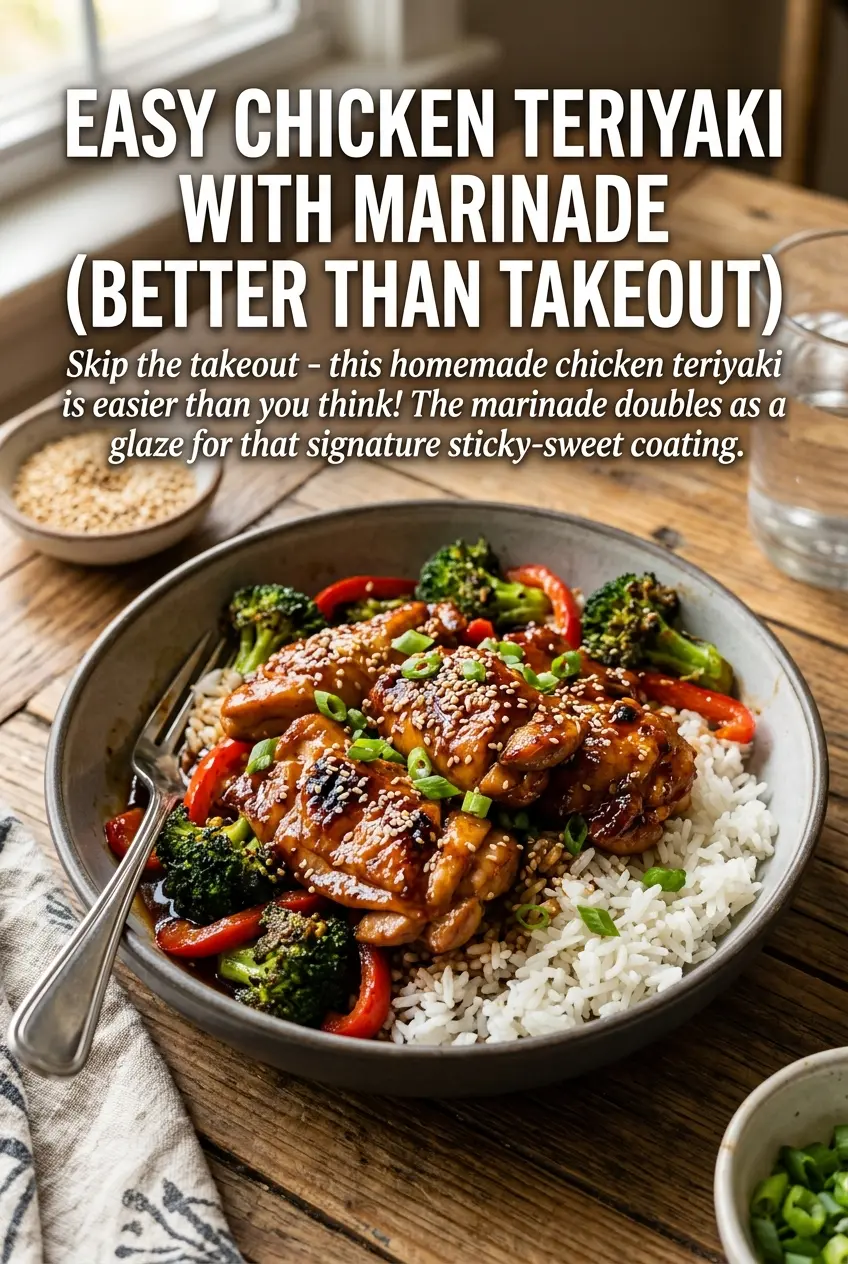
Easy Chicken Teriyaki with Marinade
Ingredients
Equipment
Method
- In a bowl, combine soy sauce, mirin (or rice wine), brown sugar, honey, minced garlic, and grated ginger until the sugar dissolves and the mixture looks smooth.
- Reserve 0.25 cup of the marinade for basting and thickening, then set it aside for later.
- Marinate the chicken in the remaining sauce for 30 minutes to 2 hours in the refrigerator, turning once so the surface stays evenly coated.
- Preheat your grill to medium-high heat, then place the chicken on the grates and grill 6 to 7 minutes per side, basting frequently with the reserved marinade.
- If you want a thicker glaze, simmer the reserved marinade with cornstarch until it thickens into a glossy coating, stirring constantly.
- Serve the chicken drizzled with the teriyaki glaze over rice, then finish with sesame seeds and green onions.


