Dark beer, browned beef, and tender potatoes build a stew that eats like it simmered all afternoon, because it did. The broth turns deep and savory, the carrots soften just enough to hold their shape, and the beef ends up spoon-tender without falling apart into shreds. This is the kind of pot that settles in and gets better with every minute on the stove.
What makes this version work is the layering: the beef gets floured and browned for a better crust and a naturally thickened broth, then the onions cook long enough to turn sweet before the beer goes in and lifts up every browned bit from the pot. The mustard and vinegar don’t make it taste sharp; they keep the stew from feeling heavy and give the beer and beef something to brighten against.
Below you’ll find the little details that matter most, from when to add the vegetables so they stay intact to how to adjust the broth if your beer runs bitter. If you’ve ever had a stew taste flat or muddy, the notes here will help you avoid that.
The gravy got silky after the flour-coated beef browned, and the potatoes held their shape instead of dissolving. My husband kept going back for “just one more spoonful” until the pot was gone.
Save this German beef stew for a cold night when you want deep beer-braised flavor, tender beef, and potatoes that soak up the broth.
The Browning Stage Is Where the Stew Gets Its Depth
If the beef goes into the pot pale and crowded, the whole stew tastes thinner than it should. Browning in batches is what creates the savory base here, and those dark bits stuck to the bottom are not a problem — they are the flavor. The flour on the meat helps with both browning and body, but it works best when it hits a hot pan and gets time to toast.
The other place this recipe can lose momentum is the onion stage. Let them cook until they turn golden and collapse; if they stay crunchy, the broth ends up tasting sharper and less rounded. Once the beer goes in, scrape the pot clean. That step turns the browned bits into part of the sauce instead of leaving them behind.
What Each Ingredient Is Actually Doing in This Stew
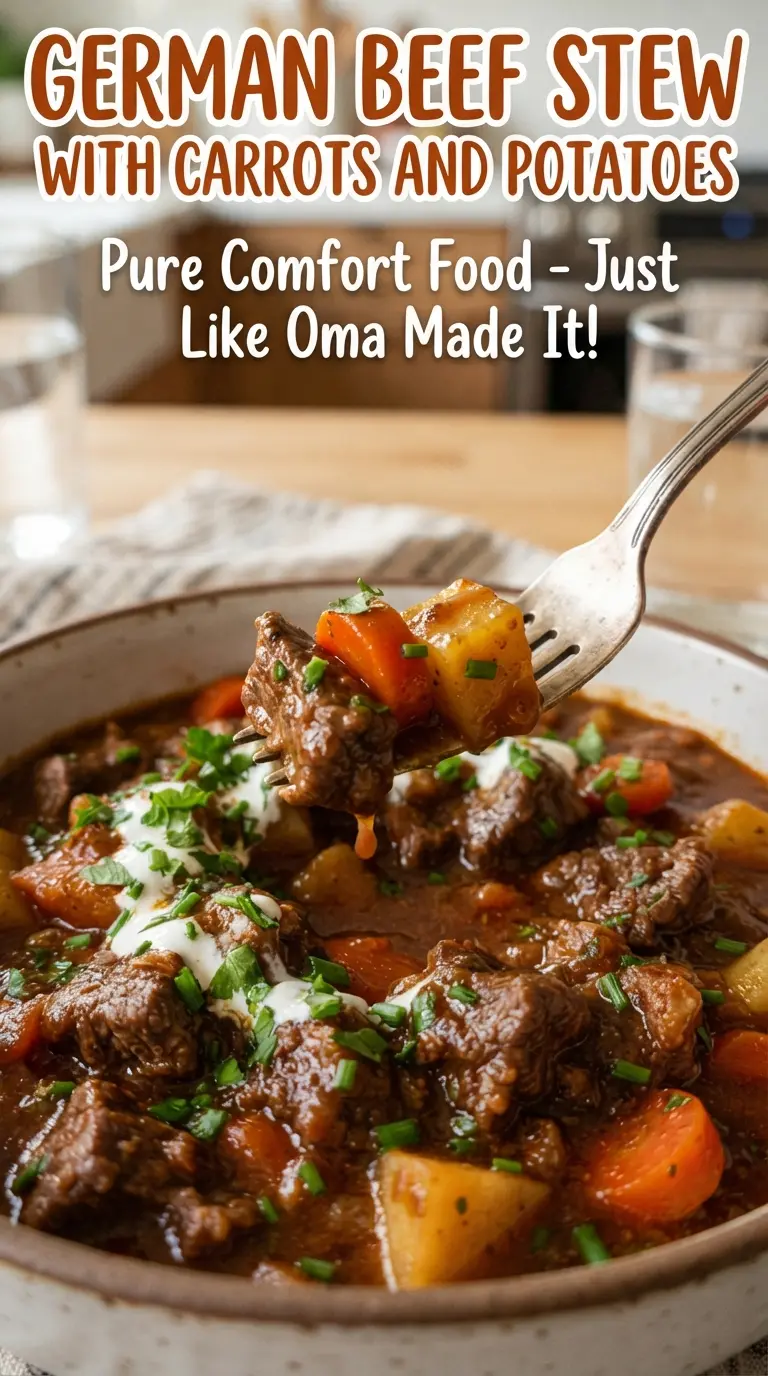
- Beef chuck — This cut has enough collagen to turn tender during a long simmer without drying out. Lean stew meat works, but it won’t give you the same rich texture.
- German dark beer — This adds malt, bitterness, and color in a way broth alone can’t. Use a beer you’d actually drink; overly hoppy beer can push the stew toward harsh.
- Tomato paste, paprika, and caraway — These three ingredients build the German-style backbone of the dish. Bloom them briefly in the hot pot so their flavor turns round instead of raw.
- Potatoes and carrots — Add them late so they stay intact. If they go in at the beginning, the potatoes turn chalky and the carrots lose their shape long before the beef is done.
- Dijon mustard and red wine vinegar — These keep the broth from tasting heavy. The mustard blends in, while the vinegar sharpens the finish without making the stew sour.
Building the Pot in the Right Order
Brown the beef before anything else
Pat the beef dry, season it, and toss it with the flour so the coating clings instead of turning gummy. Brown it in batches in hot butter or oil until the pieces have a dark crust on more than one side. If the pot is crowded, the meat steams and you lose the deep base this stew depends on.
Cook the onions until they turn sweet
The onions need a real 8 to 10 minutes in the pot, not a quick softening. You want them golden and relaxed, with the edges starting to pick up color. Stir in the garlic, tomato paste, paprika, and caraway for just a minute so they wake up without burning, because paprika turns bitter fast over high heat.
Let the beer do the deglazing
Pour in the dark beer and scrape the bottom of the pot until it looks clean again. Then add the broth, mustard, vinegar, and bay leaves, return the beef, and bring everything to a gentle simmer. The liquid should barely move; a hard boil tightens the meat and muddies the broth.
Add the vegetables after the beef starts to soften
Let the stew cook covered for about 1 1/2 hours before adding the potatoes and carrots. At that point, the beef is starting to give up some resistance, and the vegetables can finish at the same pace without turning to mush. After they go in, simmer until the potatoes are tender at the center and the carrots slice cleanly with a spoon.
Finish with parsley and a final taste
Pull out the bay leaves before serving and scatter the parsley over the top. Taste the broth after the stew is fully cooked, not before, because the saltiness concentrates as it reduces. If it tastes flat, a small splash more vinegar wakes it right up; if it tastes too sharp, give it a few more minutes of simmering to settle.
How to Adapt This Stew Without Losing What Makes It Work
Make it gluten-free
Skip the flour on the beef and brown it dry instead, or use a gluten-free flour blend for a similar crust. The broth will be a little looser, so let the stew simmer uncovered for the last 10 to 15 minutes if you want it to tighten up.
Use a different beer with care
A Munich dunkel or other malty dark lager keeps the stew balanced. If all you have is a stout, use it, but expect a deeper roasted note; if you use a very bitter IPA, the stew can turn sharp and the vinegar will feel louder.
Swap the beef for mushrooms
For a vegetarian version, use a mix of cremini and portobello mushrooms and swap in vegetable broth. You won’t get the same collagen-rich body, but you will keep the dark, savory flavor if you brown the mushrooms hard before adding the liquid.
Storage and Reheating
- Refrigerator: Keeps for 4 days. The broth thickens and the potatoes soften a little more as it sits.
- Freezer: Freezes well for up to 3 months, though the potatoes can turn slightly grainy. Freeze in portions and thaw overnight in the fridge.
- Reheating: Warm it gently on the stove over low heat with a splash of broth or water. A hard boil can break the potatoes down and make the beef stringy.
Answers to the Questions Worth Asking
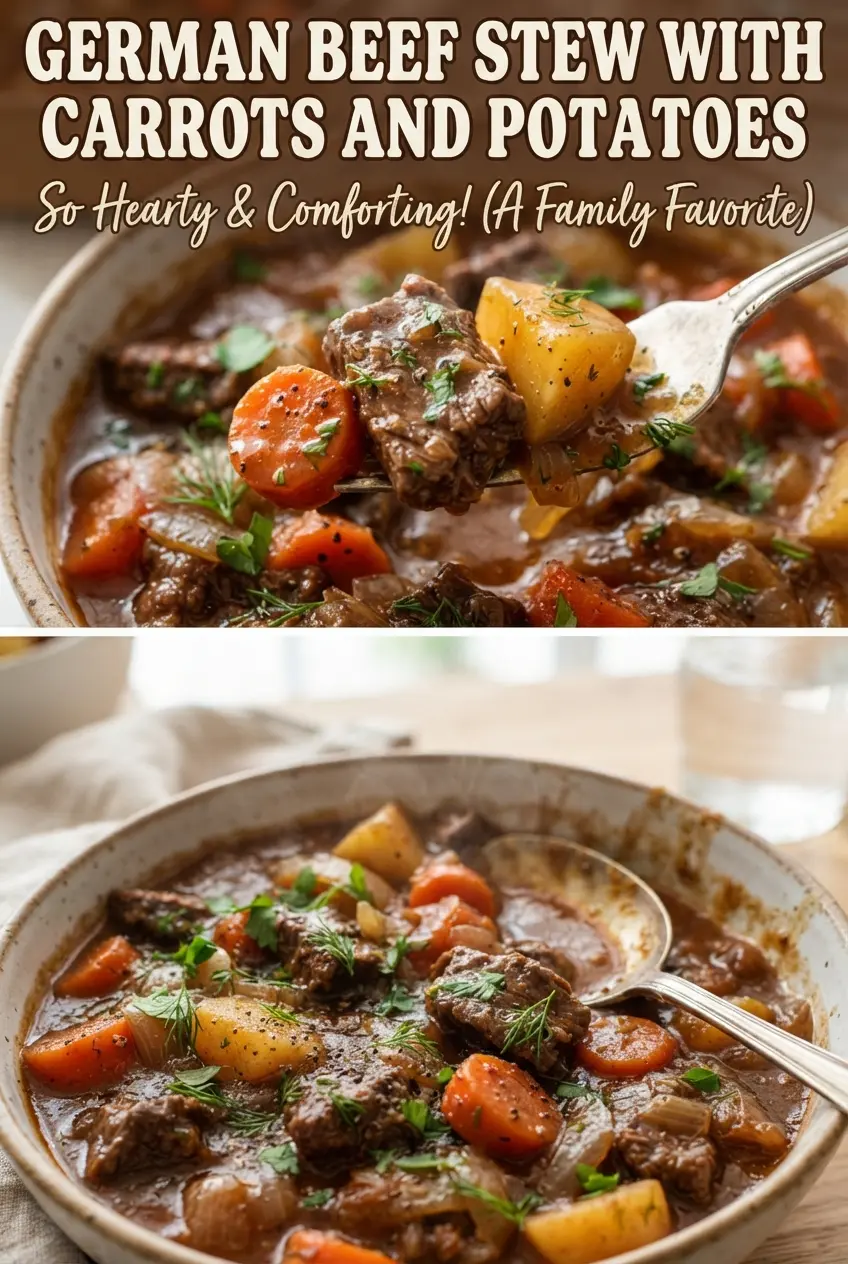
German Beef Stew with Carrots and Potatoes
Ingredients
Equipment
Method
- Season the beef with salt and black pepper, then toss with the all-purpose flour until coated. Brown the beef in batches in butter (or oil) in a Dutch oven over medium-high heat until well browned, about 5-7 minutes total per batch, then transfer to a plate.
- Cook the sliced onions for 8-10 minutes until golden in the same Dutch oven. Add the minced garlic, tomato paste, sweet paprika, and caraway seeds and cook for 1 minute until fragrant.
- Pour in the German dark beer and scrape the pot to lift browned bits. Add beef broth, Dijon mustard, red wine vinegar, and bay leaves, then return the browned beef to the pot.
- Cover and simmer at a gentle simmer until the beef is tender, 1 1/2 hours. Skim any foam if needed so the broth stays clear and the sauce looks smooth.
- Add the cubed potatoes and sliced thick carrots to the pot. Simmer uncovered at a gentle simmer for 45-60 minutes until the vegetables are tender and the stew thickens.
- Remove the bay leaves and top with chopped parsley right before serving. Let the stew stand 5 minutes for the gravy to thicken slightly, then serve hot.