
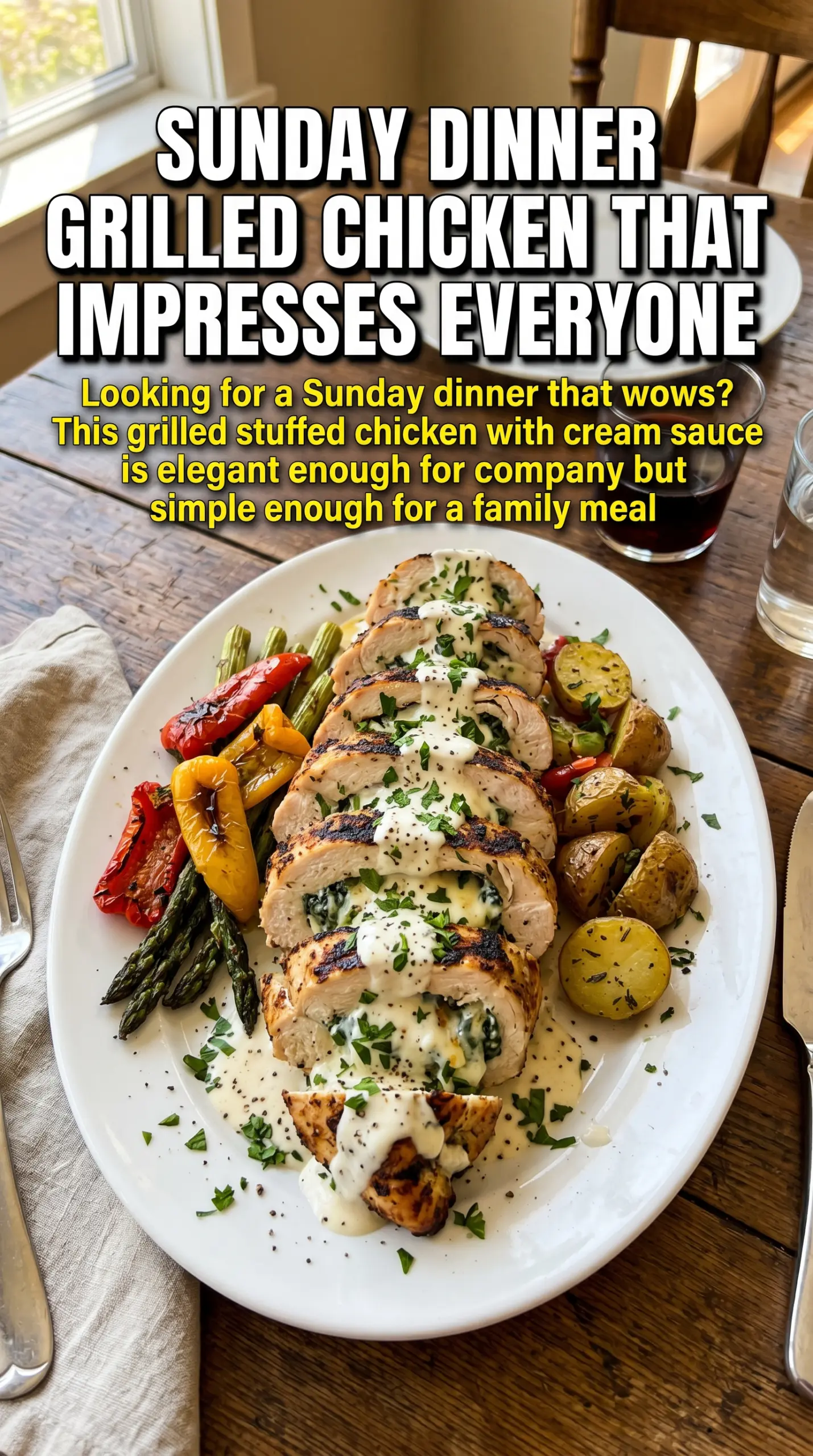
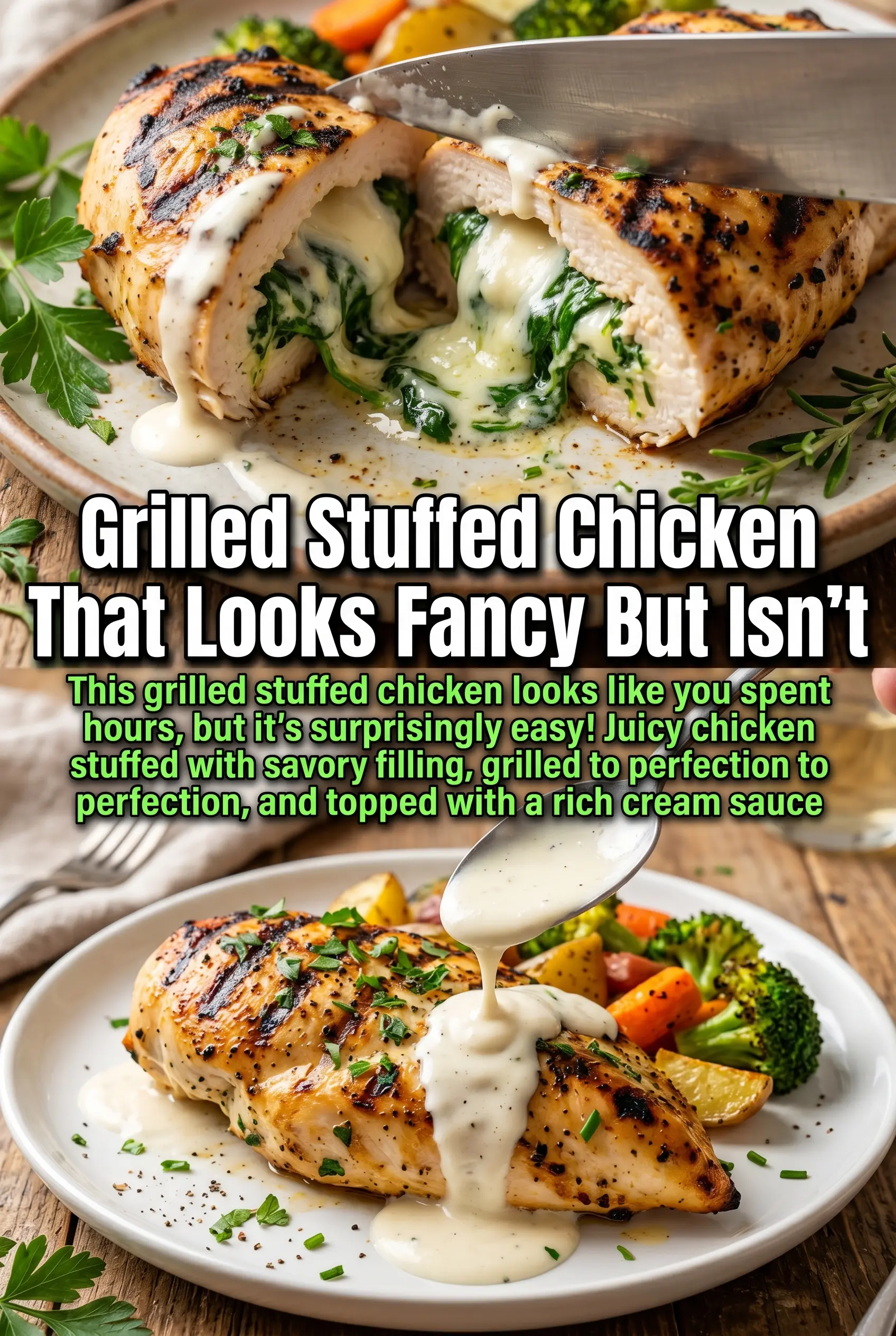
Juicy grilled chicken wrapped around a savory spinach-and-mozzarella filling, then finished with a spoonable cream sauce, is the kind of dinner that looks like it took more effort than it did. The chicken stays smoky on the outside and tender inside, while the filling turns soft and melty without spilling out all over the grill. That contrast is what makes this one worth putting on repeat.
The trick is starting with evenly pounded chicken breasts so they cook at the same pace, then keeping the filling modest and centered so the seams have room to seal. The cream sauce works best when the garlic is just fragrant and the heat stays low once the cream goes in; push it too hard and the cheese can turn grainy instead of silky. A short rest at the end keeps the juices in the meat and gives you cleaner slices.
Below, I’ve included the specific spots where this recipe can go sideways and how to keep them on track, plus a few smart variations if you want to change the cheese, make it lighter, or prep it ahead.
The chicken stayed really juicy on the grill, and the cream sauce thickened up beautifully without breaking. I used kitchen twine instead of toothpicks, and the filling stayed put the whole time.
Save this grilled stuffed chicken with cream sauce for a dinner that slices beautifully and brings smoky chicken, melted cheese, and silky sauce together on one plate.
The Part That Keeps the Filling Inside Instead of Leaking Into the Grill
The biggest mistake with stuffed chicken is overfilling it and expecting the seam to hold like magic. It won’t. Once the cheese warms up, it wants to move, and the chicken edges only seal if they have enough overlap to work with. A thin, even layer of filling gives you the best shot at a neat slice instead of a molten escape.
Butterflying and pounding the breasts to even thickness matters just as much as the filling itself. Thick spots overcook before the center gets to 165°F, which is how you end up with dry edges and underdone centers. If the chicken tears while you’re pounding, stop there; patching it with another piece of meat is clumsy, but stuffing a hole is worse.
What Each Ingredient Is Actually Doing in This Dish
- Chicken breasts — Large breasts give you enough surface area to butterfly and stuff without falling apart. If yours are huge, slice them open carefully and pound them to a thinner, even layer so they grill through before the outside dries out.
- Fresh spinach — Spinach brings color and a little earthy balance to the rich cheese and cream. Use it fresh, then chop or wilt it lightly before stuffing if the leaves are especially large, or the filling can feel bulky and uneven.
- Mozzarella — This is the melt factor. It gives the filling stretch and body; low-moisture shredded mozzarella works better than fresh mozzarella because it won’t flood the chicken with liquid as it heats.
- Sun-dried tomatoes — These cut through the richness with concentrated sweetness and tang. Chop them small so they distribute evenly, and if they’re packed in oil, blot off the excess so the filling doesn’t slide around.
- Heavy cream — There’s no substitute that behaves exactly the same way under heat. Half-and-half can work in a pinch, but the sauce will be thinner and a little less stable; keep the heat low either way so the dairy stays smooth.
- Parmesan — Parmesan is what thickens and seasons the sauce at the same time. Grate it finely so it melts in cleanly; pre-shredded can make the sauce a little gritty.
Grilling and Saucing Without Losing the Juices
Building the Stuffed Chicken
Lay each butterflied breast flat and pound it just until the thickest parts match the thinner areas. Season lightly, spoon the filling onto one side, then fold the meat over and secure it with toothpicks or kitchen twine. If the filling squeezes out before it even hits the grill, there’s too much inside; pull some back out rather than trying to force it shut.
Cooking Over Medium Heat
Set the grill to medium, not high. Too much heat burns the outside before the center cooks through, and stuffed chicken needs a steadier pace than plain breasts. Cook for 8 to 10 minutes per side, then check the thickest part with an instant-read thermometer; pull it at 165°F and let it rest before slicing, or the juices will run out onto the cutting board.
Making the Cream Sauce
Melt the butter and cook the garlic just until it smells fragrant, not browned. Add the cream and Parmesan over low heat and stir until the sauce thickens enough to coat a spoon. If it turns grainy, the heat was too high or the cheese went in too fast, so pull the pan off the burner and whisk until it smooths out.
Slicing and Serving
Let the chicken rest for 5 minutes before removing the toothpicks. Slice on a slight diagonal so you get a clean look at the filling, then spoon the sauce over the top instead of drowning the chicken in it. A light hand keeps the grilled edges visible and the whole plate looks sharper.
Three Ways to Change This Without Breaking the Dish
Make it dairy-free
Use a dairy-free mozzarella-style shred for the filling and swap the cream sauce for an unsweetened cashew cream or coconut cream version. You’ll lose some of the sharp Parmesan bite, but the chicken still stays rich and sliceable if you keep the sauce gentle and don’t boil it hard.
Make it gluten-free
This recipe is naturally gluten-free as written, so the main job is checking the labels on your Parmesan and any seasoned sun-dried tomatoes. Keep the process the same; the sauce thickens from cream and cheese, not flour, so you don’t need a separate starch.
Swap the filling for a sharper, more savory version
Replace half the mozzarella with fontina or provolone if you want a deeper, saltier melt. The filling will be a little less stretchy and a little more robust, which works well if you like the sauce to feel like the softer part of the plate.
Prep it ahead for an easier dinner
You can stuff and secure the chicken up to a day ahead, then keep it covered in the fridge until grilling time. The sauce is best made fresh, because reheated cream sauce can tighten up and lose that smooth finish.
Storage and Reheating
- Refrigerator: Store leftovers for up to 3 days. The filling stays good, but the chicken slices a little more firmly once chilled.
- Freezer: The stuffed chicken freezes better than the cream sauce. Freeze the cooked chicken tightly wrapped, then make the sauce fresh when serving for the best texture.
- Reheating: Reheat the chicken gently in a covered skillet with a splash of water or broth, or warm it in a low oven. Don’t blast it in the microwave or the breast meat will turn dry before the center is warm.
Answers to the Questions Worth Asking
Grilled Stuffed Chicken with Cream Sauce
Ingredients
Equipment
Method
- Butterfly the chicken breasts and pound them to an even thickness so they cook uniformly on the grill.
- Mix the spinach, mozzarella, and sun-dried tomatoes together until the filling looks evenly combined.
- Place the filling on one side of each chicken breast, fold over, and secure with toothpicks so the filling stays inside.
- Season the outside of each stuffed chicken breast with salt and pepper.
- Preheat the grill to medium heat, then place the chicken on the grate and grill for 8-10 minutes per side.
- Continue grilling until the internal temperature reaches 165°F, and look for clear juices and firm, cooked meat.
- Melt the butter in a skillet over medium heat until it foams lightly.
- Sauté the minced garlic for about 30-60 seconds, stirring, until fragrant but not browned.
- Add the heavy cream and bring it to a gentle simmer.
- Stir in the Parmesan cheese and Italian seasoning, then simmer for 3-5 minutes until the sauce thickens enough to coat the back of a spoon.
- Remove the toothpicks from the chicken and let the chicken rest for 5 minutes to hold the filling in place.
- Slice the chicken and drizzle with the cream sauce, finishing with a visible coat over the colorful filling.


