Homestyle chicken noodle soup earns its place in the rotation because the broth tastes like it spent all afternoon in the pot, even though the actual hands-on work stays simple. The chicken turns tender enough to shred with a spoon, the vegetables give the broth body without making it muddy, and the wide egg noodles soak up enough flavor to taste seasoned all the way through. It’s the kind of soup that settles everything down in one bowl.
The key is starting with the whole chicken, bones and all, so the broth gets depth before any noodles go in. I like leaving a few carrots and celery stalks whole for the first simmer, then adding the sliced vegetables later so they stay bright and don’t collapse into the broth. Fresh dill at the end changes the whole pot; it gives the soup that clean finish you miss when you rely only on dried herbs.
Below, I’ll walk through the part that matters most: how to get a clear, rich broth, when to add the noodles so they stay pleasant instead of bloated, and what to do if you want to make this soup ahead.
The broth turned out rich and clear, and the noodles stayed tender without falling apart. I loved that the dill at the end made it taste fresh instead of heavy.
Save this homestyle chicken noodle soup for the nights when you want a clear broth, tender chicken, and noodles that hold their shape.
The Part Most Soup Recipes Rush: Building a Broth That Actually Tastes Like Chicken
The mistake that flattens homemade chicken soup is chasing flavor too early with noodles and extra seasoning. The broth needs time with the whole chicken, bones, aromatics, and peppercorns so it can pull out the deep savory notes that boxed broth never quite gives you. If the pot comes to a hard boil for the whole simmer, the broth can turn cloudy and the chicken can toughen on the edges before the center is tender enough to shred.
Keep the simmer gentle once it starts moving. You want lazy bubbles, not a rolling boil. Skim off the foam in the first few minutes, because that keeps the broth cleaner tasting and helps the finished soup look bright instead of murky.
- Whole chicken or bone-in pieces — Bones are what give the broth body. Boneless chicken breast cooks too fast and leaves you with a thinner soup.
- Whole carrots, celery, onion, garlic, bay leaves, peppercorns, thyme — These build the broth from the inside out. Leaving some of the vegetables whole in the first simmer gives up flavor without making the liquid gritty.
- Wide egg noodles — They hold up better than thin pasta and give this soup its old-fashioned feel. Cook them in the broth at the end so they absorb flavor, but don’t let them sit too long or they’ll swell and go soft.
- Fresh dill — Use fresh here if you can. Dried dill won’t give you the same clean, bright finish, and it’s the last thing that keeps the soup from tasting heavy.
What Each Ingredient Is Doing in the Pot

- Whole chicken or bone-in pieces — This is the backbone of the soup. If you only have bone-in thighs or breasts, that works fine; just keep the simmer gentle so the meat stays juicy.
- Carrots and celery — Using a few of each whole for the broth and the rest sliced later gives you both depth and texture. If everything goes in sliced from the start, the vegetables disappear before the soup is finished.
- Onion and garlic — The whole onion and garlic cloves perfume the broth, while the diced onion and fresh garlic at the end give the finished soup a little more presence. That second round matters if you want the vegetables to taste fresh, not just boiled.
- Egg noodles — Wide noodles are worth using because they catch broth in every curl. If you swap in another pasta, choose something sturdy and shorten the cooking time.
- Fresh dill — Stir it in after the noodles are tender so it stays fragrant. If it simmers too long, the flavor dulls fast.
The 20 Minutes That Set Up the Whole Pot
Starting the Broth Cold
Put the chicken, whole carrots, whole celery, onion, garlic, bay leaves, peppercorns, thyme, and water in the pot before you turn on the heat. Starting cold gives the chicken and aromatics time to release flavor gradually, which helps the broth taste fuller. Bring it up to a boil, skim the foam, then lower the heat right away.
Keeping the Simmer Gentle
The broth should barely bubble while it cooks for 45 to 60 minutes. If it boils hard, the fat and proteins emulsify into the liquid and the broth turns dull. The chicken is ready when it’s very tender and pulls away without resistance.
Straining and Shredding
Lift out the chicken, then strain the broth and discard the softened vegetables and peppercorns. Shred the chicken while it’s still warm enough to handle, because it separates cleanly. If the meat looks dry, it usually means it simmered too aggressively, not too long.
Finishing With the Fresh Vegetables and Noodles
Return the broth to the pot and add the sliced carrots, sliced celery, diced onion, and remaining garlic. Let them simmer until the carrots are just tender, then add the noodles and shredded chicken. Stop cooking as soon as the noodles turn tender; if they go past that point, they keep soaking up liquid and the soup turns heavy.
The Dill and Final Seasoning
Stir in the dill at the very end so it stays bright and clean-tasting. Taste the broth after the noodles go in, then season generously with salt and pepper. Soup almost always needs more salt than people expect, especially after it has been diluted by chicken and noodles.
How to Adjust the Soup When You’re Missing One Thing or Need It to Last Longer
Make it gluten-free
Swap the egg noodles for a sturdy gluten-free pasta and undercook it slightly before adding the chicken. Gluten-free noodles soften faster in hot broth, so they’re best added only at the end and served right away.
Use rotisserie chicken for a faster version
If you’re short on time, start with good broth or stock, then simmer the carrots, celery, onion, garlic, and spices in it before adding shredded rotisserie chicken. You’ll lose some of the deep homemade broth flavor, but you’ll keep the same vegetable-and-noodle balance in half the time.
Make it dairy-free and lighter
This soup is naturally dairy-free as written, which is part of why it tastes so clean and comforting. If you want it even lighter, skim the fat from the top of the broth before adding the sliced vegetables.
Storage and Reheating
- Refrigerator: Store up to 4 days. The noodles will absorb broth, so expect the soup to thicken as it sits.
- Freezer: Freeze the broth, chicken, and vegetables without the noodles for best texture. Add freshly cooked noodles after thawing and reheating.
- Reheating: Warm it gently on the stove over medium-low heat until steaming. If the soup has thickened, add a splash of water or broth; boiling it hard can break the noodles and make the chicken stringy.
Answers to the Questions Worth Asking
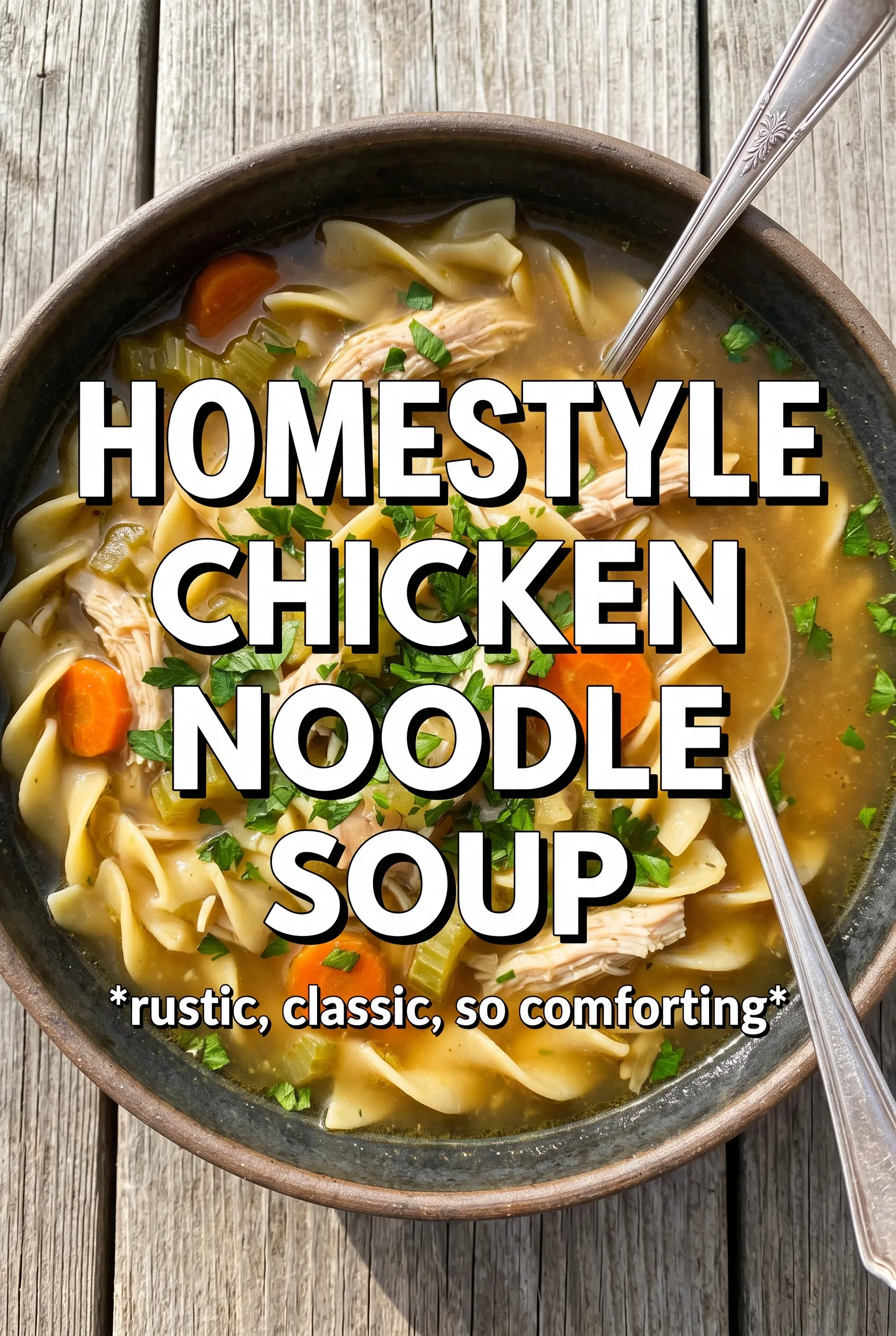
Homestyle Chicken Noodle Soup
Ingredients
Equipment
Method
- Add whole chicken, 2 whole carrots, 2 whole celery stalks, whole onion, 4 garlic cloves, bay leaves, and whole peppercorns to a large pot with water. Bring to a boil over high heat.
- Skim off the foam as it forms, then reduce heat to a gentle simmer. Simmer for 45–60 minutes until the chicken is very tender.
- Strain the broth, discarding the vegetables and peppercorns. Return the broth to the pot and bring it back to a simmer.
- Add sliced carrots, sliced celery, diced onion, and remaining garlic. Simmer for 10 minutes, until the vegetables begin to soften.
- Add wide egg noodles and shredded chicken to the simmering broth. Cook for 6–8 minutes until the noodles are tender.
- Stir in fresh dill and season generously with salt and pepper. Taste and adjust as needed, then serve hot.