
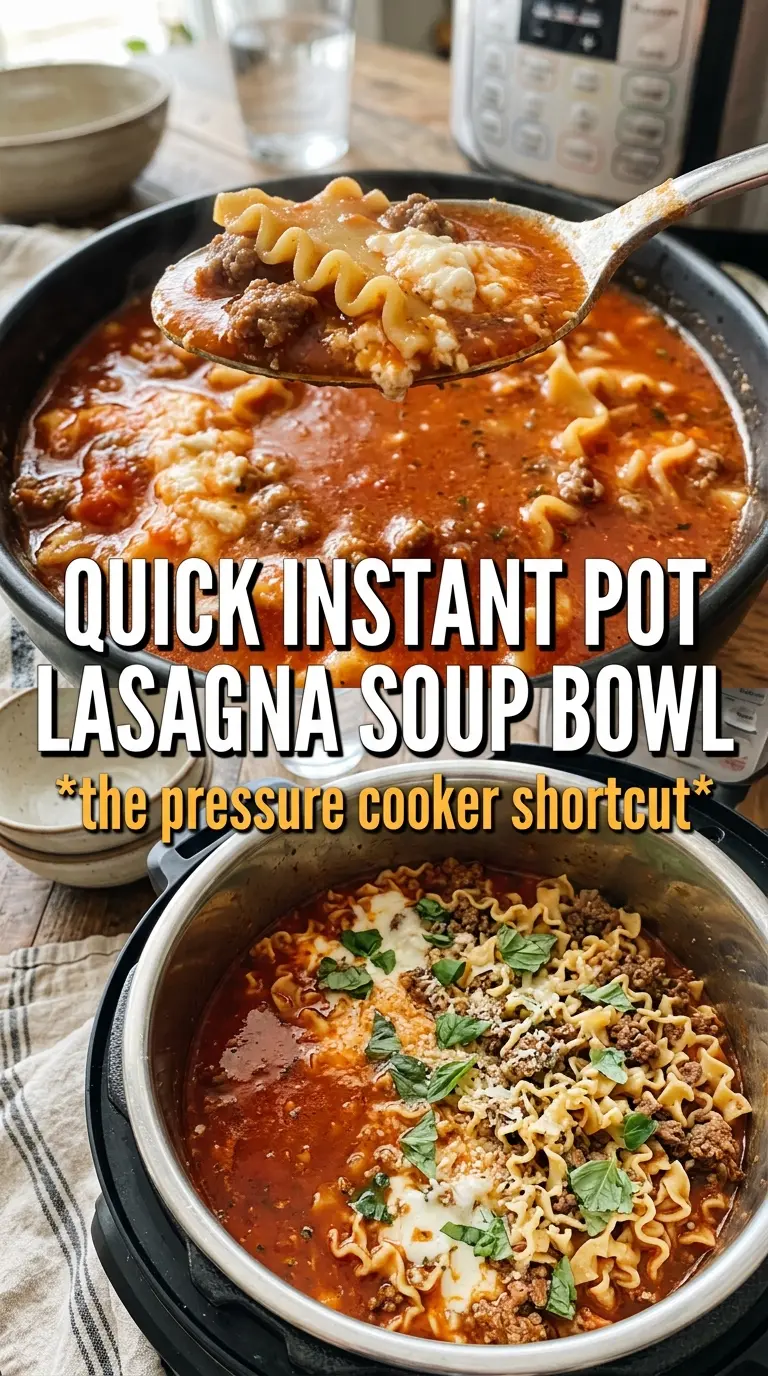
Rich tomato broth, tender ribbons of lasagna noodles, and browned sausage make this Instant Pot lasagna soup taste like a shortcut to a big pan of baked lasagna without the layering or waiting. The broth turns savory and a little silky from the tomato paste and sausage drippings, and the cheese dollop melts into the bowl in a way that gives each spoonful that classic lasagna finish. It’s the kind of dinner that feels hearty enough for Sunday, but it lands on the table fast enough for a weeknight.
What makes this version work is the order of the cooking. Browning the sausage first gives you the base flavor, and the tomato paste gets a full minute in the hot pot so it loses that raw edge before the broth goes in. The noodles cook directly in the soup, which means they pick up flavor instead of tasting like plain pasta stirred in at the end. That said, pressure cooking pasta is always a little delicate, so the quick release matters. It stops the noodles before they go from tender to mushy.
Below you’ll find the small timing details that keep the soup brothy instead of heavy, plus the cheese mixture I use when I want each bowl to taste like lasagna, not just tomato soup with pasta.
The noodles stayed tender without falling apart, and the ricotta-mozzarella topping melted into the soup just like the filling in baked lasagna. Even the leftovers reheated without turning gluey.
Save this Instant Pot lasagna soup for the nights when you want all the comfort of lasagna with a rich broth and no baking dish to scrub.
The Reason the Noodles Stay Tender Instead of Turning to Mush
The pressure-cooked noodles are the part that can go wrong fastest, and the fix is simple: keep the cook time short and use a quick release. Lasagna noodles absorb liquid fast, especially once they’re broken into smaller pieces, so four minutes under pressure is enough to cook them through without stripping them of all their texture. If you let the pot sit and naturally release for too long, the residual heat keeps softening the pasta until the soup gets heavy.
The other thing that matters is pressing the noodles under the liquid instead of stirring them around after they’re added. Stirring can snap the noodles into too many tiny shards and make the soup cloudy. They’ll soften and settle on their own once the lid is on.
What Each Ingredient Is Actually Doing in the Bowl
- Italian sausage — This carries most of the savory flavor, so use a good one. Mild or hot both work, but avoid sausage with a lot of filler if you can. If you want a lighter version, ground turkey works, but you’ll want a little extra seasoning and a splash of olive oil because it won’t render as much flavor.
- Tomato paste — This is what gives the broth depth instead of a flat tomato taste. Cooking it for a minute with the onions and garlic takes away the raw edge and concentrates the soup. Don’t skip that short sauté.
- Broken lasagna noodles — Their wide shape gives you the lasagna feel without needing layered sheets. Regular lasagna noodles work best here because they hold up to pressure cooking better than thinner pasta. Break them into rough 2-inch pieces so they fit a spoon and cook evenly.
- Ricotta, mozzarella, and parmesan — This topping is what turns the soup into lasagna soup. Ricotta gives you the creamy center, mozzarella melts into the broth, and parmesan sharpens the finish. If you only have ricotta, the soup still works, but the mozzarella makes the bowl feel more complete.
- Crushed and diced tomatoes — The crushed tomatoes build the body of the broth while the diced tomatoes leave little soft pieces that make every bite feel a little more substantial. If you want a smoother soup, use two cans of crushed tomatoes instead.
Building the Broth So It Stays Rich, Not Watery
Browning the Sausage First
Start with the sausage in Sauté mode and cook it until it’s browned in spots and no longer pink. Those browned bits on the bottom are part of the flavor, so don’t rush to wipe them out. If there’s a lot of grease after the sausage cooks, drain most of it off; too much fat can make the soup feel greasy instead of rich. The goal is browned meat with a little fond left behind, not a scorched pot.
Cooking the Tomato Paste Long Enough
Once the onion softens and the garlic goes in, stir in the tomato paste and cook it for about a minute. It should darken slightly and smell sweeter, less sharp. If you add the broth too early, the tomato paste never fully loses that tinny raw taste. This one minute changes the whole soup.
Pressure Cooking Without Overdoing the Pasta
After the tomatoes, broth, and seasonings go in, press the broken noodles under the liquid and lock the lid. Cook on High for 4 minutes, then quick release as soon as the cycle ends. The noodles will still finish softening from the residual heat while you stir, so don’t add extra time unless you want a softer, more brothy pasta soup. If it looks too thick after opening, loosen it with a splash of broth rather than more cooking time.
Finishing With the Cheese Dollop
Mix the ricotta, mozzarella, parmesan, and basil right before serving so it stays thick enough to sit on top of the soup. A generous spoonful in each bowl melts slowly into the hot broth, which gives you creamy pockets instead of a blended-down soup. If the soup cools too much before serving, the cheese won’t melt as well, so ladle first and top immediately.
Three Ways to Change the Soup Without Losing What Makes It Work
Make it with ground turkey
Swap the sausage for ground turkey if you want a lighter pot. You’ll lose some built-in seasoning and richness, so add an extra pinch of Italian seasoning and a little olive oil when browning. The broth will taste cleaner and less savory, but it still comes together well.
Make it dairy-free
Skip the ricotta-mozzarella topping and finish each bowl with a drizzle of good olive oil and a spoonful of dairy-free pesto or chopped basil. The soup itself is already dairy-free, so this swap changes mostly the finish, not the base. You lose the creamy lasagna effect, but the tomato broth and sausage still carry the dish.
Make it gluten-free
Use gluten-free lasagna noodles or another sturdy gluten-free pasta cut into pieces. Watch the pressure time closely, because gluten-free pasta softens faster and can break down if it sits too long. Quick release matters even more here.
Storage and Reheating
- Refrigerator: Store for up to 4 days. The noodles will keep absorbing broth, so expect the soup to thicken.
- Freezer: Freeze the soup base without the noodles if you want the best texture. Pasta softens too much after thawing, so add fresh noodles when you reheat.
- Reheating: Warm gently on the stove over medium-low heat or in the microwave in short bursts. Add a splash of broth or water as needed, because the noodles drink up liquid in the fridge and the soup can tighten fast.
Answers to the Questions Worth Asking

Instant Pot Lasagna Soup
Ingredients
Equipment
Method
- Set the Instant Pot to Sauté and brown the Italian sausage, then drain excess fat.
- Add the diced onion and cook for 3 minutes, stirring, until softened.
- Add the minced garlic and tomato paste and cook for 1 minute, stirring until fragrant.
- Add the crushed tomatoes, diced tomatoes, chicken broth, Italian seasoning, dried basil, and red pepper flakes, then stir to combine.
- Press the broken lasagna noodles under the liquid so they are mostly submerged.
- Seal the Instant Pot and pressure cook on High for 4 minutes, then quick release.
- Stir the soup and season with salt and pepper to taste.
- If the soup is too thick, add a splash of broth; if too thin, set to Sauté and simmer briefly until it reaches your preferred consistency.
- Mix the cheese dollop by combining ricotta, mozzarella, parmesan, and basil until evenly blended.
- Ladle the soup into bowls and top each serving with a generous dollop of the cheese mixture so it melts into the center.


