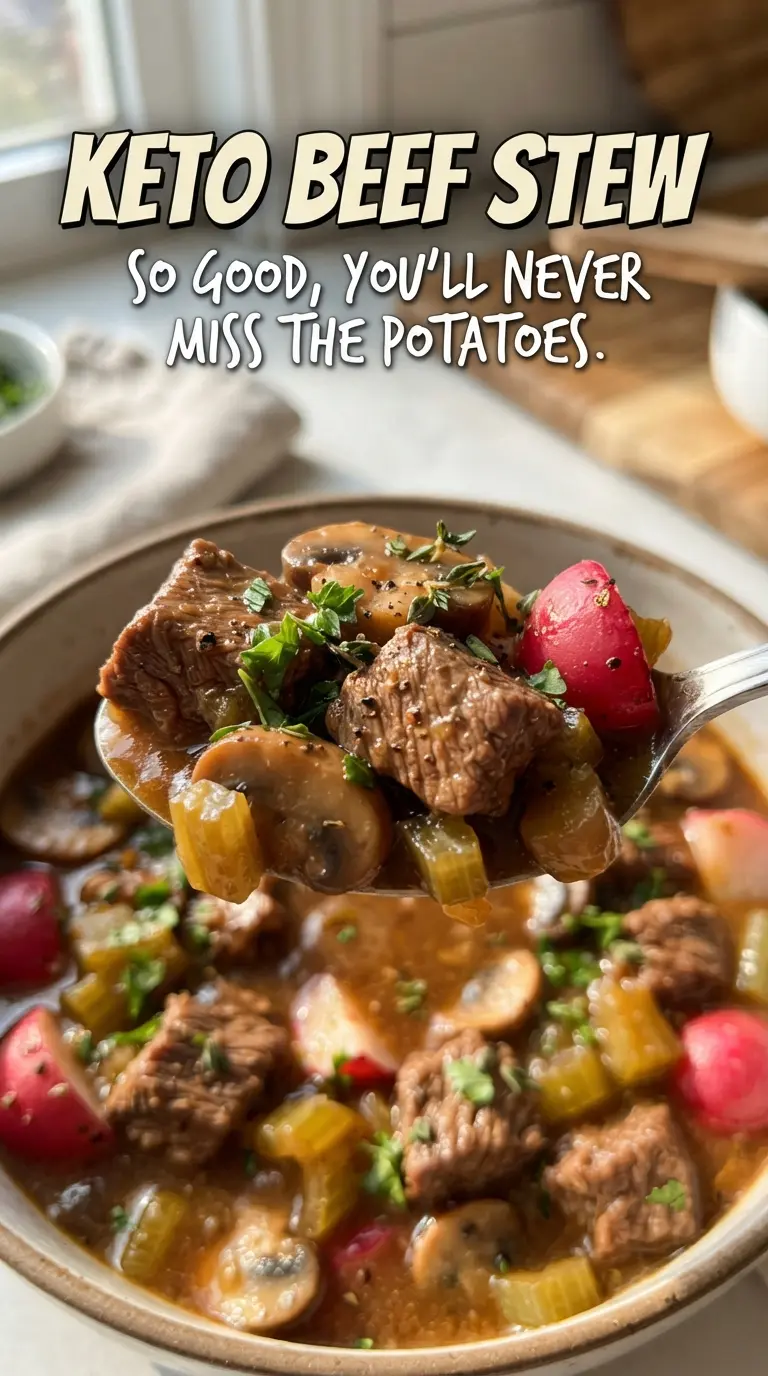
Rich, spoon-coating keto beef stew is the kind of dinner that lands like a full meal and tastes like it took all day, even though most of the work is just patient simmering. The beef turns tender in a dark, savory broth, and the radishes pick up the same slow-cooked character you’d normally expect from potatoes without pushing the carb count up. Mushrooms and celery round out the pot with just enough body to keep every bite hearty.
What makes this version work is the order. The beef gets a hard brown first, which builds the flavor base before any liquid goes in, and the tomato paste cooks briefly so it loses that raw edge. Radishes go in later so they hold their shape and soften into something close to a potato texture instead of disappearing into the broth. The xanthan gum finishes the stew at the end, where it thickens the pot without needing flour or a long reduction.
Below, you’ll find the small timing details that keep the stew from turning flat or watery, plus a few swaps that still keep it low carb if you need to work with what’s in the kitchen.
The stew got thick and glossy without any flour, and the radishes softened up enough that my husband didn’t even realize they weren’t potatoes until I told him.
Save this keto beef stew for the nights when you want a thick, low-carb pot of comfort with radishes standing in for potatoes.
The Brown Bits Are the Whole Difference
If the beef goes into the pot pale, the stew tastes boiled no matter how long it simmers. Browning the meat in batches is what builds the deep, savory base here, and crowding the pan steals that chance by dropping the temperature too fast. You want each batch to hit hot oil, leave the pan browned in spots, and pick up color without steaming.
The other quiet turning point is the tomato paste. A full minute in the hot pot takes away the raw, tinny edge and gives the broth a darker, rounder backbone. Once the broth goes in, the browned bits on the bottom dissolve into the liquid and turn into part of the gravy instead of staying stuck to the pan.
- Beef chuck — Chuck has enough connective tissue to turn tender during the long simmer. Lean stew meat can work, but it won’t give you the same silky finish.
- Radishes — These are the low-carb stand-in that matters most. They soften best when they go in after the first long simmer, not at the beginning, or they’ll lose their shape.
- Worcestershire sauce — It adds fermented depth that salt alone can’t mimic. If you need a substitute, use a small splash of coconut aminos plus a tiny bit of vinegar, but the flavor won’t be as layered.
- Xanthan gum — This thickens the stew without flour or a reduction that can overcook the beef. Sprinkle it in slowly while whisking, or it will clump on contact.
What Each Ingredient Is Actually Doing in This Recipe
- Primary ingredient (the star) — Quality matters most. Choose the best you can find.
- Cooking medium (oil, butter, or broth) — This carries flavors and prevents dryness.
- Seasonings (salt, pepper, spices, herbs) — Layer flavors so nothing overpowers. Build depth gradually.
- Aromatics (garlic, onion, herbs) — Cook with fat to bloom flavors. Become the foundation.
- Supporting ingredients — Complement the main ingredient without overpowering it.
- Sauce or liquid (if applicable) — Brings flavors together. Balance richness with acid.
- Acid (lemon, vinegar, wine, or other) — Brightens and prevents flat-tasting results.
- Final finish (garnish, glaze, or sauce) — Prevents one-dimensional taste and adds visual appeal.
Building the Stew So the Broth Stays Deep and Thick
Brown the beef in real batches
Season the beef first, then sear it in hot avocado oil until a dark crust forms on the outside. The pan should sizzle as soon as the meat hits it, and the pieces should release easily once they’ve browned. If the cubes are packed together, they’ll steam and the fond you need for flavor won’t form, so work in batches and leave the pan alone until the crust sets.
Cook the onion until it softens, not until it disappears
Once the beef is out, cook the diced onion in the same pot until it turns translucent and picks up the browned bits from the bottom. Add the garlic and tomato paste only for the last minute so the garlic stays fragrant and the paste loses its raw taste. If the pan looks dry, the onion will start catching; a splash of broth can loosen it without washing away the flavor.
Let the long simmer do the heavy lifting
After the broth, Worcestershire, thyme, bay leaf, and beef go in, keep the pot at a gentle simmer with the lid on. You want a few lazy bubbles, not a hard boil, because boiling tightens beef instead of softening it. After about 1 1/2 hours, the beef should be starting to yield when pierced with a fork, but not fully falling apart yet.
Add the vegetables when the meat is almost there
Radishes, mushrooms, and celery go in after the beef has had time to soften. This keeps the radishes from turning mushy and lets the mushrooms keep some shape instead of dissolving into the broth. Simmer until the radishes are tender all the way through and the beef breaks apart with light pressure, then thicken at the end with xanthan gum while whisking so the stew turns glossy instead of lumpy.
How to Adapt This for Different Pans, Pantries, and Diet Needs
Make it dairy-free without changing the method
This stew is naturally dairy-free as written, which makes it an easy low-carb dinner for mixed diets. Keep the broth and Worcestershire checked for hidden dairy if you’re using a packaged brand, and the rest of the recipe stays exactly the same.
Swap in turnips if you don’t want radishes
Cubed turnips give a more traditional stew texture and a slightly earthier bite than radishes. They’ll need about the same simmer time, but they keep a firmer edge and don’t soften into quite the same potato-like feel.
Use arrowroot only if you’re not strict keto
Arrowroot will thicken the broth, but it doesn’t hold up the same way xanthan gum does in a long-simmered stew, and it can push the dish out of keto territory. If you use it, stir it into a little cold broth first and add it right at the end so it doesn’t break down from extended heat.
Make it ahead for better flavor the next day
The stew tastes even deeper after a night in the fridge because the beef broth and thyme settle together. If the gravy tightens up overnight, loosen it with a splash of broth while reheating instead of adding water, which can thin out the flavor.
Storage and Reheating
- Refrigerator: Store in an airtight container for up to 4 days. The stew thickens as it chills, and the radishes soften a bit more.
- Freezer: It freezes well for up to 3 months. Cool it completely first, then leave a little space in the container for expansion.
- Reheating: Warm it gently on the stove over low to medium-low heat, stirring often. A hard boil can make the beef dry and can thin out the texture if the xanthan gum has already done its job.
Answers to the Questions Worth Asking
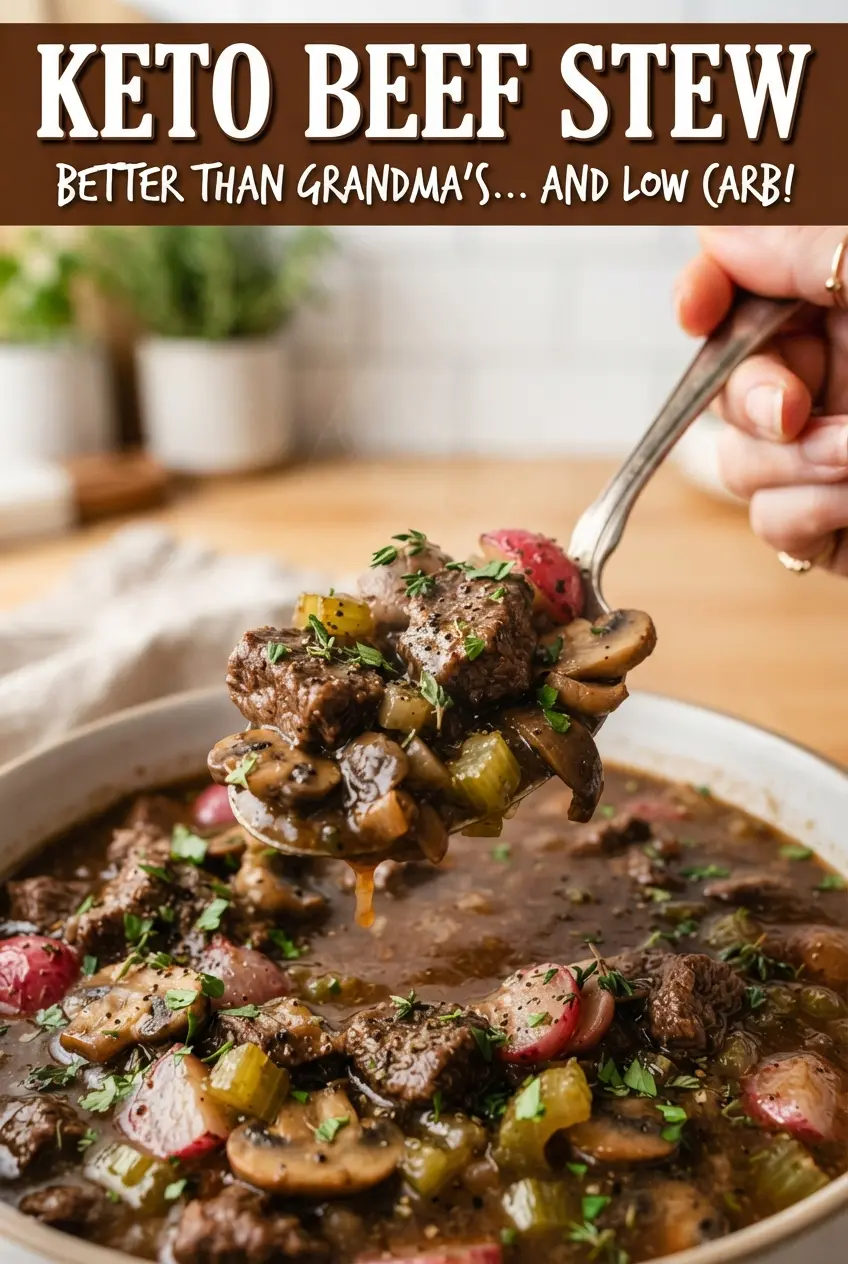
Keto Beef Stew
Ingredients
Equipment
Method
- Season the beef chuck cubes with salt and black pepper, then heat avocado oil in a Dutch oven over hot heat and brown the beef in batches until well browned, about 5 to 7 minutes total per batch.
- Transfer the browned beef to a plate while you finish the remaining batches, keeping the browned bits in the pot.
- Add the diced onion to the Dutch oven and cook for 3 minutes, stirring, until softened.
- Add the minced garlic and tomato paste and cook for 1 minute, stirring constantly, until fragrant.
- Return the browned beef to the pot, then add beef broth, Worcestershire sauce, dried thyme, and bay leaf; bring to a simmer.
- Cover and simmer at a steady low simmer for 1 1/2 hours, stirring once halfway through so the beef stays submerged.
- Add radishes, cremini mushrooms, and sliced celery to the stew and stir to combine.
- Simmer covered for 30 to 40 minutes, until the beef is tender and the radishes are soft.
- Whisk xanthan gum into the stew while stirring continuously, then simmer for 2 minutes until the gravy thickens and looks glossy.
- Remove the bay leaf, then top with chopped fresh parsley and serve hot.