
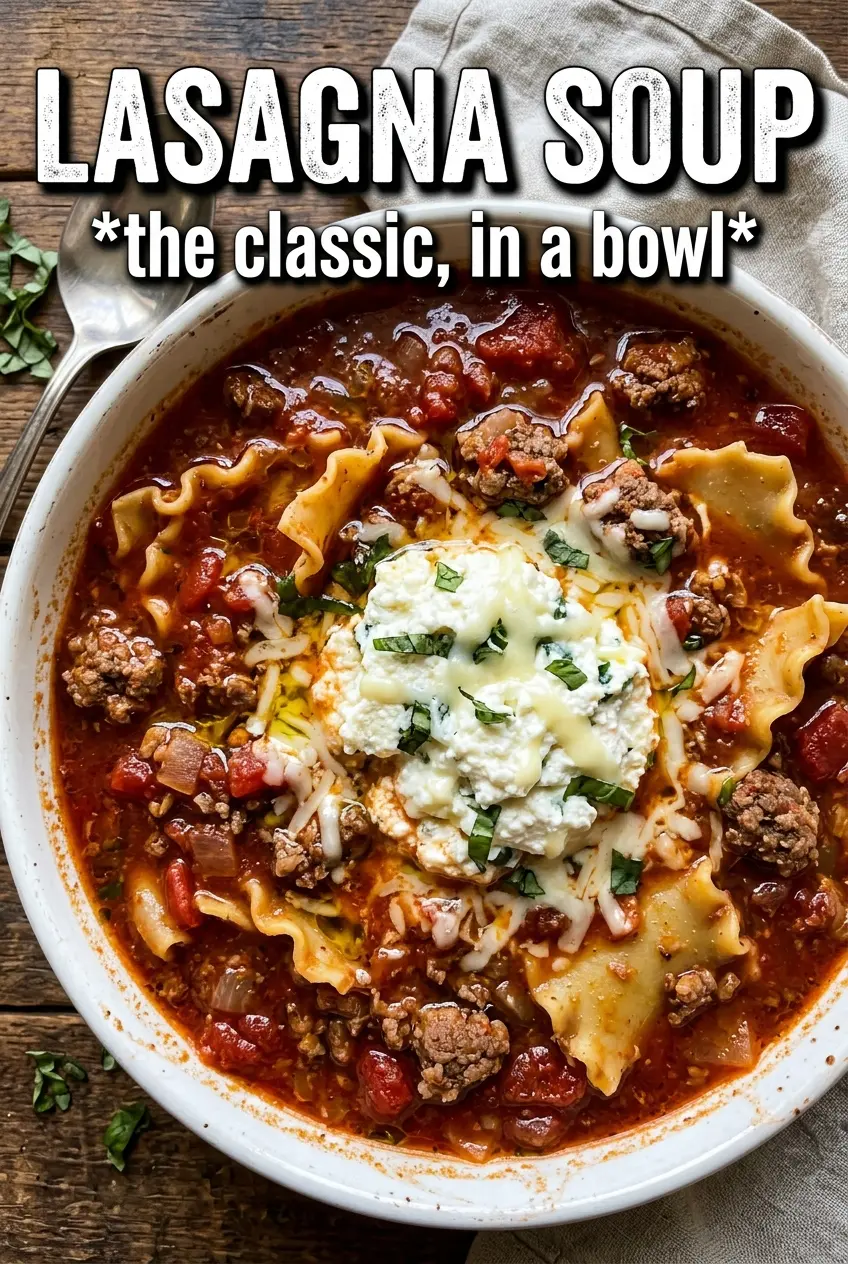
Lasagna soup turns all the best parts of a baked pan of lasagna into a bowl that feels faster, cozier, and a lot less fussy. You still get the rich tomato broth, the savory sausage, the tender noodles, and that creamy cheese topping that melts into the center like the best bite from the pan. The trick is keeping the broth bold enough to stand up to the pasta and cheese, so every spoonful tastes layered instead of thin.
This version leans on tomato paste for depth and uses both crushed and diced tomatoes for a broth that feels hearty without turning into sauce. Browning the sausage first gives the pot a strong savory base, and cooking the pasta right in the soup lets the noodles soak up flavor instead of tasting separate from it. The cheese mixture stays cold until serving, which gives you that creamy contrast against the hot soup.
Below, I’ll walk through the few details that matter most, including how to keep the noodles from going mushy and how to adjust the broth if you want it thicker or looser. It’s the kind of dinner that tastes like you worked harder than you did.
The tomato broth came out rich and not watery at all, and the broken noodles held their shape even after a second bowl. My husband kept saying it tasted like lasagna without the hassle.
Save this lasagna soup for a fast bowl of sausage, broken noodles, and creamy ricotta topping that tastes like classic lasagna in spoonable form.
The Reason the Noodles Go In Late, Not First
The biggest mistake in lasagna soup is treating the noodles like they’re separate from the broth. They’re not. Once they hit the pot, they start drinking in liquid fast, and if they simmer too long they can go from pleasantly tender to bloated and soft. That’s why the broth needs to be fully seasoned and already flavorful before the pasta goes in.
Tomato paste matters here because it gives the soup a cooked, savory backbone instead of a flat tomato flavor. Browning it for a minute or two darkens it just enough to take the raw edge off. If you skip that step, the broth still works, but it tastes younger and thinner than it should.
- Italian sausage — This is the main source of depth, salt, and seasoning. Mild or hot both work; hot sausage gives the pot more bite without needing extra pepper.
- Crushed and diced tomatoes — Crushed tomatoes build the body, while diced tomatoes leave some texture in the broth. If you only have crushed tomatoes, use them; the soup will be smoother, not worse.
- Tomato paste — This is the ingredient that makes the broth taste like it simmered longer than it did. Cook it for 1 to 2 minutes until it darkens before adding liquid.
- Ricotta, mozzarella, parmesan, and basil — This topping is what makes the soup feel like lasagna instead of just tomato pasta. Whole-milk ricotta gives the best creamy texture, but part-skim works if that’s what you keep on hand.
- Lasagna noodles — Break them into rough pieces rather than neat squares. The irregular edges catch the broth and give the soup a better bite.
What Each Ingredient Is Actually Doing in This Recipe

- Primary ingredient (the star) — Quality matters most. Choose the best you can find.
- Cooking medium (oil, butter, or broth) — This carries flavors and prevents dryness.
- Seasonings (salt, pepper, spices, herbs) — Layer flavors so nothing overpowers. Build depth gradually.
- Aromatics (garlic, onion, herbs) — Cook with fat to bloom flavors. Become the foundation.
- Supporting ingredients — Complement the main ingredient without overpowering it.
- Sauce or liquid (if applicable) — Brings flavors together. Balance richness with acid.
- Acid (lemon, vinegar, wine, or other) — Brightens and prevents flat-tasting results.
- Final finish (garnish, glaze, or sauce) — Prevents one-dimensional taste and adds visual appeal.
Building the Pot So the Broth Stays Rich
Brown the Sausage First
Cook the sausage over medium-high heat until it’s deeply browned and broken into small crumbles. That browned fond left in the pot is where a lot of the flavor comes from, so don’t rush to the next step while the meat is still pale. If there’s a lot of grease, drain off the excess, but leave a thin film behind so the onion can pick up the flavor.
Wake Up the Tomato Paste
Stir in the tomato paste and let it cook with the sausage and onion until it looks darker and a little sticky. This step takes the raw edge out of canned tomato products and gives the broth a richer, rounder taste. If the pot looks dry, the paste can catch; keep stirring and let the onion moisture loosen it.
Simmer the Noodles at the End
Once the broth is boiling, add the broken noodles and lower the heat to a steady simmer. You want the noodles tender with a little chew in the center, not collapsed or swollen. Start checking at 10 minutes, because different pasta brands soften at different speeds and the soup will keep thickening as it sits.
Finish with the Cheese in the Bowl
Mix the ricotta, mozzarella, parmesan, and basil just before serving so it stays fluffy and cool. Spoon the soup into bowls first, then top each one with a generous dollop so the cheese softens on contact without disappearing into the pot. If you stir the cheese into the whole batch, it turns the broth cloudy and you lose that classic lasagna contrast.
Make It Spicier or Milder
Use hot Italian sausage and keep the red pepper flakes for a bowl with more heat, or switch to mild sausage and cut the flakes in half for something gentler. The base broth stays the same either way; this change only shifts the finish.
Dairy-Free Version
Skip the ricotta topping and finish each bowl with a drizzle of good olive oil and extra basil. You lose the creamy lasagna-style contrast, but the soup still has plenty of body and flavor from the sausage and tomatoes.
Gluten-Free Swap
Use your favorite gluten-free pasta in place of the lasagna noodles, but start checking it a few minutes early because it can soften faster and break more easily. If you’re making leftovers, keep the pasta separate so it doesn’t soak up the broth overnight.
Stretch It for a Crowd
Add an extra can of broth and another handful of noodles if you need to feed more people. The soup gets a little less concentrated, so taste it at the end and bump up the salt and Italian seasoning before serving.
Storage and Reheating
- Refrigerator: Store for up to 4 days. The noodles will continue to absorb broth, so expect the soup to thicken.
- Freezer: Freeze the broth and sausage without the noodles for best texture. Thaw, reheat, then cook fresh noodles in the soup before serving.
- Reheating: Warm gently on the stove over medium-low with a splash of broth or water. High heat can make the noodles mushy and can cause the tomato base to splatter and reduce too far.
Answers to the Questions Worth Asking
Lasagna Soup
Ingredients
Equipment
Method
- Brown the Italian sausage in a large pot over medium-high heat, breaking it into crumbles, until cooked through and browned, about 8-10 minutes; drain excess fat.
- Add the diced onion to the same pot and sauté for 4 minutes, stirring often, until softened.
- Stir in the minced garlic and cook for 1 minute, just until fragrant.
- Stir in the tomato paste and cook for 1-2 minutes until darkened.
- Add the crushed tomatoes, diced tomatoes, broth, Italian seasoning, dried basil, and red pepper flakes; bring the mixture to a boil.
- Add the broken lasagna noodles and simmer for 10-12 minutes, stirring occasionally, until the noodles are tender.
- Season with salt and pepper to taste and taste again to adjust if needed.
- Mix ricotta, shredded mozzarella, parmesan, and fresh basil together until evenly combined.
- Ladle the soup into bowls and top each bowl with a generous dollop of the cheese mixture so it begins melting as you serve.


