
Vibrant citrus-chili chicken is the kind of marinade that earns repeat status fast: it perfumes the meat with lime and orange, seasons it all the way through, and leaves you with chicken that tastes bright instead of flat. On the grill, it picks up a little char and the spices turn deeper and warmer, which is exactly what you want for tacos, bowls, or a simple plate with rice and beans.
The balance matters here. Lime brings the sharpness, orange smooths it out, and olive oil carries the garlic and spices so they cling to the chicken instead of sinking to the bottom of the bag. I’ve made plenty of citrus marinades that tasted lively in the bowl but disappeared after cooking; this one holds up because the seasoning is measured enough to let the acid work without turning the chicken chalky.
Below you’ll find the timing that keeps the texture right, why the marinade works with both chicken breasts and thighs, and a few smart swaps if you’re cooking for a different crowd or using what’s already in the kitchen.
The chicken came off the grill juicy with a great char, and the lime-orange marinade tasted bright without being too sour. I let it sit about 4 hours, and the seasoning went all the way through.
Save this Mexican Chicken Marinade for juicy grilled chicken with lime, orange, and taco-friendly spice.
The Part That Keeps Citrus Marinades From Turning Chicken Mushy
Citrus can work against you if it sits too long. Lime juice is excellent for flavor, but given enough time it starts to tighten and dry the outside of the chicken, especially on breasts. That’s why this marinade lands best in the 2 to 8 hour range: long enough to season the meat, short enough to keep the texture juicy.
The other thing people get wrong is using too much acid without enough fat. Olive oil softens the edge of the lime and helps the garlic and spices coat the chicken evenly. Without it, the marinade tastes sharp on the surface and thin once cooked.
What Each Ingredient Is Actually Doing in This Marinade
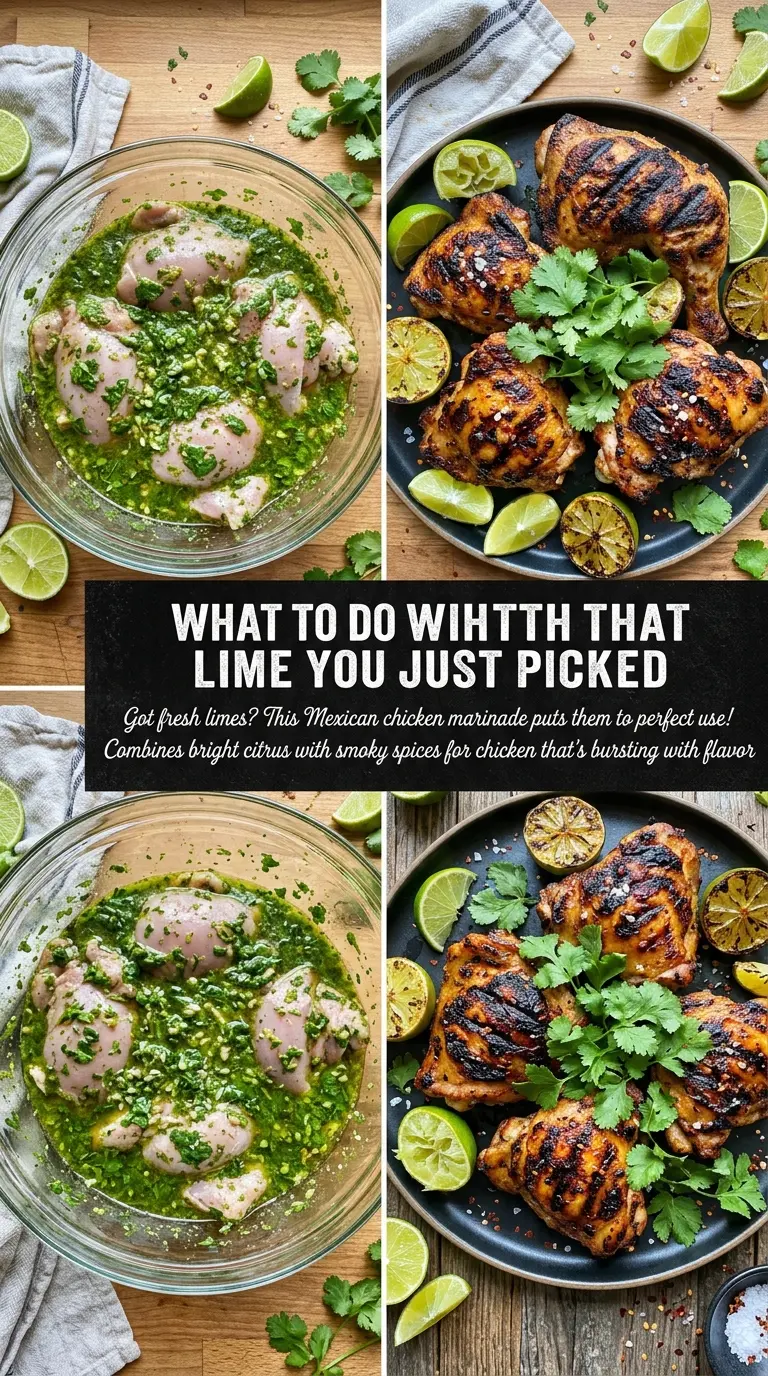
- Lime juice — This gives the marinade its clean, bright edge and helps the seasoning taste alive after grilling. Fresh lime is worth using here; bottled juice tastes dull and can leave the whole dish flat.
- Orange juice — Orange rounds out the lime so the chicken doesn’t taste aggressively sour. It also helps with browning on the grill because of the natural sugar.
- Olive oil — The oil carries the spices and keeps the chicken from drying out over direct heat. A basic extra-virgin olive oil works fine; save the fancy bottle for finishing.
- Chili powder, cumin, paprika, oregano — This is the spice backbone. Chili powder brings warmth, cumin adds earthiness, paprika gives color and a little sweetness, and oregano keeps the marinade tasting distinctly Mexican rather than just citrusy.
- Chicken thighs or breasts — Thighs stay juicier and forgive a longer grill time. Breasts work well too, but they need a closer eye and should come off as soon as they hit 165°F.
How to Marinate and Grill It Without Losing the Juices
Whisk the Marinade Until It Looks Emulsified
Start by whisking the citrus, oil, garlic, and spices until the mixture looks evenly combined and slightly thickened. If the oil is still sitting in a separate layer, it won’t coat the chicken well, and the seasoning ends up patchy. Salt belongs in the marinade now, not later, because it helps the chicken season from the outside in.
Let the Chicken Sit in the Fridge, Not on the Counter
Use a zip-top bag or shallow dish and turn the chicken a couple of times while it marinates. The cold slows the acid down, which protects the texture; leaving citrus-marinated chicken out at room temperature is how you get mushy edges and food-safety problems. Two hours is enough for good flavor, and eight hours is the upper limit I’d use for breasts.
Grill for Color, Then Stop Chasing the Flame
Preheat the grill to medium-high and lay the chicken on clean grates that have been lightly oiled. You want a steady sizzle and visible grill marks, not flare-ups that scorch the sugar in the orange juice. For breasts, 6 to 8 minutes per side is a useful starting point, but the real target is 165°F in the thickest part.
Rest Before Slicing
Move the chicken to a plate and let it rest for 5 minutes before cutting. If you slice immediately, the juices run out and the meat eats drier than it should. A short rest is enough to keep the center juicy without letting the crust soften too much.
Three Ways to Use This Marinade Beyond Basic Grilled Chicken
Make it a taco night chicken
Slice the grilled chicken thin and serve it in warm tortillas with onions, cilantro, and a little crema. The marinade already has the right citrus-spice balance, so it needs very little else; the grill flavor does the heavy lifting.
Swap in thighs for a juicier, more forgiving result
Chicken thighs hold up better if your grill runs hot or you tend to cook a little past perfect timing. They take the same marinade beautifully, but they’ll taste richer and stay tender even if they sit on the heat a minute or two longer than breasts.
Make it dairy-free and gluten-free without changing the method
This marinade already fits both dairy-free and gluten-free cooking as written, which is part of why it’s such a useful weeknight staple. Just pair it with gluten-free sides and skip any creamy toppings if you’re keeping the whole meal dairy-free.
Use it for drumsticks with a little extra grill time
Drumsticks need a longer, gentler cook than breasts, but the marinade works well because the skin and dark meat can handle the bold seasoning. Move them to indirect heat if they’re browning too fast, and cook until the juices run clear and the thickest part reaches 165°F.
Storage and Reheating
- Refrigerator: Store cooked chicken in an airtight container for up to 4 days. The flavor holds up well, though breast meat can dry out a bit if it’s reheated too hard.
- Freezer: Cooked chicken freezes well for up to 2 months. Slice it first or freeze whole pieces with a little juice in the container so it doesn’t dry out.
- Reheating: Warm it gently in a covered skillet with a splash of water or broth over low heat, or use the microwave at 50% power. High heat is what makes leftover chicken stringy.
Answers to the Questions Worth Asking
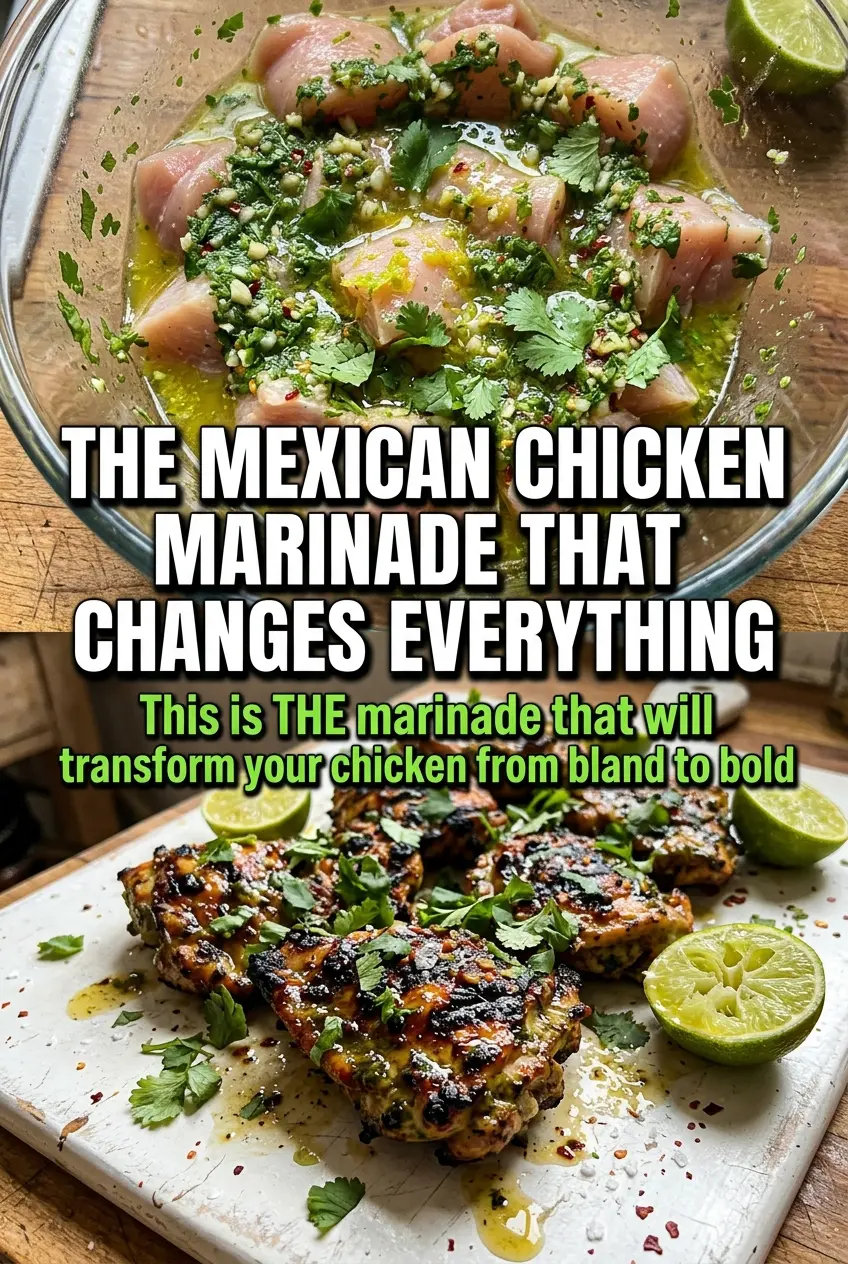
Mexican Chicken Marinade
Ingredients
Equipment
Method
- Whisk together lime juice, orange juice, olive oil, garlic, chili powder, cumin, paprika, oregano, salt, and pepper until evenly combined and glossy.
- Place chicken in a large zip-top bag and pour the marinade over it, pressing out excess air so the chicken is coated.
- Marinate in the refrigerator for 2-8 hours, turning occasionally, until the chicken looks evenly seasoned.
- Preheat grill to medium-high heat until hot, then oil the grates lightly to prevent sticking.
- Grill chicken until internal temperature reaches 165°F, about 6-8 minutes per side for breasts, with visible spice rub on the surface.
- Let chicken rest for 5 minutes so juices redistribute, then serve hot with fresh cilantro and lime wedges.


