
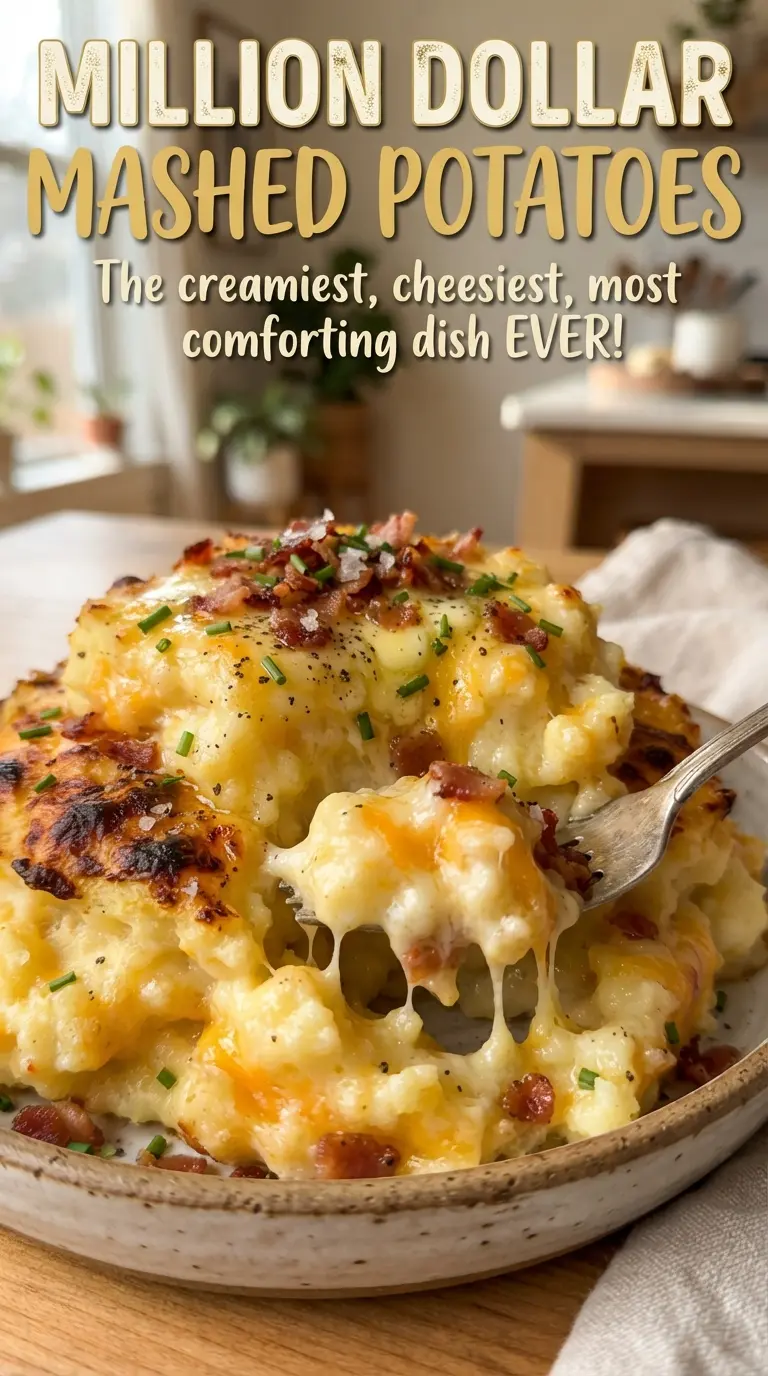
Million Dollar Mashed Potatoes land on the table with the kind of rich, velvet-soft texture that makes people hover near the serving spoon. They’re creamy enough to feel special, but sturdy enough to bake up with a buttery top that holds its shape when scooped. The flavor is familiar in the best way: potatoes, butter, cream cheese, sour cream, and Parmesan working together without any one ingredient taking over.
The reason this version works is balance. Yukon gold potatoes give you a naturally buttery base, and the cream cheese plus sour cream keep the mash lush without turning it gluey. A short bake at the end doesn’t dry them out; it sets the surface and deepens the flavor, so the top gets a little color while the center stays soft and spoonable.
Below you’ll find the small details that matter most: how to keep the potatoes from getting watery, why the dairy goes in while the potatoes are still hot, and what to change if you want to make these ahead for a holiday or Sunday dinner.
I loved how the potatoes stayed fluffy but still baked into this super creamy casserole-style side. The Parmesan on top gave it a little savory crust, and they reheated without getting stiff.
Love the ultra-creamy bake and buttery top on these Million Dollar Mashed Potatoes? Save it to Pinterest for holiday dinners and comfort-food sides.
The Secret to Keeping These Mashed Potatoes Rich Instead of Gluey
Mashed potatoes can go from luxurious to gummy fast if they’re overworked or mixed while the potatoes are too dry. The trick here is to mash them while they’re still hot, then add the dairy before the starch tightens up. That gives you a smoother finish with less effort and keeps the texture light enough to bake instead of turning heavy in the dish.
Yukon golds matter here because they mash into a naturally creamy texture without needing a food processor or extra handling. Use a potato masher or ricer if you have one. A mixer can work in a pinch, but once potatoes are whipped too aggressively, they can turn pasty. The bake at the end should warm the casserole through and brown the top, not cook the potatoes further from scratch.
What Each Ingredient Is Doing in the Bowl
- Yukon gold potatoes — These are the backbone of the dish. They’re waxier than russets, so they hold onto moisture and give you a naturally buttery mash that doesn’t need a lot of help to taste rich.
- Cream cheese — This is what gives the potatoes that dense, plush texture people notice right away. It also stabilizes the mash, so the casserole bakes up creamy instead of loose.
- Sour cream — It adds tang and softens the richness of the butter and cream cheese. Plain Greek yogurt can work, but it’s sharper and a little less silky.
- Heavy cream — This loosens the mixture just enough so it spreads cleanly into the dish. Whole milk works if that’s what you have, but the final result won’t feel quite as luxurious.
- Parmesan — It brings saltiness and a savory edge that keeps the potatoes from tasting flat. Finely grated Parmesan melts in more evenly than the chunky stuff.
- Butter — Some goes into the mash, and the rest gets dotted over the top for browning. Use unsalted butter if you want control over the salt level, since the cheese already adds plenty.
- Chives — They’re not just garnish. Fresh chives cut through the richness and give the finished dish a clean, oniony lift.
Building the Bake So the Top Turns Golden and the Center Stays Creamy
Cooking the Potatoes Until They Collapse Easily
Start the potatoes in salted water and cook them until a fork slides through with no resistance. If they stay even a little firm in the middle, they won’t mash evenly and you’ll end up with little lumps that never fully disappear. Drain them well and let the steam escape for a minute or two so the final dish doesn’t turn watery.
Mashing While the Potatoes Are Still Hot
Add the cream cheese, sour cream, butter, and cream while the potatoes are hot enough to melt them in. That’s the moment when everything blends smoothly. If the dairy goes in cold and the potatoes have already cooled, you’ll need to stir more aggressively, and that’s how mash gets dense and sticky.
Finishing the Seasoning Before It Goes in the Pan
Stir in the Parmesan, garlic powder, salt, and pepper before the potatoes hit the baking dish. Once the mixture is in the pan, it’s harder to distribute seasoning evenly without overhandling it. Spread the potatoes gently into the dish, dot the top with the remaining butter, and bake just until the surface takes on a light golden color and the edges start to look set.
Letting the Chives Stay Bright
Sprinkle the chives on after baking so they stay fresh and green. If they go in too early, they darken and lose their pop. The finished casserole should scoop like a soft cloud with a browned top and a clean, buttery finish underneath.
How to Adapt These Million Dollar Mashed Potatoes for Different Tables
Make-Ahead Holiday Mashed Potatoes
Assemble the potatoes in the baking dish, cover tightly, and refrigerate for up to 2 days before baking. Let the dish sit on the counter while the oven preheats, then add a few extra minutes in the oven so the center warms through. This keeps the texture smooth and saves you from last-minute mashing.
Gluten-Free by Default
These potatoes are naturally gluten-free as written, so the main job is checking your Parmesan and seasonings if you’re cooking for someone highly sensitive. Nothing in the texture changes here, which makes this an easy side for mixed-diet gatherings.
Lighter Dairy Swap
You can swap the sour cream for plain Greek yogurt and use half-and-half instead of heavy cream. The potatoes will still be creamy, but the flavor turns a little brighter and the final dish won’t be quite as lush. It’s a good trade if you want richness without the full weight of the original.
Extra-Savory Version
Stir in a handful of shredded sharp cheddar with the Parmesan if you want a deeper, more casserole-like flavor. The potatoes will be a little heavier and the top will brown more aggressively, so keep an eye on the oven during the last 10 minutes.
Storage and Reheating
- Refrigerator: Store covered for up to 4 days. The potatoes will firm up in the fridge, but the texture comes back once reheated.
- Freezer: They freeze well for up to 2 months, though the texture is a little less silky after thawing. Wrap tightly and freeze in a casserole dish or an airtight container.
- Reheating: Cover and warm in a 325F oven until hot throughout. If they seem dry, stir in a splash of cream before reheating. Microwaving works for small portions, but use low power so the dairy doesn’t separate.
Answers to the Questions Worth Asking

Million Dollar Mashed Potatoes
Ingredients
Equipment
Method
- Preheat the oven to 350°F, then butter a 9x13-inch baking dish so the potatoes don’t stick.
- Boil the Yukon gold potatoes in salted water for 15–18 minutes until tender, then drain well.
- Mash the hot potatoes with the softened cream cheese, sour cream, 6 tablespoons of the butter, and the heavy cream until very smooth and creamy.
- Stir in the Parmesan, garlic powder, salt, and black pepper until evenly combined.
- Spread the mashed potatoes into the buttered dish, dot with the remaining butter, and bake at 350°F for 25–30 minutes until golden on top.
- Remove from the oven and immediately sprinkle with chopped fresh chives as a fresh green finish.


