
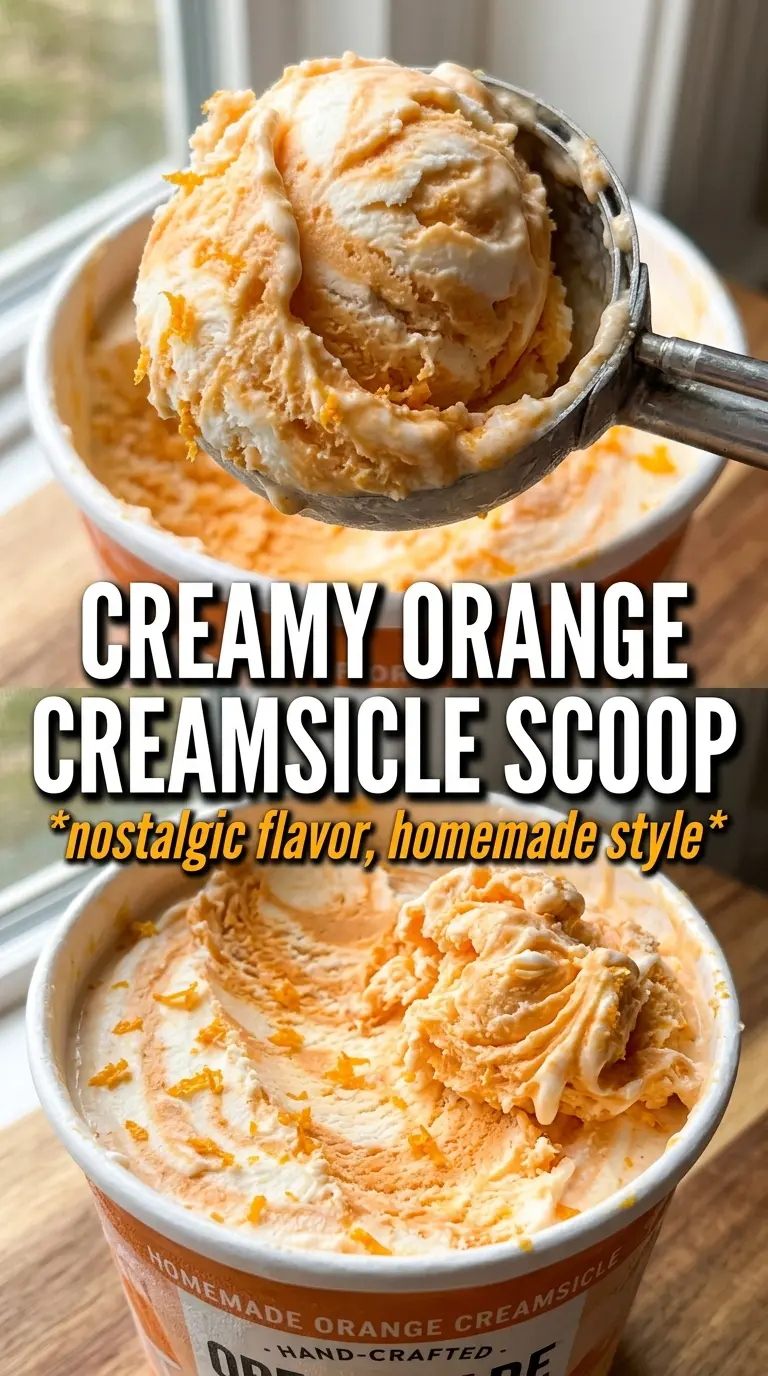
Orange Creamsicle Ice Cream gets that nostalgic push-pull of bright citrus and soft vanilla without tasting flat or overly sweet. The best batches have a clean orange note, a custard base that turns silky in the churn, and those pale orange ribbons that stay distinct after freezing. It tastes like the frozen treat you remember, only creamier and with a little more depth.
The trick is treating the orange two different ways. Fresh juice gives the flavor, but it needs a quick simmer with zest and sugar so it doesn’t freeze into an icy layer. The vanilla base is cooked to a proper custard, which keeps the texture rich instead of airy or thin. Once the two parts are cold, they come together at the end, so the swirl stays visible and the orange doesn’t disappear into the base.
Below, I’ll walk you through the part that matters most: getting the custard smooth, and then adding the orange syrup at exactly the right moment so you end up with a real creamsicle swirl, not a monotone orange ice cream.
The custard turned out smooth and the orange syrup swirled in instead of freezing into hard bits. It tasted just like a creamsicle, and the texture stayed scoopable after a full night in the freezer.
Save this orange creamsicle ice cream for the kind of dessert that needs bright orange swirl, vanilla custard, and a scoopable freezer texture.
The Reason the Orange Swirl Stays Bright Instead of Turning Icy
The orange part only works if you concentrate it a little before it goes into the churn. Fresh juice on its own brings too much water, and water turns hard in the freezer. A short simmer with sugar and zest cooks off some of that excess moisture and pulls more oils from the peel, which gives the swirl a stronger orange taste without making the ice cream grainy.
The other big mistake is adding the orange mixture too early. If it goes in before the custard is fully chilled, the base softens too much and the churn takes longer, which makes the texture heavier than it should be. Add the orange syrup at the end, when the ice cream is thick enough to hold ribbons. That’s how you get the creamsicle look instead of an orange-colored base.
What the Creamsicle Ingredients Are Doing Here
- Heavy cream — This gives the ice cream its lush body and keeps the final texture rich. Lower-fat dairy makes the base icier, especially once the orange syrup is added.
- Whole milk — It loosens the custard just enough so it churns smoothly. If you swap in skim milk, the ice cream loses that creamy creamsicle finish.
- Egg yolks — They thicken the custard and help it freeze into a dense, scoopable texture. Temper them slowly, because rushing that step can scramble the eggs and force you to strain out little bits.
- Fresh orange juice and zest — The zest carries the real orange perfume; the juice brings brightness and tang. Bottled juice works in a pinch, but fresh zest is what makes this taste like a creamsicle instead of generic orange ice cream.
- Vanilla extract — Vanilla softens the citrus and gives the base that classic creamsicle flavor. Use real vanilla if you can; imitation vanilla tastes sharper here.
- Orange food coloring — Optional, but useful if you want a more vivid sherbet-style color. It doesn’t change flavor, so skip it if you like a paler, more natural look.
Cooking the Custard, Then Swirling the Orange at the Right Moment
Heating the Dairy
Warm the cream and milk until they’re steaming but not boiling. You want the mixture hot enough to temper the yolks without curdling them on contact. If you see bubbles racing around the edge, pull it off the heat. Overheating here doesn’t help the custard set faster; it just makes the eggs harder to control.
Tempering and Thickening
Whisk the hot dairy into the yolks and sugar gradually, then return everything to the pan and cook over medium-low heat. Stir constantly and watch for the mixture to thicken enough to coat the back of a spoon and reach 175°F. If it starts to look grainy or steam aggressively, the heat is too high. Move the pan off the burner for a few seconds, keep stirring, and let the residual heat do the work.
Cooling the Base Completely
Strain the custard, then add the vanilla and salt while it’s still warm. That strain is worth doing even if the custard looks smooth, because it catches tiny cooked bits before they become a problem in the churn. Chill it all the way through before churning. If the base is even slightly warm, the ice cream maker won’t freeze it tightly enough and the texture will stay soft and loose.
Making and Adding the Orange Syrup
Simmer the orange juice, zest, and remaining sugar until it looks lightly syrupy. The goal is not a jam or a candy, just a small reduction that tastes concentrated. Cool it completely before use, because hot syrup melts the churned custard on contact. Add it in the last couple of minutes so it streaks through the ice cream instead of blending in completely.
Freezing for Clean Scoops
Layer the churned ice cream and orange syrup into the container instead of dumping everything in at once. A few spoonfuls at a time help preserve the swirl you just worked for. Freeze it until firm, at least four hours, before scooping. If you try to serve it too early, the center will be soft and the ribbons will collapse into a muddy orange-vanilla mix.
How to Adapt This Orange Creamsicle Ice Cream Without Losing the Swirl
Dairy-Free Version
Use full-fat coconut milk in place of the cream and whole milk, and expect a slight coconut note in the background. The texture will be a little less custardy, but it still freezes well if you chill the base fully and don’t rush the churn.
No Ice Cream Maker
Pour the chilled custard into a shallow container and freeze it, stirring every 30 minutes for the first 2 to 3 hours. Fold in the orange syrup during one of the last stirs so you still get ribbons. The texture won’t be as airy, but it will still taste right.
More Citrus Forward
Add an extra teaspoon of zest to the orange syrup, not more juice. Extra juice makes the swirl icier, while extra zest deepens the orange aroma without changing the freezer texture.
Storage and Reheating
- Refrigerator: Not recommended for storing the finished ice cream; it will melt and the texture won’t come back.
- Freezer: Freeze in an airtight container for up to 2 weeks for the best texture. After that, the orange swirl can start to turn harder and less distinct.
- Reheating: Let it sit at room temperature for 5 to 10 minutes before scooping. Don’t microwave it, or the edges will melt first and the center will stay icy.
Answers to the Questions Worth Asking

Orange Creamsicle Ice Cream
Ingredients
Equipment
Method
- Heat heavy cream and whole milk until steaming, then whisk them into egg yolks beaten with 1/2 cup granulated sugar. Keep stirring so the custard looks smooth, not scrambled.
- Return the mixture to heat and cook until it reaches 175F, stirring constantly. When it coats the back of a spoon, remove from heat.
- Strain the custard, then whisk in vanilla extract and salt. Cool completely to room temperature before you churn.
- In a small saucepan, combine fresh orange juice, orange zest, and the remaining 1/4 cup granulated sugar. Bring it to a gentle simmer.
- Simmer for 5 minutes until slightly syrupy, then cool completely. The syrup should thicken enough to drizzle.
- Churn the vanilla custard in an ice cream maker until thick. The texture should look like soft-serve.
- In the last 2 minutes, drizzle in the orange syrup to create swirls, but do not fully mix. Stop when ribbons of orange streak through the white base.
- Transfer to a container, layering spoonfuls to maintain the swirl pattern, then freeze at least 4 hours. Let it firm up until scoopable.


