
Salsa verde chicken casserole lands in that sweet spot between comforting and bright. The tortillas soften just enough to turn almost spoonable at the edges, the chicken stays tender under the sauce, and the melted Monterey Jack pulls everything together with a salty, creamy finish. It’s the kind of bake that comes out bubbling at the center and still holds its shape when you scoop it, which is exactly what you want from a weeknight casserole.
What makes this version work is the balance in the sauce. Salsa verde brings sharp tomatillo tang, sour cream rounds it out, and chicken broth loosens the mixture so it can soak into the tortillas instead of sitting on top. Roasted poblanos add a little smoky depth without taking over, and the rest time at the end matters more than people think — it lets the layers settle so the casserole serves cleanly instead of collapsing into a wet pile.
Below, I’m breaking down the layering trick that keeps this from turning soupy, the ingredients that matter most, and the small adjustments that make it work whether you’re feeding a family or stretching leftovers into another meal.
The sauce thickened up perfectly and the tortillas stayed tender without getting mushy. I used leftover rotisserie chicken and the whole pan disappeared fast.
Save this bubbly salsa verde chicken casserole for nights when you want a layered, cheesy dinner with almost no fuss.
The Reason Most Casseroles Turn Watery Instead of Spoonable
The mistake usually starts with too much liquid or not enough time for the layers to set. Salsa verde already carries moisture, and sour cream adds even more, so the broth needs to be just enough to loosen the sauce, not turn it thin. If the casserole looks loose when it comes out of the oven, that doesn’t mean it failed. The resting time is what lets the tortillas absorb the sauce and the cheese settle into a cohesive top instead of sliding off the surface.
Tearing the tortillas instead of slicing them into neat strips also helps. The uneven pieces overlap naturally and catch the sauce in different spots, which gives you those creamy, tender layers without a sharp edge of dry tortilla poking through. A tight, even layer beats a perfect-looking one every time here.
What the Salsa Verde, Sour Cream, and Poblanos Are Doing
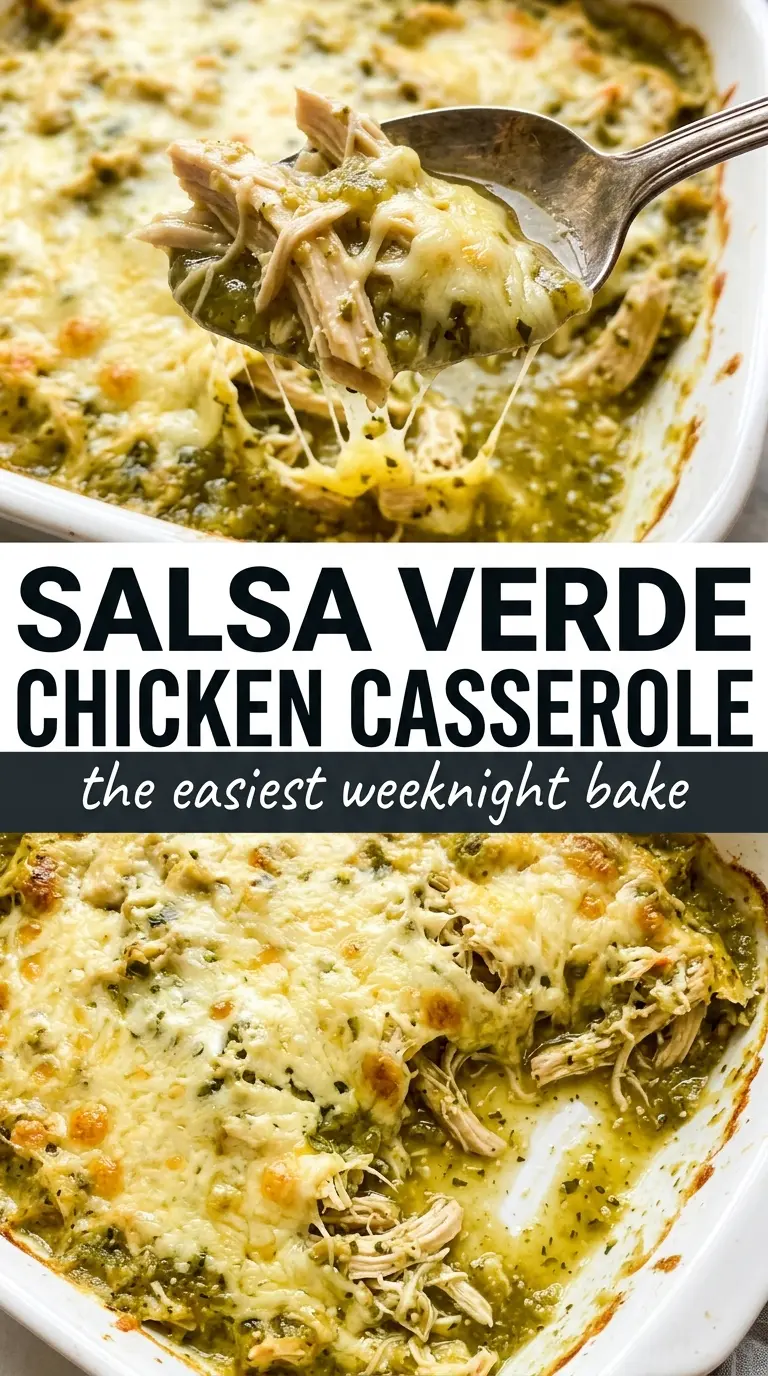
- Salsa verde — This is the backbone of the dish, bringing tang and a little heat without the heaviness of a red sauce. A good jarred salsa verde works fine here, but if yours is especially salty or sharp, taste the sauce before you season it and hold back on extra salt until the end.
- Sour cream — It softens the acidity and gives the sauce that creamy, clingy texture that coats the chicken and tortillas. Full-fat sour cream holds up best in the oven; if you use a lighter version, the sauce can look a bit looser.
- Chicken broth — This helps the sauce spread through the casserole instead of sitting in thick patches. Use low-sodium broth if possible so the finished dish doesn’t drift too salty once the cheese melts on top.
- Roasted poblano peppers — They add a gentle smoky note that makes the casserole taste deeper and more finished. If you can’t find poblanos, roasted Anaheim peppers are the closest swap. Canned green chiles will work in a pinch, but they won’t bring the same meaty, roasted flavor.
- Corn tortillas — These soften beautifully and give the casserole its layered, almost enchilada-like structure. Flour tortillas turn softer and more doughy, so they’re not the best choice if you want the filling to stay light and distinct.
How to Layer It So the Top Bakes Golden and the Middle Stays Creamy
Mixing the Sauce First
Whisk the salsa verde, sour cream, and chicken broth until the mixture looks smooth and pale green with no streaks of sour cream left behind. That step matters because cold pockets of sour cream can bake unevenly and leave you with a sauce that looks broken even when the flavor is fine. Taste it before it goes into the dish. If it’s underseasoned now, it will taste flat after the tortillas and cheese absorb some of the salt.
Building the Layers
Start with half the torn tortillas in the bottom of the baking dish, then add half the chicken, half the poblanos, and some of the sauce. Press the layers down lightly with the back of a spoon so the tortillas touch the liquid; if they’re left too dry in spots, those pieces can stay chewy after baking. Repeat with the remaining ingredients, then finish with cheese all the way to the edges so the top browns evenly and seals in the moisture underneath.
Baking Until Bubbling, Then Waiting
Bake until the cheese is melted, the edges are actively bubbling, and the center looks hot all the way through. If the top browns before the middle is hot, lay a loose piece of foil over the dish for the last few minutes. The rest time is not optional here. Ten minutes out of the oven gives the sauce a chance to settle, which is what keeps each scoop intact.
Make it a little lighter
Swap the sour cream for plain Greek yogurt and use a touch less broth. The casserole will taste a little tangier and the sauce may be slightly less rich, but it still bakes into a creamy, spoonable filling.
Make it gluten-free without changing the texture
Use corn tortillas as written and check that your salsa verde and broth are gluten-free. The texture stays the same, since the structure of the casserole comes from the tortillas and sauce, not any flour-based thickener.
Turn it into a vegetarian bake
Replace the chicken with black beans, sautéed mushrooms, or roasted cauliflower. Beans give the most satisfying bite and keep the casserole hearty, while mushrooms add a savory depth that works especially well with the salsa verde.
Storage and Reheating
- Refrigerator: Store covered for up to 4 days. The tortillas will soften a bit more as it sits, but the flavor deepens nicely.
- Freezer: It freezes well after baking. Cool completely, wrap tightly, and freeze for up to 2 months. The texture is best if you freeze in portions instead of one large block.
- Reheating: Reheat covered in a 325°F oven until hot in the center, or warm single servings in the microwave. Add a spoonful of broth or salsa verde if it looks dry, and don’t blast it on high heat or the cheese can turn greasy.
Questions I Get Asked About This Recipe
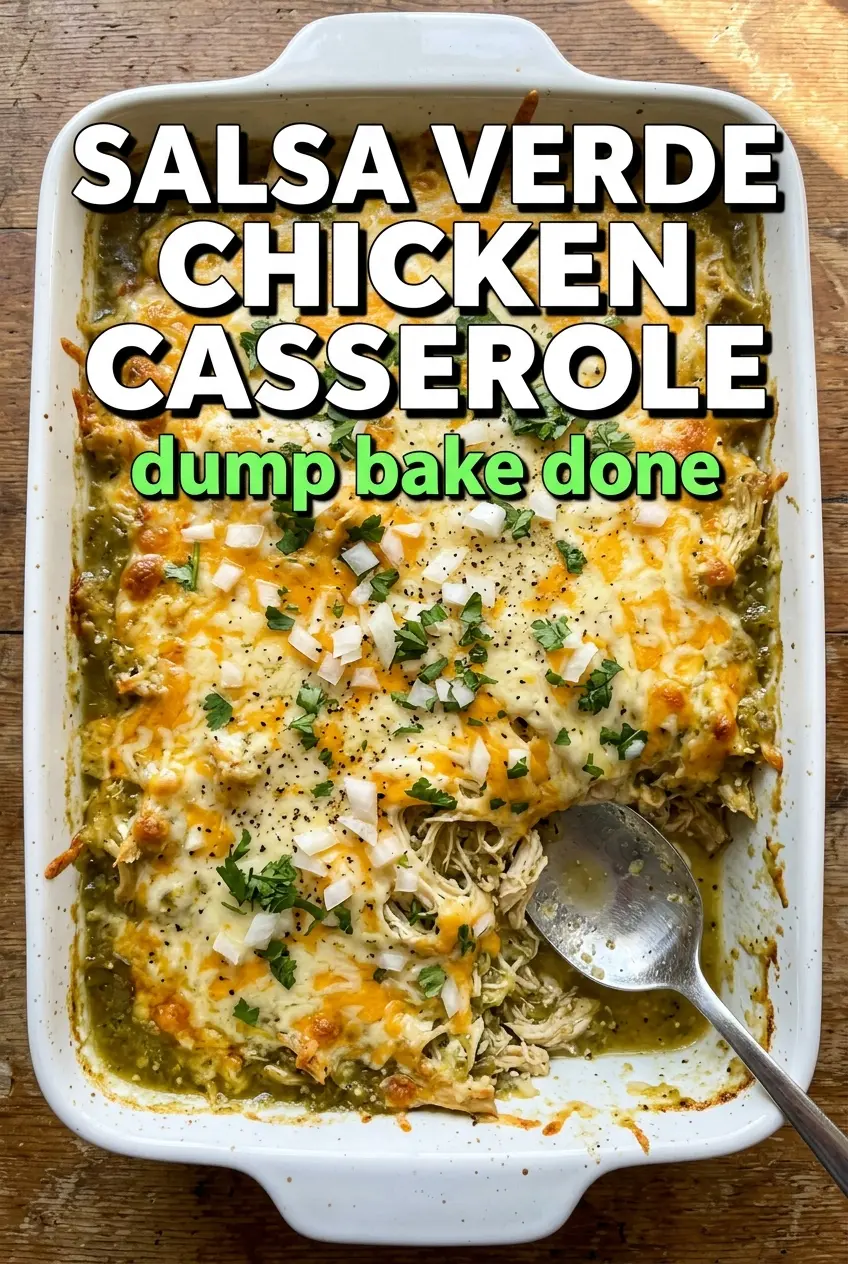
Salsa Verde Chicken Casserole
Ingredients
Equipment
Method
- Preheat the oven to 350°F. Whisk together salsa verde, sour cream, and chicken broth, then season with salt and pepper.
- Tear the corn tortillas into pieces and layer half in the bottom of a 9x13 inch baking dish. Top with half the chicken, poblano peppers, and 1 cup of the salsa mixture.
- Repeat the layers with the remaining tortillas, chicken, poblanos, and salsa mixture. Sprinkle the remaining Monterey Jack cheese over top.
- Bake for 30 to 35 minutes at 350°F until bubbly with melted, golden cheese. Rest for 10 minutes, then garnish with chopped cilantro and serve with lime wedges.


