Deep, spoon-coating Scottish beef stew is built on slow browning, mellow onions, and the quiet nuttiness of pearl barley. The beef turns tender enough to pull apart with a spoon, while the turnip and carrots soften into the gravy without disappearing. It’s the kind of stew that tastes even better after the first bowl, when the broth has had time to settle into something rich and round.
What makes this version work is the layering. The beef gets a light flour coating before browning, which helps the stew thicken naturally later without turning pasty. Scottish ale adds a malty edge, but if you use extra broth instead, the stew still lands in the right place because the onions, leeks, Worcestershire, and long simmer do the heavy lifting. Barley goes in later so it stays pleasantly chewy instead of breaking down into mush.
Below, I’ve included the small details that keep the gravy glossy, the vegetables intact, and the beef tender. If you’ve ever had stew go flat or thin, the timing here is the part worth paying attention to.
The gravy thickened up beautifully and the barley stayed chewy instead of falling apart. I made it on Sunday and the flavor was even better the next day.
Scottish beef stew with pearl barley and turnip is the kind of slow-simmered dinner worth pinning for a cold night.
The Trick to Keeping Scottish Stew Thick Without Turning the Barley Mushy
The flour on the beef does double duty here: it helps the meat brown with a little more structure, and it gives the broth a head start on thickening. That matters because this stew isn’t meant to be a thin soup. You want a gravy that clings to the beef and vegetables, but if you dump the barley in too early, it will drink up too much liquid and go soft before the meat is tender.
The other timing detail that matters is the order of the vegetables. The onions and leeks need time to collapse and sweeten before the liquid goes in, but the carrots, turnip, and barley belong near the end so they keep their shape and give the stew some contrast. If the pot looks too loose before the last simmer, that’s normal. The barley thickens the broth as it cooks, and the stew settles once it rests.
What the Beef, Barley, and Ale Each Bring to the Pot
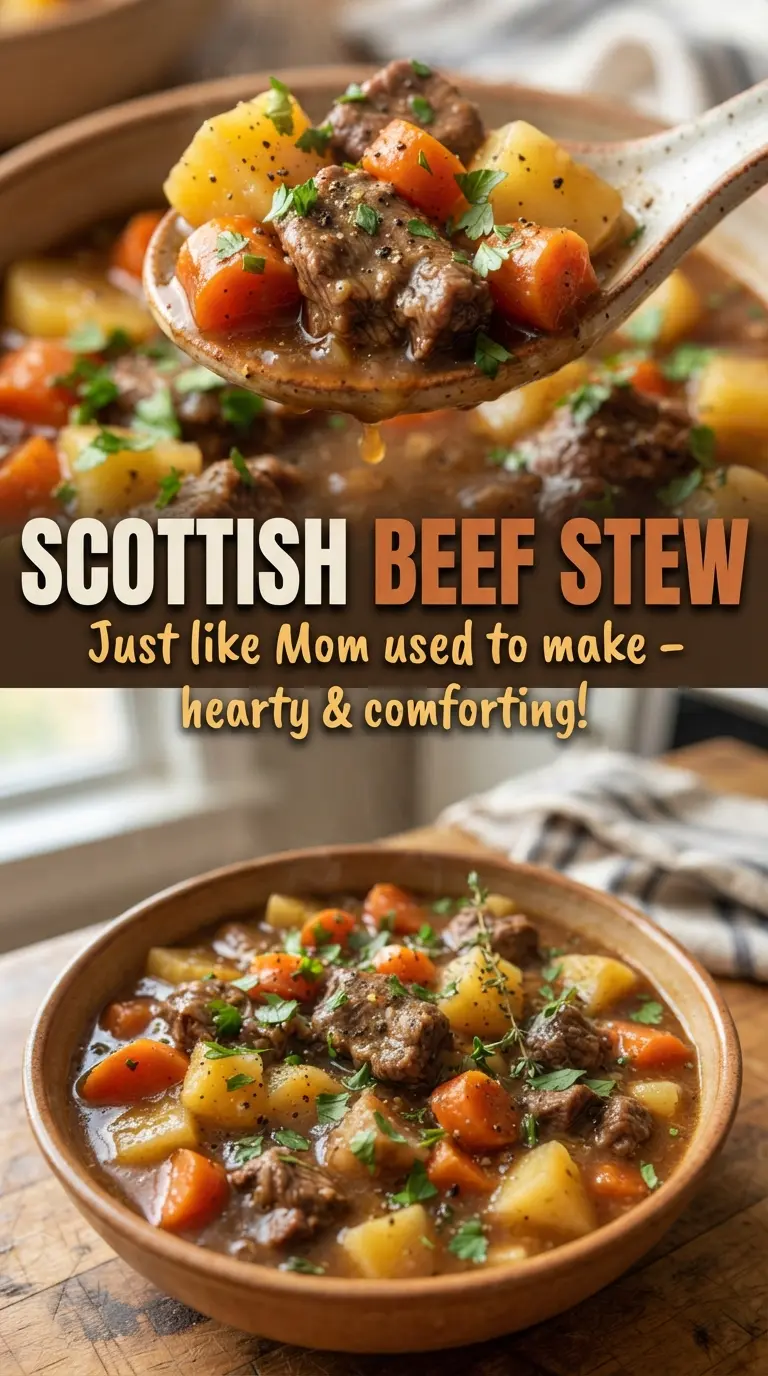
- Beef chuck — This is the cut that gives you the right balance of flavor and tenderness after a long simmer. Anything leaner will dry out before the stew has enough time to finish. If you can, cut the pieces evenly so they braise at the same pace.
- Scottish ale — The ale adds malt and a little bitterness that deepens the broth. If you don’t have it, use more beef broth and add an extra splash of Worcestershire for depth. Don’t use a strongly hopped beer unless you want the stew to taste sharper than traditional.
- Pearl barley — Barley gives this stew its hearty texture and makes the gravy feel fuller. Rinse it before adding it so excess starch doesn’t cloud the pot too much. If you need to substitute, farro is the closest in texture, though it takes a little more chewing.
- Turnip or swede — This brings a gentle earthy note that keeps the stew from tasting only beefy and sweet. Swede, which is rutabaga, is especially good here because it holds its shape and softens into the broth without disappearing.
- Leeks and onions — The combination gives the base more sweetness than onions alone. Slice the leeks well and wash them carefully, because grit hides between the layers and will end up in the pot if you rush them.
Building the Pot in the Right Order So the Flavor Stays Deep
Browning the Beef in Batches
Season the beef, toss it with the flour, and brown it in a hot mix of butter and oil in small batches. Crowding the pan is the fastest way to steam the meat instead of searing it, and steamed beef gives you flat broth. You’re looking for a deep brown crust on the outside and some sticky browned bits left behind in the pot. Those bits are the base of the stew, so don’t wipe the pan clean.
Softening the Onions and Leeks
Once the beef is out, add the onions and leeks and cook them until they’ve lost their raw edge and turned soft and glossy. Six minutes is about right, but the visual cue matters more than the clock. They should look collapsed, not browned hard. If the bottom of the pot starts catching, add a splash of broth and scrape it up before moving on.
Simmering Low and Slow
Pour in the ale and scrape every browned bit off the bottom, then add the broth, Worcestershire, thyme, and beef. Bring it to a gentle simmer, not a hard boil. A rough boil makes chuck seize up before it has time to relax and soften. Cover the pot and let it cook until the meat is getting close to tender, which is when the stew earns its body without turning greasy.
Finishing with Barley and Vegetables
Add the barley, turnip, and carrots once the beef has had its head start. This timing keeps the vegetables recognizable and lets the barley thicken the broth without dissolving. Simmer until the barley is tender and the beef yields easily when pressed with a spoon. If the stew gets too thick at this stage, loosen it with a splash of broth rather than adding water, which can flatten the flavor.
How to Adapt This Stew for the Pot You Have and the Diet You Need
Gluten-Free Version
Skip the flour on the beef and use a gluten-free all-purpose blend or a cornstarch slurry at the end to thicken the broth. Use a gluten-free beer or replace the ale with more broth. The stew still gets its depth from the long simmer and browned beef, but the sauce will be a little lighter unless you finish it with a thickener.
No Ale on Hand
Use an extra cup of beef broth and add a teaspoon more Worcestershire for a deeper savory edge. You’ll lose the malty note, but the stew will still taste rounded if the onions and leeks get fully softened first. This is the cleanest swap when you want the recipe to stay family-friendly or alcohol-free.
Vegetable Changes That Still Fit the Style
If you don’t have turnip, use rutabaga, parsnips, or a mix of both. Parsnips bring more sweetness, while rutabaga stays a little firmer and earthier. Keep the pieces the same size as the carrots so everything finishes together instead of one vegetable turning mushy before the others.
Storage and Reheating
- Refrigerator: Keep covered for up to 4 days. The broth thickens as it chills, and the barley will keep absorbing liquid.
- Freezer: It freezes well for up to 3 months, though the barley softens a bit after thawing. Cool it completely and freeze in airtight containers with a little extra broth if you want a looser texture later.
- Reheating: Reheat gently on the stove over low heat with a splash of broth. Don’t boil it hard or the beef can tighten and the barley can break down too far.
Questions I Get Asked About This Recipe
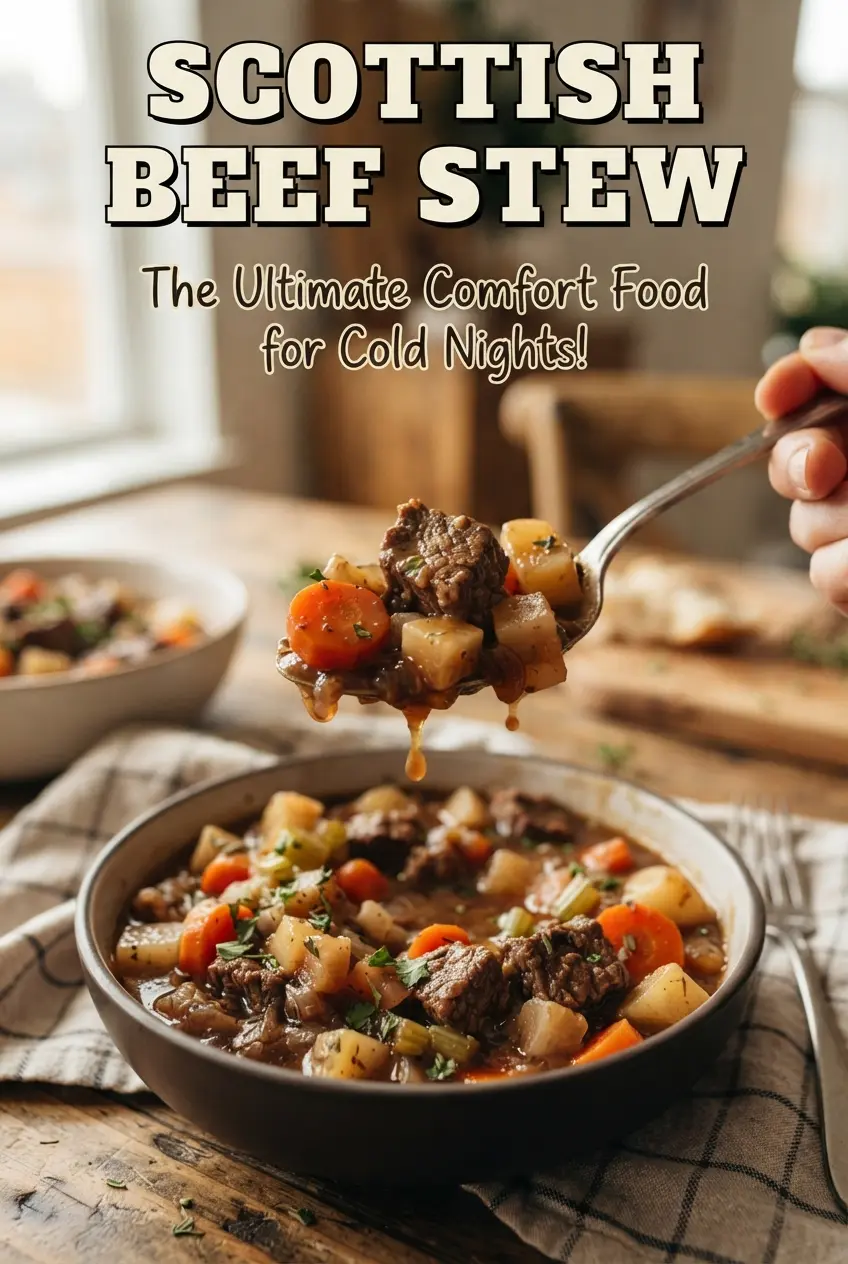
Scottish Beef Stew
Ingredients
Equipment
Method
- Season the beef with salt and black pepper, then toss with the all-purpose flour to coat evenly.
- Melt the butter with the vegetable oil in a Dutch oven over medium-high heat and brown the beef in batches, turning until deeply browned, about 3-5 minutes per batch, then transfer to a plate.
- Add the onions and leeks to the Dutch oven and cook for 6 minutes, stirring, until soft and lightly softened in the browned bits.
- Pour in the Scottish ale (or extra beef broth) and scrape the bottom to lift the browned fond, then cook for 1-2 minutes to reduce slightly.
- Add the beef broth, Worcestershire sauce, and dried thyme, then return the browned beef and bring to a simmer.
- Cover and simmer at a steady low bubble for 1 1/2 hours, stirring once or twice so nothing sticks.
- Add the rinsed pearl barley, cubed turnip or swede, and sliced carrots, then bring back to a simmer.
- Simmer covered for 45-60 minutes, until the barley is tender and the beef is easily pierced with a fork, adding a splash of broth only if the pot looks dry.
- Taste and season to adjust salt and pepper, then top with the chopped fresh parsley before serving.