
Slow cooker pork tenderloin can turn out dry if the heat runs too long, but this version stays tender and picks up a glossy apple butter glaze that clings to every slice. The sauce lands somewhere between savory and sweet, with Dijon and cider vinegar keeping it from tasting heavy, and the finish is just right for spooning over mashed potatoes or roasted vegetables.
The key is layering flavor from the start. The pork gets seasoned first, then the glaze is brushed on before cooking so it can melt into the meat as it warms. The apple cider or broth underneath keeps the slow cooker from drying out the bottom while the sauce reduces slightly around the edges. That balance gives you a tenderloin that slices cleanly instead of shredding apart.
Below you’ll find the best timing for keeping pork tender, what apple butter actually does here, and a few practical swaps if you need to work with what’s in the pantry.
The glaze coated the pork beautifully and the sauce thickened up just enough to spoon over the slices without running all over the plate. I cooked it on low for 4 hours and it came out tender, not dry at all.
Like this slow cooker apple butter glazed pork tenderloin? Save it to Pinterest for an easy glazed dinner with tender slices and a sweet-savory sauce.
The Part That Keeps Pork Tenderloin From Drying Out in the Slow Cooker
Pork tenderloin is lean, which means it doesn’t forgive overcooking the way a fattier cut would. The biggest mistake is treating the slow cooker like it can’t go too far. It can, and once tenderloin crosses that safe, juicy window, it starts turning chalky fast. The fix here is simple: cook just until the center hits 145°F, then rest it before slicing so the juices settle back into the meat instead of running onto the board.
The glaze also works better when it’s brushed over the pork instead of dumped in one puddle. That gives the apple butter, mustard, and spices a chance to cling to the surface and build a more even coating. The liquid in the bottom is there for moisture and background flavor, not to submerge the meat.
What Each Ingredient Is Doing in the Glaze

- Apple butter — This is the backbone of the sauce. It brings concentrated apple flavor, body, and the sticky finish that plain applesauce can’t match. If you substitute applesauce, the glaze will be thinner and less rich, so simmer it a little longer or reduce the added liquid.
- Dijon mustard — Dijon sharpens the sweetness and helps the glaze taste balanced instead of dessert-like. Whole grain mustard works in a pinch, but the sauce will look flecked and taste a little more rustic.
- Apple cider vinegar — This wakes up the apple butter and keeps the sauce from feeling flat. If you skip it, the glaze can taste heavy and one-note.
- Soy sauce — A small amount adds salt and depth without making the dish taste overtly savory. Tamari works well if you need a gluten-free swap.
- Cinnamon and nutmeg — These warm spices belong here because they echo the apple butter, but they should stay in the background. Too much and the glaze reads as pie filling instead of dinner.
- Apple cider or chicken broth — Either one works under the pork. Cider gives a fruitier finish, while broth keeps the sauce more savory. Use broth if your apple butter is already very sweet.
Building the Glaze So It Stays Glossy, Not Watery
Mix the glaze until it looks smooth and thick
Whisk the apple butter, Dijon, vinegar, soy sauce, garlic, cinnamon, and nutmeg until the mixture looks even and glossy. If the apple butter is very stiff, it may take a minute to loosen up, but that’s normal. You want a sauce that clings to a spoon, not one that pours like juice. Any unmixed pockets of mustard or spice will show up in the finished sauce, so take the extra few seconds here.
Set the pork in the slow cooker without crowding it
Lay the tenderloin in a single layer so the glaze can coat the surface evenly. If your slow cooker is small and the pork curves up the sides, the top can cook faster than the bottom, which makes slicing uneven later. Pour the cider or broth around the pork, not over it, so you keep the glaze on the meat where it belongs.
Cook until the center just reaches 145°F
Low for 4 to 5 hours is the better choice for texture, though high will work if you’re watching the clock. Start checking early, especially if your tenderloin is on the smaller side, because slow cookers vary a lot in temperature. Pull it the moment the center reaches 145°F. If you keep going while you finish a side dish, the pork will keep cooking from residual heat and can go from tender to dry in minutes.
Rest, slice, and spoon the sauce over the top
Give the pork at least 5 minutes before cutting into it. That rest keeps the slices from flooding with juice the second your knife touches them. Spoon the sauce from the cooker over the pork after slicing, then finish with thyme for a fresh note that cuts through the sweetness. If the sauce looks thin, let it sit for a minute; it usually thickens slightly as it cools.
Three Practical Ways to Change This Dinner Without Losing What Makes It Work
Make it gluten-free with tamari
Swap the soy sauce for tamari in a 1:1 amount. You’ll keep the same salty depth and umami, and the glaze will still reduce and cling the same way. Just check that your apple butter is gluten-free if you’re cooking for someone with celiac disease.
Use boneless pork loin if that’s what you bought
Pork loin is larger and leaner than tenderloin, so it needs more time and is easier to overcook. It can work here, but check the temperature early and plan for a firmer slice. The flavor stays good, but the texture won’t be as delicate.
Make the glaze a little sharper
If your apple butter is very sweet, add an extra teaspoon of cider vinegar or a small splash of lemon juice. That brighter edge keeps the sauce from tasting sticky and helps it stand up to rich sides like mashed potatoes or stuffing.
Storage and Reheating
- Refrigerator: Store leftovers in an airtight container for up to 3 days. The pork stays moist, but the glaze will thicken as it chills.
- Freezer: Freeze sliced pork with a little sauce for up to 2 months. Thaw it overnight in the refrigerator so the meat reheats more evenly.
- Reheating: Warm gently in a covered skillet over low heat with a spoonful of sauce or broth. High heat dries out tenderloin fast, so skip the microwave blast unless you’re reheating a single small portion.
Answers to the Questions Worth Asking
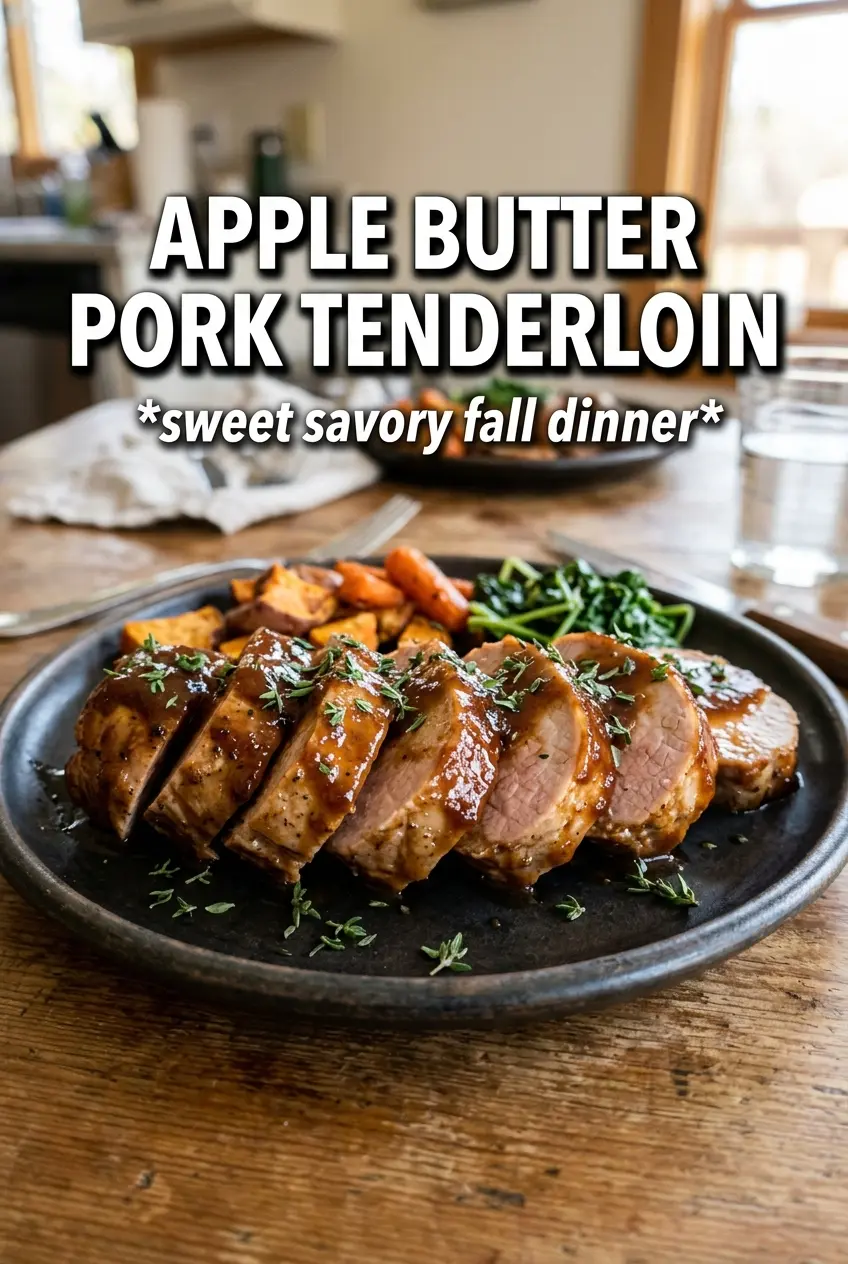
Slow Cooker Apple Butter Glazed Pork Tenderloin
Ingredients
Equipment
Method
- Season the pork tenderloin all over with salt and black pepper, ensuring it’s evenly coated for consistent flavor.
- Whisk together apple butter, Dijon mustard, apple cider vinegar, soy sauce, minced garlic, cinnamon, and nutmeg until smooth and glossy.
- Place the pork in the slow cooker and pour apple cider or chicken broth around it.
- Brush the apple butter glaze generously all over the surface of the pork so the top is well covered.
- Cook on low for 4–5 hours or on high for 2–2.5 hours until the internal temperature reaches 145°F; watch for bubbling simmer around the pork when cooking on high.
- Let the pork rest for 5 minutes so the juices redistribute before slicing.
- Spoon the remaining sauce from the slow cooker over the sliced pork and garnish with fresh thyme for a fresh, fragrant finish.


