
Slow Cooker Beef Ragu turns a tough chuck roast into a pot of deep, silky sauce and spoon-tender beef that clings to every ribbon of pasta. After a long cook, the tomatoes mellow, the wine loses its sharp edge, and the beef shreds into thick strands that feel like they belong in the sauce instead of sitting on top of it. It’s the kind of dinner that tastes like it took all day because it did, but the slow cooker does the heavy lifting.
What makes this version work is the balance between richness and acidity. Chuck roast has enough fat and connective tissue to stay juicy through a long simmer, while crushed San Marzano tomatoes give the sauce body without turning it watery. The wine cooks down with the aromatics and leaves behind depth, not a boozy bite, and a small amount of sugar takes the edge off the tomatoes without making the ragu taste sweet.
Below, I’ve included the one step that keeps the beef from tasting flat, the ingredient swaps that still give you a proper ragu, and the best way to reheat leftovers without drying out the meat.
The beef came out fall-apart tender and the sauce had that slow-cooked, restaurant-style depth after just one day. I served it over pappardelle and my husband asked if there was enough for leftovers before he even finished dinner.
Save this slow cooker beef ragu for the nights when you want deeply savory sauce, fall-apart beef, and almost no hands-on work.
The Part That Keeps the Sauce from Tasting Flat
The biggest mistake with slow cooker ragu is treating it like a dump-and-go stew. Beef chuck needs enough time to break down, but the sauce also needs a strong base or the finished dish tastes muddy instead of layered. That’s why the onion, carrot, celery, garlic, tomato paste, wine, and herbs all go in together here: they build a proper soffritto-style foundation before the beef has time to surrender.
Tomato paste matters more than it looks like it should. It gives the sauce concentration and a little caramelized depth so the finished ragu coats pasta instead of sliding off it. The bay leaves do quiet work in the background too; if you skip them, the sauce still works, but it loses that subtle savory edge that makes the whole pot taste finished.
What Each Ingredient Is Actually Doing in This Ragu
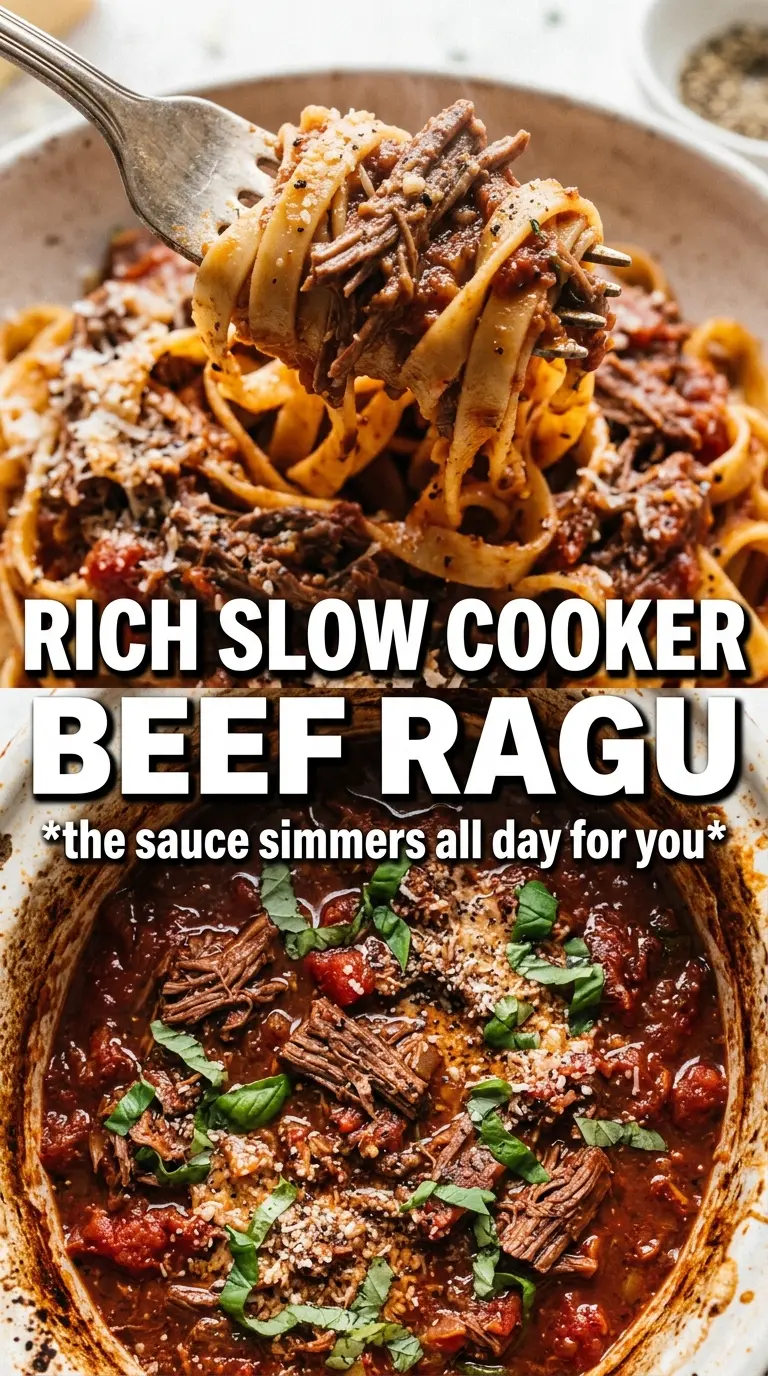
- Beef chuck roast — This is the cut that makes the dish work. It has enough connective tissue to turn silky and shreddable after a long cook, while leaner beef would dry out or taste stringy by the end.
- San Marzano crushed tomatoes — Use a good canned tomato here if you can. Better tomatoes mean a cleaner, sweeter sauce with less tinny acidity, and crushed tomatoes give you body without needing extra reduction.
- Dry red wine — Chianti or Cabernet Sauvignon gives the ragu backbone and depth. If you need to skip it, use beef broth plus a teaspoon of red wine vinegar, but the flavor will be a little less complex and a little softer.
- Tomato paste — This is the concentration step in the ingredient list. It gives the sauce a deeper color and helps the finished ragu cling to pasta instead of pooling underneath it.
- Carrot, celery, and onion — These aren’t just filler. They melt into the sauce over the long cook and create sweetness, savoriness, and structure all at once.
- Freshly grated Parmesan for serving — Pre-grated cheese won’t melt as cleanly or taste as sharp. Use the real stuff at the end; it finishes the sauce instead of muddying it.
How to Build the Slow Cooker Ragu So It Tastes Braised, Not Boiled
Season the Beef First
Season the chuck roast generously with salt and black pepper before it goes into the slow cooker. That first layer of seasoning matters because the meat spends hours in a closed pot, and it needs to be seasoned from the start rather than corrected at the end. If the beef looks pale and under-seasoned before cooking, the finished ragu usually tastes the same way.
Mix the Sauce Before It Meets the Meat
Whisk the tomatoes, wine, tomato paste, garlic, onion, celery, carrots, herbs, and sugar together before pouring them over the beef. That keeps the tomato paste from clumping and spreads the aromatics evenly through the pot. If the vegetables sit in one corner, they’ll steam unevenly and the sauce won’t develop the same deep, unified flavor.
Let Time Do the Work
Cook on low for 8 to 10 hours until the beef gives up without resistance. You’re looking for meat that shreds with a fork, not meat that just slices apart. If it still feels tight in the center, it needs more time; pulling it early leaves you with chewy strands instead of that soft, saucy texture you want in ragu.
Shred the Beef Back into the Sauce
Lift the beef out, discard the bay leaves, and shred the meat into large pieces with two forks. Return it to the sauce and stir it through so the beef absorbs the tomato mixture instead of sitting dry on top of the pasta. Larger shreds hold up better than tiny bits, which can disappear into the sauce and lose that satisfying, meaty texture.
How to Adapt This for Different Tables and Different Pantries
Make It Gluten-Free Without Changing the Sauce
The ragu itself is naturally gluten-free, so the only real change is the pasta. Serve it over gluten-free rigatoni or pappardelle, and cook the pasta just to al dente so it can hold up under the sauce. Overcooked gluten-free pasta softens fast once it’s coated.
Skip the Wine and Keep the Depth
Replace the wine with beef broth and 1 teaspoon red wine vinegar or balsamic vinegar. That keeps the sauce from tasting flat, though it won’t have quite the same round, braised flavor. Add the acid sparingly; too much makes the tomatoes taste sharp instead of rich.
Use a Different Pasta Shape
Pappardelle gives you the most elegant bite because the wide ribbons trap the shredded beef, but rigatoni works when you want something sturdier. Short pasta catches the bits of carrot and onion in the sauce, while wide pasta gives you more of that silky, twirled forkful effect. Either one works as long as you cook it separately and toss it with the sauce at the end.
Storage and Reheating
- Refrigerator: Store the ragu for up to 4 days. The flavor gets even better on day two, and the sauce will thicken as it chills.
- Freezer: It freezes well for up to 3 months. Cool it completely first, then portion it into airtight containers with a little extra sauce around the beef so it doesn’t dry out.
- Reheating: Reheat gently on the stove over low heat with a splash of water or broth. The common mistake is blasting it over high heat, which tightens the beef and makes the sauce taste dull.
Answers to the Questions Worth Asking
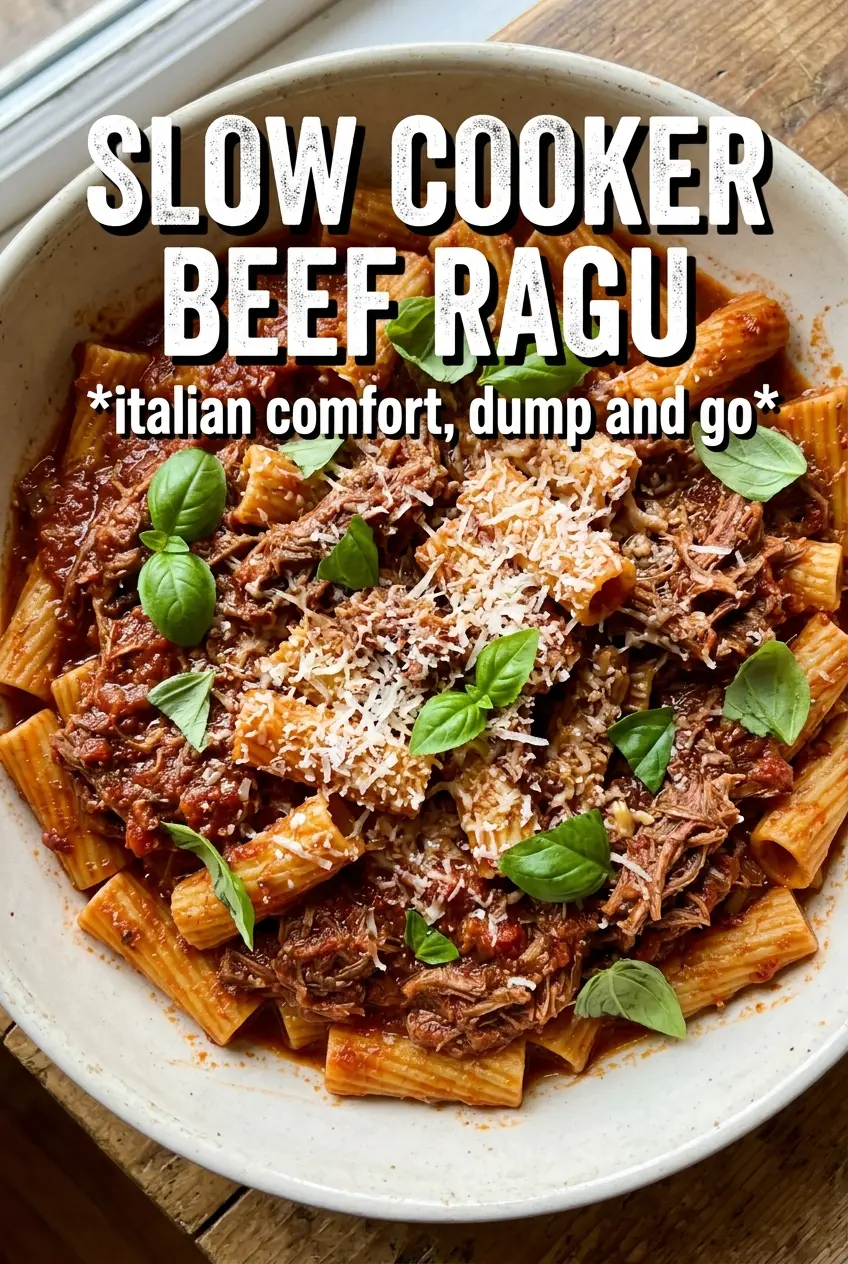
Slow Cooker Beef Ragu
Ingredients
Equipment
Method
- Season the beef chuck roast generously with salt and pepper, then place it in the slow cooker.
- Arrange the beef so it sits flat in a single layer to help it cook evenly.
- Whisk together the crushed San Marzano tomatoes, red wine, tomato paste, garlic, onion, celery, carrots, dried basil, dried oregano, dried thyme, sugar, salt, and black pepper until evenly combined, about 1 minute.
- Pour the sauce mixture over the beef in the slow cooker, then add the bay leaves.
- Cook on low for 8–10 hours, until the beef is completely fall-apart tender.
- Check near 8 hours by pulling at the center of the roast; it should shred easily with pressure.
- Remove the beef, shred it into large pieces with two forks, then discard the bay leaves.
- Return the shredded beef to the sauce and stir to combine until glossy and well coated.
- Serve the beef ragu over pappardelle or rigatoni.
- Garnish each bowl with fresh basil and freshly grated Parmesan.


