Spezzatino turns a simple beef stew into something with a deeper, rounder flavor: tender chunks of beef, soft potatoes, and a tomato-wine broth that tastes like it spent all day on the stove. The beef stays intact but gives easily with a spoon, and the potatoes catch just enough of the sauce to make every bite feel complete. It’s the kind of stew that gets better as it sits, which is why I’m always glad to have leftovers.
The key is building flavor in layers instead of dumping everything into the pot at once. Browning the floured beef first gives the stew body, and the wine needs time to reduce before the tomatoes and broth go in or the final sauce can taste flat. I also like adding the potatoes later, after the beef has already had time to turn tender, so they hold their shape instead of dissolving into the pot.
Below you’ll find the small details that matter here: when the wine is reduced enough, how to keep the stew from turning muddy, and a few useful swaps if you need to work with what’s in the kitchen.
The beef went meltingly tender and the sauce thickened up beautifully after the wine reduced. I served it with bread for soaking and my husband went back for seconds before I even sat down.
Save this Spezzatino for the kind of night when you want tender beef, potatoes, and rosemary tomato gravy with bread for dipping.
The Browning Stage Is Where the Flavor Starts
Spezzatino can taste flat if the beef never gets real color. The flour coating helps the meat take on a deeper crust and later gives the sauce a little body, but that only works if the cubes are browned in batches instead of crowded into one steaming layer. If the pan looks wet, wait. You want the beef to sizzle when it hits the oil, and you want the browned bits left behind in the pot.
The wine matters here too. It shouldn’t just warm through; it needs to reduce until the sharp alcohol smell is gone and the liquid looks syrupy at the edges. That’s the point where it starts tasting like part of the sauce instead of a splash added on top. Scraping up the bottom of the pan while it reduces pulls all that browned flavor back into the stew.
What Each Ingredient Is Actually Doing in the Pot
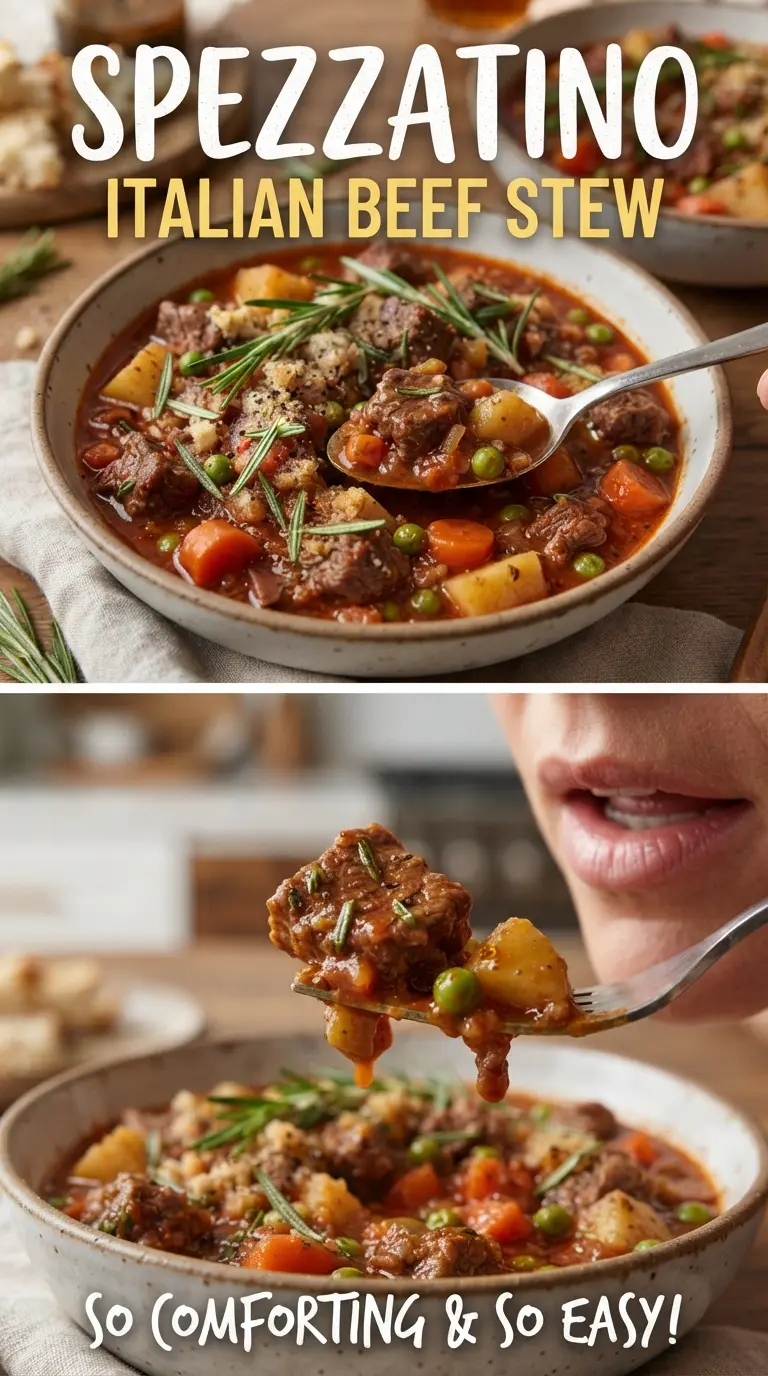
- Beef chuck — This is the cut that turns silky after a long simmer. Leaner beef won’t give you the same rich texture, because chuck has enough connective tissue to melt into the sauce.
- Dry red wine — This adds depth and a little acidity that keeps the stew from tasting heavy. Use something you’d drink, not cooking wine; the reduction concentrates whatever is in the glass.
- Crushed tomatoes — They give the stew its red base without making it thick like marinara. If you use diced tomatoes, the sauce stays chunkier and a little looser.
- Potatoes — Add them late so they stay intact. Waxy potatoes hold their shape best, but regular Yukon golds work well and soak up the broth nicely.
- Frozen peas — They go in at the end for color and sweetness. Don’t add them early or they’ll lose their bright green color and turn dull.
- Rosemary and bay leaves — These are the backbone of the stew’s aroma. Fresh rosemary gives the cleanest flavor here, but if you only have dried rosemary, use less and crush it between your fingers before it goes in.
The Simmer That Turns Tough Beef into Stew
Cooking the Aromatics First
Once the beef is out of the pot, the onion, carrot, and celery go into the same oil and browned bits. Cook them until the onion looks soft and the carrot loses its raw edge, because that’s what builds the sweet base under the tomatoes. Garlic only needs a minute; if it goes in too early, it can turn bitter during the long simmer.
Reducing the Wine
Pour the wine into the hot pot and let it bubble hard enough to loosen the stuck-on bits from the bottom. Keep cooking until it’s reduced by about half and the smell turns rounded instead of sharp. If you rush this stage, the finished stew can taste boozy instead of rich.
Long Simmer, Then the Potatoes
After the tomatoes, broth, rosemary, bay leaves, and beef go in, the stew needs steady low heat and a covered pot. You want a lazy simmer, not an aggressive boil, or the beef tightens instead of softening. Add the potatoes only after the beef has had plenty of time, then let them cook just until a knife slides in without breaking them apart.
The Final Five Minutes
The peas go in at the end because they only need heat to warm through. Stir them in once the potatoes are tender, then pull the rosemary and bay leaves before serving. Taste the sauce at the end; if it needs brightness, a small pinch more salt wakes it up better than extra cooking ever will.
How to Adapt This Stew When You Need a Swap
Gluten-Free Version
Skip the all-purpose flour and brown the beef without it, or coat it lightly with cornstarch instead. The stew will still thicken from the potatoes and reduction, but the sauce will be a touch looser and more brothy.
No Wine in the House
Use extra beef broth with 1 tablespoon of red wine vinegar or balsamic vinegar stirred in at the end. You’ll lose some of the deep winey note, but the vinegar gives back the lift the stew needs.
Vegetable Variation
Swap the beef for big cubes of mushrooms, cauliflower, and cannellini beans if you want a meatless version. It won’t taste like the original, but it keeps the same tomato-herb backbone and still eats like a proper stew.
Storage and Reheating
- Refrigerator: Keeps for 4 days in a covered container. The sauce gets even better overnight, and the potatoes soften a bit more.
- Freezer: Freezes well for up to 3 months, though the potatoes can turn slightly softer after thawing. For the best texture, freeze in portions and cool completely before packing.
- Reheating: Warm it gently on the stove over low heat with a splash of broth if it has thickened too much. High heat can make the beef stringy and can break the potatoes apart.
Answers to the Questions Worth Asking
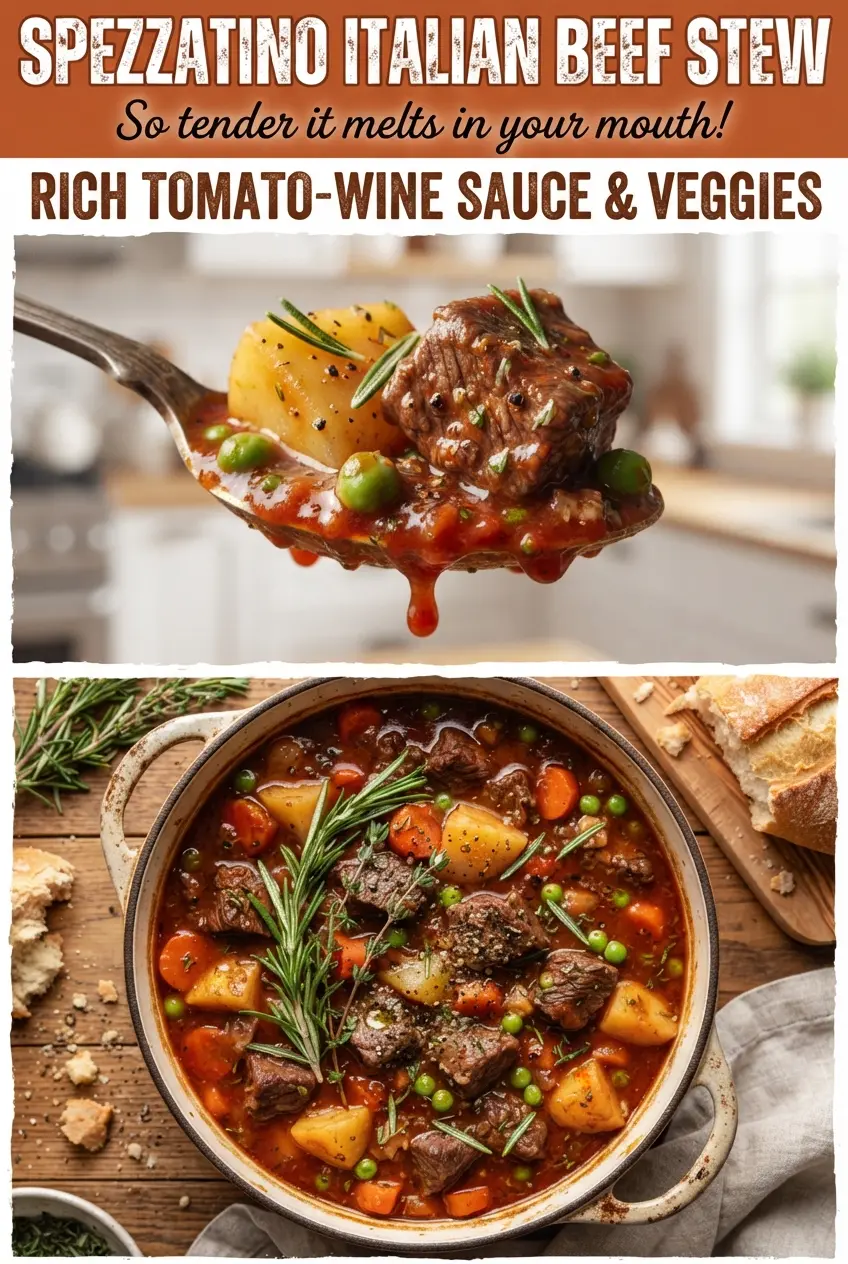
Spezzatino Italian Beef Stew
Ingredients
Equipment
Method
- Season the beef with salt and black pepper, then dust with all-purpose flour. Brown the beef in batches in olive oil until deeply browned, then transfer to a plate.
- Keep the heat at medium-high so the oil stays active but doesn’t burn the flour. Use multiple batches if needed to avoid steaming and uneven browning.
- In the Dutch oven, cook the onion, carrot, and celery for 8 minutes until soft. Add the garlic and cook for 1 minute.
- Pour in the dry red wine and simmer until reduced by half, scraping the bottom of the pot to loosen browned bits.
- Add the crushed tomatoes, beef broth, rosemary, bay leaves, and the browned beef. Cover and simmer at a gentle bubble for 1 1/2 hours, stirring once or twice to prevent sticking.
- Add the cubed potatoes and simmer until tender for 40 minutes, stirring occasionally. The stew should thicken as the potatoes break down slightly.
- Stir in the frozen peas during the last 5 minutes to heat through. Remove the rosemary and bay leaves before serving.
- Serve the spezzatino hot with crusty Italian bread on the side. Taste and adjust seasoning if needed before ladling into bowls.