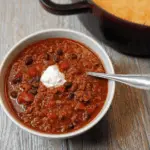
Rich tomato broth, crumbled sausage, and ribbons of lasagna noodles make this stovetop lasagna soup taste like a full pan of lasagna without the layering, baking, or waiting. The broth turns savory and a little silky from the tomato paste and sausage drippings, then the cheese dollop melts into the bowl and gives you that creamy, stretchy finish that makes each spoonful feel complete.
What makes this version work is the order. The sausage browns first so the pot starts with real depth, then the tomato paste cooks briefly with the onion and garlic to lose its raw edge. Broken lasagna noodles go in near the end, so they stay tender instead of bloating into mush while you wait for dinner.
You’ll find a few smart ways to keep the noodles from overcooking, plus the best way to serve the ricotta-mozzarella topping so it looks as good as it tastes.
The broth was rich without being heavy, and the noodles stayed perfectly tender after 10 minutes. I loved how the ricotta and mozzarella melted into the soup instead of sitting on top in a clump.
Save this stovetop lasagna soup for the nights when you want all the comfort of lasagna in one pot and under 30 minutes.
The Noodle Timing That Keeps This Soup Soupy, Not Starchy
The biggest mistake with lasagna soup is treating the noodles like pasta you can leave alone. Broken lasagna sheets thicken the broth fast, and if they simmer too long they turn soft in the middle and sticky at the edges. Add them only after the broth is fully boiling, then keep the pot at a steady simmer and stir often so the pieces don’t glue themselves together.
That short cooking window matters because this is a soup that keeps moving after it comes off the heat. The noodles will continue to soften in the hot broth, so pull the pot once they’re just tender, not after they’ve gone fully floppy. If you know you’ll have leftovers, the best fix is to cook the noodles just shy of done or keep them separate and add them to each bowl.
What Each Ingredient Is Actually Doing In The Pot
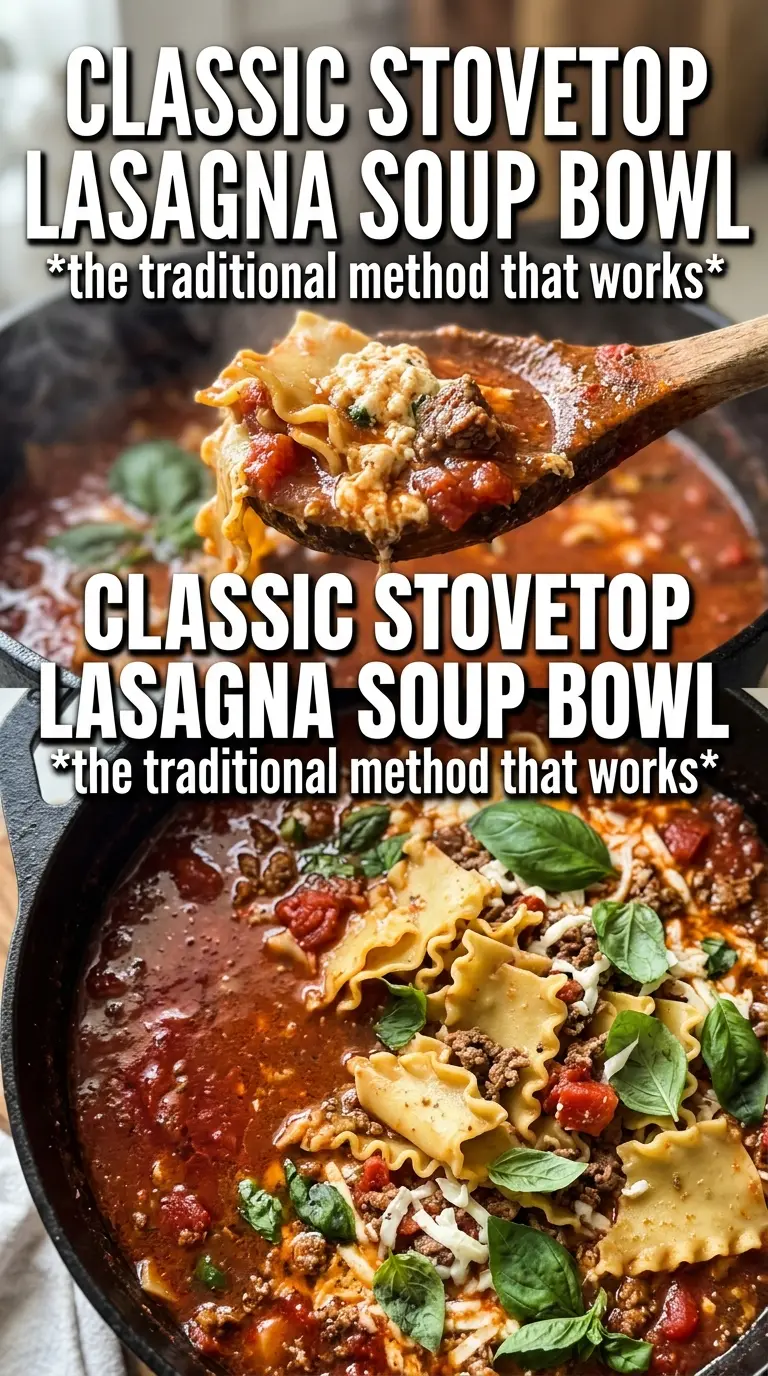
- Italian sausage — This is the backbone of the soup. It seasons the broth as it browns, and the little bits stuck to the pot turn into flavor once the tomatoes and broth go in. Mild or hot both work; hot sausage gives the pot more bite without needing extra red pepper flakes.
- Tomato paste — Don’t skip the minute or two of cooking here. That step removes the raw, tinny edge and deepens the broth so it tastes cooked, not just mixed together.
- Crushed tomatoes and fire-roasted diced tomatoes — The crushed tomatoes give you body, while the diced tomatoes leave little pockets of texture. Fire-roasted tomatoes are worth using if you have them because they bring a faint smoky note that makes the soup taste fuller.
- Ricotta, mozzarella, and parmesan — The ricotta gives creaminess, the mozzarella gives stretch, and the parmesan sharpens the whole bowl. Fresh basil stirred into the topping or scattered on top keeps it from tasting heavy.
- Lasagna noodles — Regular dry noodles are perfect here. Break them into uneven pieces so the bowl feels rustic and spoonable; exact sizes aren’t important, but pieces too small will disappear into the broth.
Building The Broth Before The Noodles Go In
Browning The Sausage
Heat the pot over medium-high and cook the sausage until it’s deeply browned in spots and no pink remains. Break it up as it cooks, but leave a few larger crumbles for texture. If you rush this stage and steam the meat instead of browning it, the broth ends up flatter and less savory.
Cooking Out The Tomato Paste
Add the onion, then stir in the garlic and tomato paste once the onion starts to soften. Cook for a minute or two until the paste darkens slightly and smells sweeter. That quick step builds depth, and it also keeps the garlic from tasting sharp once the soup simmers.
Simmering The Tomato Base
Pour in the crushed tomatoes, diced tomatoes, broth, and dried herbs, then bring everything to a full boil before the noodles go in. The boil matters because it gives the noodles an even start and helps the broth thicken a little as they cook. Once the noodles are added, drop the heat to maintain a steady simmer and stir often so they don’t settle and clump at the bottom.
Finishing For The Bowl
Cook until the noodles are just tender, then season with salt and pepper right at the end. Ladling too early leaves the noodles underdone, while letting the pot sit on the heat too long turns the broth into a heavy, pasta-like stew. Serve immediately with a big spoonful of the cheese mixture so it melts into the hot soup instead of sitting cold on top.
How To Adapt This When You’re Out Of Sausage Or Need A Lighter Bowl
Ground turkey or chicken instead of sausage
Use lean ground turkey or chicken and add a little extra Italian seasoning plus a pinch more salt. You’ll lose some richness, so brown the meat well and don’t skip the tomato paste step; that’s what keeps the soup from tasting thin.
Gluten-free version with gluten-free pasta
Use a sturdy gluten-free lasagna-style pasta if you can find it, or another short gluten-free pasta with similar cook time. Keep a close eye on it, because many gluten-free noodles soften quickly and can break apart if they sit in the hot broth too long.
Dairy-free bowl with a savory finish
Skip the ricotta and mozzarella topping and finish each bowl with a drizzle of olive oil and a handful of basil. The soup itself is already dairy-free if you leave off the cheese, and the tomato-sausage base still tastes complete because the broth is built with browned meat and herbs.
Storage and Reheating
- Refrigerator: Store for up to 4 days. The noodles will keep absorbing broth, so expect a thicker soup the next day.
- Freezer: Freeze the broth and sausage without the noodles for best texture. Cook fresh noodles when you reheat, or the pasta will turn soft and grainy after thawing.
- Reheating: Warm gently on the stovetop over medium-low, adding a splash of broth or water to loosen it. High heat can make the noodles break apart and can make the dairy topping separate if you stir it in too early.
Answers To The Questions Worth Asking

Stovetop Lasagna Soup
Ingredients
Equipment
Method
- Heat a large Dutch oven or pot over medium-high heat, then brown and crumble the Italian sausage. Drain off excess fat so the soup isn’t greasy.
- Add the diced onion and cook for 3 minutes, stirring occasionally. Stir in the minced garlic and tomato paste, then cook 1–2 minutes until fragrant.
- Pour in the crushed tomatoes, fire-roasted diced tomatoes, and chicken or beef broth, then stir in the Italian seasoning, dried basil, dried oregano, and red pepper flakes. Keep stirring to evenly distribute the spices.
- Bring the soup to a full boil over high heat, then add the broken lasagna noodles. Make sure the noodles are submerged so they cook evenly.
- Reduce to a steady simmer and cook 10–12 minutes, stirring often, until the noodles are just tender. If needed, simmer a minute longer for al dente noodles.
- Season the soup with salt and pepper to taste. Serve immediately with a dollop made from ricotta, mozzarella, and parmesan topped with fresh basil.