
Vegan mashed potatoes need to be fluffy, creamy, and rich enough that nobody misses the butter-and-cream version. The best ones don’t taste like a compromise; they taste like a bowl of smooth, savory potatoes with just enough body to hold a little swirl on top. Yukon golds give you that naturally buttery texture, and when they’re mashed while still hot with warm plant milk, the result is light instead of gluey.
What makes this version work is the timing. Draining the potatoes well and returning them to the warm pot for a minute dries off the surface starch, which keeps the mash from turning pasty. Warm oat milk or almond milk blends in cleanly, and nutritional yeast adds the rounded, almost-cheesy depth that keeps the flavor from falling flat. Vegan butter carries the richness, but the potatoes still taste like potatoes first.
Below you’ll find the small details that make a difference, including the best potato choice, the reason to warm the milk, and a few smart swaps if you need to work with what’s in your kitchen.
The potatoes turned out silky and held up beautifully when I reheated them the next day. Warming the oat milk first made a bigger difference than I expected, and the nutritional yeast gave them that savory finish without tasting “vegan.”
Save these creamy vegan mashed potatoes for the side dish that stays fluffy, savory, and dairy-free.
The Reason Potato Mash Turns Gluey, and How This One Stays Light
Gluey mashed potatoes usually come from two mistakes: too much mixing and not enough drying. Once potatoes are fully tender, they only need enough force to break apart and combine with the fat and liquid. If you beat them aggressively, the starch gets overworked and the texture turns sticky instead of fluffy.
This recipe avoids that by using warm potatoes, warm milk, and a brief stint back on the burner after draining. That extra minute matters because water left clinging to the potatoes is the enemy of a clean, creamy mash. Yukon golds help too; they’re waxier and naturally buttery, so they mash smooth without needing a ton of liquid.
- Yukon gold potatoes — These are the best choice here because they stay creamy without turning stringy or watery. Russets work, but they make a drier, fluffier mash that needs a little more fat and careful handling.
- Vegan butter — This gives the potatoes their rich finish and helps the mash emulsify. Use a brand you actually like eating on toast; the flavor carries through.
- Warm oat milk or almond milk — Cold milk cools the potatoes down and makes them seize up a little. Warm it first so it blends in smoothly and keeps the texture silky.
- Nutritional yeast — This brings a savory depth that makes the mash taste rounded instead of flat. It doesn’t replace cheese, but it adds the same kind of background savoriness that people notice even if they can’t name it.
What Each Ingredient Is Actually Doing in the Bowl
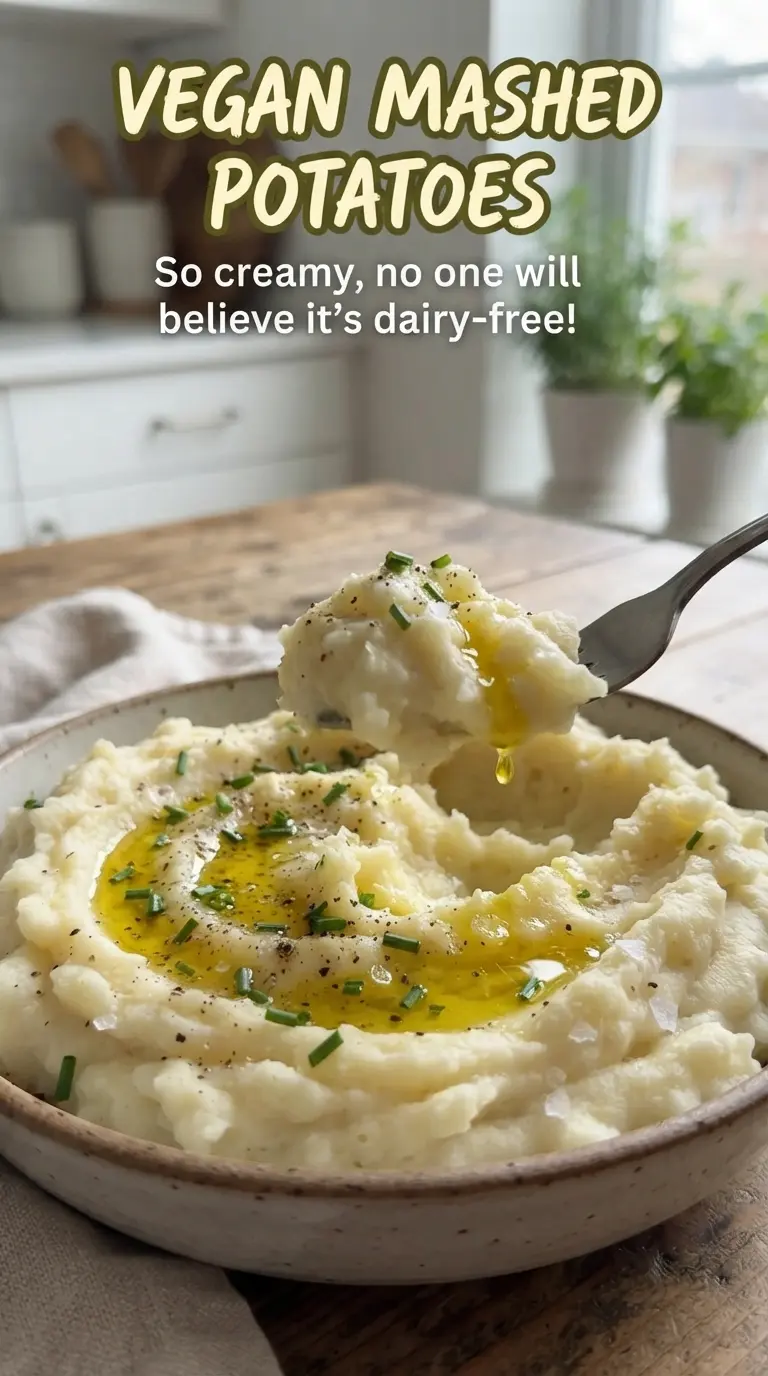
- Yukon gold potatoes — Their naturally creamy texture gives you a smooth mash with less effort and less added fat. Peel them if you want the softest result; leaving the skins on makes the mash a little more rustic and less silky.
- Vegan butter — This coats the potato starch and gives the finished mash body. Add it while the potatoes are still hot so it melts in fully before the milk goes in.
- Warm oat milk or almond milk — Oat milk makes the most neutral, creamy result, while almond milk is a little lighter. Either works, but unsweetened matters; sweetened plant milk will throw off the savory balance.
- Nutritional yeast — This is the ingredient that makes the flavor feel complete. If you skip it, the potatoes are still creamy, but they lose some of that deep savory note.
- Garlic powder — Fresh garlic can overpower a simple mash and bring texture you don’t want here. Garlic powder spreads evenly and keeps the finish smooth.
Building the Creaminess Without Overmixing
Boil Until the Centers Give Way Cleanly
Start the potatoes in well-salted water and cook them until a knife slides through with no resistance, usually 15 to 18 minutes. If some cubes are much larger than others, the smaller ones will collapse before the bigger ones are ready, so keep the pieces close in size. Drain them thoroughly the moment they’re tender.
Dry the Potatoes Before the Fat Goes In
Put the drained potatoes back in the hot pot over low heat for about a minute. You’ll see steam rising and the surface moisture disappearing. That step keeps the mash from getting watery and helps the butter cling to the potatoes instead of pooling at the bottom.
Finish with Warm Dairy-Free Ingredients
Mash in the vegan butter first, then stir in the warm plant milk, nutritional yeast, garlic powder, salt, and pepper. Stop once the potatoes are smooth and creamy. If you keep working them after they’ve come together, they’ll tighten up and lose the fluffy texture you worked for.
Top and Serve While the Texture Is at Its Best
Chives give the bowl a fresh bite and a little color contrast. Add them at the end so they stay bright instead of wilted. If the mash looks a touch thick, stir in a splash more warm milk, not cold milk, which can make the potatoes stiffen again.
How to Adapt These Mashed Potatoes for Different Tables
Extra-Rich Version
Use oat milk instead of almond milk and add an extra tablespoon of vegan butter. Oat milk has a little more body, so the potatoes taste fuller and more luxurious without becoming heavy.
Garlic-Herb Version
Stir in a spoonful of finely chopped chives, parsley, or roasted garlic at the end. Roasted garlic gives the mash a sweeter, deeper flavor than garlic powder, but it also makes the texture a little more rustic.
Gluten-Free and Dairy-Free as Written
This recipe already fits both needs as long as your vegan butter and nutritional yeast are certified gluten-free if that matters for your kitchen. The texture stays the same, so there’s no trade-off here.
Storage and Reheating
- Refrigerator: Store in an airtight container for up to 4 days. The potatoes will firm up as they chill.
- Freezer: They freeze well for up to 1 month, though the texture softens a little after thawing. Freeze in portions so you can reheat only what you need.
- Reheating: Warm gently on the stove with a splash of plant milk, stirring over low heat until creamy again. High heat can make the mash dry on the edges before the center loosens.
Answers to the Questions Worth Asking
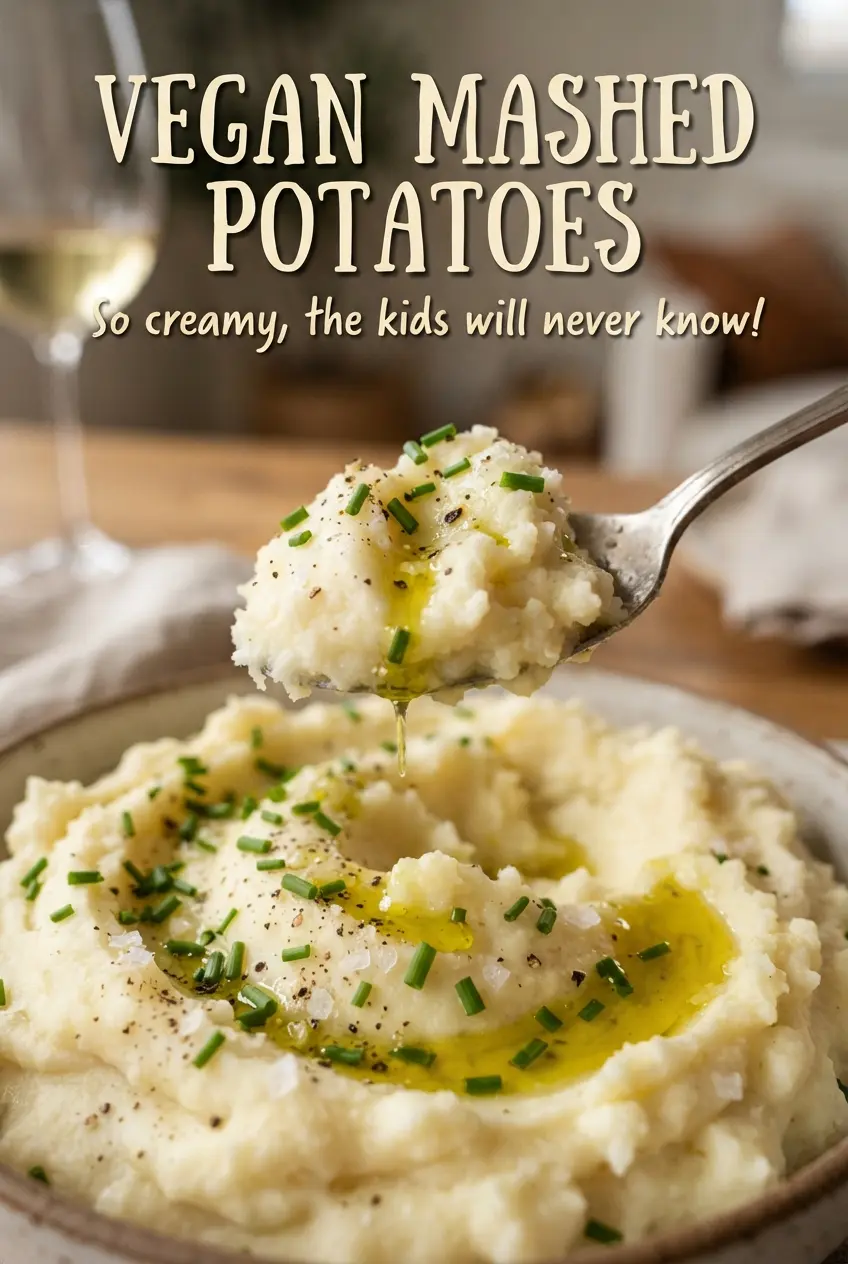
Vegan Mashed Potatoes
Ingredients
Equipment
Method
- Bring a pot of salted water to a boil, then add peeled and cubed Yukon gold potatoes and boil for 15-18 minutes until tender. Visual cue: a fork should slide in easily through the cubes.
- Drain the potatoes well, then return them to the pot over low heat for 1 minute to dry out. Visual cue: you should see light steaming with the surface looking less wet.
- Mash the potatoes with vegan butter until smooth. Visual cue: the mixture should look creamy with no large lumps.
- Stir in warm unsweetened oat milk or almond milk, nutritional yeast, and garlic powder until creamy. Visual cue: the mash should loosen to a silky, even consistency.
- Season with salt and black pepper, then top with fresh chives. Visual cue: visible green chive flecks on the surface.


