Ingredients
Equipment
Method
Fry the bacon
- Cook the chopped bacon in a large cast iron skillet over medium heat for 8 minutes, stirring until crisp. Visual cue: bacon pieces look browned and slightly crunchy with drippings left in the skillet.
- Remove the bacon to a plate, leaving the drippings in the skillet. Visual cue: you should see a thin layer of rendered fat coating the skillet surface.
Cook the onion and garlic
- Add the sliced onion to the skillet and cook for 5 minutes, stirring occasionally, until softened. Visual cue: onion turns translucent and glossy.
- Stir in the minced garlic and cook for 30 seconds. Visual cue: garlic smells fragrant but does not brown.
Caramelize the cabbage
- Add chopped cabbage along with butter, salt, black pepper, red pepper flakes, and sugar. Stir until cabbage is coated and begins to wilt.
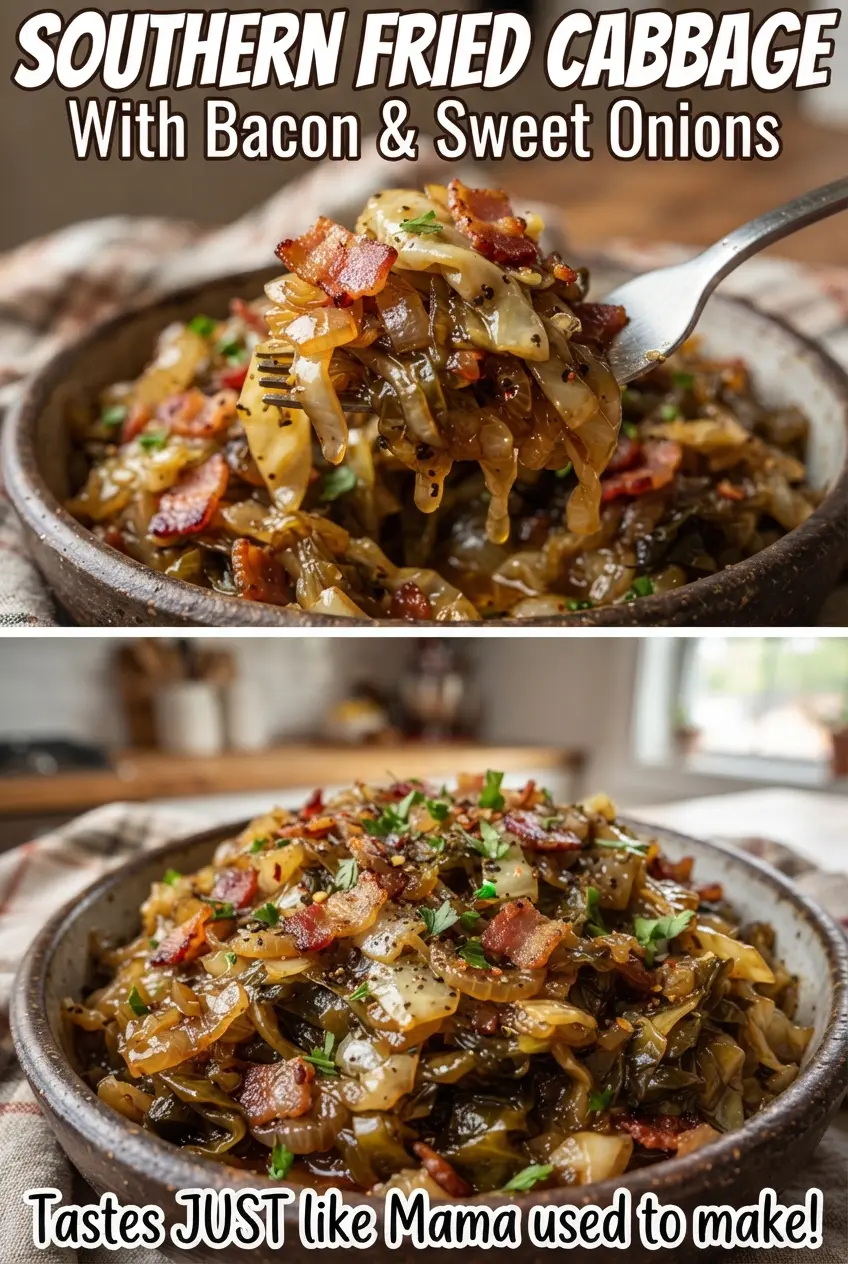
- Cook for 12-15 minutes, stirring occasionally, until the cabbage is tender and caramelized at the edges. Visual cue: browned, golden patches form on the cabbage, especially along skillet contact points.
Finish and serve
- Stir in the apple cider vinegar and mix until evenly distributed. Visual cue: the cabbage looks brighter and the sizzling aroma becomes sharper.
- Stir in the crispy bacon and serve warm. Visual cue: bacon pieces are scattered throughout and cabbage is hot and slightly glossy.
Notes
Pro tip: don’t over-stir during the caramelization stage—letting cabbage sit briefly in contact with the pan helps those golden edges. Store leftovers in the refrigerator up to 4 days; reheat in a skillet over medium-low until warmed through. Freezing is not recommended because cabbage texture softens. For a lighter option, use turkey bacon or reduce to 3 slices bacon while keeping the same drippings method.