
Southern fried cabbage turns simple cabbage into something worth putting on repeat: tender, silky strands with browned edges, smoky bacon, sweet onion, and just enough vinegar at the end to keep every bite lively. It cooks down fast, fills the skillet with the kind of savory smell that pulls people into the kitchen, and lands on the plate with a texture that sits right between soft and lightly crisp.
What makes this version work is the order. The bacon drippings season the whole dish from the start, the onion gets time to soften before the cabbage goes in, and the butter helps the cabbage take on those caramelized edges without drying out. A small pinch of sugar rounds out the cabbage’s natural bitterness, while the apple cider vinegar at the end wakes everything up instead of letting it taste flat.
Below, I’ve included the timing that keeps the cabbage from turning mushy, plus a few swaps and storage notes if you want to use what’s already in your kitchen.
The cabbage softened without turning watery, and the bacon stayed crisp even after I stirred in the vinegar at the end. My husband asked if I could make it with dinner again the next night.
Save this Southern Fried Cabbage for a skillet side with crispy bacon, sweet onion, and caramelized edges.
The Part Most People Get Wrong: Letting the Cabbage Steam Too Long
The difference between fried cabbage and soft cabbage soup is the pan. If the skillet is crowded or the heat is too low, the cabbage gives off water and steams before it ever has a chance to brown. What you want are hot edges, a little browning on the bottom, and enough stirring to keep things moving without scrubbing away all the color.
Bacon drippings do more than add flavor here; they help the cabbage fry instead of collapse. The butter goes in with the cabbage to soften the bite and carry the seasoning, while the sugar encourages browning without making the dish sweet. That final splash of vinegar matters too, because once cabbage cooks down, it can taste heavy unless you bring back a little sharpness at the end.
What Each Ingredient Is Doing in the Skillet
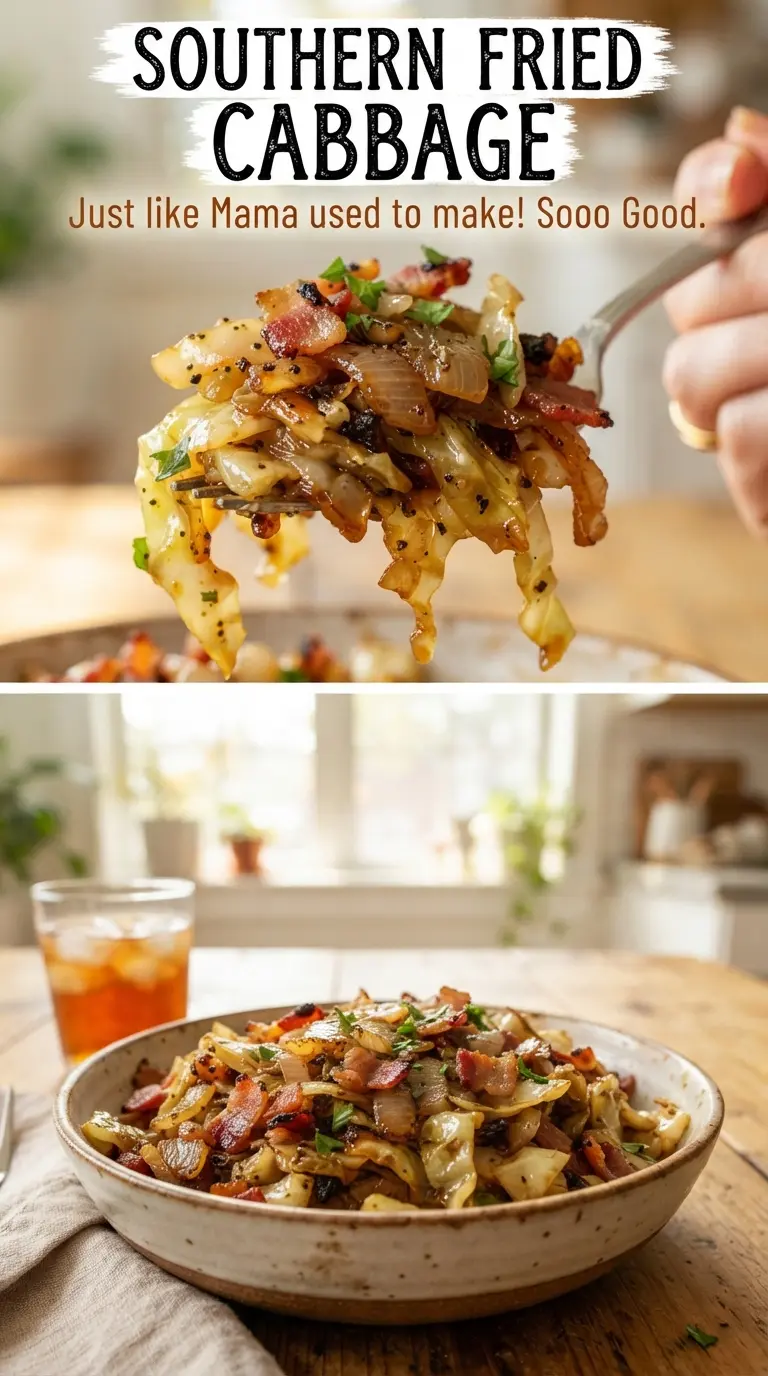
- Bacon — This is the backbone of the dish. It seasons the fat in the pan and gives you the smoky, salty finish that makes the cabbage taste like more than a side vegetable. Thick-cut bacon works too, but it takes a bit longer to crisp.
- Yellow onion — Onion brings sweetness and depth as it softens in the drippings. Slice it thin enough that it melts into the cabbage, not so thick that it stays crunchy. White onion will work in a pinch, but yellow gives a fuller, sweeter base.
- Green cabbage — Fresh, firm cabbage holds its shape and develops those browned edges instead of turning watery. A tight head is worth choosing here. If you use pre-shredded cabbage, it cooks faster and softens more quickly, so watch the skillet closely.
- Apple cider vinegar — This is the bright finish that keeps the dish from tasting heavy. Stir it in off the heat or at the very end so it stays sharp. White vinegar can work, but apple cider vinegar gives a rounder flavor.
- Sugar — Just a teaspoon helps the cabbage caramelize and balances the bite from the vinegar and pepper. It doesn’t make the dish sweet; it smooths the edges.
Building Flavor Without Turning the Cabbage Mushy
Rendering the Bacon
Start the bacon in a cold skillet and let the heat come up gradually. That gives the fat time to render cleanly and helps the pieces crisp instead of seizing up. Pull the bacon when it’s deeply browned and set it aside, but leave the drippings in the pan — that fat is doing the heavy lifting for the rest of the dish.
Softening the Onion and Garlic
Add the sliced onion to the hot drippings and let it cook until it turns translucent and picks up a little color at the edges. If the pan looks dry, the bacon didn’t render enough fat, and the onion can stick; a small knob of butter fixes that without changing the flavor. Garlic goes in only for the last 30 seconds, because it burns fast and turns bitter if it stays in too long.
Cooking the Cabbage Down
Once the cabbage hits the pan, it will look like too much. It isn’t. Stir it to coat everything in fat, then let it sit between stirs so the edges can brown. If you keep moving it nonstop, it will soften but never caramelize; if you walk away too long, the bottom can scorch, especially near the end when the moisture cooks off.
Finishing for Balance
When the cabbage is tender and the edges are golden, stir in the vinegar and bacon. The vinegar should smell sharp for a second, then blend into the bacon and onion so the whole skillet tastes brighter. Taste at the end and adjust salt only if needed, because bacon brings its own saltiness and it’s easy to overshoot.
How to Adapt This Southern Fried Cabbage for Your Kitchen
Make It Without Bacon
Use 2 tablespoons olive oil or butter to cook the onion and cabbage, then add a pinch of smoked paprika for depth. You’ll lose the smoky bacon flavor, but the cabbage still turns tender and savory, and the vinegar finish keeps it from tasting flat.
Low-Carb and Keto-Friendly
This recipe is already naturally low in carbs if you keep the sugar to the listed amount or leave it out. The cabbage gets most of its sweetness from the onion and the browning in the skillet, so you won’t lose the basic structure if you skip the sugar.
Add Sausage for a Heartier Side
Brown sliced smoked sausage after the bacon and before the onion, then build the recipe from there. It makes the dish meatier and a little richer, which works well when you want it to stand in as more than a side.
Storage and Reheating
- Refrigerator: Store in an airtight container for up to 4 days. The cabbage softens a bit more as it sits, but the flavor holds well.
- Freezer: It freezes, but the texture gets softer after thawing. If you do freeze it, cool it completely and use within 2 months for the best result.
- Reheating: Reheat in a skillet over medium-low heat until warmed through. The common mistake is blasting it in the microwave, which makes the cabbage watery and the bacon rubbery.
Answers to the Questions Worth Asking
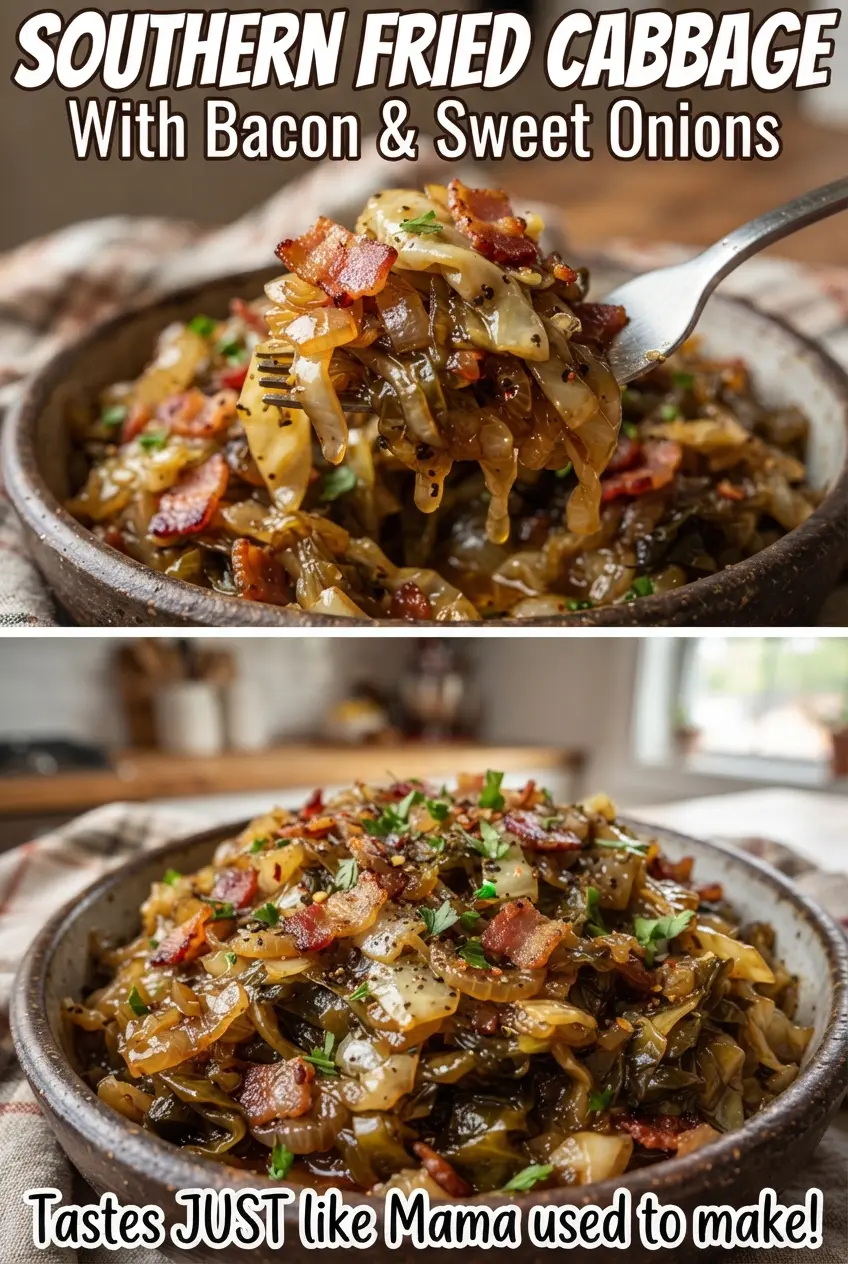
Southern Fried Cabbage
Ingredients
Equipment
Method
- Cook the chopped bacon in a large cast iron skillet over medium heat for 8 minutes, stirring until crisp. Visual cue: bacon pieces look browned and slightly crunchy with drippings left in the skillet.
- Remove the bacon to a plate, leaving the drippings in the skillet. Visual cue: you should see a thin layer of rendered fat coating the skillet surface.
- Add the sliced onion to the skillet and cook for 5 minutes, stirring occasionally, until softened. Visual cue: onion turns translucent and glossy.
- Stir in the minced garlic and cook for 30 seconds. Visual cue: garlic smells fragrant but does not brown.
- Add chopped cabbage along with butter, salt, black pepper, red pepper flakes, and sugar. Stir until cabbage is coated and begins to wilt.
- Cook for 12-15 minutes, stirring occasionally, until the cabbage is tender and caramelized at the edges. Visual cue: browned, golden patches form on the cabbage, especially along skillet contact points.
- Stir in the apple cider vinegar and mix until evenly distributed. Visual cue: the cabbage looks brighter and the sizzling aroma becomes sharper.
- Stir in the crispy bacon and serve warm. Visual cue: bacon pieces are scattered throughout and cabbage is hot and slightly glossy.


