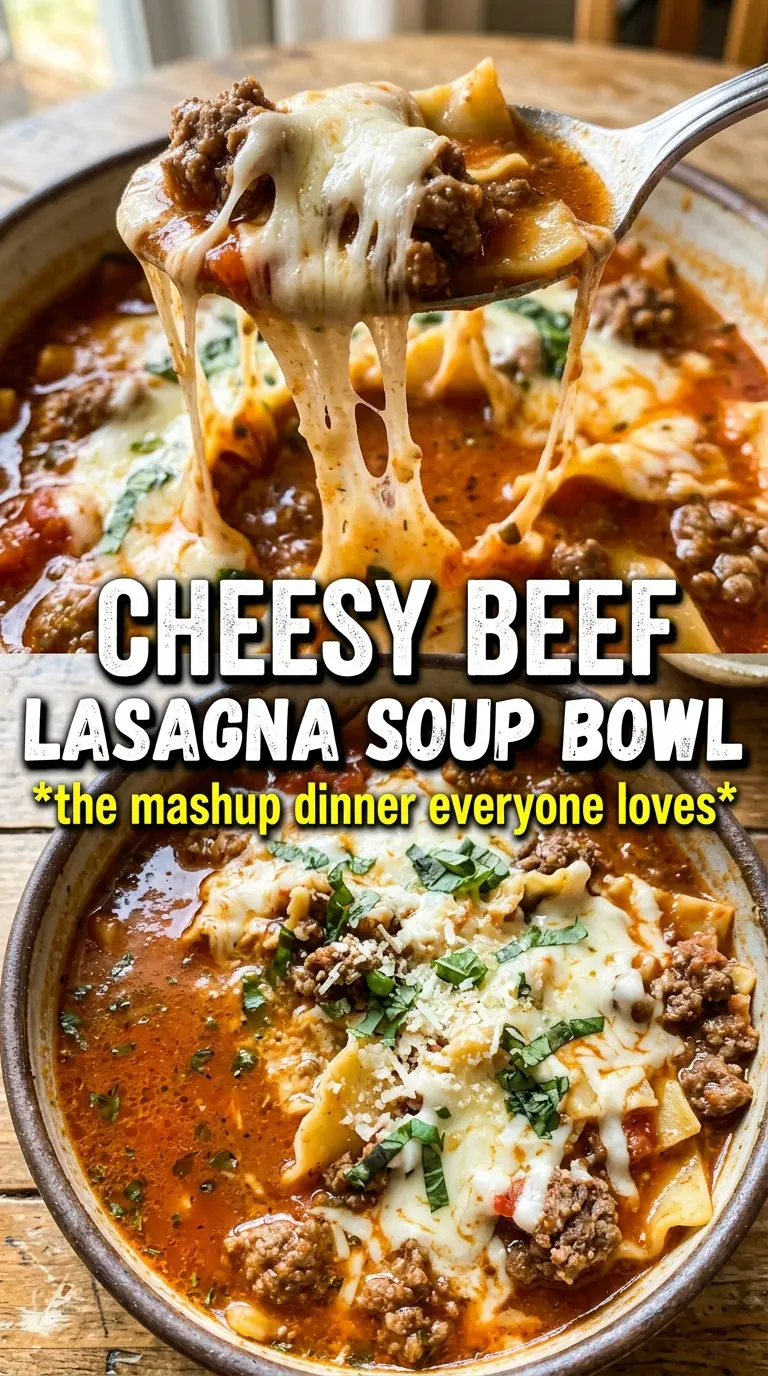
Cheesy ground beef lasagna soup brings all the best parts of a layered pan of lasagna into one deep, savory bowl. You get tender noodles, a rich tomato-beef broth, and that stretchy, creamy cheese finish without standing over a casserole dish or waiting for it to bake. The ricotta dollop on top keeps every spoonful tasting like lasagna, not just tomato soup with pasta in it.
The trick is building enough flavor before the noodles go in. Browning the beef well gives you the base, then tomato paste cooks with the onion and garlic long enough to lose its raw edge and add that slow-cooked taste. The broth stays hearty, not thin, because the crushed tomatoes and cheeses finish the soup in a way that feels rich instead of heavy.
Below, I’ll walk through the part that matters most: keeping the noodles tender, not mushy, and getting the cheese to melt into the soup without turning grainy. I’ve also added a few swaps and storage notes, because this is one of those dinners that earns a spot in the regular rotation fast.
The noodles stayed perfectly tender and the cheese melted into the broth instead of disappearing. I used cheddar like suggested and the ricotta on top made it taste just like lasagna in a bowl.
Save this cheesy ground beef lasagna soup for a cozy one-pot dinner with tender noodles, melty cheese, and a ricotta topping that tastes straight out of a baked lasagna.
The Part That Keeps This Soup from Turning Into Pasta Porridge
The biggest mistake with lasagna soup is treating the noodles like an afterthought. Break them into pieces, then simmer them right in the broth only until they’re tender with a little bite left in the center. If they cook all the way through while the soup is still on the stove, they keep softening as the pot sits and the texture turns heavy fast.
Tomato paste matters here more than people expect. Cooking it with the onion and garlic for a couple of minutes takes the sharp edge off and gives the broth a deeper, almost slow-simmered taste. That’s the difference between a soup that tastes like red sauce with broth added and one that tastes like lasagna you can eat with a spoon.
- Browned ground beef — Don’t rush this part. Let the meat get some color before draining, because those browned bits build the base flavor for the whole pot.
- Broken lasagna noodles — Use standard dry noodles, not oven-ready sheets. The broken edges catch the broth and hold onto the cheese better than small pasta shapes do.
- Ricotta topping — The ricotta gives you the creamy lasagna finish that melts into the hot soup at the table. If you skip it, the dish still works, but it loses the layered lasagna feel.
- Mozzarella and cheddar — Mozzarella gives stretch, while cheddar or American melts into the broth more smoothly. Freshly shredded cheese melts better than pre-shredded, which can go a little grainy.
What Each Ingredient Is Actually Doing in This Recipe
- Primary ingredient (the star) — Quality matters most. Choose the best you can find.
- Cooking medium (oil, butter, or broth) — This carries flavors and prevents dryness.
- Seasonings (salt, pepper, spices, herbs) — Layer flavors so nothing overpowers. Build depth gradually.
- Aromatics (garlic, onion, herbs) — Cook with fat to bloom flavors. Become the foundation.
- Supporting ingredients — Complement the main ingredient without overpowering it.
- Sauce or liquid (if applicable) — Brings flavors together. Balance richness with acid.
- Acid (lemon, vinegar, wine, or other) — Brightens and prevents flat-tasting results.
- Final finish (garnish, glaze, or sauce) — Prevents one-dimensional taste and adds visual appeal.
Building the Pot in the Right Order
Brown the Beef First
Cook the ground beef in a large pot until it’s no longer pink and you see browned spots on the bottom of the pan. That color is flavor, so don’t just gray it out and move on. Drain the excess fat if there’s a lot, but leave a little behind if the meat is very lean, because it helps carry the onion and garlic.
Cook Out the Tomato Paste
Add the onion and cook it until soft and translucent, then stir in the garlic and tomato paste. The paste needs a minute or two against the heat to darken slightly and lose its raw taste. If it sticks a little, that’s good; just keep stirring so it doesn’t scorch.
Simmer the Broth and Noodles
Pour in the tomatoes, broth, and seasonings, then bring everything to a real boil before adding the broken noodles. Once the noodles go in, lower the heat to a steady simmer and cook until they’re tender but not falling apart. If the soup boils hard here, the noodles break down too fast and the broth can get starchy in an uneven way.
Finish with Cheese at Low Heat
Turn the heat down before you add the mozzarella and cheddar. High heat can make melted cheese look stringy and separate instead of turning the soup creamy. Stir slowly until the cheese disappears into the broth, then spoon it straight into bowls and top with the ricotta mixture so it softens from the heat without melting away completely.
How to Make This Soup Fit What You’ve Got
Make it a little lighter
Use ground turkey instead of beef and add a teaspoon of olive oil when you brown it. You’ll lose some richness, so keep the tomato paste and ricotta topping in place to bring some of that body back.
Dairy-free version
Skip the mozzarella, cheddar, and ricotta, then finish each bowl with a drizzle of olive oil and a spoonful of dairy-free cashew cream if you want something creamy on top. The soup still has plenty of flavor from the beef and tomatoes, but it won’t have the same lasagna-like finish.
Gluten-free swap
Use a sturdy gluten-free lasagna noodle or another short gluten-free pasta that can hold up in soup. Cook it just until tender, because many gluten-free pastas soften quickly after the heat is off.
Make it ahead for busy nights
Cook the soup base without the noodles, then add the pasta when you reheat it. That keeps the noodles from soaking up the broth and going soft before you’re ready to eat.
Storage and Reheating
- Refrigerator: Store for up to 4 days. The noodles will keep absorbing broth, so expect the soup to thicken.
- Freezer: Freeze the soup base without noodles or cheese for up to 3 months. Add fresh noodles and cheese after thawing for the best texture.
- Reheating: Warm it gently on the stovetop over low heat with a splash of broth or water. Fast boiling can make the noodles fall apart and can make the cheese separate if it’s already mixed in.
Answers to the Questions Worth Asking
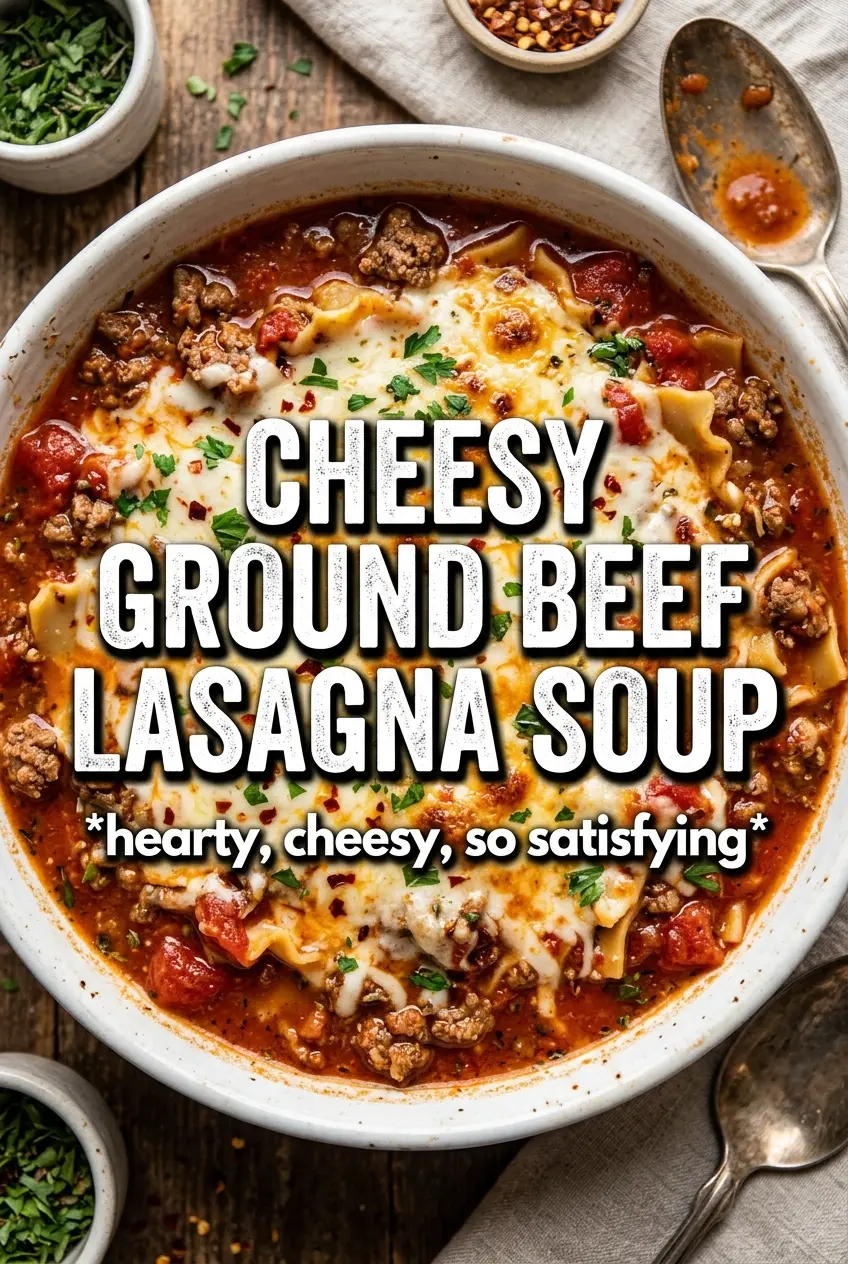
Cheesy Ground Beef Lasagna Soup
Ingredients
Equipment
Method
- Brown ground beef in a large pot over medium-high heat, then drain fat. Keep the beef in the pot so you can build flavor without extra dishes.
- Sauté diced onion for 4 minutes. Add minced garlic and tomato paste, then cook for 2 minutes until fragrant and slightly darkened at the edges.
- Add crushed tomatoes, diced tomatoes, beef broth, Italian seasoning, dried basil, dried oregano, and red pepper flakes, then bring to a boil. Stir to scrape up any browned bits from the bottom.
- Add broken lasagna noodles and simmer for 10-12 minutes until tender. Stir occasionally so the noodles don’t stick together.
- Reduce heat to low, then stir in shredded mozzarella and cheddar until melted. Move the spoon through the pot until the cheese fully disappears into the soup for a creamy, cohesive texture.
- Season with salt and pepper to taste. Taste at the end so you can adjust after the cheese melts.
- Mix ricotta with parmesan (and basil) until combined for dollops. Add a little basil for a fresh finish.
- Serve the soup hot with a generous ricotta dollop on top. Optional: add extra basil for a fresh, green garnish.