
Olive oil mashed potatoes land in that rare place where comfort food feels clean, bright, and deeply satisfying all at once. The potatoes turn silky instead of heavy, with a glossy finish from good olive oil and just enough lemon zest to keep each bite lifted. They still taste like mashed potatoes at heart, but the flavor stays lighter and more Mediterranean than the butter-and-cream version most of us grew up with.
The key is using starchy Yukon Gold potatoes and mashing them while they’re still hot enough to absorb the oil evenly. The reserved cooking water matters more here than milk or cream would, because the starch helps loosen and emulsify everything into a smooth, cohesive mash. Garlic goes into the pot from the start so it softens and melds into the potatoes instead of landing as sharp raw bits at the end.
Below, you’ll find the small details that keep this bowl from turning greasy or gluey, plus the best way to adjust the texture if you want it looser, richer, or a little more rustic.
The potatoes came out silky, not dense, and the olive oil gave them this gorgeous gloss without tasting greasy. I loved the lemon zest at the end — it made the whole dish taste brighter.
Save these silky olive oil mashed potatoes for the night you want a bright, creamy side without any butter or cream.
The Reason These Potatoes Stay Silky Instead of Heavy
The biggest mistake with mashed potatoes is treating them like a place to dump in fat and hope for the best. Here, the texture comes from the order of operations: potatoes are drained hot, mashed while they still steam, and then loosened with reserved cooking water little by little. That starch-rich water helps the olive oil disperse through the potatoes instead of sitting on top in a slick layer.
Yukon Golds matter because they’re naturally creamy and less prone to turning paste-like than russets if you get a little enthusiastic with the masher. Garlic cooks right alongside them, so it softens enough to blend in fully. If the mash ever looks dense after the oil goes in, it usually needs more hot cooking water, not more mashing.
What Each Ingredient Is Actually Doing Here
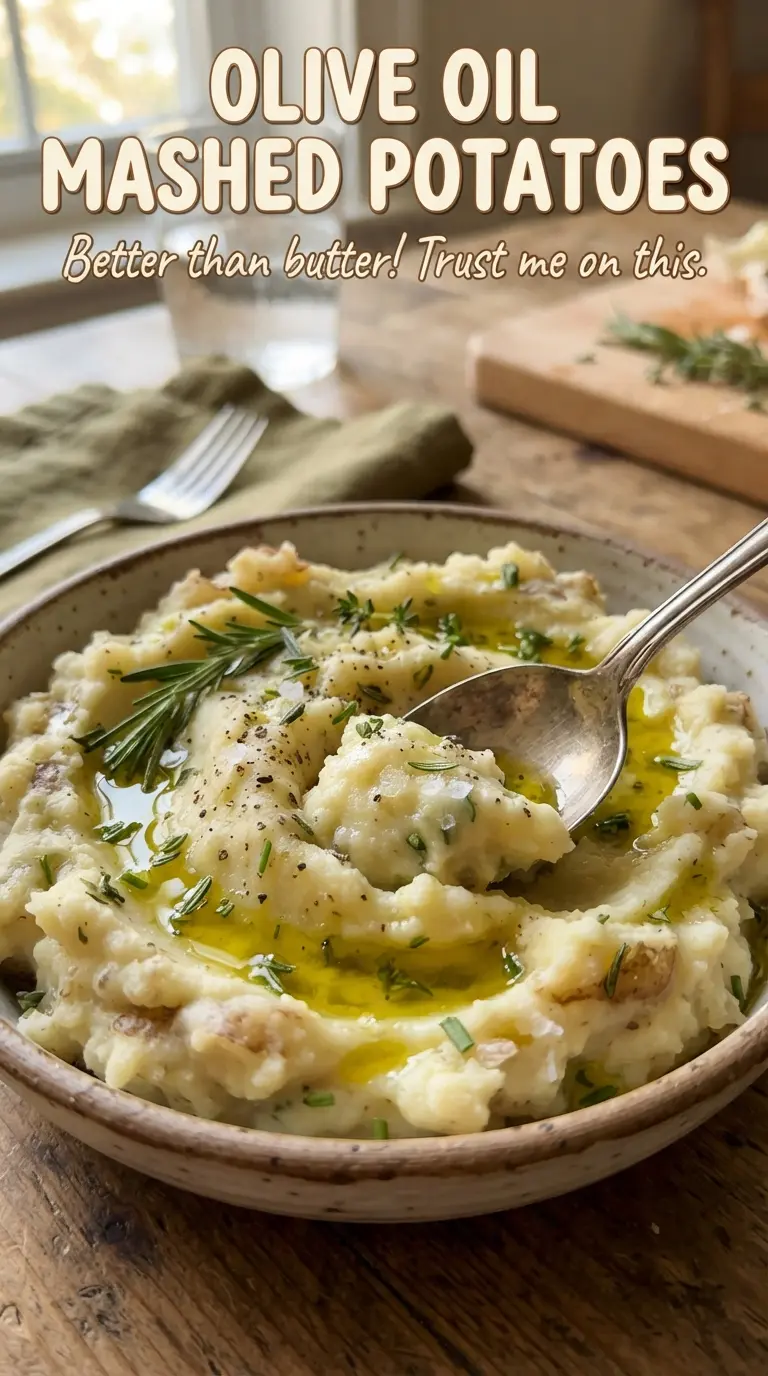
- Yukon Gold potatoes — These are the backbone of the dish. They mash into something naturally creamy without needing dairy, and their buttery flavor gives the olive oil somewhere to land. Russets work in a pinch, but they’re drier and need a little more careful handling so they don’t go grainy.
- Extra virgin olive oil — This is the flavor, not just the fat. Use one you’d actually want to taste on its own, because it shows up clearly in the final bowl. A mild olive oil will give you a softer finish, while a peppery one makes the potatoes taste more assertive and Mediterranean.
- Reserved potato water — Don’t skip this. It carries starch, which helps the mash turn smooth and spoonable without milk. If you run out, hot water works better than cold, but it won’t give quite the same body.
- Lemon zest and herbs — These keep the potatoes from tasting flat. The zest adds lift without souring the dish, and parsley or chives give just enough green freshness to match the olive oil.
- Garlic — Boiling the garlic with the potatoes softens the sharp edge. You get a gentle garlic note throughout instead of little pockets of raw bite.
Building the Mash So It Stays Creamy
Boiling the Potatoes and Garlic
Start the potatoes in well-salted cold water so they cook evenly from the outside in. Add the garlic right from the beginning; it should end up completely tender and mashable, not roasted or browned. The potatoes are ready when a knife slides through without resistance and the cubes are losing their sharp edges. If they’re even a little undercooked, the mash will stay lumpy no matter how much you work it.
Mashing While Everything Is Hot
Drain the potatoes and keep that half cup of cooking water before anything else. Mash immediately, while the steam is still rising, and drizzle in the olive oil as you work so it gets absorbed instead of pooling. A potato masher gives you the best control here; a mixer can turn them gluey fast. If the potatoes look dry after the oil goes in, that’s the moment to add the reserved water, a splash at a time.
Finishing With Zest, Salt, and a Final Drizzle
Once the texture is smooth and loose enough to mound softly on a spoon, stir in the lemon zest, salt, and pepper. Taste before you stop — olive oil mashes usually need a little more salt than you expect because there’s no butter or cream to round things out. Finish with more olive oil, herbs, and flaky salt so the top tastes just as alive as the center. That final drizzle should look glossy, not greasy.
How to Adapt These Potatoes for Different Tables
Make Them Fully Dairy-Free and Vegan
They already are. That’s the beauty of this recipe: olive oil and potato water create the creamy texture without any butter, milk, or cream. Just check that your flaky salt and garnish are clean and simple, then serve as written.
Use Russets for a Fluffier, Drier Mash
Russets will give you a lighter, fluffier texture, but they absorb liquid faster and can turn pasty if overworked. Stop mashing as soon as the potatoes look smooth, then add the reserved water slowly until they loosen into a creamy pile.
Swap the Herbs for a Different Finish
Parsley keeps the flavor fresh and clean, while chives add a mild onion note. Dill works if you want a sharper, greener edge with fish or roasted vegetables, but use it lightly so it doesn’t overpower the olive oil.
Storage and Reheating
- Refrigerator: Store in an airtight container for up to 4 days. The potatoes will firm up as they chill, so expect a thicker texture the next day.
- Freezer: They freeze better than cream-based mash, but the texture gets a little softer after thawing. Freeze in a flat, sealed container for up to 2 months.
- Reheating: Warm gently over low heat with a splash of water or a drizzle of olive oil, stirring often. High heat dries out the potatoes and can make the oil separate, so keep the temperature low and patient.
Answers to the Questions Worth Asking
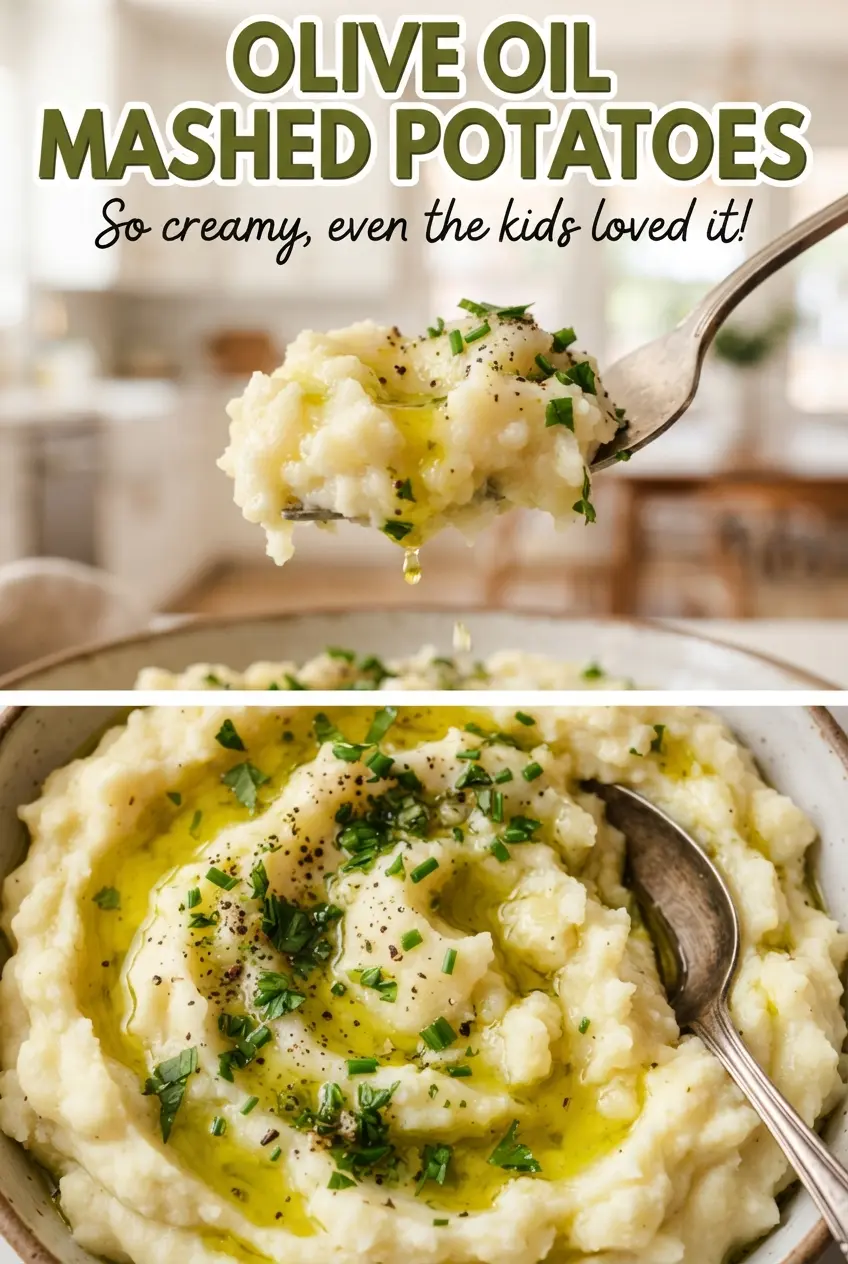
Olive Oil Mashed Potatoes
Ingredients
Equipment
Method
- Add the peeled, cubed Yukon gold potatoes and peeled garlic to a Dutch oven and cover with water; stir in 1 tablespoon salt. Bring to a boil, then simmer for 15-18 minutes until the potatoes are very tender (a fork slides in easily).
- Before draining, reserve 1/2 cup of the potato cooking water. Drain the potatoes and garlic, then immediately return them to the Dutch oven.
- Mash the potatoes and garlic until smooth, drizzling in the extra-virgin olive oil as you go for a glossy texture. Stop when no large lumps remain and the mash looks creamy.
- Add reserved potato cooking water a splash at a time, stirring until the mashed potatoes turn silky and hold a soft, creamy shape. Add just enough water so it spreads but isn’t watery.
- Stir in the lemon zest, 1 teaspoon salt, and black pepper, then taste and adjust seasoning as needed. The mash should taste bright with a gentle pepper finish.
- Drizzle with more extra-virgin olive oil and sprinkle with chopped fresh parsley or chives for a fresh green top. Finish with flaky sea salt so it shows visible flecks over the surface.


