Rich, deep, and built on layers of browned beef, tomato, and peanut, African beef stew has the kind of body that settles into a bowl and tastes even better once the flavors have had time to meet. The peanut butter doesn’t make it taste like a sandwich spread; it gives the broth a velvety finish and a roundness that plays beautifully with ginger, garlic, and warm spices. Add sweet potato and spinach near the end, and the stew turns into something hearty enough for rice but still bright and balanced.
The key is treating each part with a little restraint. Browning the beef in batches gives the stew its base, and cooking the tomato paste before the liquid goes in keeps the sauce from tasting flat or raw. Natural peanut butter works best because it melts into the broth cleanly; sugary, stabilized peanut butter can leave the stew oddly sweet and heavy. I also like to hold the spinach until the very end so it stays green and tender instead of fading into the background.
Below, I’ve included the small things that matter here: how to keep the peanut base smooth, what to do if your stew looks too thick, and the swaps that still keep the spirit of the dish intact.
The peanut sauce turned silky and rich, and the sweet potato held its shape without going mushy. I served it over rice and the leftovers tasted even better the next day.
Love this African beef stew with its peanut-rich broth and tender sweet potatoes? Save it to Pinterest for the nights when you want a hearty one-pot dinner over rice.
The Browning Step That Gives This Stew Its Depth
Most of the flavor here starts before the liquid ever goes in. Browning the beef in batches creates the dark, savory edges that make the broth taste developed instead of boiled, and that step works best when the pan stays hot enough to sear rather than steam. If the pot looks crowded, the meat will gray out and release liquid; that’s the difference between a stew with backbone and one that tastes thin.
The other place people lose flavor is with the tomato paste. Let it cook with the onion, garlic, ginger, and pepper long enough to darken slightly and lose its raw edge. That short bit of caramelization ties the peanut butter and broth together later, so the finished stew tastes cohesive instead of like separate ingredients floating in the same pot.
What Each Ingredient Is Actually Doing In This Pot

- Beef chuck — This cut has enough fat and connective tissue to turn tender during the long simmer. Lean stew meat can work, but it won’t give you the same silky texture in the broth.
- Natural peanut butter — This is what gives the stew its body and that unmistakable nutty richness. Stir it in after the tomatoes and broth have started simmering so it melts evenly instead of clumping; stabilized peanut butter can make the sauce taste sweeter and more processed.
- Crushed tomatoes and tomato paste — Together they build the red base and keep the peanut sauce from tasting flat. Paste adds concentration; crushed tomatoes add volume and acidity, which keeps the stew from feeling heavy.
- Sweet potato — It softens into the sauce just enough to thicken it slightly and adds a gentle sweetness that works with the peanut and spice. Cut it into even cubes so it cooks at the same pace as the beef.
- Fresh ginger, garlic, and hot pepper — These are the sharp notes that keep the stew lively. If you skip the pepper, the stew is still good, but the flavor will land softer and less complex.
Building the Stew So the Peanut Base Stays Smooth
Season and sear the beef first
Pat the beef dry, season it well, and brown it in batches in the oil until you get a deep crust on more than one side. You want actual color in the pan, not just gray meat with a little steam. If the beef sticks a bit, that’s fine; those browned bits are going to dissolve into the stew later and deepen everything.
Cook the aromatics until the tomato paste darkens
Add the onion first and let it soften before the garlic, ginger, and hot pepper go in. Once the tomato paste hits the pan, stir it constantly for a minute or two until it darkens slightly and stops smelling raw. That step keeps the finished broth from tasting sharp or tinny.
Simmer low and add the peanut butter with patience
After the tomatoes, broth, cumin, coriander, and beef go in, keep the simmer gentle and cover the pot. A hard boil will tighten the meat and can make the broth cloudy in a rough way. Whisk the peanut butter in slowly once the base is hot; if it looks streaky at first, keep stirring and it will smooth out as it warms.
Finish with the sweet potato and spinach
Add the sweet potato after the peanut base is fully combined so it cooks in the enriched sauce rather than before it has structure. Simmer until the beef is fork-tender and the sweet potato gives easily at the center without collapsing. Stir in the spinach at the very end just until it wilts, because long cooking turns it drab and loses that fresh green contrast.
How to Adapt This Stew Without Losing Its Character
Make it gluten-free
This stew is naturally gluten-free as written, as long as your broth is gluten-free. The texture doesn’t change at all, so this is one of those rare swaps that costs nothing.
Make it dairy-free and peanut-forward
It’s already dairy-free, and using natural peanut butter keeps the flavor clean and bold. If you want a stronger peanut note, add a spoonful more at the end, but don’t overdo it or the stew turns heavy and pasty.
Use chicken instead of beef
Bone-in or boneless chicken thighs can replace the beef for a faster version, but the stew will taste lighter and won’t have the same deep, slow-cooked body. Cut the simmer time way down and add the spinach sooner, once the chicken is cooked through.
Storage and Reheating
- Refrigerator: Store for up to 4 days. The sauce thickens as it chills, and the flavors deepen overnight.
- Freezer: It freezes well for up to 3 months. Cool it completely first and leave a little headspace in the container because the broth expands.
- Reheating: Warm it gently on the stovetop over low heat with a splash of broth or water to loosen the sauce. High heat can make the peanut base look oily before it comes back together.
Answers to the Questions Worth Asking
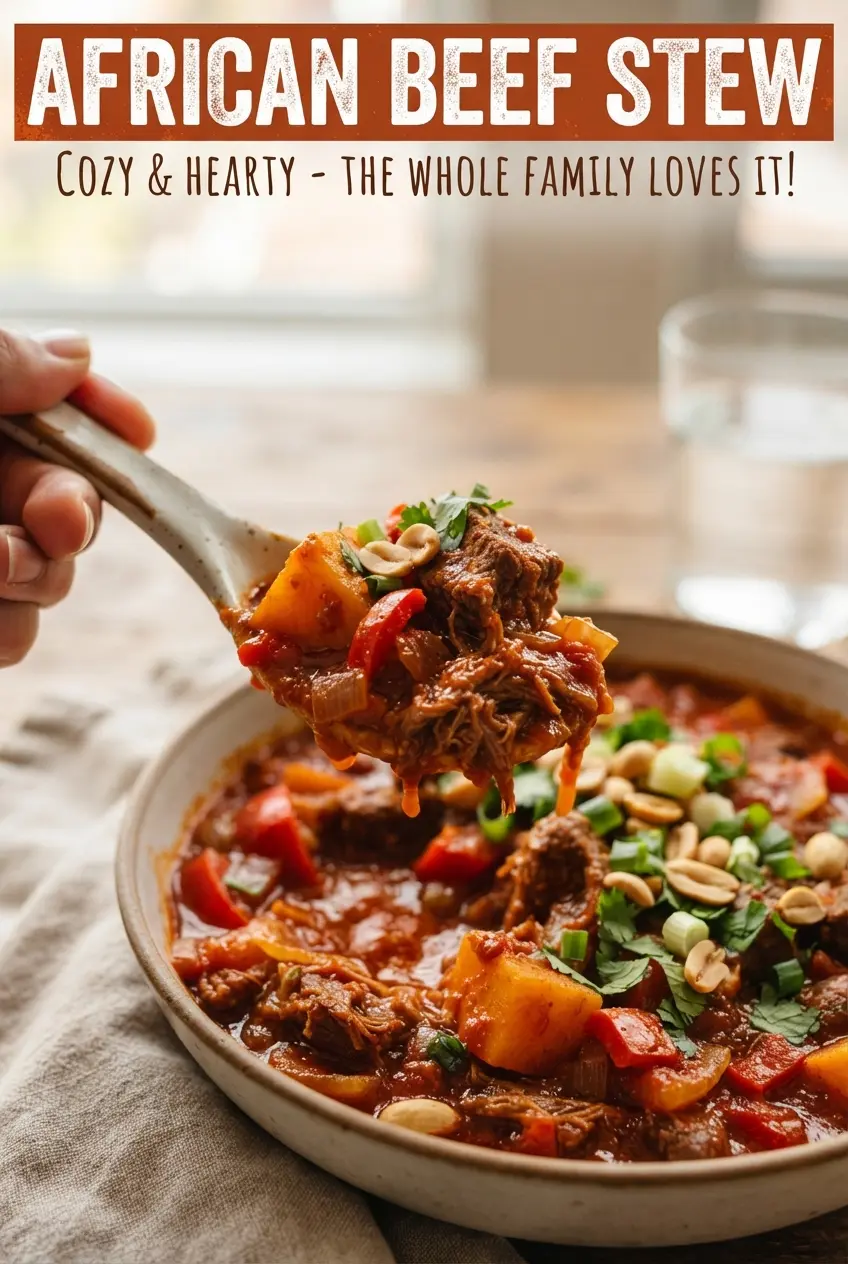
African Beef Stew with Peanut Tomato Sauce
Ingredients
Equipment
Method
- Season the beef cubes with salt and black pepper, then heat the vegetable oil in a Dutch oven over medium-high heat. Brown the beef in batches so each piece gets color, about 3–5 minutes per batch, then transfer to a plate (visual cue: browned edges and fond on the bottom).
- In the same Dutch oven, cook the diced onion over medium heat for 4 minutes, stirring until softened (visual cue: translucent onion). Add the garlic, grated ginger, black pepper, and tomato paste, then cook for 2 minutes (visual cue: fragrant, deepened tomato color).
- Stir in the crushed tomatoes, beef broth, ground cumin, ground coriander, and the browned beef, then cover and simmer at 190–205°F for 1 1/4 hours (visual cue: steady bubbling with meat becoming fork-tender at the edges).
- Whisk in the natural peanut butter until smooth, then add the cubed sweet potato (visual cue: sauce turns creamy and cohesive). Simmer uncovered at 190–205°F for 30–35 minutes, stirring occasionally, until the beef and sweet potato are tender.
- Stir in the baby spinach and cook just until wilted, about 2–3 minutes (visual cue: bright green leaves collapse into the sauce).
- Serve the stew over white rice and top with chopped roasted peanuts and fresh cilantro (visual cue: peanut topping stays crunchy against the hot stew).