Poor Man’s Stew lands in the bowl as thick, savory, and deeply satisfying, with tender potatoes, soft carrots, and ground beef tucked into a tomato-rich broth that eats like a full meal. It has the kind of old-school comfort that doesn’t need any garnish to feel complete, and it stretches a small amount of meat into a pot that feeds a crowd.
The trick is building flavor in layers even though the ingredient list stays humble. Browning the beef with the onion first gives the broth a better base, and the tomato soup adds body that diced tomatoes alone can’t provide. Potatoes simmer until they turn creamy at the edges, while the frozen vegetables go in at the end so they stay bright instead of turning to mush.
Below you’ll find the small timing details that keep the stew hearty instead of watery, plus the one adjustment I reach for when I want it even thicker the next day.
The potatoes were tender without falling apart, and the broth thickened up just enough after sitting for ten minutes. My husband asked if I could put this on the regular rotation.
Save this hearty Poor Mans Stew for a filling pot of ground beef, potatoes, and tomato broth that gets even better after a short simmer.
The Simmer Time That Keeps the Potatoes Intact
The biggest mistake with a stew like this is boiling it hard once the potatoes go in. That tears the potato cubes at the edges before the centers are tender, and the broth turns cloudy in a rough, broken way instead of thick and comforting. A steady simmer is what you want: enough movement to cook the potatoes through, but not enough to beat them up.
The tomato soup is doing more work than it looks like. It gives the broth body without needing flour, cornstarch, or a separate roux, which keeps this stew uncomplicated and makes it easier to get a spoon-coating texture by the end. If the pot looks a little loose when the potatoes are done, give it five extra minutes uncovered and it will tighten up as the starches release.
What Each Ingredient Is Actually Doing In This Stew

- Ground beef — This gives the stew its backbone and enough fat to carry the rest of the flavors. An 80/20 blend works best because it leaves a little richness in the pot, but lean beef still works if you don’t mind a lighter broth. If you use lean beef, don’t skip the onion browning step because that extra caramelized flavor matters more.
- Tomato soup — This is the shortcut that makes the broth taste full and rounded instead of thin. It thickens the stew as it simmers, so you don’t need to add flour or cornstarch. If you swap it for extra diced tomatoes, expect a looser, more brothy result.
- Potatoes — Starchy potatoes like Russets break down a little and help thicken the stew, while Yukon Golds stay a bit more structured. Either one works; the only thing that ruins the texture is cutting them too small. Keep the cubes on the larger side so they hold their shape through the simmer.
- Frozen mixed vegetables — These go in at the end on purpose. They need just enough heat to come alive, not enough to lose their color and texture. Fresh vegetables can work too, but frozen mixed vegetables are one of the places where the cheaper option is genuinely fine.
Building the Pot So It Eats Like More Than the Sum of Its Parts
Browning the Beef and Onion
Cook the beef and diced onion together until the meat loses its pink color and the onions soften in the fat. You’re looking for browned bits on the bottom of the pot, not a pale, steamed mixture. If the pan looks greasy, drain off the excess, but leave a little behind because that’s where the flavor lives. Stir in the garlic at the end so it perfumes the pot without burning.
Adding the Broth and Vegetables
Once the potatoes, carrots, tomatoes, tomato soup, broth, Worcestershire, and seasonings go in, bring everything up to a boil just long enough to get the pot moving. Then lower the heat right away. If you keep it boiling, the potatoes cook unevenly and the tomatoes can taste harsher than they should. A gentle simmer lets the broth turn savory and the carrots soften without disappearing.
Finishing With the Frozen Vegetables
Stir in the frozen vegetables only after the potatoes are tender. They need about five minutes, which is enough to heat them through while keeping the peas bright and the corn from turning chewy. Taste at the end and adjust the salt and pepper after the stew has finished reducing a little, since simmering concentrates everything already in the pot.
How to Adapt Poor Mans Stew Without Losing the Heart of It
Swap the Ground Beef for Ground Turkey
Ground turkey works well if you want a lighter stew, but it needs a little help because it doesn’t bring the same richness as beef. Add a small splash of oil when browning it, and don’t skip the Worcestershire sauce. The result will be cleaner-tasting and a little less hearty, but still satisfying.
Make It Gluten-Free
This stew can be naturally gluten-free if your tomato soup and Worcestershire sauce are certified gluten-free, since those are the two ingredients most likely to hide gluten. The texture stays the same because the body comes from the soup and potatoes, not flour. Check the label on the broth too if you’re cooking for someone with celiac disease.
Stretch It With Extra Vegetables
Add celery, green beans, or peas if you want the pot to feed a few more people without feeling thin. Celery goes in with the carrots so it softens properly, while delicate vegetables like peas should still go in at the end. More vegetables make the stew feel lighter, but they also soak up seasoning, so taste before serving.
Storage and Reheating
- Refrigerator: Store covered for up to 4 days. The broth thickens as it sits and the potatoes soften a little more overnight.
- Freezer: It freezes well for up to 3 months, though the potatoes will be a bit softer after thawing. Cool it completely before freezing in airtight containers.
- Reheating: Warm it gently on the stove over medium-low heat with a splash of broth or water if needed. A hard boil can break the potatoes down too far and make the texture mushy.
Questions I Get Asked About This Recipe
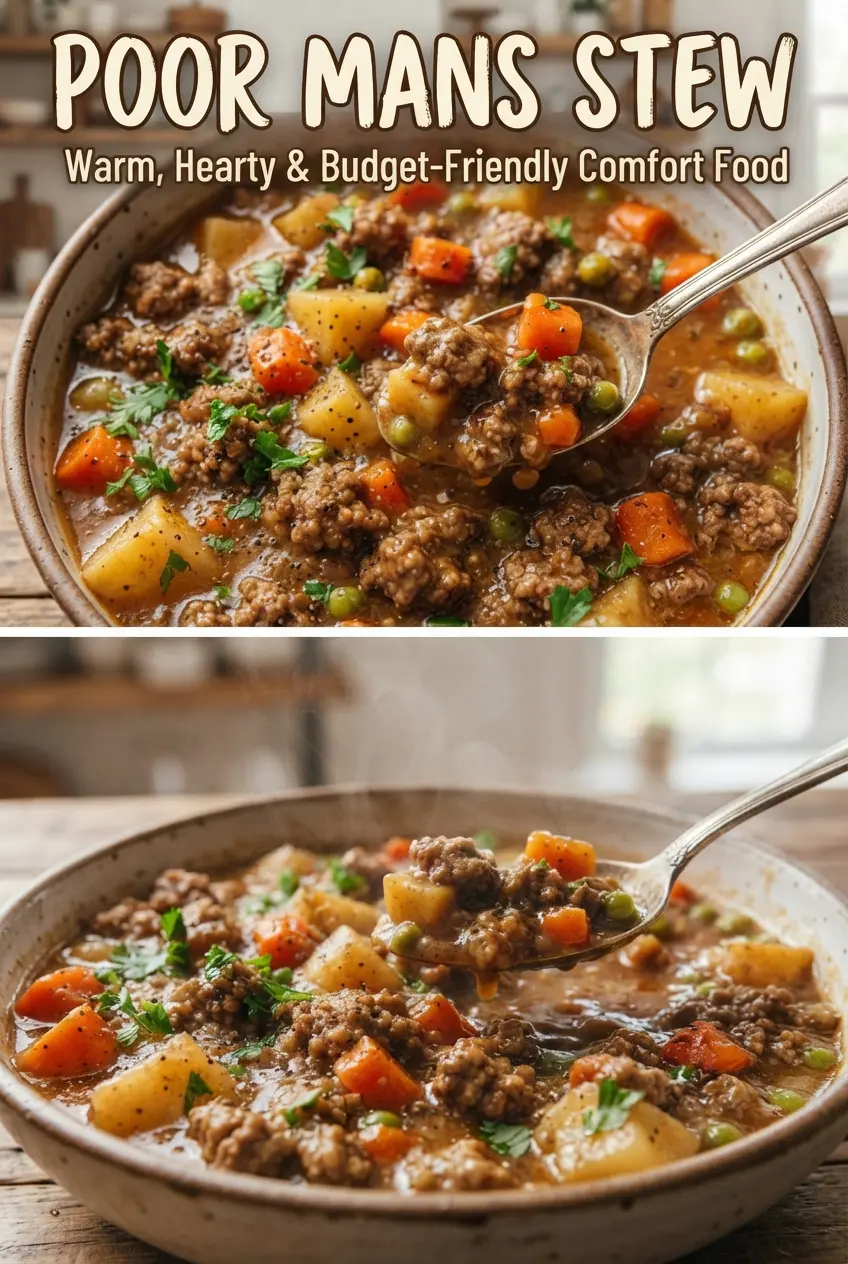
Poor Mans Stew
Ingredients
Equipment
Method
- In a large Dutch oven, brown the ground beef and onion for 8 minutes. Drain excess grease, then add the minced garlic and stir for 1 minute; you should see the onions softened and the garlic fragrant.
- Add the cubed potatoes, sliced carrots, diced tomatoes, tomato soup, beef broth, Worcestershire sauce, dried thyme, salt, and black pepper. Stir well until the liquids look evenly combined, with no dry seasoning pockets.
- Bring the pot to a boil over medium-high heat. Look for steady bubbling across the surface, not just around the edges.
- Reduce heat to low and simmer covered for 20-25 minutes. Check at 20 minutes by piercing a potato; it should be tender all the way through.
- Stir in the frozen mixed vegetables and simmer for 5 minutes. The vegetables should be hot and bright, and the broth should be lightly thickened.
- Taste and adjust seasoning, then serve hot. For best texture, the potatoes should hold their shape while the stew stays saucy.