
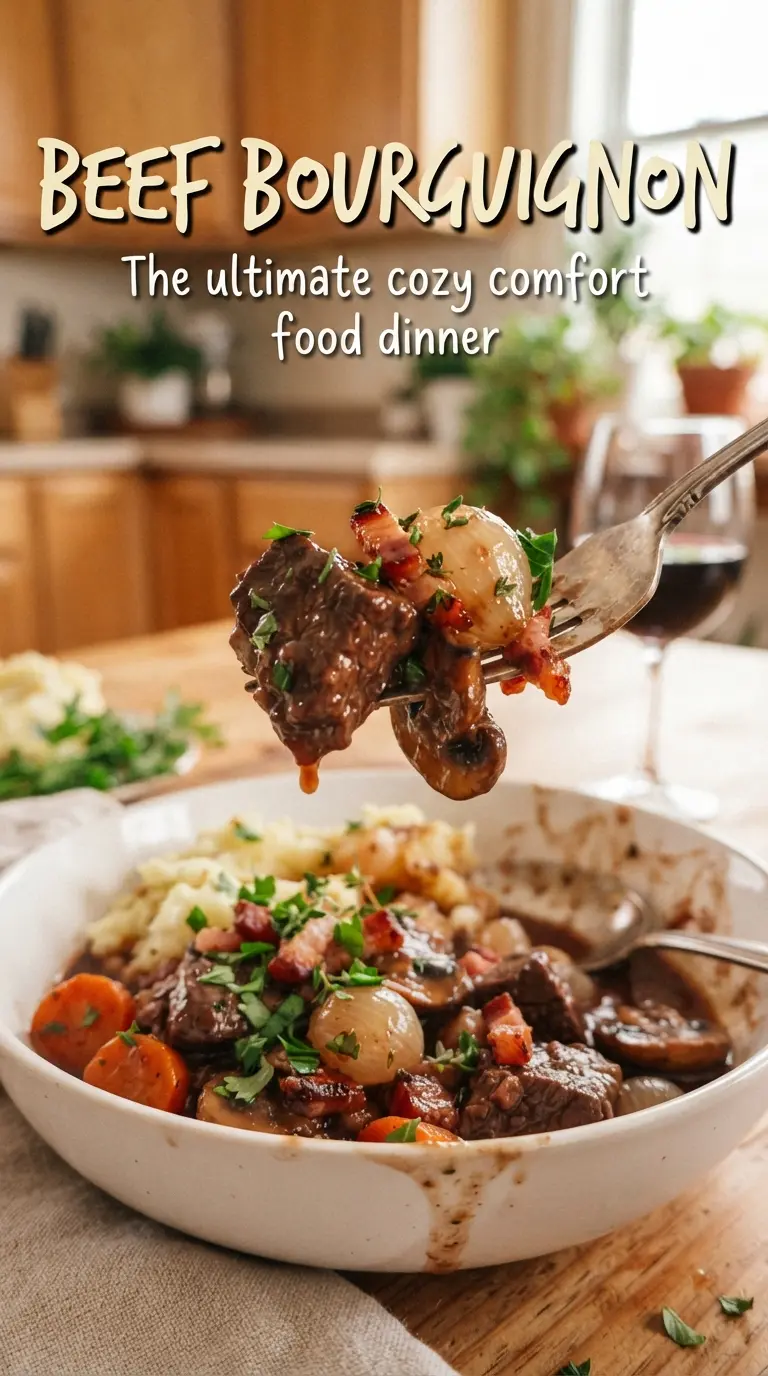
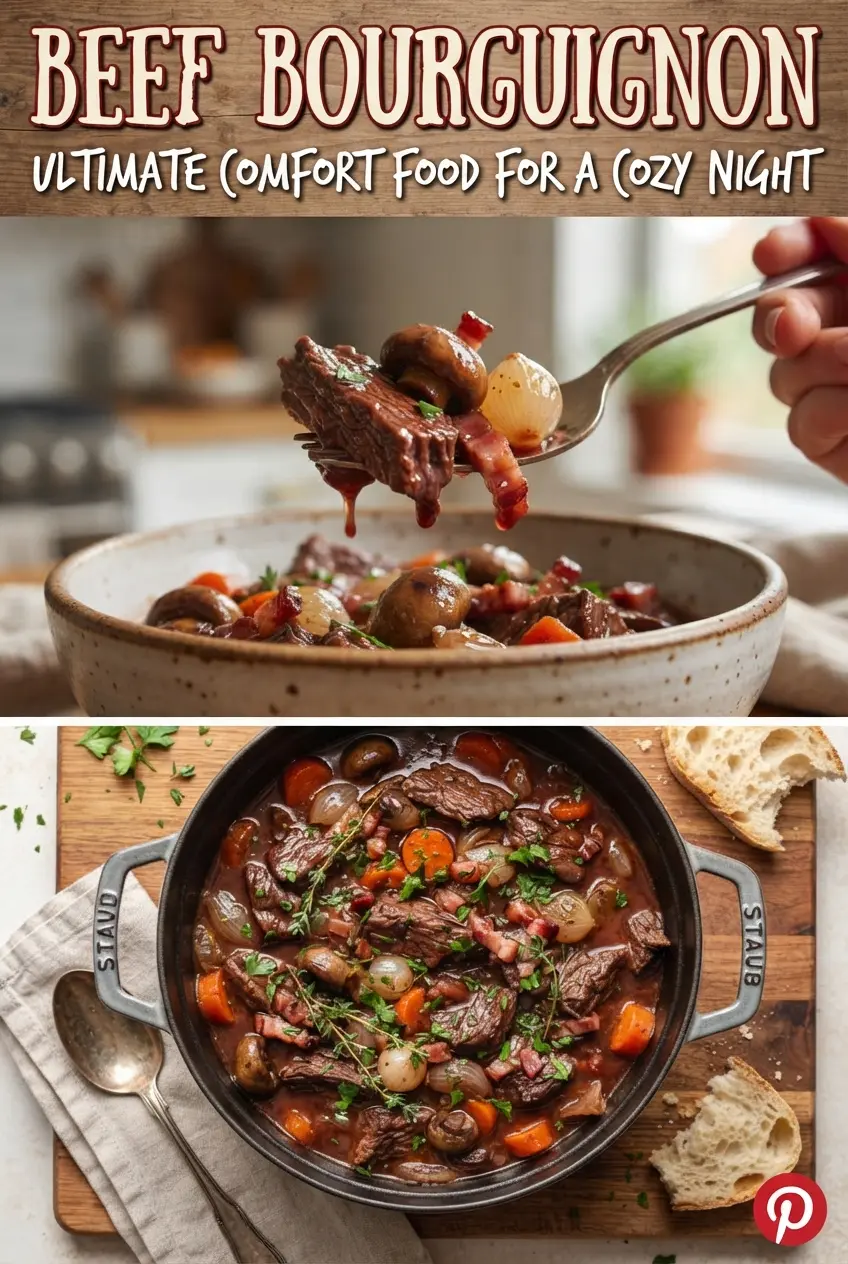
Beef Bourguignon rewards patience with meat that turns fork-tender and a sauce that tastes deep, glossy, and built from layers instead of shortcuts. The bacon gives the base a smoky edge, the red wine cooks down into something rounded instead of sharp, and the mushrooms and pearl onions land at the end with enough texture to keep every bite interesting.
What makes this version work is the order. The beef gets browned in batches so it sears instead of steaming, and the flour and tomato paste cook for a minute or two before the liquid goes in, which keeps the sauce from tasting raw or clumpy. The wine braise needs time; that long, slow oven cook is what turns a tough chuck roast into something spoon-tender.
Below you’ll find the little decisions that matter, from getting the bacon crisp without burning the fond to adding the mushrooms late so they keep their shape. If you’ve had Bourguignon that tasted flat or muddy, the fixes are in the details.
The sauce reduced into this rich, velvety gravy and the beef fell apart with a spoon. Browning the mushrooms and pearl onions separately made the whole dish taste restaurant-level.
Save this Beef Bourguignon for a slow Sunday braise with tender beef, glossy red wine sauce, and browned mushrooms.
The Browning Step That Gives This Stew Its Depth
The biggest mistake with Beef Bourguignon is rushing the browning. If the beef goes into a crowded pot, it steams and gives you a gray, flat-tasting stew instead of that dark, savory base you want. Work in batches and wait for a deep brown crust before turning the pieces. That crust is not just color; it’s the flavor that carries the whole dish.
The same idea applies to the bacon and the vegetables. The bacon should render enough fat to coat the pot, and the onions and carrots need time to soften and pick up the browned bits from the bottom. When the flour and tomato paste go in, cook them long enough to lose their raw edge, because that step keeps the braising liquid from tasting dusty or pasty later.
What Each Ingredient Is Actually Doing in the Pot
- Beef chuck — This is the cut that turns silky after a long braise. Leaner beef won’t give you the same texture, and it can dry out before the sauce has time to deepen.
- Dry red wine — Use a bottle you’d actually drink. It doesn’t need to be expensive, but it should taste clean and dry, because the wine becomes the sauce. Something overly sweet or heavily oaked can throw the whole pot off.
- Bacon lardons — They build the first layer of savoriness and leave fat behind for browning. If you use regular sliced bacon, cut it into thicker pieces so it doesn’t vanish during the long braise.
- Cremini mushrooms and pearl onions — These go in at the end because they need to stay distinct. Add them too early and they collapse into the stew instead of giving you those little bursts of texture in the finished bowl.
- Tomato paste and flour — Tomato paste adds quiet acidity and color; flour helps the sauce take on body. Let both cook before the liquid goes in or the sauce can taste raw and starchy.
How to Build the Braise So the Sauce Stays Glossy
Rendering the Bacon and Saving the Fat
Start the bacon in the Dutch oven over medium heat and cook until the pieces are browned and the fat has rendered. Pull the bacon out before it goes too dark, because it will spend the rest of the recipe in the oven and can turn leathery if you overcook it now. Leave enough fat in the pot to sear the beef, and only add the olive oil if the pot looks dry.
Sealing the Beef in Batches
Pat the beef dry before it hits the pan. Moisture is the enemy of browning. Sear in batches and give each cube room to develop a crust without crowding, then let the pieces release naturally before turning. If the meat sticks hard, it usually needs another minute; once the crust forms, it lifts cleanly.
Building the Wine Base
After the onion and carrots soften, add the garlic, flour, and tomato paste and cook them until they smell nutty and concentrated. Then pour in the wine and broth and scrape the bottom until the browned bits dissolve into the liquid. That fond is where a lot of the flavor lives, and skipping the scrape leaves you with a thinner, less interesting sauce.
Finishing the Braise and Enriching the Sauce
Cover the pot and braise at 325°F until the beef is tender enough to cut with a spoon, which usually takes about 3 hours. The liquid should stay at a gentle simmer, not a hard boil, or the meat can tighten up before it softens. Stir in the browned mushrooms and pearl onions near the end, then finish with the last butter swirl and parsley for a sauce that looks glossy instead of greasy.
Three Ways to Adapt Beef Bourguignon Without Losing What Makes It Work
No-alcohol version
Replace the wine with extra beef broth plus 1 to 2 tablespoons of red wine vinegar. You won’t get the same roundness as a true wine braise, but the vinegar gives the stew enough brightness to keep it from tasting heavy.
Gluten-free version
Skip the all-purpose flour and use a small slurry of cornstarch mixed with cold water near the end, after the beef is tender. You lose a little of the deep, cooked flavor that flour gives during the sauté, but the sauce still thickens nicely without gluten.
Dairy-light finish
Leave out the final butter swirl if you want a lighter finish. The stew will still taste rich from the bacon, wine, and beef reduction, though the sauce won’t have quite the same sheen. A spoonful of good olive oil at the end can soften the edges.
Make-ahead timing
This stew tastes even better the next day. Chill it overnight after cooking, then rewarm it slowly before serving so the beef stays tender and the sauce keeps its body.
Storage and Reheating
- Refrigerator: Keeps well for 4 days. The sauce thickens as it chills, and the flavor deepens.
- Freezer: Freezes well for up to 3 months. Cool it completely first and store in airtight containers, leaving a little room for expansion.
- Reheating: Warm gently on the stovetop over low heat until hot throughout. A hard boil can break the sauce and toughen the beef, so go slow and add a splash of broth if it seems too thick.
Answers to the Questions Worth Asking
Beef Bourguignon
Ingredients
Equipment
Method
- Preheat the oven to 325F. Brown the bacon in the olive oil in a Dutch oven, then set aside.
- Pat the beef dry, season with salt and black pepper, then sear in batches in the bacon fat until deeply browned. Keep the heat high enough to get color on all sides, then transfer to a plate as each batch finishes.
- Cook the onion and carrots for 5 minutes in the Dutch oven. Add the garlic, flour, and tomato paste and cook for 2 minutes, stirring until the flour no longer looks raw.
- Add the wine, beef broth, fresh thyme, bay leaves, beef, and the bacon to the pot. Bring to a simmer, cover, and braise in the oven for 3 hours, until the beef is tender.
- In a skillet, brown the pearl onions and mushrooms in 1 tbsp of butter. Add them to the stew for the last 20 minutes of braising.
- Remove the thyme and bay leaves, then swirl in the remaining butter. Top with chopped parsley before serving.


