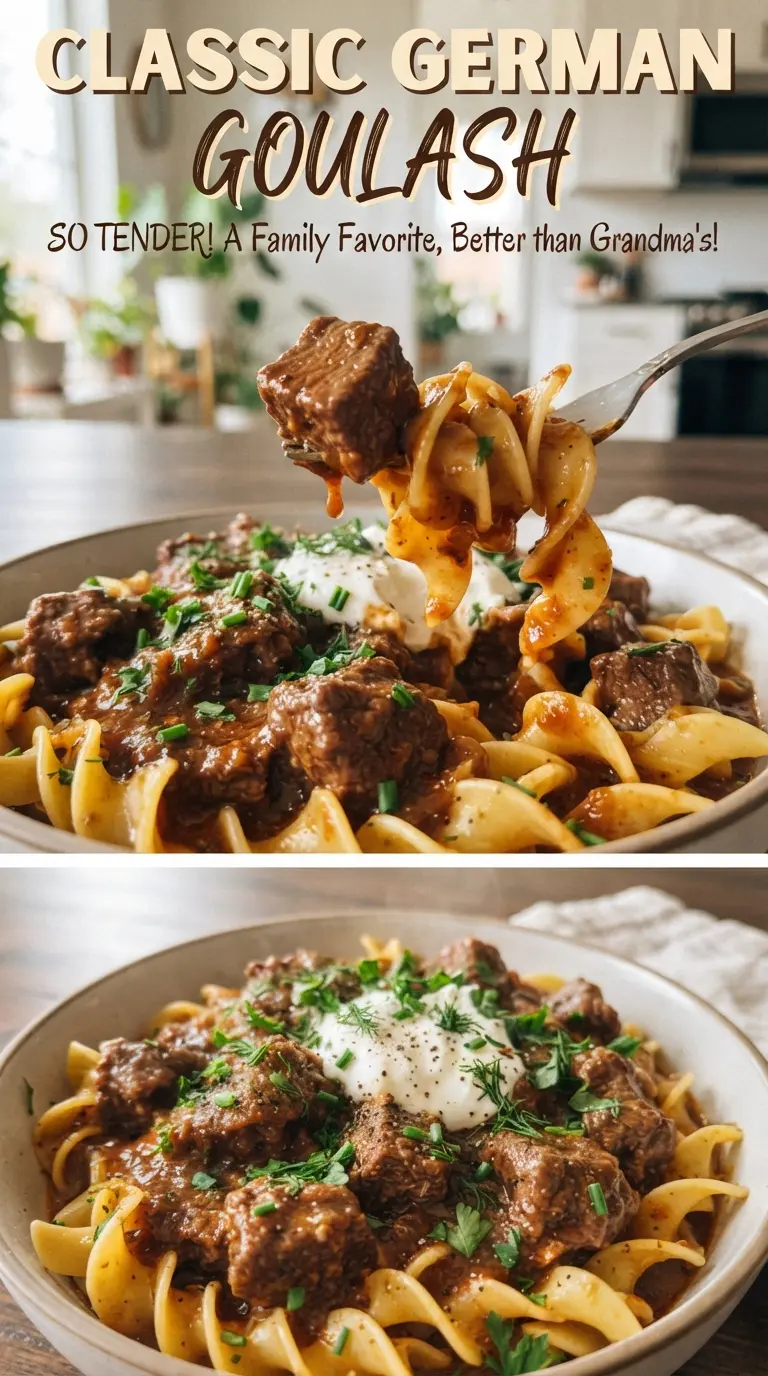
Deep, paprika-rich German goulash lands somewhere between a stew and a gravy, with beef that turns spoon-tender after a long, slow simmer and onions that melt down into the sauce until they almost disappear. The finished pot should be thick enough to coat spaetzle, glossy enough to cling to the beef, and savory enough that you’ll want to drag bread through every last bit.
The key here is patience with the onions and restraint with the heat. Two pounds looks like a mountain at the start, but they cook down into the body of the sauce and replace the need for a heavy roux. Sweet paprika gives the goulash its deep color and warmth, while the smaller amount of hot paprika keeps it from tasting flat. A splash of vinegar wakes everything up at the end so the sauce tastes rounded instead of heavy.
Below, I’ve included the small details that matter most: how to brown the beef without steaming it, why the paprika goes in after the onions, and what to do if your sauce looks thin before the final thickening step. Those little moves are what turn a good beef stew into a proper bowl of German goulash.
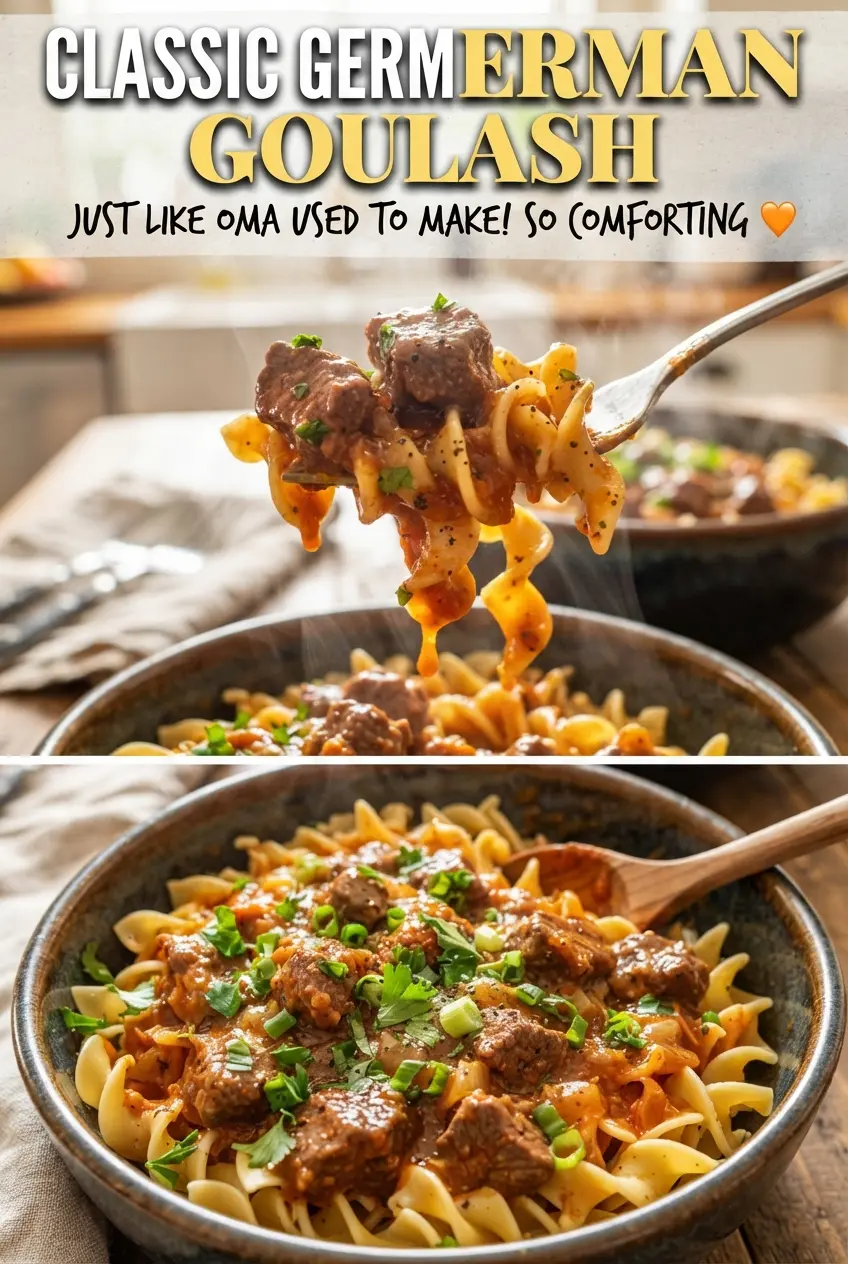
The onions cooked down into this beautiful dark gravy, and the beef was fall-apart tender after the full simmer. Serving it over spaetzle made it feel just like the German restaurant I remember.
Save this classic German goulash for the nights when you want tender beef, paprika gravy, and buttery spaetzle on the same plate.
The Onion Base Is the Difference Between Rich and Thin
Most goulash problems start before the liquid goes in. If the onions are rushed, the finished sauce tastes harsh and the broth stays loose; if they cook until soft, golden, and almost jammy, they give the stew its body and a deep savory sweetness. That’s why the pan can look crowded at the beginning and completely transformed by the time the onions are done.
The beef also needs real browning in batches. If you pile it all in at once, it steams and you lose the browned bits that help build the gravy later. Those brown flecks stuck to the bottom are not burnt; they’re flavor waiting for the broth and vinegar to pull them back into the pot.
What the Paprika, Onions, and Vinegar Are Doing Here
- Beef chuck — This cut has enough connective tissue to turn silky during the long simmer. Leaner beef will dry out before the sauce has time to develop, which is why chuck is worth using here.
- Onions — They’re not just a background vegetable in this dish; they melt into the sauce and create body without needing a lot of flour. Yellow onions are the best choice because they cook down sweetly and hold up to the long sauté.
- Sweet paprika and hot paprika — Sweet paprika gives the stew its signature color and warm depth, while hot paprika adds a gentle back-of-the-throat heat. If your paprika has been sitting in the cupboard for years, replace it; old paprika tastes dusty instead of vivid.
- Red wine vinegar — A little acid at the start keeps the sauce from tasting heavy after two hours of simmering. Don’t swap in a big pour of lemon juice; it changes the flavor in a sharper, less rounded way.
- Caraway seeds and marjoram — These are the German-leaning notes that make the dish taste specific instead of generic. If you don’t love caraway, use a light hand, but don’t leave both spices out or the stew loses its backbone.
Building the Paprika Gravy Without Burning the Spices
Browning the Beef First
Season the beef, then brown it in batches in hot oil until the surface is deeply colored on several sides. The pan needs room so the meat can sear instead of sweat, and each batch should leave behind browned bits on the bottom. If the meat sticks hard, give it another minute; if it lifts cleanly and smells meaty and toasty, it’s ready to come out.
Cooking the Onions All the Way Down
Add the onions to the same pot and cook them low and slow until they soften, take on a golden color, and start collapsing into themselves. Stir often enough that they don’t scorch, but not so much that they never pick up color. This step takes time, and if you stop while they’re still pale, the finished sauce tastes thin and sharp instead of rich.
Waking Up the Paprika and Simmering
Stir in the garlic, both paprikas, caraway, and tomato paste for about a minute, just until fragrant. Paprika burns fast, so the broth should go in soon after it hits the pot. Add the vinegar, broth, marjoram, bay leaves, and beef, then cover and let it simmer gently until the meat gives easily when pressed with a spoon. A hard boil will tighten the beef and muddy the sauce, so keep the bubbles lazy.
Finishing the Gravy
Stir in the flour slurry and cook it for another few minutes until the sauce thickens enough to coat the back of a spoon. The goal is a gravy that clings to spaetzle, not a paste, so add the slurry gradually if the pot already looks thick. Pull out the bay leaves before serving and taste the sauce at the end; if it needs brightness, a tiny extra splash of vinegar wakes it up.
How to Adapt This Goulash for Your Table
Serve It Over Spaetzle for the Most Traditional Result
Buttered spaetzle catches the gravy best and gives you the most classic German-style plate. Egg noodles work too, but they’re softer and won’t hold the sauce quite as well.
Make It Gluten-Free Without Losing the Gravy
Use a gluten-free flour blend for the slurry and serve it over gluten-free noodles, mashed potatoes, or rice. The sauce will still thicken, but give it a minute or two longer after adding the slurry so the starch fully cooks out.
Use Pork Shoulder for a Slightly Different Classic
Pork shoulder can replace the beef if you want a softer, slightly sweeter stew. It still needs the long simmer, but the flavor will be lighter and less beefy, so keep the paprika and caraway in place.
Storage and Reheating
- Refrigerator: Store for up to 4 days. The sauce thickens as it chills, and the flavor gets deeper by the next day.
- Freezer: It freezes well for up to 3 months. Cool it completely first, then portion it into airtight containers so the beef and gravy reheat evenly.
- Reheating: Warm it gently on the stove over low heat with a splash of broth or water. The common mistake is blasting it on high heat, which tightens the beef and can make the sauce look greasy before it smooths back out.
Questions I Get Asked About This Recipe
Classic German Goulash
Ingredients
Equipment
Method
- Season the beef chuck cubes with salt and black pepper. Heat the vegetable oil in a Dutch oven over medium-high heat.
- Brown the beef in batches until well-browned on the outside, then transfer to a plate. Keep the pan hot so the meat sears rather than steams, about 3-5 minutes per batch.
- Add the sliced onions to the Dutch oven and cook for 15-20 minutes until soft and golden. Stir frequently so they caramelize evenly.
- Add the minced garlic and cook for 1 minute. Stir constantly so the garlic becomes fragrant without browning too far.
- Stir in the sweet paprika, hot paprika, caraway seeds, and tomato paste, cooking for 1 minute. Keep stirring to toast the spices and prevent scorching.
- Add the red wine vinegar, beef broth, dried marjoram, and bay leaves, then return the browned beef to the pot. Cover with a lid.
- Simmer covered for 2 hours, maintaining a gentle bubble. Stir once or twice during the cook to keep the gravy evenly flavored.
- Remove the bay leaves and stir the beef mixture. Let any bay leaves float up so they’re easy to lift out.
- Whisk the all-purpose flour with water to make a slurry, then stir it into the simmering goulash. Simmer for 10 minutes until the gravy thickens and coats the back of a spoon.
- Serve the classic German goulash over buttered spaetzle or egg noodles. Top with parsley if desired and add a dollop of sour cream.