Deep burgundy broth, fork-tender beef, and potatoes that hold their shape until the last spoonful are what make this red wine beef stew worth putting on repeat. The wine doesn’t just add color; it gives the broth a slow-cooked depth that tastes richer than the short ingredient list would suggest. By the time the carrots soften and the beef starts to fall apart, the whole pot has that cooked-all-day comfort people expect from a proper stew.
The part that matters most is the browning. If the beef goes into the pot pale and crowded, the stew tastes flat no matter how long it simmers. Dusting the meat with flour helps the exterior pick up better color and gives the broth a little body later on. Red wine and balsamic vinegar bring the brightness, while tomato paste adds a quiet savory backbone that keeps the stew from tasting one-note.
Below, I’ll walk through the exact points that keep the sauce from turning muddy and the vegetables from going soft too early. There’s also a storage note worth knowing, because this stew tastes even better the next day.
The beef got unbelievably tender and the wine gravy turned silky after the long braise. I added the potatoes and carrots at the end like you said, and they stayed perfectly intact instead of turning mushy.
Save this red wine beef stew for the kind of dinner that needs a slow braise, tender beef, and rich potatoes and carrots in every bowl.
The Browning Step That Decides Whether This Stew Tastes Deep or Flat
The biggest mistake with beef stew is rushing the first stage. If the pot is crowded, the meat steams instead of searing, and you lose the dark, savory fond that gives the braise its backbone. Brown the beef in batches and leave it alone until a crust forms and releases cleanly from the pot.
The flour on the beef does two jobs here: it helps the cubes brown and it lightly thickens the braising liquid later. Don’t add too much flour or the stew can turn pasty instead of glossy. You want a thin coating that disappears into the wine and broth after a long simmer.
What Each Ingredient Is Actually Doing in the Pot
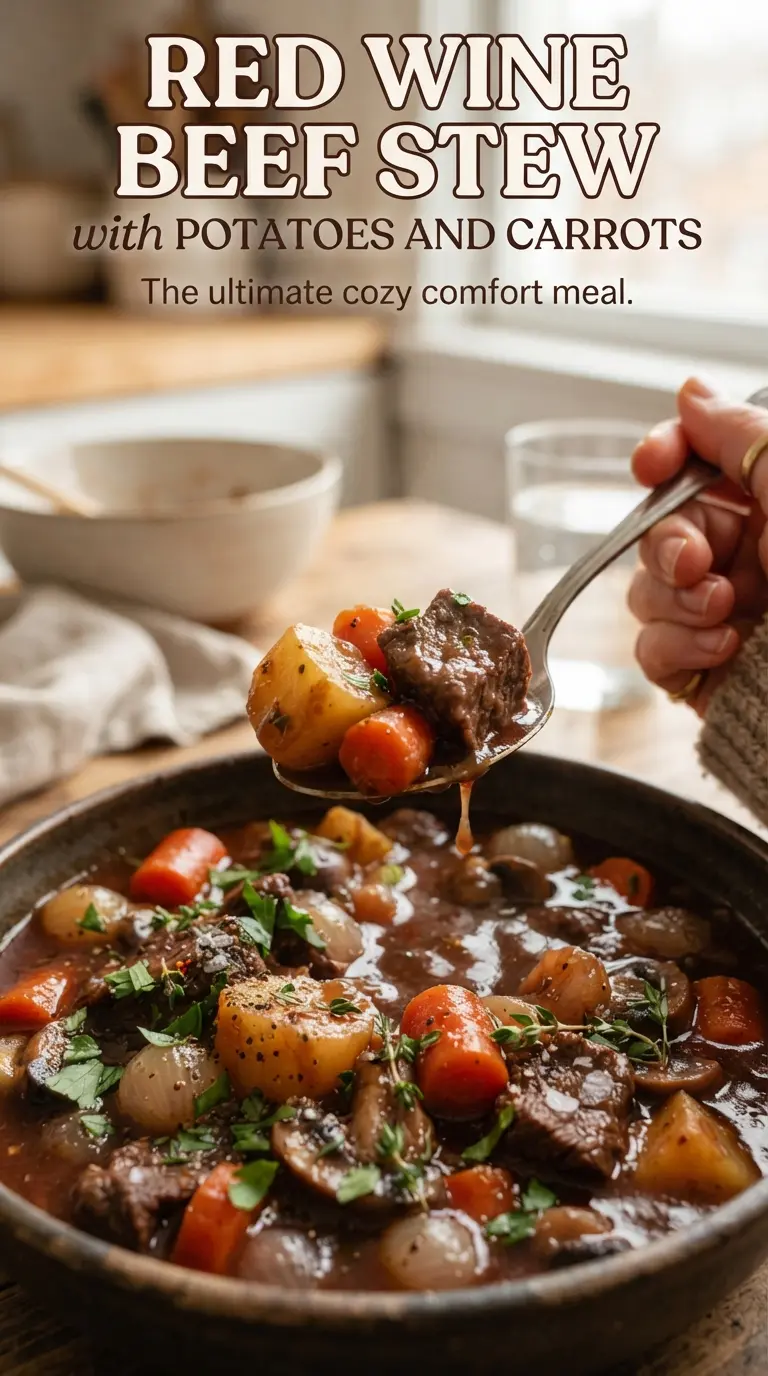
- Beef chuck — This is the cut that turns silky after a long braise. Leaner beef won’t give you the same spoon-tender texture, and it can dry out before the vegetables are done.
- Dry red wine — This builds the stew’s signature color and depth. Pick something you’d actually drink; a harsh wine gets harsher as it reduces. If you need a substitute, use more beef broth plus 1 tablespoon extra balsamic, but the flavor will be less layered.
- Tomato paste — It’s not there to make the stew taste like tomato. It adds concentration and a little sweetness, which rounds out the wine and broth.
- Yukon gold potatoes — They stay creamy without dissolving into the broth. Russets break down faster and will cloud the stew.
- Fresh thyme and bay leaves — These bring the braise into French territory fast. Dried thyme works in a pinch, but use less because it can take over if you’re heavy-handed.
How to Build the Braise So the Vegetables Stay Whole
Deepening the Onion Base
Cook the onion until it turns soft and translucent, with a few golden edges starting to show. That sweetness balances the wine later. Add the garlic and tomato paste for just a minute; once the paste darkens slightly, the pot smells richer and less raw. If the garlic browns hard, it turns bitter, so keep the heat moderate.
Reducing the Wine
When the wine hits the hot pot, scrape up every browned bit from the bottom. Those bits dissolve into the braising liquid and carry most of the flavor. Let the wine simmer until it reduces by about a third; if you add the broth too early, the wine stays sharp and thin instead of turning round and deep.
Slow Braising in the Oven
Once the broth, balsamic, herbs, and beef go in, cover the pot and move it to the oven. The low, steady heat tenderizes the chuck without beating it up the way a hard boil can. After two hours, the beef should be starting to yield when pierced, but not falling apart yet. That’s the moment to add the potatoes and carrots so they finish tender instead of collapsing.
Finishing the Pot
The last hour is for the vegetables and the final texture. When the potatoes are just tender and the carrots can be pierced cleanly with a knife, pull the pot and remove the thyme stems and bay leaves. Stir in the parsley at the end so it stays fresh and bright against the dark broth.
How to Adapt This for a Bigger Pot, a Lighter Pot, or No Wine at All
For a gluten-free version
Skip the flour and brown the beef without it, then simmer the finished stew a little longer with the lid off if you want a thicker broth. You lose a touch of body, but the flavor stays intact and the texture is still rich.
For a wine-free stew
Replace the wine with extra beef broth plus 2 teaspoons red wine vinegar. You’ll lose some of the dark fruit notes, but the vinegar keeps the broth from tasting heavy.
For a thicker, spoon-coating stew
After the vegetables are tender, simmer the pot uncovered on the stove for 10 to 15 minutes. That reduces the broth without overcooking the beef, which is the better fix than adding more flour at the end.
Storage and Reheating
- Refrigerator: Store covered for up to 4 days. The broth thickens as it sits, and the flavor gets deeper.
- Freezer: Freezes well for up to 3 months. Cool it completely first, then portion it into airtight containers, leaving a little space at the top.
- Reheating: Warm it gently on the stove over medium-low heat until hot. Don’t boil it hard or the beef can tighten and the potatoes can start to break apart.
Answers to the Questions Worth Asking
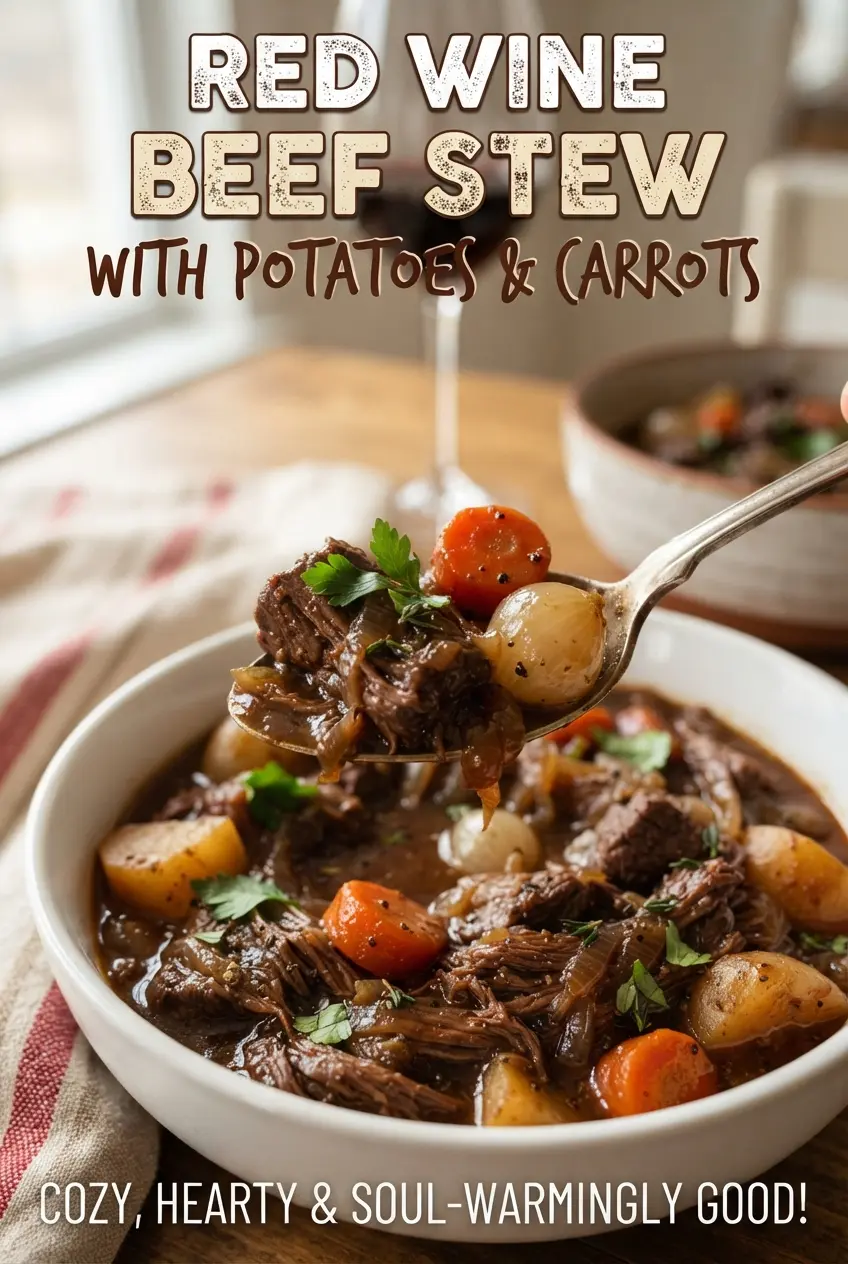
Red Wine Beef Stew with Potatoes and Carrots
Ingredients
Equipment
Method
- Preheat oven to 325F. Season beef with salt and black pepper, toss with flour, and brown in batches in a Dutch oven with olive oil until deep golden all over.
- Keep the Dutch oven at a steady heat while browning. Transfer browned beef to a plate as each batch finishes so it doesn’t steam.
- Cook the diced onion in the Dutch oven for 5 minutes. Add minced garlic and tomato paste and cook for 1 minute, stirring to coat.
- Pour in the dry red wine and simmer for 5 minutes, scraping the bottom. Continue simmering until the liquid is reduced by a third and slightly glossy.
- Add beef broth, balsamic vinegar, fresh thyme, bay leaves, and the browned beef to the pot. Cover and braise in the oven for 2 hours at 325F.
- Add the Yukon gold potatoes and carrots, then return to the oven covered. Braise for 1 hour more until everything is tender and the sauce clings to the beef.
- Remove thyme sprigs and bay leaves, then top with chopped parsley. Let the stew stand for 5 minutes so the sauce settles before serving.