
Juicy BBQ chicken starts with protecting the meat long before the sauce goes on. The outside gets smoky and caramelized, but the inside stays tender because the chicken cooks mostly over indirect heat and only finishes over the flame once the sauce has had time to set. That keeps the glaze sticky instead of burnt and gives you chicken that actually stays moist when you cut into it.
The small details matter here: drying the chicken first helps the seasoning cling, a little apple cider vinegar loosens the BBQ sauce just enough for brushing, and smoked paprika deepens the grilled flavor without needing a complicated rub. You don’t need fancy tools or a long marinade. You just need steady heat, a watchful eye, and the patience to sauce at the end instead of too early.
Below, I’ll walk through the part that matters most on the grill, plus the small swaps and timing notes that keep this BBQ chicken juicy from the first bite to the last.
The chicken stayed juicy all the way through, and brushing on the sauce during the last 10 minutes gave me that sticky, caramelized finish without any burnt spots.
Save this juicy BBQ chicken for the nights when you want smoky grilled chicken with a sticky glaze and almost no cleanup.
The Reason BBQ Chicken Turns Dry Before It Should
Most BBQ chicken dries out because people put the sauce on too early and keep cooking it over high heat. Sugar in the sauce burns before the chicken is done, and the meat keeps losing moisture while you wait for the center to catch up. The fix is simple: cook the chicken mostly over indirect heat, then glaze it near the end when it’s already close to temperature.
That change does two things at once. It gives the chicken time to cook through gently, and it lets the sauce reduce into a sticky coating instead of a dark, bitter crust. If you’ve ever pulled chicken off the grill with blackened sauce and bland meat underneath, that’s the problem this method solves.
- Indirect heat keeps the outside from overcooking while the inside reaches 165°F.
- Brushing late lets the sauce caramelize instead of scorch.
- Turning every 10 minutes helps the pieces cook evenly, especially if you’re grilling mixed cuts like thighs and breasts.
What Each Ingredient Is Doing in This Grill Setup
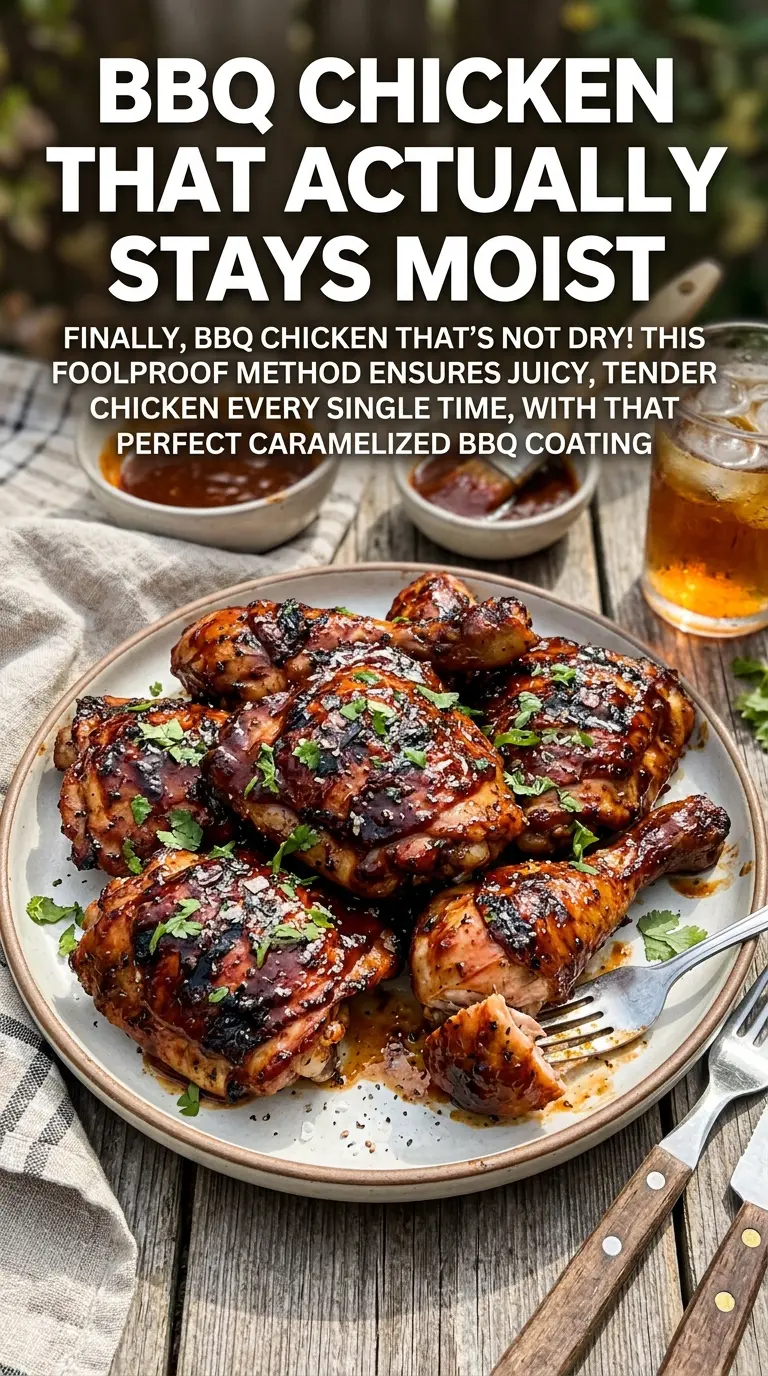
- Chicken pieces — A mix of legs, thighs, and breasts gives you a better spread of texture and doneness. Thighs stay the juiciest, while breasts need the gentlest heat so they don’t dry out before the darker meat is ready.
- BBQ sauce — Use a sauce you already like, because it becomes the backbone of the finished dish. A thick, sweet sauce will caramelize faster, while a thinner one gives you a little more room if your grill runs hot.
- Apple cider vinegar — This loosens the sauce just enough to brush on in thin layers and keeps the glaze from tasting heavy. White vinegar works in a pinch, but cider vinegar has a rounder edge that fits BBQ better.
- Smoked paprika — This adds smoke without needing a smoker. It matters most if you’re grilling on a gas grill, where you want extra depth to back up the sauce.
- Olive oil — A light coating helps the seasoning stick and keeps the surface from drying before the skin or exterior has a chance to brown.
Getting the Chicken Cooked Through Without Burning the Sauce
Seasoning the Chicken First
Pat the chicken dry before anything else. If the surface is wet, the seasoning slides off and the skin steams instead of browning. A thin coat of olive oil helps the salt and pepper cling, and it also encourages a little color once the chicken hits the grill.
Mixing the Glaze
Stir the BBQ sauce, apple cider vinegar, and smoked paprika together until the sauce looks smooth and a little looser than it started. That extra fluidity matters because a thick sauce will clump on the chicken and burn before it can set. You want it brushable, not watery.
Grilling Over Indirect Heat
Lay the chicken over indirect heat and close the lid. The goal here is steady, even cooking, not a hard sear. Turn the pieces every 10 minutes so no side sits too close to the flame for too long, and watch for the surface to look opaque and slightly glossy as it cooks through.
Finishing With Sauce and Direct Heat
During the last 10 minutes, brush on the sauce and move the chicken over direct heat just long enough to caramelize the glaze. Keep the lid open or partially open so you can watch the color closely. If the sauce starts to darken too fast, move the chicken back to indirect heat right away; that’s the moment that saves the whole batch.
Resting Before Serving
Let the chicken rest for 5 minutes after it comes off the grill. That short pause keeps the juices inside the meat instead of running out onto the cutting board. If you slice too soon, even perfectly cooked chicken will look drier than it is.
Three Ways to Use This BBQ Chicken Without Losing the Juicy Finish
Use Thighs Only for the Safest Juicy Result
All thighs give you the most forgiving version of this recipe. They handle a little extra grill time better than breasts, and the texture stays moist even if your grill has hot spots. This is the best route if you’re cooking for a crowd and want fewer timing worries.
Make It Dairy-Free and Gluten-Free by Checking the Sauce Label
The recipe is naturally dairy-free, but BBQ sauce can hide gluten in thickeners or flavorings, so read the label if that matters for your table. A gluten-free sauce keeps the same sticky finish, and you don’t lose anything in texture as long as the sauce is still thick enough to glaze.
Turn It Into Oven BBQ Chicken When Grilling Isn’t an Option
Bake the seasoned chicken at 400°F on a rack or lined sheet pan until nearly done, then brush on the sauce and broil for a minute or two at the end. You won’t get the same smoke, but you’ll keep the juicy interior and get a caramelized top without standing over the grill.
Storage and Reheating
- Refrigerator: Store leftovers in an airtight container for up to 4 days. The sauce may thicken on the chicken, but the meat stays tender if you don’t overcook it the first time.
- Freezer: Freeze cooked chicken for up to 2 months. Wrap it well and freeze it with a little extra sauce if you can, since that helps protect the surface from drying out.
- Reheating: Warm it covered in a 300°F oven with a splash of sauce or a spoonful of water until heated through. The mistake to avoid is blasting it in the microwave, which tightens the meat and turns the glaze sticky in the wrong way.
Questions I Get Asked About This Recipe
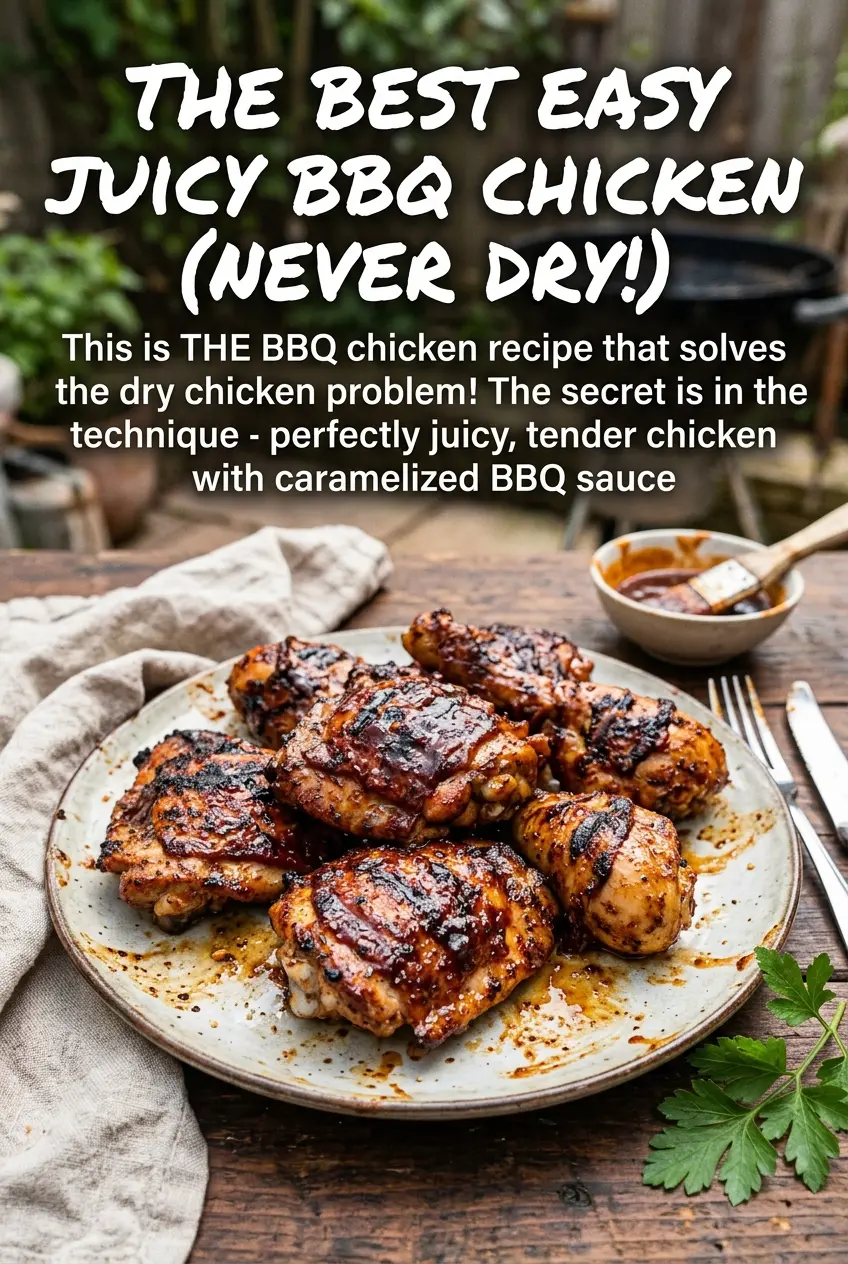
The Best Easy Juicy BBQ Chicken
Ingredients
Equipment
Method
- Pat the chicken pieces dry, then rub with olive oil and season all over with salt and pepper.
- Keep the seasoned chicken at room temperature while you prepare the sauce and heat the grill.
- Mix BBQ sauce with apple cider vinegar and smoked paprika until smooth and evenly combined.
- Preheat your grill to medium heat, 350-400°F.
- Place the chicken over indirect heat and grill for 30-35 minutes, turning every 10 minutes for even cooking.
- In the last 10 minutes, brush generously with BBQ sauce and move the chicken to direct heat.
- Continue grilling and basting until the internal temperature reaches 165°F and the sauce looks caramelized and glossy.
- Let the chicken rest for 5 minutes before serving so the juices stay in the meat.


