
Juicy Greek chicken starts with a marinade that actually seasons the meat instead of just coating it. Lemon, garlic, oregano, and olive oil work together here the way they should: bright, savory, and fragrant, with enough acid to wake up the chicken without turning the texture tight or chalky. When it hits the grill, the edges pick up a little char and the inside stays tender and well-seasoned all the way through.
The trick is balance. Too much lemon and not enough oil can make the surface taste harsh. Too little salt and the chicken tastes flat no matter how long it sits. A touch of Dijon helps the marinade cling, and fresh oregano gives you that clean, herbal Greek flavor that dried herbs alone can’t quite match. This is the kind of marinade that works just as well on thighs as it does on breasts, which makes it easy to use with whatever chicken you already have.
Below, I’ve included the one marinating mistake that ruins good chicken, what to swap if you only have dried oregano, and the best way to cook it so you get flavor on the outside without drying out the center.
The lemon and oregano came through beautifully, and the chicken stayed juicy after grilling. I marinated thighs overnight, and the flavor reached all the way through instead of just sitting on the surface.
Save this Greek chicken marinade for grilled chicken that comes out lemony, garlicky, and deeply seasoned every time.
The Main Reason Greek Marinades Taste Flat
The difference between a good Greek chicken marinade and one that just smells nice is salt, acid, and time working together. Lemon juice brings the brightness, but it also starts changing the chicken’s texture the longer it sits, so the goal is not to drown the meat in acid and hope for the best. The olive oil softens that edge and helps carry the garlic and herbs across the surface.
The biggest failure point is using too much lemon for too long. Four hours gives the chicken time to take on flavor without turning stringy; 24 hours is the outer limit, especially if you’re using boneless breasts. If you’ve had marinades that tasted bold in the bowl but faded on the grill, it’s usually because they were missing enough salt or never had enough contact time to season the meat through.
What Each Ingredient Is Actually Doing in This Marinade
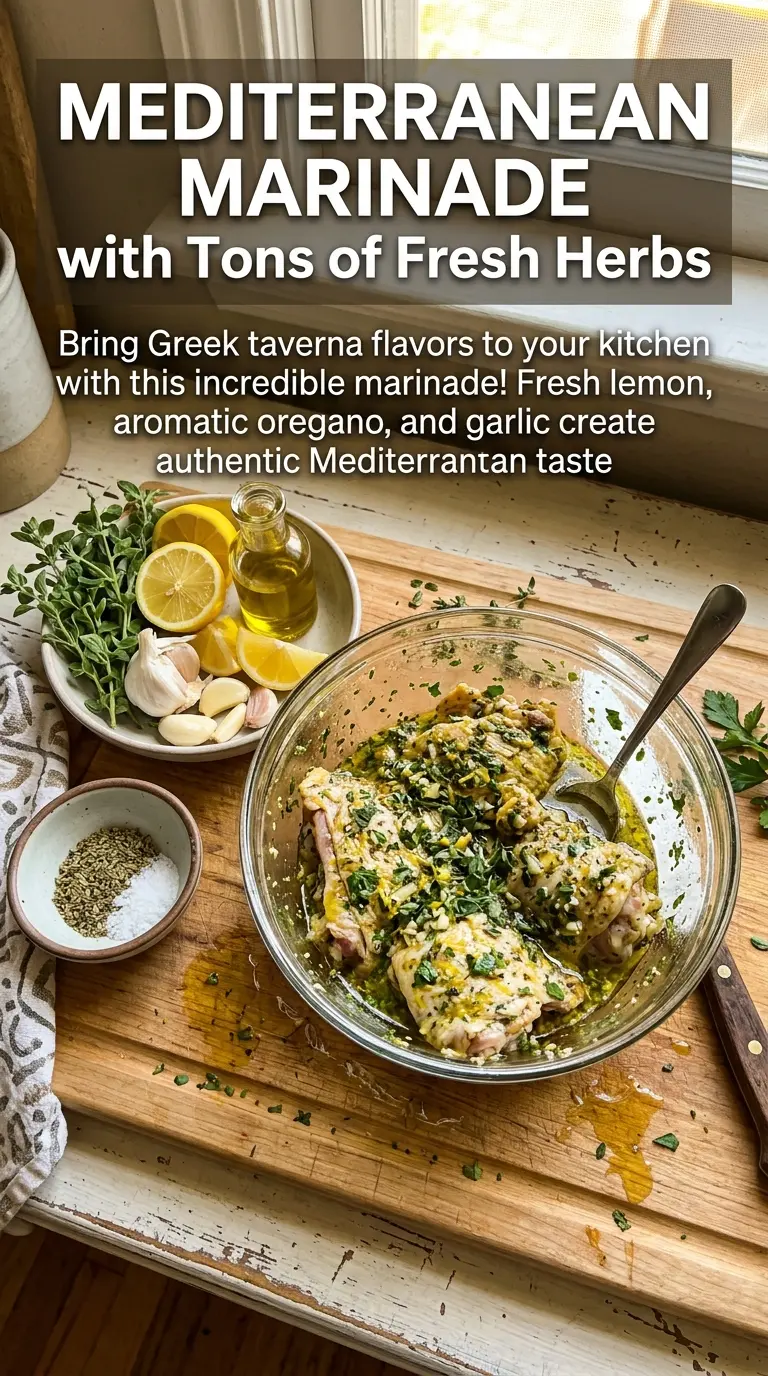
- Olive oil — This carries the herbs and garlic and helps the chicken brown instead of drying out. Use a good-tasting olive oil if you have it, since it makes up a big part of the marinade.
- Lemon juice and zest — The juice gives the marinade its sharp Greek brightness, while the zest adds the lemon flavor that acid alone can’t deliver. Don’t skip the zest; it keeps the marinade from tasting thin.
- Garlic — Fresh minced garlic gives the marinade its backbone. Jarred garlic works in a pinch, but the flavor is sharper and less rounded.
- Fresh oregano — This is the herb that makes the marinade taste distinctly Greek. If you only have dried oregano, use half the amount and crush it between your fingers before adding it so it releases more oil.
- Dijon mustard — It doesn’t make the marinade taste like mustard. It helps everything emulsify so the oil and lemon don’t separate instantly, which means the seasoning coats the chicken more evenly.
- Chicken cut — Thighs stay juicier and forgive a longer marinating time, while breasts need more attention so they don’t overcook. Any cut works, but the cooking time should always follow the piece you chose, not the clock alone.
Getting the Marinade, Grill, and Rest Time in the Right Order
Whisking the Marinade Until It Looks Cohesive
Start by whisking the oil, lemon juice, zest, garlic, oregano, thyme, Dijon, salt, and pepper until the mixture looks slightly thickened and no longer separates immediately. That small bit of emulsion helps the herbs cling to the chicken instead of sliding to the bottom of the bag. If the marinade looks broken, keep whisking for another 20 seconds; Dijon usually pulls it together.
Marinating Without Overdoing the Acid
Put the chicken and marinade in a zip-top bag or shallow dish, then turn everything so every piece is coated. Four hours is the sweet spot for most cuts, though thighs can go longer and breasts should stay closer to the lower end. If you leave it for much more than a day, the lemon starts to work against you and the outside can get mushy before the inside takes on enough flavor.
Grilling to Juicy, Not Dry
Preheat the grill to medium-high so the chicken sears quickly instead of steaming. Scrape off excess marinade before the chicken goes on, since wet garlic and herbs can burn and taste bitter. Cook until the thickest part hits 165°F, but start checking early because chicken breasts, thighs, and cutlets all finish at different speeds.
Resting Before You Slice
Let the chicken rest for 5 minutes after it comes off the grill. That short pause keeps the juices from spilling out the second you cut in. If you slice too early, even perfectly cooked chicken can seem dry because all the moisture ends up on the cutting board instead of staying in the meat.
How to Adapt This Greek Chicken for Different Cuts and Different Kitchens
Boneless chicken breasts
Use the shorter end of the marinating window and watch the grill closely. Breasts take on flavor fast but dry out faster than thighs, so pull them as soon as they reach 165°F and let them rest before slicing.
Dairy-free, gluten-free, naturally
This marinade already fits both of those needs without any changes. That’s part of why it’s such a reliable weeknight option: the flavor comes from oil, citrus, herbs, and garlic, not from cream, soy sauce, or bread-based ingredients.
No grill, no problem
Bake the marinated chicken at 425°F on a sheet pan until done, then broil for a minute or two if you want a little more color. You won’t get the same smoky edges as a grill, but the lemon and oregano still come through cleanly.
Storage and Reheating
- Refrigerator: Cooked chicken keeps for 3 to 4 days in a sealed container. Slice it only after it cools so it holds onto more moisture.
- Freezer: The marinated raw chicken freezes well for up to 2 months. Freeze it in the marinade, then thaw it overnight in the refrigerator before cooking.
- Reheating: Reheat gently in a covered skillet over low heat with a splash of water or chicken broth. High heat dries out grilled chicken fast, especially breasts, so don’t blast it in the microwave unless you want tough edges.
Answers to the Questions Worth Asking
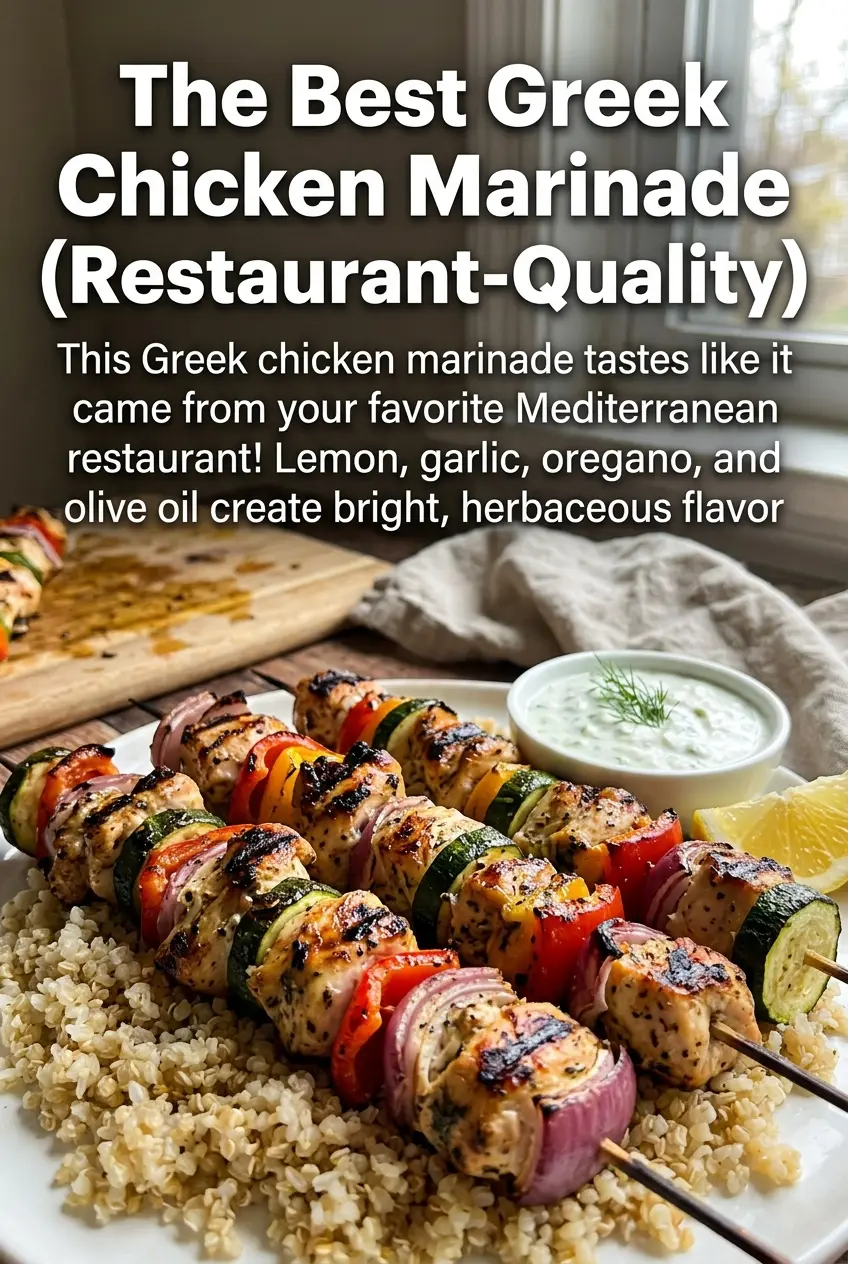
The Best Greek Chicken Marinade
Ingredients
Method
- Whisk together olive oil, lemon juice, lemon zest, garlic, oregano, thyme, Dijon mustard, salt, and pepper until well combined and fragrant.
- Place the chicken in a large zip-top bag and pour the marinade over it, turning to coat evenly.
- Marinate in the refrigerator for 4-24 hours, keeping the bag sealed and turning once halfway through if possible.
- Preheat the grill to medium-high heat and oil the grates lightly to prevent sticking.
- Grill the chicken until the internal temperature reaches 165°F, timing varying by cut and thickness.
- Let the chicken rest for 5 minutes after grilling, then serve with lemon wedges.


