
Grilled salmon kebabs come off the grill with crisp-edged vegetables, juicy salmon, and just enough smoky char to make the whole plate taste like more effort went into it than actually did. The salmon stays tender because it cooks fast and goes on the skewer in even-sized pieces, while the vegetables pick up the marinade and soften at the edges without collapsing.
The trick here is keeping the marinade bright instead of heavy. Lemon juice and dill give the salmon that clean, fresh flavor that works so well with grilled fish, but the fish only needs a short soak. Leave it too long and the acid starts to cure the surface, which changes the texture before it even hits the grill. The other thing that matters is cutting everything to a similar size so the salmon and vegetables finish together instead of one going dry while the other is still raw.
Below, I’ve included the timing that keeps the salmon from sticking, the one marinating window that works best, and a few useful swaps if you want to change up the vegetables or make the recipe fit what’s already in your kitchen.
The salmon stayed so tender and the zucchini had just enough char without turning mushy. I marinated it for 30 minutes like you said, and the lemon-dill flavor came through perfectly.
Save these grilled salmon kebabs for the nights when you want smoky salmon, lemony vegetables, and almost no cleanup.
The Short Marinate Window That Keeps Salmon Tender
Salmon is one of those proteins that can go from silky to dry fast if you push it too far, and the lemon in this marinade is the reason timing matters. Thirty minutes is enough for the garlic, dill, and olive oil to season the fish without letting the acid start changing the surface texture. That’s the line to respect here.
The other mistake people make is using a marinade that’s too thin or too aggressive. Olive oil carries the herbs and helps the salmon brown, while the lemon juice brightens everything without needing much time. If the fish sits in the acid for much longer than half an hour, the outside starts to firm up before the grill even gets involved.
- Short marinating time — This keeps the salmon tender and prevents a cured, chalky edge.
- Olive oil — It helps the herbs cling and gives you a better grilled surface than lemon juice alone.
- Fresh dill — Dried dill works in a pinch, but fresh dill has the clean, grassy note that fits grilled salmon best.
- Even-sized salmon cubes — Cut them as close to 1 inch as you can so the fish cooks at the same pace as the vegetables.
What the Salmon, Zucchini, and Lemon Are Each Doing Here
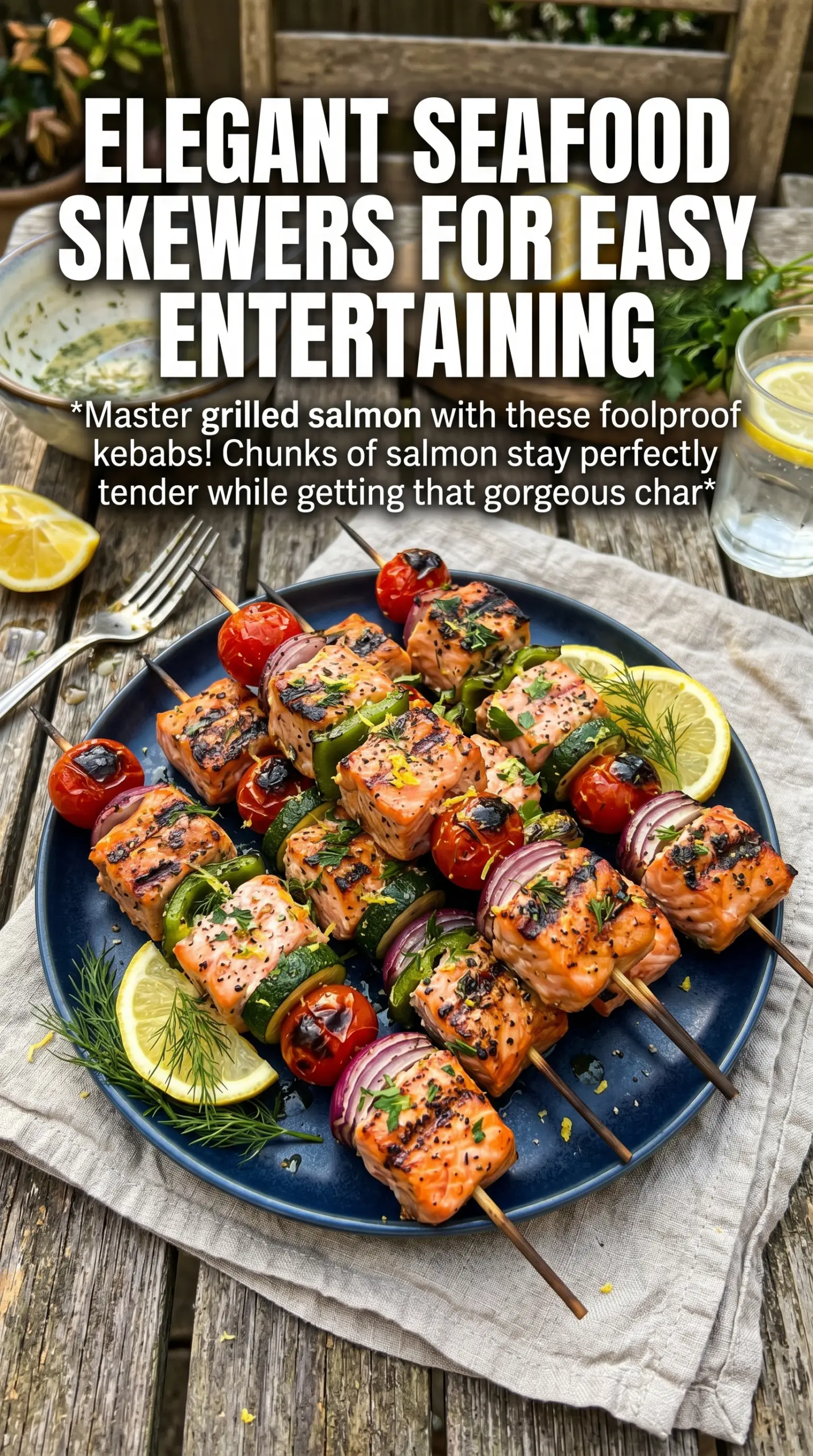
- Salmon fillets — Use a firm fillet that holds together when cubed. Skinless salmon is easiest for skewers, but if you only have skin-on fillets, remove the skin first so the pieces thread cleanly.
- Zucchini — This vegetable softens quickly and picks up grill marks fast. Cut it into sturdy chunks so it doesn’t collapse before the salmon is done.
- Red bell pepper — It brings sweetness and color, and it keeps its shape better than softer vegetables. Yellow or orange peppers work the same way.
- Red onion — The edges sweeten on the grill and balance the lemon. Slice it into thick pieces so it stays on the skewer instead of falling apart.
- Wooden skewers — Soak them long enough to keep the exposed ends from burning. If you’re using metal skewers, skip the soaking step and still oil them lightly so the fish releases cleanly.
Building the Skewers So the Fish and Vegetables Finish Together
Whisking the Marinade
Start by whisking the olive oil, lemon juice, garlic, dill, salt, and pepper until the mixture looks unified and a little thickened. You don’t want the lemon floating on top in a separate layer, because uneven marinade means uneven flavor on the skewers. If the garlic is very wet or the dill is clumped, break it up before the fish goes in.
Letting the Salmon Take on Flavor Without Curing
Add the salmon to the marinade and let it sit for 30 minutes, not longer. The fish should look glossy and lightly seasoned, not opaque on the outside. If you leave it too long, the acid tightens the surface and the salmon loses that soft, flaky texture after grilling.
Threading for Even Cooking
Alternate salmon, zucchini, pepper, and onion on the skewers, leaving a little space between pieces so the heat can move around them. Packed skewers steam before they brown, which is why soggy vegetables show up so often on grilled kebabs. If the salmon cubes are slipping, push them through the widest part and keep the pieces snug but not crushed.
Grilling Until Just Cooked Through
Cook over medium-high heat for 3 to 4 minutes per side, turning once the salmon releases easily. If it sticks, give it another 20 to 30 seconds; fish usually tells you when it’s ready by loosening from the grates. Pull them off as soon as the salmon turns opaque and flakes at the center, because a minute too long is enough to dry out the edges.
Swap the Vegetables Based on What Holds Up on the Grill
Broccoli florets, cherry tomatoes, or thick mushrooms can stand in for the zucchini and pepper, but keep the pieces substantial so they don’t burn before the salmon is done. Softer vegetables like squash need the same treatment as zucchini: cut large enough to stay on the skewer and give them a little space. The result changes the flavor balance, but the grilling method stays the same.
Make It Dairy-Free Without Changing a Thing
This recipe is already dairy-free, which makes it easy to serve as written. The clean lemon, garlic, and dill combination gives you a bright finish without needing yogurt, butter, or cream. That means the grill flavor stays front and center instead of getting buried under a rich sauce.
Use Metal Skewers for Easier Turning
Metal skewers make the kebabs easier to flip and don’t need to be soaked first. They also conduct heat through the center of the salmon, which helps the middle cook a little more evenly. If you use them, still oil the skewers lightly so the fish releases cleanly.
Scale Up for a Crowd Without Crowding the Grill
Double the marinade and prep the skewers ahead, but grill in batches so the kebabs have space over the heat. Crowding traps steam and leaves the vegetables soft instead of browned. Holding the finished kebabs loosely tented with foil for a few minutes is fine, but don’t stack them or the grill marks will fade.
Storage and Reheating
- Refrigerator: Store leftovers in an airtight container for up to 2 days. The salmon stays usable, but the vegetables soften.
- Freezer: Freezing is not ideal once the kebabs are cooked. The salmon can turn dry and the vegetables lose their texture when thawed.
- Reheating: Warm gently in a covered skillet over low heat or in a 300°F oven just until heated through. High heat dries salmon out fast, so don’t blast it in the microwave unless you don’t mind a firmer texture.
Questions I Get Asked About This Recipe
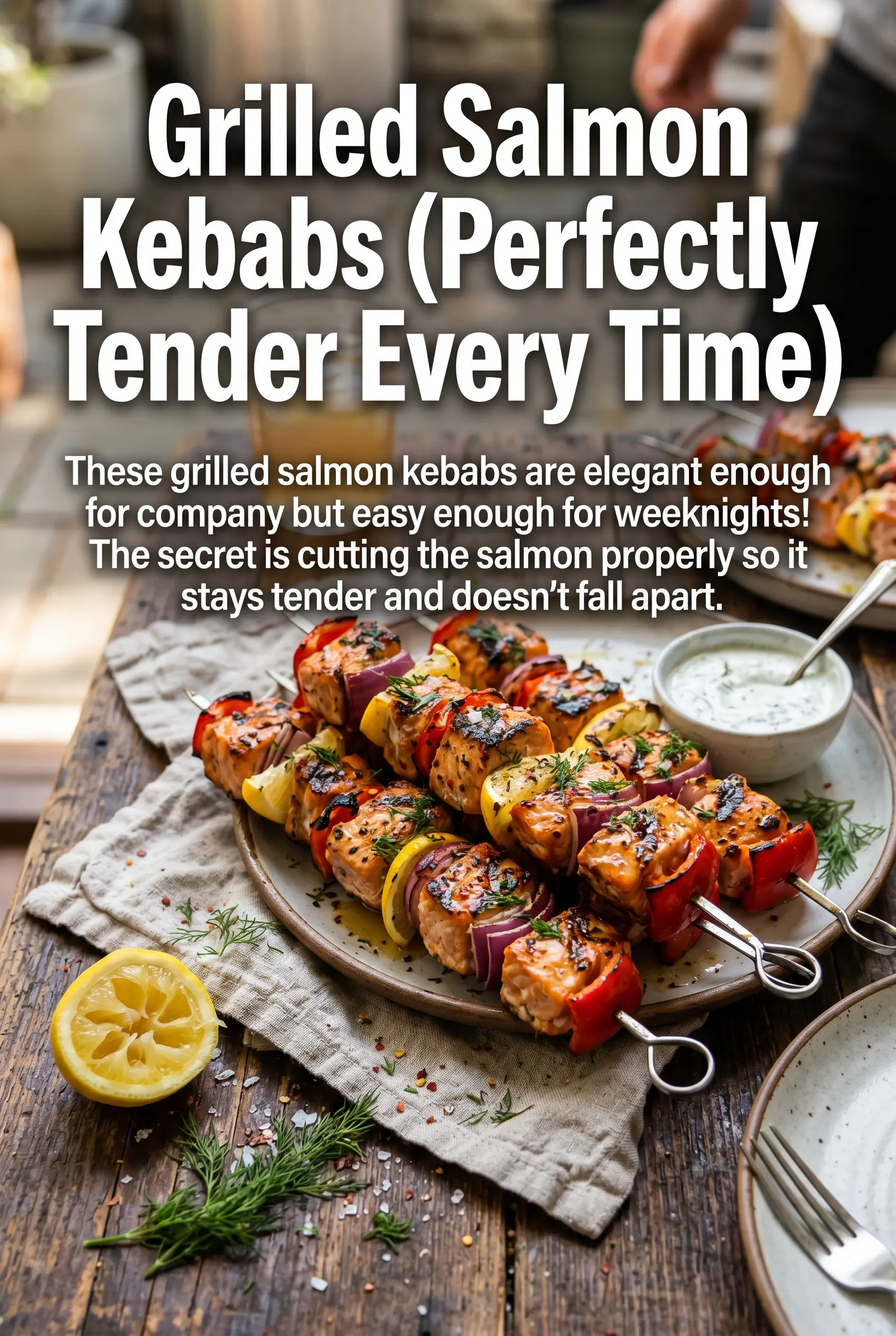
Grilled Salmon Kebabs
Ingredients
Equipment
Method
- Whisk together olive oil, lemon juice, minced garlic, chopped dill, salt, and black pepper until combined and aromatic, 30-60 seconds, and you should see the mixture turn slightly lighter.
- Transfer the salmon cubes to a container and coat with the marinade, then let it marinate 30 minutes in the refrigerator (do not marinate longer because the acid can start cooking the fish).
- Thread salmon cubes and vegetable chunks alternately onto the soaked wooden skewers, leaving a little space between pieces so they grill evenly.
- Preheat the grill to medium-high heat, aiming for steady heat before cooking the kebabs.
- Place the salmon kebabs on the grill and cook for 3-4 minutes per side, turning once, until the salmon is cooked through and the vegetables are lightly charred with grill marks.
- Serve immediately with lemon wedges and fresh dill for a bright, herb-forward finish.


