
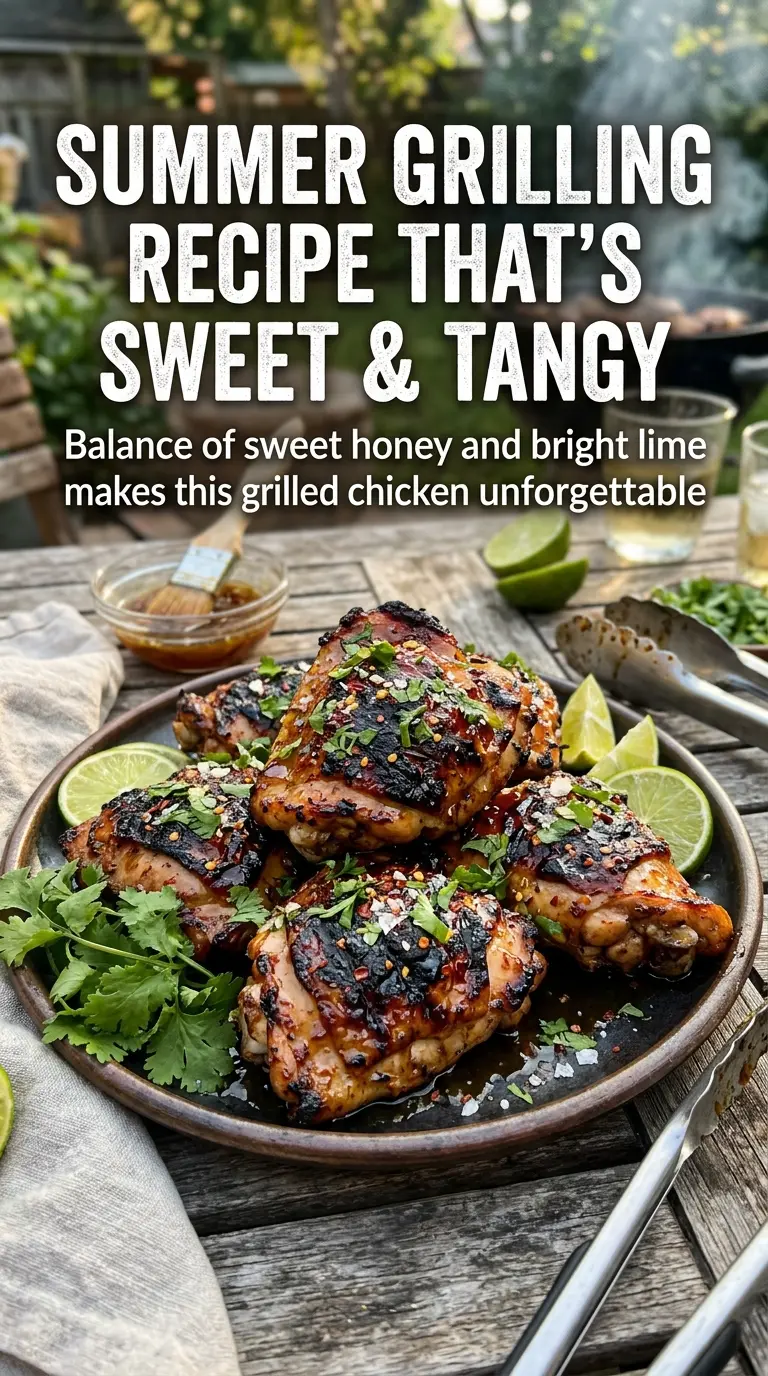
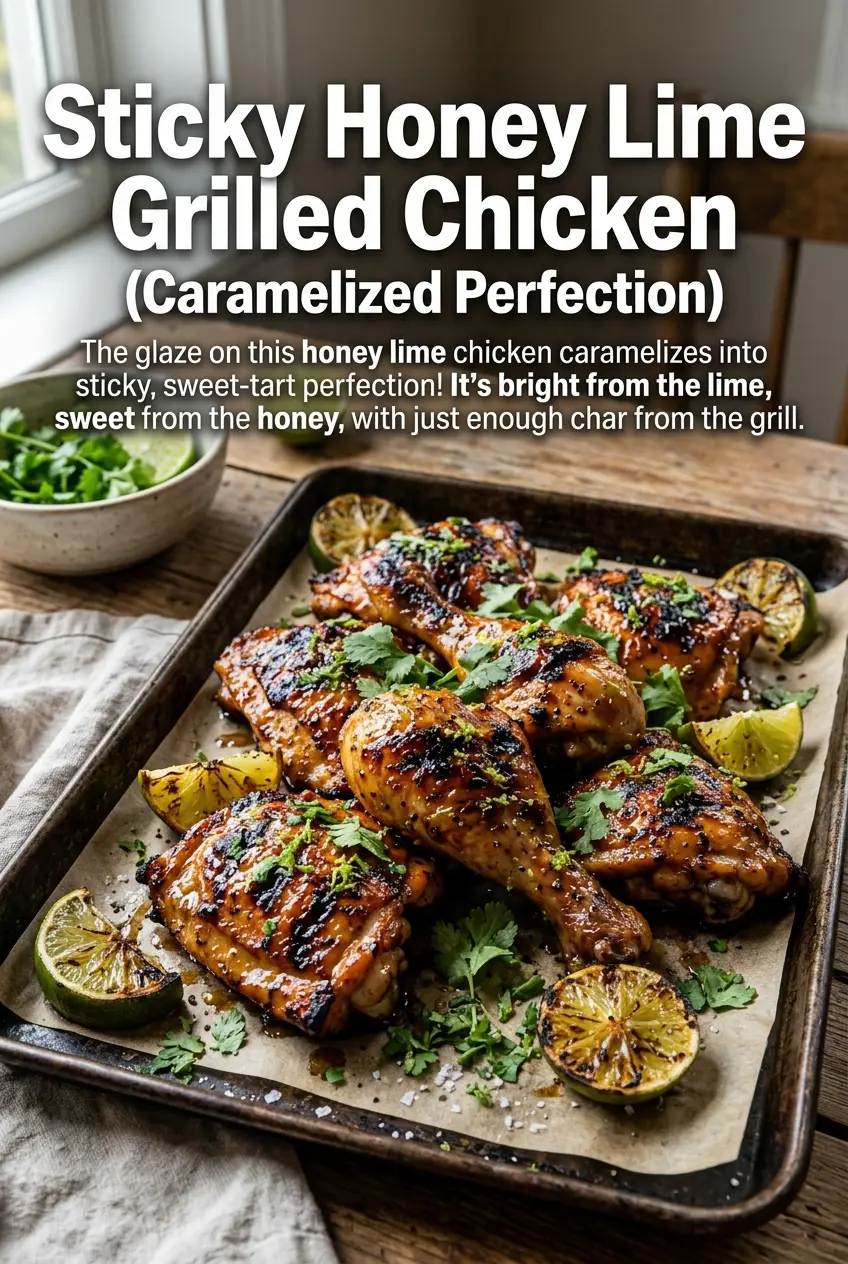
Sticky honey lime grilled chicken lands on the table with caramelized edges, a glossy glaze, and that sweet-tart bite that keeps you going back for one more piece. The chicken stays juicy under the heat, while the honey and lime reduce on the grill into a coating that clings instead of running off. It’s the kind of main dish that feels simple while it’s cooking and special when you slice into it.
The key is balance. Honey gives you the sticky finish, but lime juice and zest keep it from turning one-note or heavy. I like thighs for their forgiveness and deeper flavor, though drumsticks work just as well if you want something easy to serve outdoors. The garlic, cumin, and chili powder don’t shout; they build a warm backbone that plays well with the citrus.
Below, I’ve included the small details that matter most here: how to keep the glaze from burning before the chicken cooks through, why part of the marinade has to be reserved for basting, and what to change if you’re using a different cut.
The glaze thickened up beautifully on the grill, and the lime zest gave it a bright finish that kept the honey from tasting too sweet. My chicken thighs came off juicy with those sticky charred edges everyone fought over.
Save this sticky honey lime grilled chicken for your next grill night when you want juicy chicken with a glossy citrus glaze.
The Trick to Keeping Honey Glaze Sticky Instead of Burned
Honey burns faster than most people expect, especially once it’s brushed onto a hot grill. The fix is not to avoid the honey; it’s to keep the heat at medium and use a reserved portion of marinade for basting instead of brushing on the bowl you used for raw chicken. That gives you the shine and flavor without dragging raw juices back onto cooked meat.
Chicken thighs give you a little more room for error because the fat keeps them juicy even if they spend an extra minute or two over the fire. Drumsticks work too, but they need a bit more patience around the bone. The goal here is a dark, sticky exterior with cooked-through meat that still feels supple when you cut into it.
- Medium heat matters — too hot and the honey scorches before the chicken reaches temperature; too cool and you lose that lacquered finish.
- Reserved marinade is for basting only after the split — separating it before the chicken goes in keeps the glaze clean and safe to brush on.
- Thighs are the easiest choice — they stay moist and handle the sugar in the marinade better than lean cuts.
- Zest does more than juice — it gives the lime flavor real presence, even after the marinade hits the grill.
What the Honey, Lime, and Spices Are Each Doing Here
- Honey — this is the ingredient that gives you the sticky finish and helps the surface caramelize. There’s no substitute that quite behaves the same way on the grill, though maple syrup can work in a pinch with a slightly darker, less floral result.
- Lime juice and zest — juice brings the brightness and helps tenderize the surface; zest keeps the citrus flavor from disappearing during cooking. If you only use juice, the flavor fades more than you’d expect.
- Chicken thighs or drumsticks — thighs give the best balance of juiciness and char, while drumsticks are sturdy and crowd-friendly. If you use boneless thighs, cut the grilling time down and watch the glaze closely because they cook faster.
- Cumin and chili powder — these don’t make the chicken spicy; they give the glaze a warm, savory depth that keeps it from tasting like straight honey and lime.
- Olive oil — it helps carry the marinade across the chicken and slows down sticking on the grill grates. A neutral oil works too, but olive oil adds a little more body.
Building the Glaze on the Grill Without Losing the Juices
Mixing the Marinade
Whisk the honey, lime juice, lime zest, olive oil, garlic, cumin, chili powder, salt, and pepper until the honey loosens and the mixture looks cohesive. It won’t become fully smooth like a sauce, and that’s fine. The garlic and spices need to be evenly dispersed so they don’t clump when they hit the heat. Set aside one-third of the marinade before the chicken goes in; once raw chicken touches it, that portion is done for safety.
Marinating for Flavor, Not for Too Long
Coat the chicken and let it sit for 1 to 4 hours. Less than an hour and the seasoning stays on the surface; much longer than 4 hours and the lime can start making the texture a little mushy, especially on thinner pieces. Use a dish or bag that lets every piece stay in contact with the marinade. Turn the chicken once or twice if you can so the glaze reaches all sides.
Grilling to a Sticky Finish
Preheat the grill to medium and oil the grates lightly if they tend to cling. Lay the chicken on and let it sear before you move it; if it sticks hard, give it another minute and it should release more cleanly. Baste with the reserved marinade during the last stretch of cooking, not right at the start, so the sugar has time to cling instead of burning instantly. Pull the chicken when the thickest part reaches 165°F and the exterior looks shiny, lightly charred, and tacky instead of wet.
Dairy-Free and Naturally Gluten-Free
This recipe already fits both of those needs as written, which is part of why it works so well for a mixed crowd. Just check your spices for hidden fillers if you’re cooking for someone with a serious allergy, and keep the grill surface clean so no breaded or butter-based residue transfers to the chicken.
Boneless Thighs for Faster Weeknights
Boneless thighs cut the cook time down and still hold onto the sticky glaze beautifully. They need closer attention because they can go from juicy to dry in a hurry, so start checking them a few minutes early and pull them as soon as they hit temperature.
Make It Milder or Brighter
For a milder version, cut the chili powder in half and lean into extra lime zest. For a bolder version, add a pinch more chili powder or a little crushed red pepper to the marinade, but keep the amount small so the honey still gets to be the star.
Storage and Reheating
- Refrigerator: Store leftovers in an airtight container for up to 4 days. The glaze will thicken as it chills, and the chicken may pick up even more lime flavor overnight.
- Freezer: Freeze cooked chicken for up to 2 months. Wrap portions tightly and thaw in the refrigerator before reheating so the glaze doesn’t separate.
- Reheating: Warm gently in a covered skillet over low heat with a splash of water to loosen the glaze. High heat dries out the chicken fast and can turn the honey coating sticky in the wrong way.
Questions I Get Asked About This Recipe
Sticky Honey Lime Grilled Chicken
Ingredients
Equipment
Method
- Whisk together honey, lime juice, lime zest, olive oil, garlic, cumin, chili powder, salt, and pepper until smooth and fully combined.
- Reserve 1/3 cup of the marinade for basting and set it aside.
- Marinate the chicken for 1-4 hours so the flavors penetrate the meat.
- Preheat the grill to medium heat.
- Grill the chicken for 7-8 minutes per side, brushing with the reserved marinade frequently as the surface begins to caramelize.
- Continue grilling and basting until the internal temperature reaches 165°F and the glaze looks glossy and sticky.
- Garnish with fresh cilantro and serve with lime wedges for bright citrus pop.


