
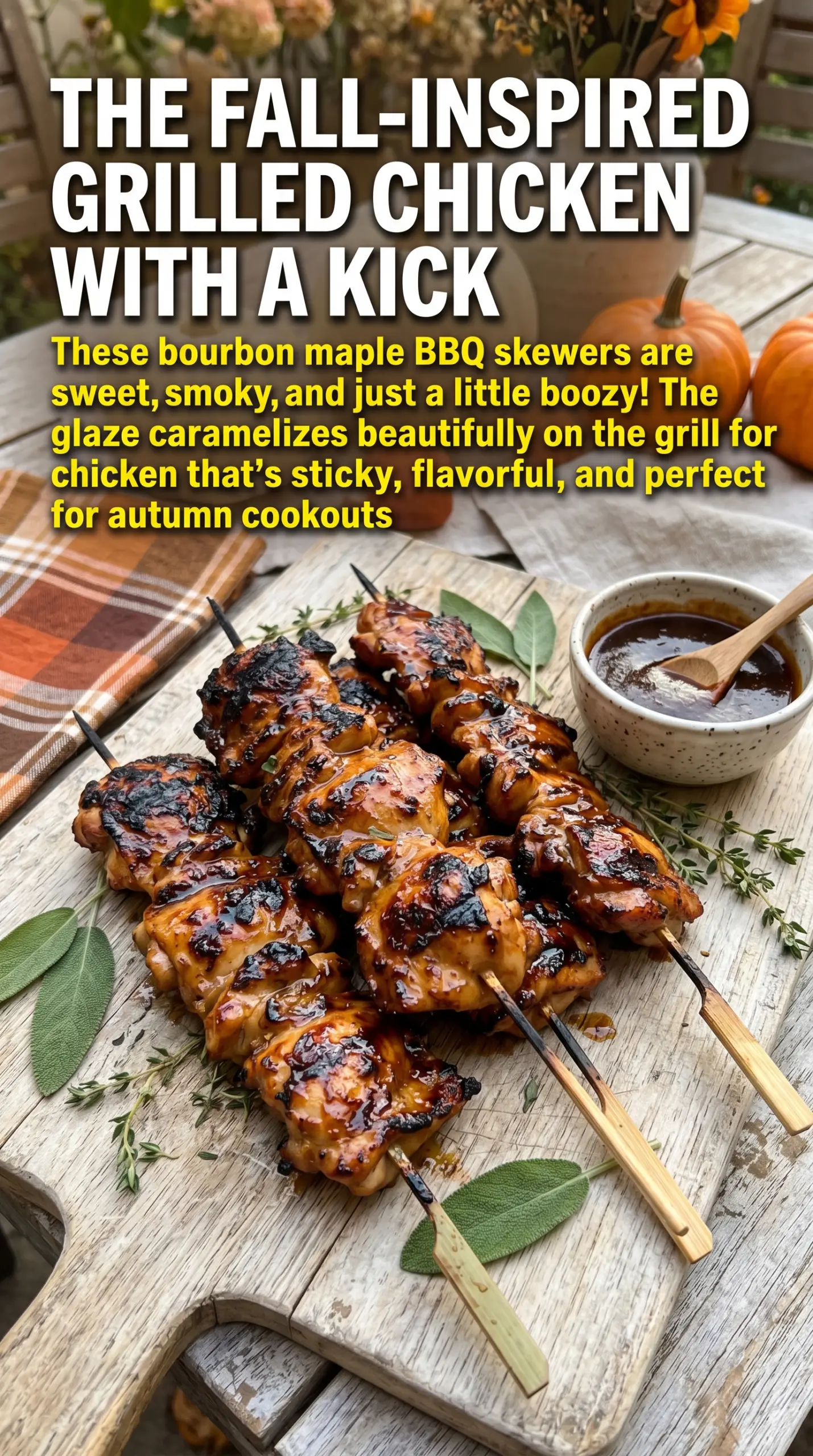
Glossy, caramelized bourbon maple BBQ chicken skewers land on the plate with sticky edges, smoky char, and just enough sweetness to keep people reaching for one more piece. The glaze clings to the chicken instead of sliding off, and the grill marks give it that deep, backyard-cookout look that always disappears fast once the platter hits the table.
What makes this version work is the balance in the marinade. Bourbon brings warmth, maple syrup gives body and shine, BBQ sauce handles the savory base, and a hit of apple cider vinegar keeps the glaze from turning flat or syrupy. The mustard pulls everything together and helps the sauce stay emulsified long enough to baste cleanly on the grill.
Below, I’ve included the part that matters most with sticky skewers: how to keep the glaze from burning before the chicken cooks through, plus a few simple swaps if you want to use what you already have on hand.
The glaze turned out thick and shiny, and brushing it on during the last few minutes kept the chicken from burning. The bourbon-maple flavor came through without tasting too sweet.
Save these bourbon maple BBQ chicken skewers for the next grill night when you want sticky glaze, smoky char, and zero leftover sauce in the bowl.
The Glaze Needs Time to Cook Down, Not Just Stick on the Chicken
The biggest mistake with bourbon maple skewers is treating the marinade like it’s only there for flavor. It also has to reduce. If the glaze goes on too thick and too early, the sugar in the maple syrup and BBQ sauce can scorch before the chicken cooks through, leaving you with bitter edges and pale meat. The better move is to reserve part of the sauce for basting and use that in the last stretch on the grill, when the chicken is mostly cooked and the glaze has time to bubble into a lacquer.
Soak the wooden skewers long enough that they don’t catch fire over medium heat, and keep the grill at a steady medium rather than high. You want a steady sizzle, not flare-ups. If the chicken is browning too fast, move it to a cooler part of the grill and finish it there. That little bit of control is what keeps the glaze dark and sticky instead of burnt.
What Each Ingredient Is Actually Doing in the Glaze
- Chicken breasts — Cubing them evenly matters more than people think. Smaller pieces cook before the glaze has a chance to burn, and uniform size keeps every skewer on the same timeline. Thighs work too if you want a juicier result, but they need a minute or two longer.
- BBQ sauce — This gives you the smoky, savory backbone. A thicker sauce helps the glaze cling better, while a thinner, sweeter sauce will need a little longer on the grill to set. Use a brand you already like, because its flavor shows up clearly here.
- Bourbon — It doesn’t need to taste boozy when the skewers are done, but it does add depth and a warm finish. Don’t swap in plain water or broth and expect the same result. If you want to skip alcohol, use apple juice plus a tiny splash of vanilla for warmth, though the flavor will be gentler.
- Maple syrup — This is what gives the glaze that glossy finish and rounded sweetness. Real maple syrup matters here; pancake syrup won’t reduce the same way and can taste flat. If your syrup is very dark or robust, the glaze will lean a little deeper and less sugary.
- Apple cider vinegar — This keeps the marinade from tasting sticky-sweet. It also helps the sauce cut through the richness of the chicken and the bourbon. If needed, lemon juice can step in, but it will read brighter and less mellow.
- Dijon mustard — It ties the glaze together and helps it emulsify so the bourbon and maple don’t separate. You won’t taste mustard as a distinct flavor, but you’ll notice the sauce feels smoother and more balanced. Yellow mustard works in a pinch, though it tastes sharper and less polished.
Grilling the Skewers Without Burning the Sugar
Marinating for Flavor, Not Soggy Chicken
Let the chicken sit in the sauce for 1 to 4 hours, and don’t push it much past that. The vinegar and bourbon do their best work in that window, but too long in an acidic marinade can start to soften the surface of the chicken in an unhelpful way. Pull out the reserved sauce before the raw chicken goes in so you’ve got a clean basting portion later. That one step keeps the final glaze safe and usable.
Threading and Spacing the Pieces
Soak the skewers first, then thread the chicken with a little space between pieces. Crowding them too tightly blocks heat and slows the cook, which is how the outside starts charring before the center is done. Aim for pieces that touch lightly but don’t pack together. If your chicken cubes are very uneven, put the smaller pieces toward the center of the skewer and the larger ones near the ends so they cook more evenly.
Building the Sticky Finish
Grill the skewers over medium heat for about 5 to 6 minutes per side, basting often with the reserved sauce. You’re looking for a glaze that thickens and darkens slightly, not one that turns black. The chicken is done when the thickest piece reaches 165°F and the glaze looks glossy and tacky, with small bubbles clinging to the surface. If the glaze starts to char before the chicken is cooked through, lower the heat and move the skewers to a cooler part of the grill.
Swap in Chicken Thighs for a Richer Bite
Boneless skinless thighs work well here and stay juicier over the grill, especially if you like a little extra richness under the sweet glaze. Cut them into even chunks and give them an extra minute or two if needed, since thighs usually take slightly longer than breasts. The flavor gets a little deeper and more forgiving, especially if your grill runs hot.
Skip the Bourbon and Keep the Warmth
If you want an alcohol-free version, use apple juice in place of the bourbon and add a small splash of vanilla for a little depth. The glaze will be a touch sweeter and less layered, but it still browns nicely and clings well. Reduce the apple juice with the rest of the marinade the same way you would the bourbon.
Use Gluten-Free BBQ Sauce and You’re Set
This recipe is easy to make gluten-free as long as your BBQ sauce and Dijon are certified gluten-free. The rest of the ingredients are naturally in range, and the texture stays the same. You won’t lose any of the sticky coating or caramelization, which is the part that matters most here.
Turn It Into Party-Size Appetizers
Use shorter skewers or cut the chicken into smaller cubes if you want bite-size pieces for a crowd. They cook faster, so keep a close eye on the glaze and start checking temperature early. The payoff is a platter of glossy, grab-and-go skewers that disappear fast.
Storage and Reheating
- Refrigerator: Store leftovers in an airtight container for up to 3 days. The glaze will thicken as it cools, and the chicken may lose a little of its fresh-from-the-grill char.
- Freezer: These freeze well after cooking. Remove the chicken from the skewers, freeze in a sealed container for up to 2 months, and thaw in the refrigerator before reheating.
- Reheating: Warm gently in a covered skillet over low heat or in a 300°F oven until heated through. High heat dries out the chicken fast and can turn the maple glaze sticky in the wrong way.
The Things That Trip People Up With This Dish
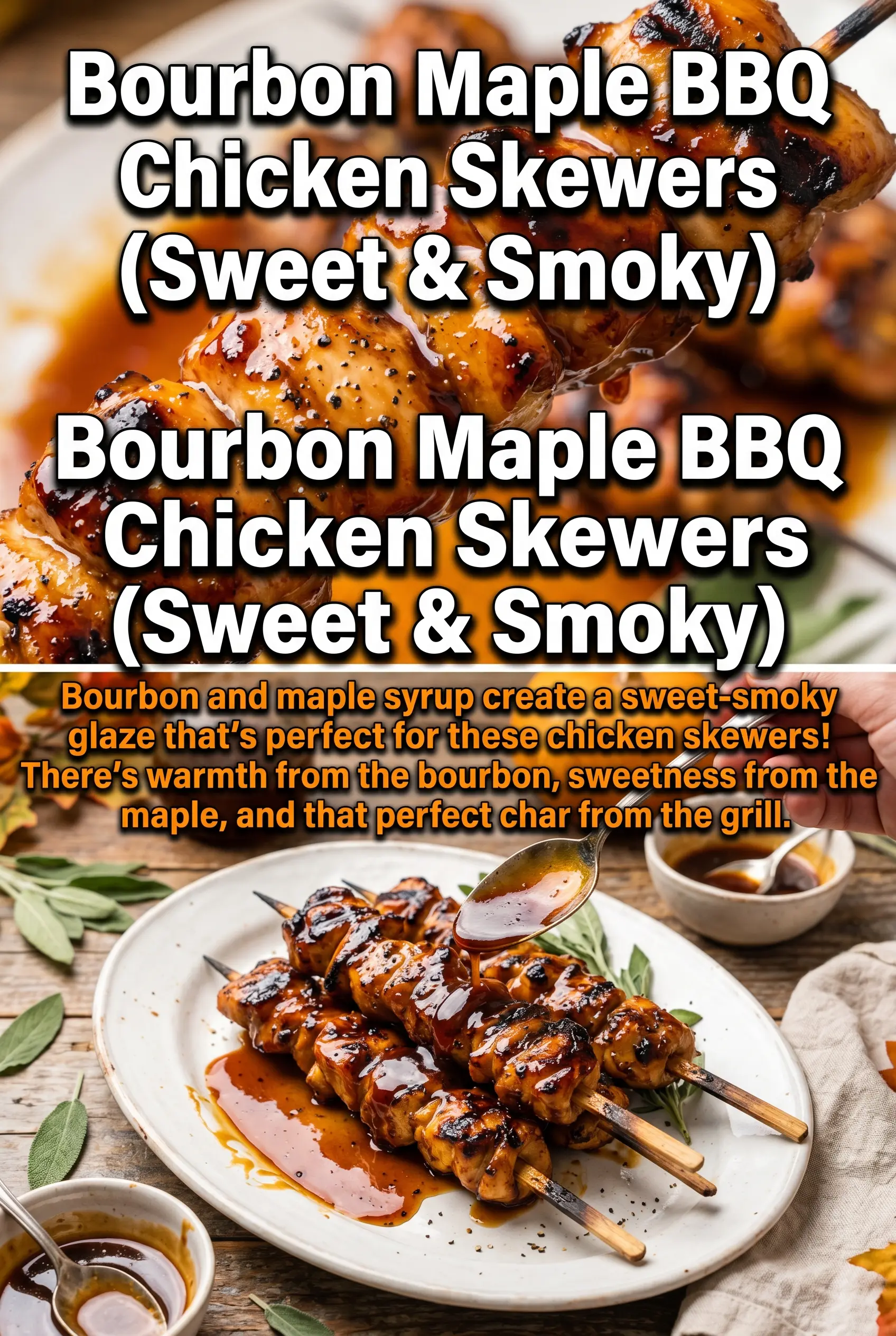
Bourbon Maple BBQ Chicken Skewers
Ingredients
Equipment
Method
- In a bowl, mix BBQ sauce, bourbon, maple syrup, apple cider vinegar, and Dijon mustard until smooth.
- Reserve 1/4 cup of the mixture for basting and set it aside.
- Toss cubed chicken breasts in the remaining marinade until evenly coated.
- Cover and marinate in the refrigerator for 1-4 hours.
- Thread the marinated chicken onto soaked wooden skewers.
- Grill the skewers over medium heat for 5-6 minutes per side, basting frequently with the reserved sauce.
- Continue grilling until chicken reaches 165°F and the glaze is sticky and caramelized, about 5-6 minutes more per side if needed.


