
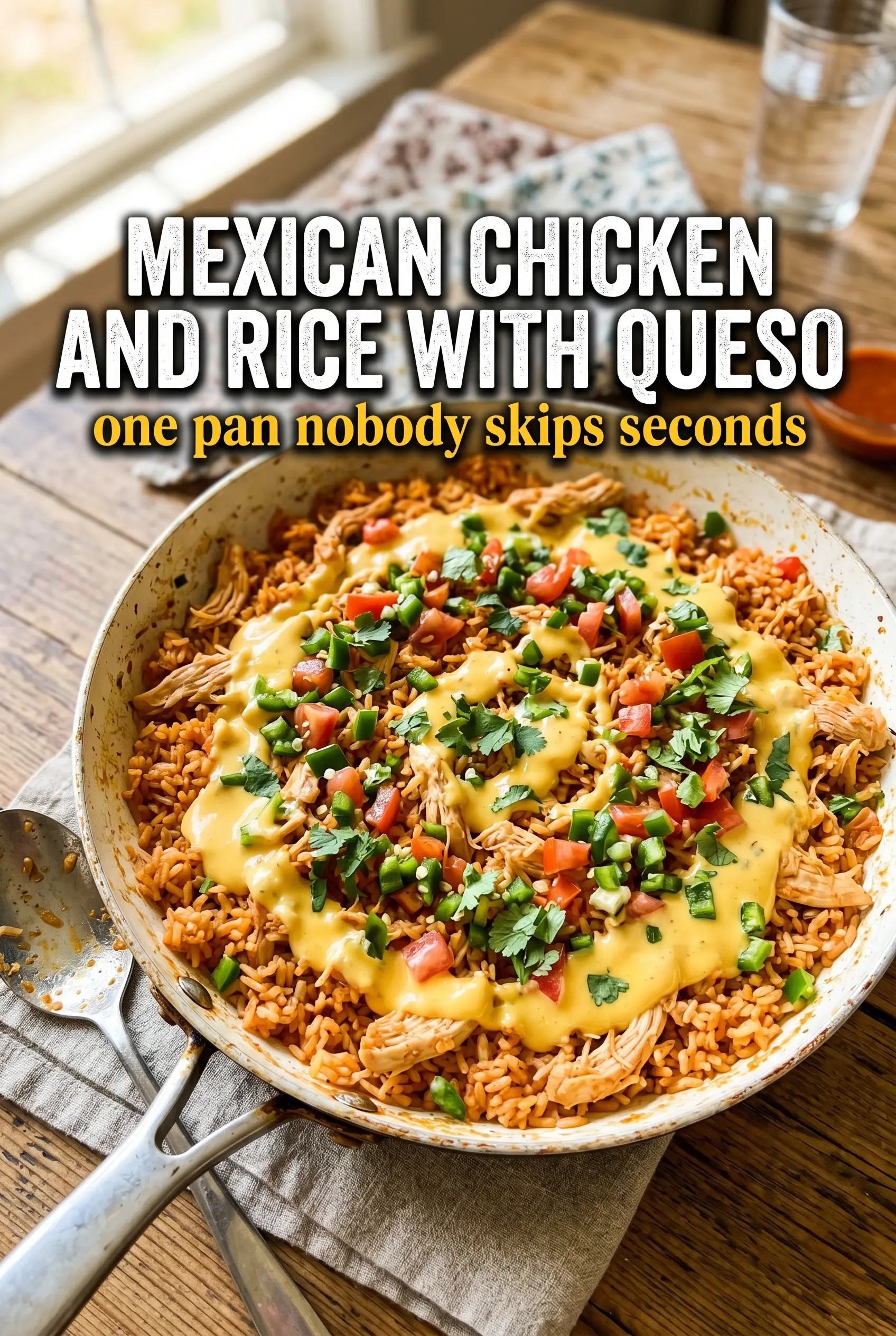
Golden rice, tender chicken, and a blanket of melted white queso make this one-pot dinner hard to ignore. The rice comes out savory and lightly spiced, not muddy, and every bite gets a little creamy finish from the queso stirred in at the end. It’s the kind of skillet meal that lands on the table fast but still tastes like you paid attention.
The trick is giving the rice enough time to toast before the liquid goes in. That extra minute or two keeps the grains distinct instead of turning soft and sticky, and it also helps the cumin and chili powder bloom in the fat so the whole pan tastes deeper. The queso goes in after the rice has cooked, not before, which keeps the sauce smooth instead of disappearing into the broth.
Below, you’ll find the small details that keep the chicken juicy, the rice from clumping, and the queso from getting lost in the pan. There’s also a few smart swaps if you need to use what’s already in the fridge.
The rice stayed fluffy and the queso melted into this smooth, creamy layer at the end instead of turning stringy. I liked that the chicken browned first because it gave the whole skillet a better flavor than just simmering everything together.
Save this Mexican Chicken and Rice with Queso for the nights when you want one skillet, fluffy rice, and a creamy queso finish.
Why the Rice Needs a Head Start Before the Queso Goes In
Rice is the part of this dish that can quietly go wrong. If you add too much liquid too soon, or stir in the queso before the grains have finished cooking, you end up with a heavy skillet instead of separate, tender rice. Toasting the rice for a couple of minutes in the oil with the onion and garlic gives the grains a little coating, which helps them stay intact during the simmer.
The other thing worth paying attention to is the order of the liquids. The broth and salsa cook the rice; the queso finishes it. If the queso goes in early, it can thicken the liquid unevenly and make the bottom of the pan stick before the rice is done. Adding it at the end keeps the sauce creamy and lets you control the final texture.
What Each Ingredient Is Actually Doing in This Skillet
- Long-grain white rice — This is the best choice because it cooks up fluffy and separate. Short-grain rice turns softer and can make the dish feel dense. If you substitute brown rice, you’ll need more broth and a longer simmer, which changes the whole timing of the recipe.
- White queso dip — This is what gives the dish its creamy finish. A scoopable queso dip melts into the rice more predictably than shredded cheese, which can clump or turn grainy if the heat is too high. If you’re using homemade queso, keep it loose enough to stir easily at the end.
- Salsa — Salsa brings acidity, seasoning, and a little body to the cooking liquid. Chunky salsa adds more texture, while a smoother salsa blends into the rice more evenly. Use one you like on its own, since its flavor carries through the whole pan.
- Chicken broth — Broth seasons the rice from the inside out. Water works in a pinch, but the dish will taste flatter and the queso will have to do all the heavy lifting. Low-sodium broth is the smart pick if your salsa and queso are already salty.
- Corn and red bell pepper — These add sweetness and color at the end, after the rice has cooked. Stirring them in too early can make them turn soft and dull. Frozen corn works fine if you thaw it first or give it an extra minute in the pan.
Getting the Skillet to Finish Creamy, Not Mushy
Browning the Chicken First
Heat the oil until it shimmers, then add the chicken in a single layer so it can brown instead of steam. You’re not cooking it through at this stage; you’re building flavor and setting up a better base for the rice. If the pan looks crowded, the chicken will release liquid and turn pale, so brown in batches if needed.
Toasting the Rice in the Aromatics
Once the onion softens and the garlic smells fragrant, stir in the rice and let it toast for about two minutes. The grains should look slightly translucent around the edges and smell a little nutty. If the garlic starts to darken, lower the heat right away, because burnt garlic will carry through the whole dish.
Simmering Without Stirring Too Much
After the broth, salsa, and spices go in, bring the pan to a boil, then drop the heat to low and cover it. Resist the urge to keep lifting the lid. That steady steam is what cooks the rice evenly, and too much stirring will break the grains and turn the texture soft.
Finishing with Queso and Vegetables
Stir in the queso, corn, and bell pepper only after the rice has absorbed most of the liquid. The rice should be tender, with just a little moisture left in the pan to help the queso melt into the dish. If it looks dry before the queso goes in, splash in a tablespoon or two of broth so the final mix stays creamy.
Make It Spicier Without Changing the Texture
Add a chopped jalapeño with the onion, or use a hotter salsa in place of mild. That gives you more heat without altering the rice-to-liquid ratio, which matters here. If you add hot sauce at the end, the flavor stays sharper and less integrated.
Dairy-Free Version
Skip the queso and finish the skillet with a dairy-free cheese sauce or a spoonful of cashew cream. You’ll lose the classic queso stretch, but the rice will still taste rich if you keep the broth well seasoned. Add a little lime juice at the end to replace the brightness the queso usually softens.
Using Leftover Cooked Chicken
If you already have cooked chicken, skip the browning step and stir it in during the last few minutes with the queso. That keeps it from drying out. You’ll still get the one-pot feel, but the chicken won’t contribute quite as much flavor to the base, so don’t skip the onion and spices.
Storage and Reheating
- Refrigerator: Store in an airtight container for up to 4 days. The rice will firm up as it chills, but the flavor holds well.
- Freezer: It freezes okay, though the queso can separate slightly after thawing. Freeze in portions for up to 2 months for the best texture.
- Reheating: Warm gently on the stovetop or in the microwave with a splash of broth or water. High heat dries out the rice and makes the queso thick and sticky before the center is hot.
Questions I Get Asked About This Recipe
Mexican Chicken and Rice with Queso
Ingredients
Equipment
Method
- Heat olive oil in a large skillet over medium-high heat. Season chicken with salt and pepper, then brown on all sides for about 5 minutes, until the pieces are lightly browned and cooked through.
- Add onion and garlic, then cook for 2 minutes until fragrant, stirring to scrape up browned bits.
- Stir in long-grain white rice and toast for 2 minutes, until the grains look slightly drier and fragrant.
- Pour in chicken broth, salsa, cumin, and chili powder, then bring the mixture to a boil.
- Reduce heat to low, cover, and simmer for 15 minutes until the rice is tender, checking that the liquid is bubbling gently under the lid.
- Stir in white queso dip, corn, and red bell pepper. Cook uncovered for 3-5 minutes until the queso is melted and the rice is tender, stirring once or twice as it thickens.
- Garnish with fresh cilantro and serve hot, letting the steam rise off the skillet before plating.


