
Churro tres leches cake lands in that rare sweet spot where every bite feels familiar and a little over the top in the best way. The cake stays feather-light even after it’s soaked, the milk mixture turns the crumb rich and custardy, and the cinnamon-sugar topping gives you that churro finish without having to fry a thing. It slices cleanly once chilled, but the inside still tastes soft and plush, not dense or soggy.
What makes this version work is the balance. The sponge cake needs enough structure to hold the three-milk soak, which is why the egg whites are beaten separately and folded in at the end. That keeps the crumb airy enough to absorb the milk mixture without collapsing. The cinnamon is mixed into the soak instead of only sprinkled on top, so the churro flavor runs through the whole cake instead of sitting on the surface.
Below, I’ll show you the small details that keep the cake from turning heavy, how to get the soak to disappear evenly into the crumb, and the best way to finish it so the churro topping stays crisp where it should.
The cake soaked up the milk mixture perfectly and still sliced beautifully after chilling overnight. The cinnamon in the milk gave it that churro taste all the way through, not just on top.
Save this churro tres leches cake for the dessert table when you want a soft, cinnamon-soaked cake with a crisp churro finish.
The Trick to Keeping the Cake Light Before the Soak Starts
The biggest mistake with tres leches cake is baking a cake that’s too sturdy. A tight crumb can hold up to the milk, but it won’t soak evenly, and you end up with dry pockets under a wet top layer. This version starts with a separate-whites sponge, which gives you enough structure without turning the cake into pound cake territory.
The other place people run into trouble is pouring the milk mixture onto a cake that’s already cooled too much. Warm cake absorbs better. The fork holes help, but the heat is what draws the milk down through the crumb instead of letting it pool on top. If the cake looks slightly saturated at first, that’s right where you want it.
- Eggs — Separating them is nonnegotiable here. The yolks build richness, and the whipped whites give the cake the lift it needs to survive the soak.
- Flour — All-purpose flour gives enough structure without making the cake heavy. Cake flour works too, but the crumb will be a little finer and softer.
- Sweetened condensed milk — This is the main source of sweetness and body in the soak. There isn’t a good stand-in for it if you want the classic texture.
- Heavy cream — It rounds out the soak so the cake tastes rich instead of just sweet. You can swap in whole milk in a pinch, but the result won’t be as lush.
- Cinnamon — This is what pushes the cake into churro territory. Use a fresh, fragrant cinnamon if you can; stale cinnamon tastes flat here.
- Churro pieces — Crush them just before serving so they stay crisp on top of the whipped cream.
How to Build the Soak Without Ending Up With a Soggy Cake
Whipping the Yolks and Dry Ingredients
Beat the yolks with the sugar until the mixture turns pale and thick enough to fall from the whisk in ribbons. That step matters because it dissolves some of the sugar and helps the cake bake with a finer crumb. Stir in the milk and vanilla, then add the flour mixture just until no dry streaks remain. If you overmix here, the cake will bake up dense and less willing to absorb the milk later.
Folding in the Egg Whites
Beat the whites to stiff peaks, not soft ones, so they can support the batter once the milk hits it. Fold them in gently in two or three additions, sweeping from the bottom of the bowl without stirring the air out. The batter should look fluffy and a little cloudlike. If you knock the volume out at this stage, the cake will still bake, but it won’t have the open crumb that makes tres leches work.
Pouring on the Milk Mixture
Whisk the condensed milk, evaporated milk, cream, cinnamon, and sugar together while the cake bakes so it’s ready the second the pan comes out. Pierce the hot cake all over with a fork, then pour the milk in slowly and give it a minute to disappear before adding more. If you rush and dump it all at once, the top can flood before the bottom gets a chance to absorb anything. The finished cake should look deeply moistened, not like a puddle is sitting on top.
Finishing with the Churro Topping
Chill the cake until it’s fully set before adding the whipped cream. That keeps the topping from sinking into the milk layer. Beat the cream and powdered sugar until stiff peaks hold their shape, then spread it over the cake in thick swoops. Add the crushed churro pieces right before serving so they keep a little crunch against the cream.
How to Adapt This for a Smaller Pan, a Lighter Finish, or a Dairy-Free Table
Make It Dairy-Free
Use full-fat coconut milk in place of the heavy cream in the soak, and swap the whipped cream topping for a dairy-free whipped topping that holds peaks. The cake itself still contains milk, so this only works if you also replace the milk in the batter with a neutral unsweetened plant milk. The texture stays soft, but the flavor picks up a mild coconut note.
Use a 9-Inch Square Pan for a Taller Slice
The cake will bake a little thicker, so start checking it early and watch for a clean toothpick and lightly golden edges. Because the layer is taller, the soak may need a few extra minutes to settle before chilling. You’ll get a richer, taller slice with more cream per bite.
Dial Back the Sweetness
Reduce the sugar in the whipped cream to 1 to 2 tablespoons and skip the tablespoon of sugar in the milk mixture if you want the cinnamon and dairy flavors to stand out more. The cake will still taste classic, just less candy-sweet. That works especially well if your churro pieces are already heavily coated.
Storage and Reheating
- Refrigerator: Store covered for up to 4 days. The cake gets even more tender by day two, but the churro topping softens.
- Freezer: Freeze the cake without the whipped cream and churro topping for up to 1 month. Wrap it tightly once chilled, then thaw in the refrigerator overnight.
- Reheating: This cake is best served cold. If you want it less chilled, let a slice sit at room temperature for 10 to 15 minutes. Don’t microwave it or the whipped topping will collapse and the milk soak will turn greasy.
Questions I Get Asked About This Recipe
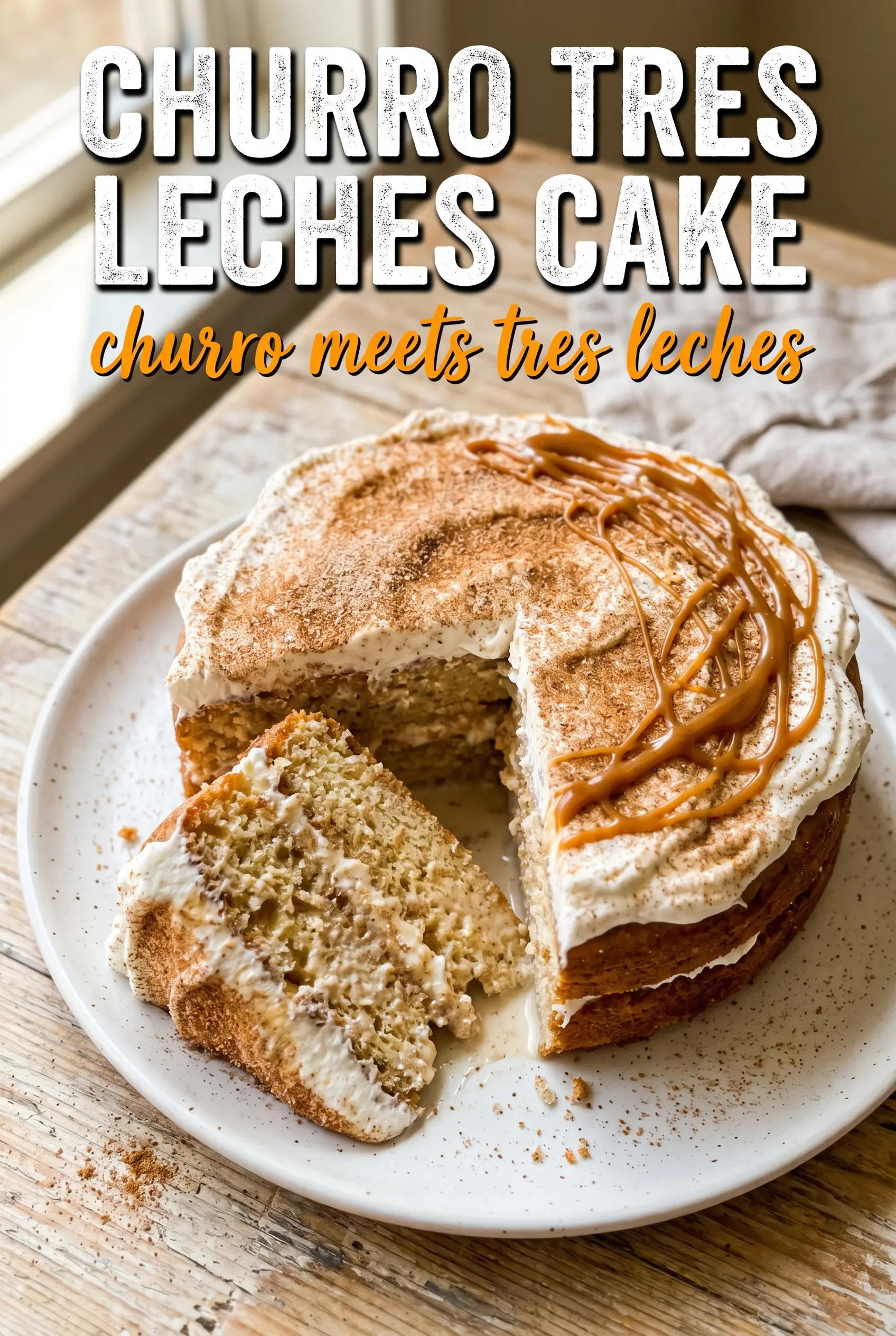
Churro Tres Leches Cake
Ingredients
Equipment
Method
- Preheat your oven to 350°F and grease a 9x13 baking dish. Position it so it bakes evenly.
- Whisk the flour, baking powder, and salt together. Make sure the dry ingredients look evenly combined.
- Beat the egg yolks with sugar until pale. Continue mixing until the texture looks lighter and smoother.
- Add the milk and vanilla to the egg yolk mixture and mix until smooth. Scrape the bowl if needed to keep the batter consistent.
- Fold the flour mixture into the egg yolk mixture. Stop as soon as no dry streaks remain to keep the cake tender.
- Beat the egg whites until stiff peaks form. You should be able to turn the bowl without the peaks collapsing.
- Gently fold the egg whites into the batter. Use slow motions so the batter stays airy.
- Pour the batter into the greased 9x13 baking dish. Spread it into an even layer.
- Bake at 350°F for 20-25 minutes until a toothpick comes out clean. Look for the top to spring back lightly.
- While the cake bakes, whisk the sweetened condensed milk, evaporated milk, heavy cream, cinnamon, and sugar together. Mix until the cinnamon is evenly distributed.
- Immediately after removing the cake from the oven, pierce it all over with a fork. Create many holes so the soak goes throughout.
- Slowly pour the milk mixture over the warm cake. Pour evenly so it saturates without pooling in one spot.
- Cool the cake completely before chilling. Then refrigerate for at least 4 hours so the layers set.
- Before serving, beat the heavy whipping cream with powdered sugar until stiff peaks form. The cream should hold strong ridges.
- Spread the whipped cream over the chilled cake. Cover the surface evenly so each slice gets topping.
- Garnish with crushed churro pieces. Add them right before serving for best crunch.


