
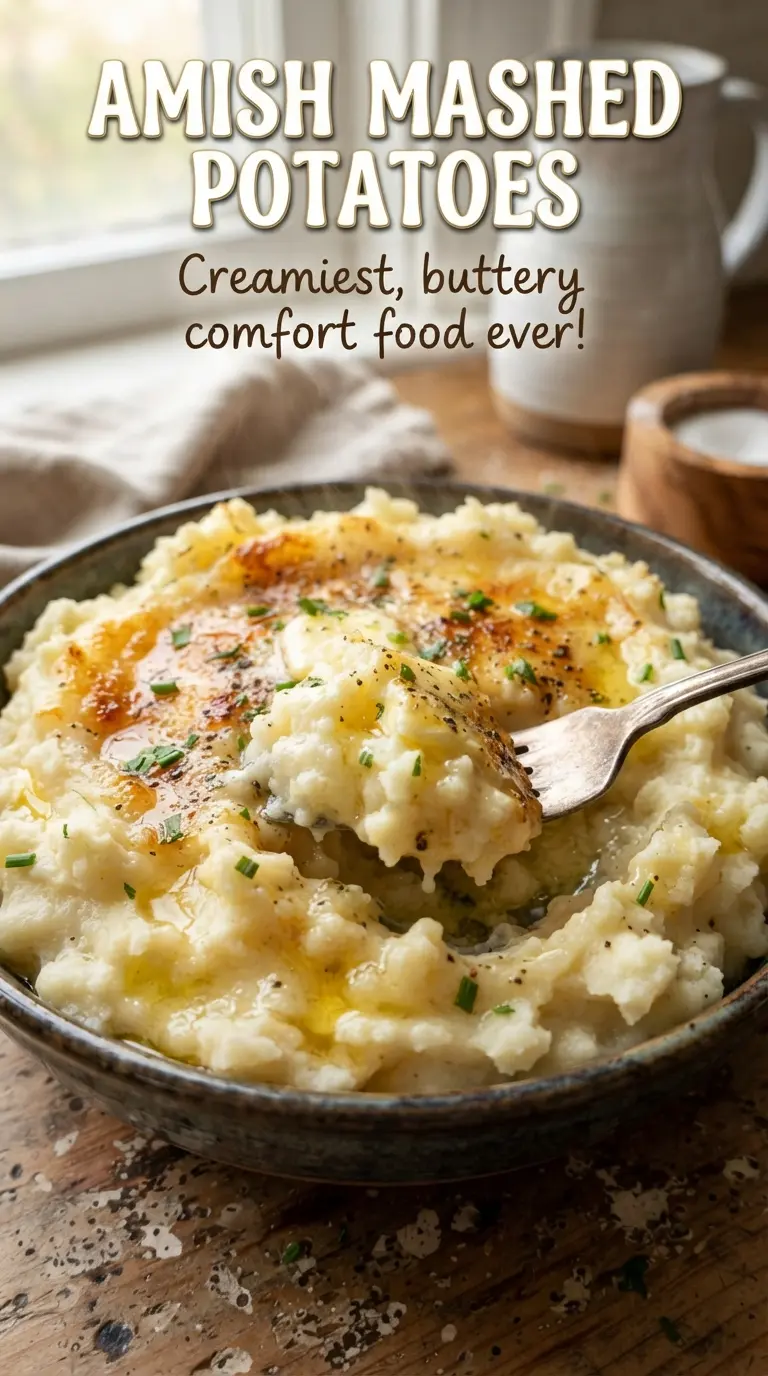
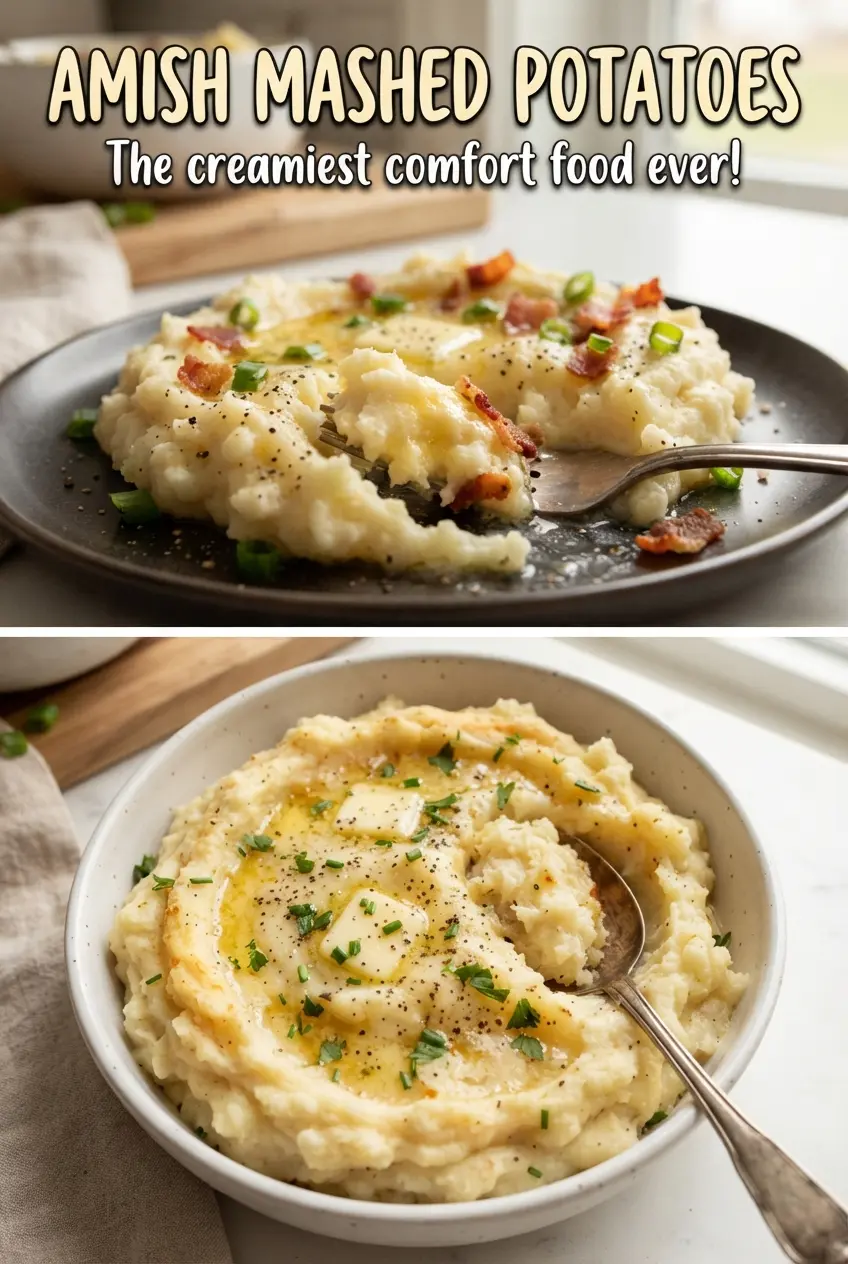
Amish mashed potatoes bake up into the kind of side dish people hover around before dinner even starts: fluffy in the middle, rich all the way through, and finished with a buttery top that turns lightly golden in the oven. The cream cheese and sour cream give them a soft tang and a dense, spoonable texture that holds up on the plate instead of sliding apart.
The key is beating the potatoes while they’re still hot enough to melt the dairy without turning gluey. Russets are the right potato here because they break down into a light mash, while the cream cheese adds body that plain butter and milk can’t quite match. A short bake at the end does the last bit of work, warming everything through and pulling the top into those browned, buttery edges that make this dish taste finished.
Below, you’ll find the small details that keep the texture smooth, the seasoning balanced, and the top from drying out. There’s also a few smart swaps if you need to adjust for what’s in the fridge.
The potatoes came out fluffy but still rich enough to hold their shape, and that buttery top turned golden in just the right spots. I used the full amount of salt and the flavor was spot on.
Save these Amish mashed potatoes for the nights when you want a creamy baked side with a buttery golden top.
The Secret to Keeping Amish Mashed Potatoes Fluffy After Baking
The mistake that ruins baked mashed potatoes is overworking them once the dairy goes in. Russets are forgiving, but if you beat them hard for too long, the starch tightens up and the texture turns sticky instead of light. The goal is to mix until the potatoes look smooth and airy, then stop.
The other thing that matters here is heat. Hot potatoes melt the cream cheese and butter quickly, which helps everything emulsify into a uniform mash. If the potatoes cool down too much before mixing, you end up chasing lumps and working the mixture harder than you need to.
- Russet potatoes give you that fluffy, dry starch structure that soaks up dairy without turning heavy.
- Cream cheese adds body and a gentle tang that keeps the mash from tasting flat.
- Sour cream brings moisture and a little acidity, which brightens the finished dish.
- Whole milk loosens the mash just enough; lower-fat milk works, but the potatoes won’t taste as rich.
What Each Ingredient Is Doing in the Bowl
- Russet potatoes are the right choice because their dry, starchy flesh whips up light. Waxy potatoes stay denser and can make the casserole feel compact.
- Cream cheese is what gives these potatoes their signature body. If you swap it for more milk, you lose that thick, almost spreadable texture.
- Sour cream sharpens the richness. Plain yogurt can stand in, but it tastes tangier and can loosen the mash a bit more.
- Butter belongs both inside the potatoes and on top. The butter in the mash carries flavor; the butter on top creates those little golden puddles in the oven.
- Onion powder adds depth without the texture of fresh onion. It melts into the potatoes instead of drawing attention to itself.
Building the Mash, Then Letting the Oven Finish It
Boiling Until the Potatoes Collapse Easily
Start the potatoes in well-salted water and cook them until a fork slides through without resistance. If they stay a little firm in the center, they’ll leave tiny lumps that don’t disappear later. Drain them well, then let the steam escape for a minute so the mash doesn’t turn watery.
Whipping in the Dairy While the Potatoes Are Hot
Add the cream cheese, sour cream, most of the butter, and the milk while the potatoes are still hot. That heat softens everything fast and helps the mixture turn smooth. If the dairy is cold and the potatoes are already lukewarm, you’ll need more mixing, and that’s when the texture can go past fluffy.
Baking Until the Top Turns Buttery and Lightly Browned
Spread the potatoes into the buttered baking dish and dot the top with the remaining butter. Bake until the surface looks set and a few golden patches appear across the top. If you bake too long, the edges dry out before the center heats through, so pull it once the top has color and the dish feels hot all the way across.
Three Ways to Adjust Amish Mashed Potatoes Without Losing the Texture
Make it lighter with Greek yogurt
Replace the sour cream with plain Greek yogurt for a sharper, slightly lighter finish. The potatoes will still be creamy, but the tang reads a little fresher and less mellow.
Make it dairy-free with plant butter and a thick dairy-free cream cheese
Use a dairy-free cream cheese and a neutral plant butter, then swap the milk for unsweetened oat milk. The result stays rich, though the flavor is a little less tangy and the top won’t brown quite the same way.
Make it ahead for a holiday table
Assemble the dish up to a day in advance, cover it, and refrigerate it before baking. Add 10 to 15 extra minutes in the oven if it’s going in cold, and keep it covered loosely with foil if the top browns before the center is hot.
Storage and Reheating
- Refrigerator: Store covered for up to 4 days. The texture firms up as it chills, but it loosens again when reheated.
- Freezer: These freeze well for up to 2 months. Cool completely, wrap tightly, and thaw overnight in the refrigerator before reheating.
- Reheating: Warm covered in a 325F oven until hot through, then uncover for the last few minutes if you want the top to refresh. A microwave works for small portions, but heat it in short bursts so the dairy doesn’t separate.
Questions I Get Asked About This Recipe
Amish Mashed Potatoes
Ingredients
Equipment
Method
- Preheat the oven to 350F and butter a 9x13-inch baking dish so the potatoes don’t stick.
- Boil the peeled and cubed russet potatoes in salted water for 15-20 minutes until tender.
- Drain the potatoes well so the mash stays thick enough to hold a golden top in the oven.
- Beat the hot potatoes with softened cream cheese, sour cream, 6 tablespoons unsalted butter, and whole milk until fluffy.
- Season the mash with onion powder, salt, and black pepper, mixing until the color looks evenly speckled.
- Spread the mashed potatoes into the buttered dish and dot the top with the remaining unsalted butter.
- Bake at 350F for 25-30 minutes until golden on top, watching for browned buttery craters and a set surface.


