
Steakhouse garlic mashed potatoes land on the plate with that same rich, plush texture you expect from a good restaurant side, but with enough rustic body to keep them from feeling heavy. The skins stay on for color and a little bite, the garlic cooks right alongside the potatoes so the flavor runs through every spoonful, and the Parmesan adds a savory edge that makes these taste like they belong next to a thick sliced steak.
The trick here is treating the potatoes gently once they’re tender. Boiling them in salted water seasons them from the inside, and warming the cream before it goes in keeps the potatoes from turning gluey or cooling down too fast. I also like to leave the mash slightly textured instead of beating it smooth, because that rougher finish catches the butter and cheese in the best way.
Below, I’ll walk through the step that keeps the potatoes fluffy instead of gummy, plus the small finishing move that makes them taste like they came off a steakhouse plate.
The garlic cooked right in the pot gave the potatoes a deep, mellow flavor, and the warm cream kept everything fluffy instead of sticky. I served them with ribeyes and my husband kept scraping the bowl clean.
Save these steakhouse garlic mashed potatoes for the night you want a buttery, garlicky side with real steakhouse texture.
The Step That Keeps Garlic Mashed Potatoes Fluffy Instead of Gluey
Mashed potatoes turn gummy when they get worked too hard after they’re cooked, especially once the starch has fully opened up in the hot pot. That’s why the potatoes get drained, then go back into the pot over low heat for a minute. That last bit of heat drives off excess moisture so the butter and cream can coat the potatoes instead of thinning out the mash.
The other place people run into trouble is with the garlic. Boiling it with the potatoes softens it completely, which gives you a sweet, mellow garlic flavor instead of sharp raw bites. If your potatoes still hold a little resistance in the center, the mash won’t feel smooth no matter how much butter you stir in, so wait until the chunks break apart easily with a fork.
What Each Ingredient Is Doing in the Bowl
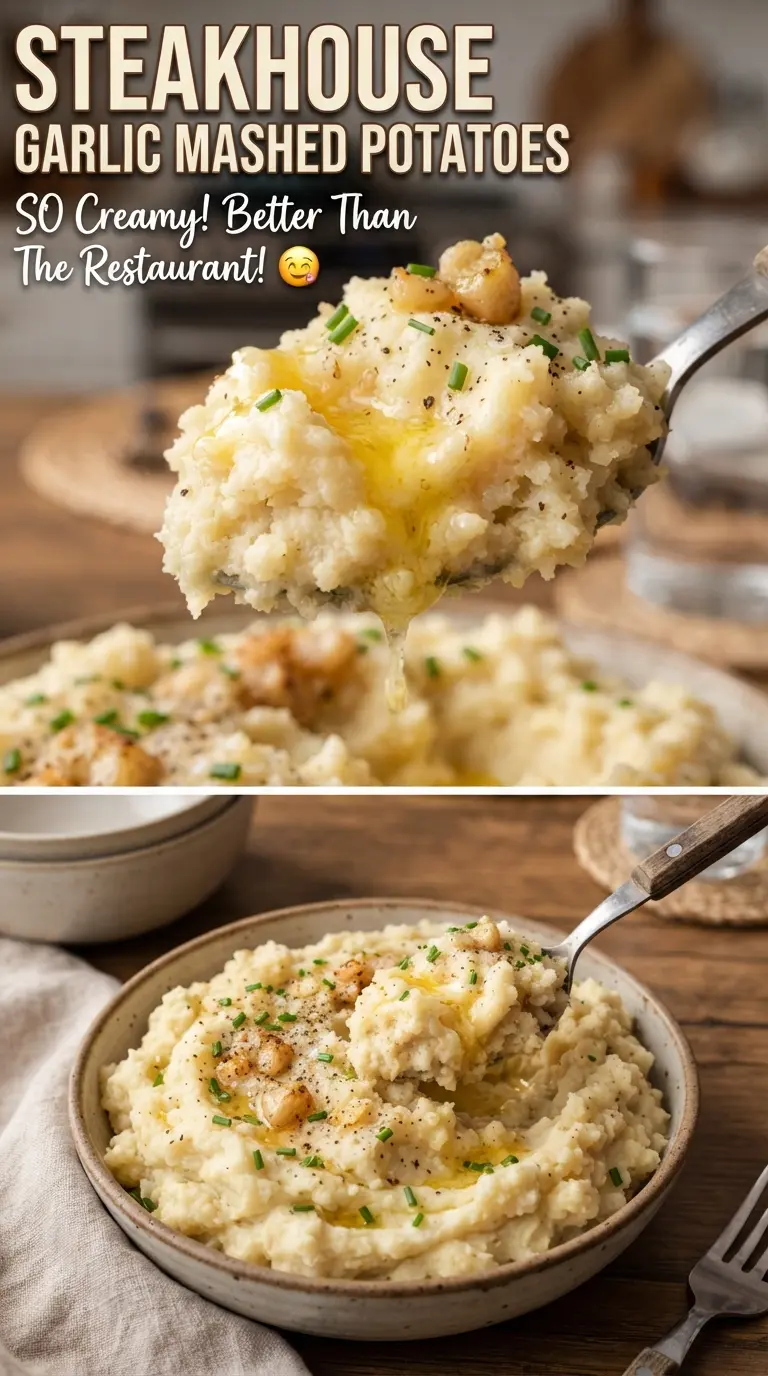
- Red potatoes — The skin-on texture gives these mash its rustic steakhouse look and keeps the finished potatoes from feeling overly silky. You can swap in Yukon Golds if that’s what you have; they’ll taste a little richer and whip up smoother.
- Garlic — Boiling the cloves with the potatoes turns them soft and sweet. Roasted garlic works too, but it changes the flavor from savory and direct to deeper and more mellow.
- Butter, cream, and sour cream — This is where the body comes from. Warm cream matters because cold dairy can tighten the potatoes and cool everything down too fast, and sour cream adds a gentle tang that keeps the mash from tasting flat.
- Parmesan — It brings saltiness and a savory finish that reads like steakhouse cooking. Use the real grated cheese, not the dusty shelf-stable kind, because it melts cleaner and tastes sharper.
- Parsley — It’s not just garnish here. That fresh green finish cuts through the butter and keeps the plate from tasting heavy.
Building the Texture Before the Dairy Goes In
Boiling Until the Potatoes Collapse Easily
Put the potatoes and garlic into salted water and cook them until a fork slides in with no resistance, usually 15 to 18 minutes. The water should taste seasoned, because this is your first chance to put flavor into the potatoes themselves. If the chunks are still firm in the middle, the final mash will stay lumpy in a bad way instead of rustic in a good way.
Drying Out the Potatoes in the Hot Pot
Drain them well, then return them to the empty pot over low heat for about a minute. You’ll hear a faint sizzle as extra water evaporates. That tiny extra step keeps the butter from pooling at the bottom and helps the potatoes absorb the cream instead of getting soupy.
Smashing, Stirring, and Stopping Before It Turns Pastier
Add the butter first and smash the potatoes and garlic until they’re broken up but still textured. Stir in the warmed cream, sour cream, and Parmesan after the butter has started to melt through the potatoes. Stop as soon as the mixture looks creamy and cohesive, because overmixing at this point is what gives mashed potatoes that sticky, heavy texture nobody wants.
Finishing With Salt, Pepper, and the Butter Pool
Season with salt and black pepper after the dairy is fully mixed in, since Parmesan already brings some salt of its own. Spoon the potatoes into a serving dish and add an extra pat of butter on top with the parsley. If you want that steakhouse look, let the butter melt into a glossy pool instead of stirring it through.
How to Adapt These Garlic Mashed Potatoes for Different Tables
Make Them Lighter Without Losing the Steakhouse Feel
Cut the butter back slightly and use half-and-half instead of heavy cream if you want a lighter side. The potatoes won’t be quite as rich, but they’ll still hold that garlicky, creamy finish if you keep the sour cream and Parmesan in the mix.
Go Dairy-Free Without Making Them Watery
Use a good plant butter, unsweetened oat cream, and a dairy-free sour cream substitute. Skip the Parmesan unless you have a flavorful vegan version on hand, since a bland substitute won’t carry the same savory punch.
Make Ahead for a Dinner Party
Cook and mash the potatoes, then refrigerate them in a covered dish. Reheat gently with a splash of warm cream and a small knob of butter, stirring just until hot. If they sit too long over direct heat, they’ll tighten up and lose that fluffy texture.
Swap the Potatoes When Red Potatoes Aren’t Handy
Yukon Gold potatoes are the easiest swap and give you a creamier, more buttery mash. Russets work too, but they’re drier and can go gluey faster, so keep the mixing gentle and add the dairy a little at a time.
Storage and Reheating
- Refrigerator: Store in an airtight container for up to 4 days. The potatoes will firm up as they chill.
- Freezer: They freeze fairly well for up to 1 month, though the texture gets a little softer after thawing. Cool completely before freezing and press a piece of parchment onto the surface to help prevent freezer burn.
- Reheating: Warm over low heat on the stove or in the oven with a splash of cream and a small pat of butter. High heat dries them out and can make the dairy separate before the center heats through.
Answers to the Questions Worth Asking
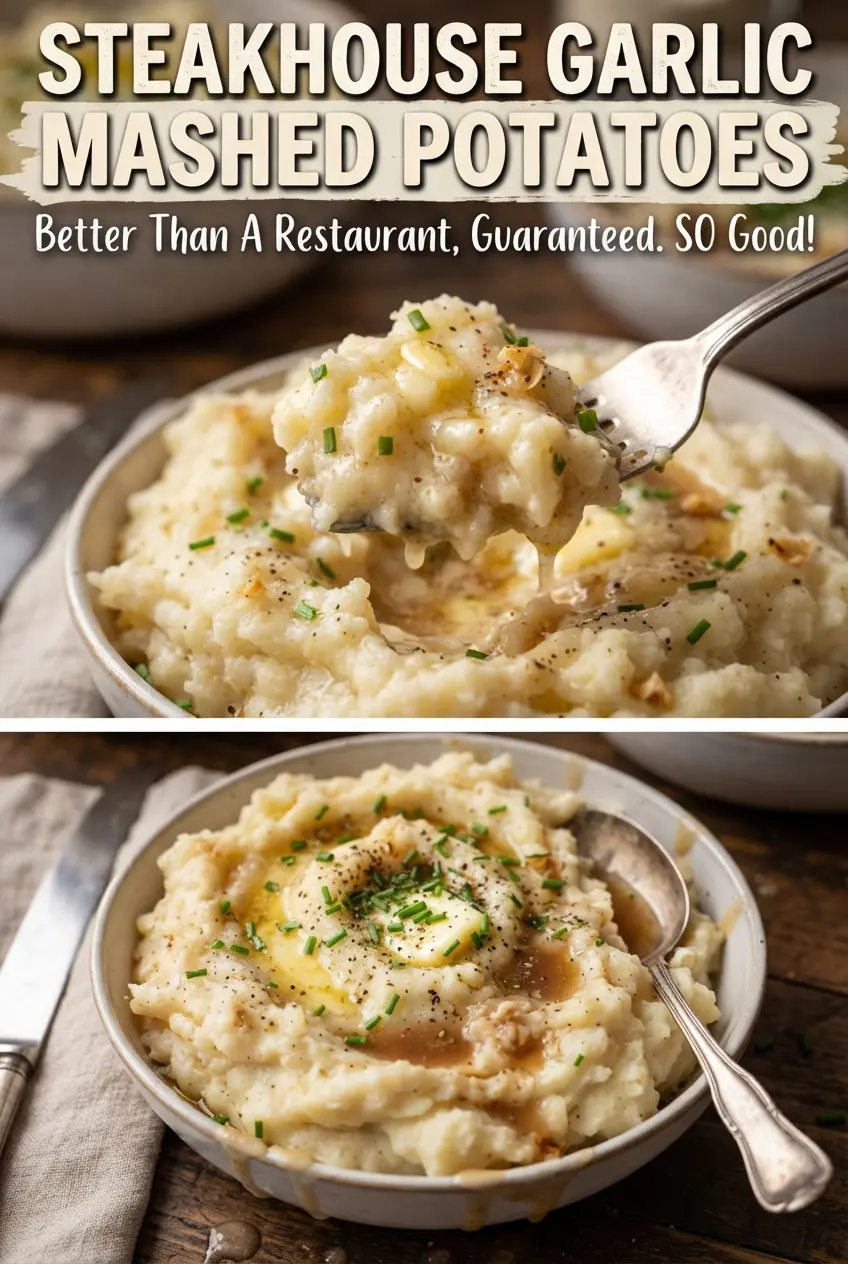
Steakhouse Garlic Mashed Potatoes
Ingredients
Equipment
Method
- Add the red potatoes and garlic to a pot and cover with salted water; bring to a boil and cook for 15-18 minutes, until the potatoes are very tender. Visual cue: a fork should slide in easily with no resistance.
- Drain the potatoes and garlic, then return them to the pot over low heat for 1 minute. Visual cue: you’ll see light steam rising from the pot as excess moisture cooks off.
- Smash the potatoes and garlic with the unsalted butter, leaving some texture. Visual cue: the mash should be creamy but still show small lumps.
- Stir in the warm heavy cream, sour cream, and grated Parmesan until smooth and evenly combined. Visual cue: the mixture looks glossy and cohesive.
- Season with salt and black pepper and mix well. Visual cue: the color brightens slightly and the seasoning blends through the mash.
- Top with an extra pat of butter and the chopped fresh parsley, then serve. Visual cue: a butter pool and green parsley flecks on top.


