
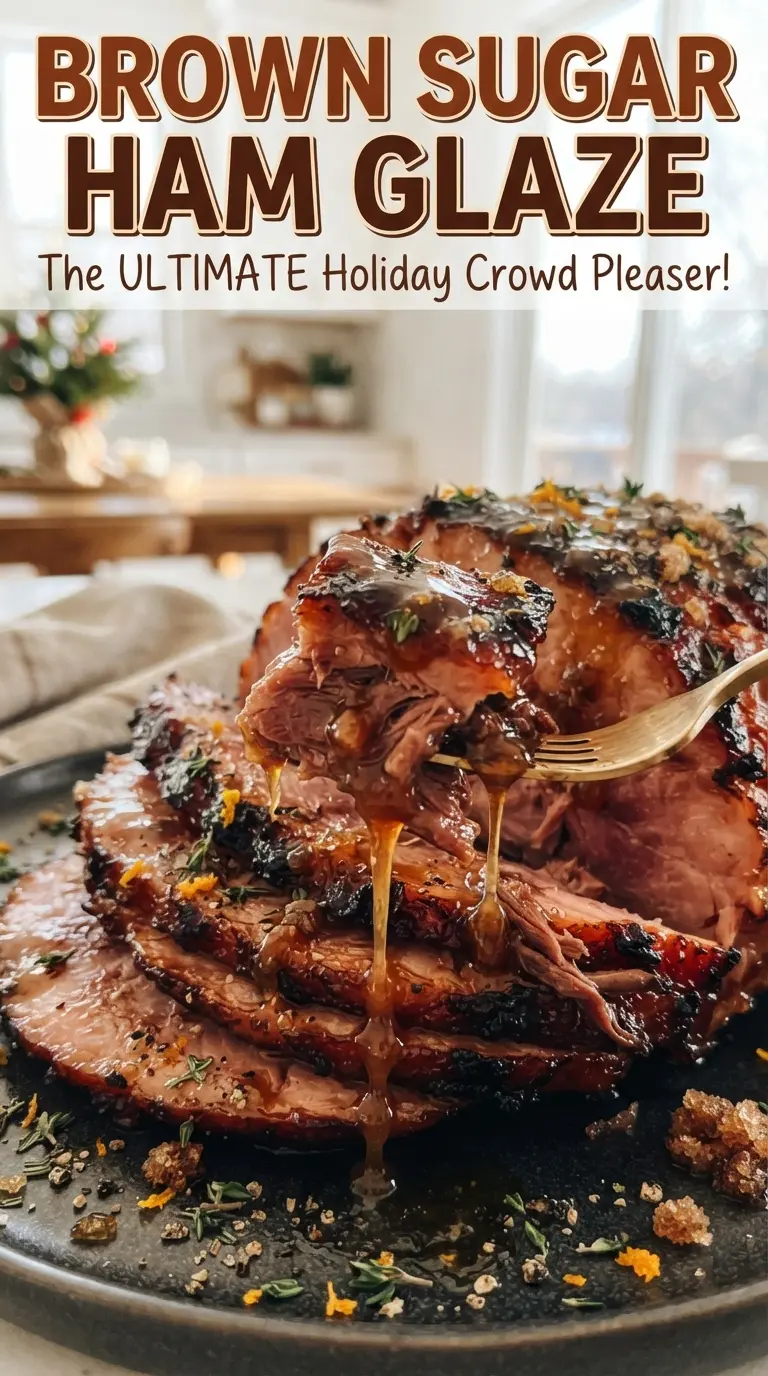
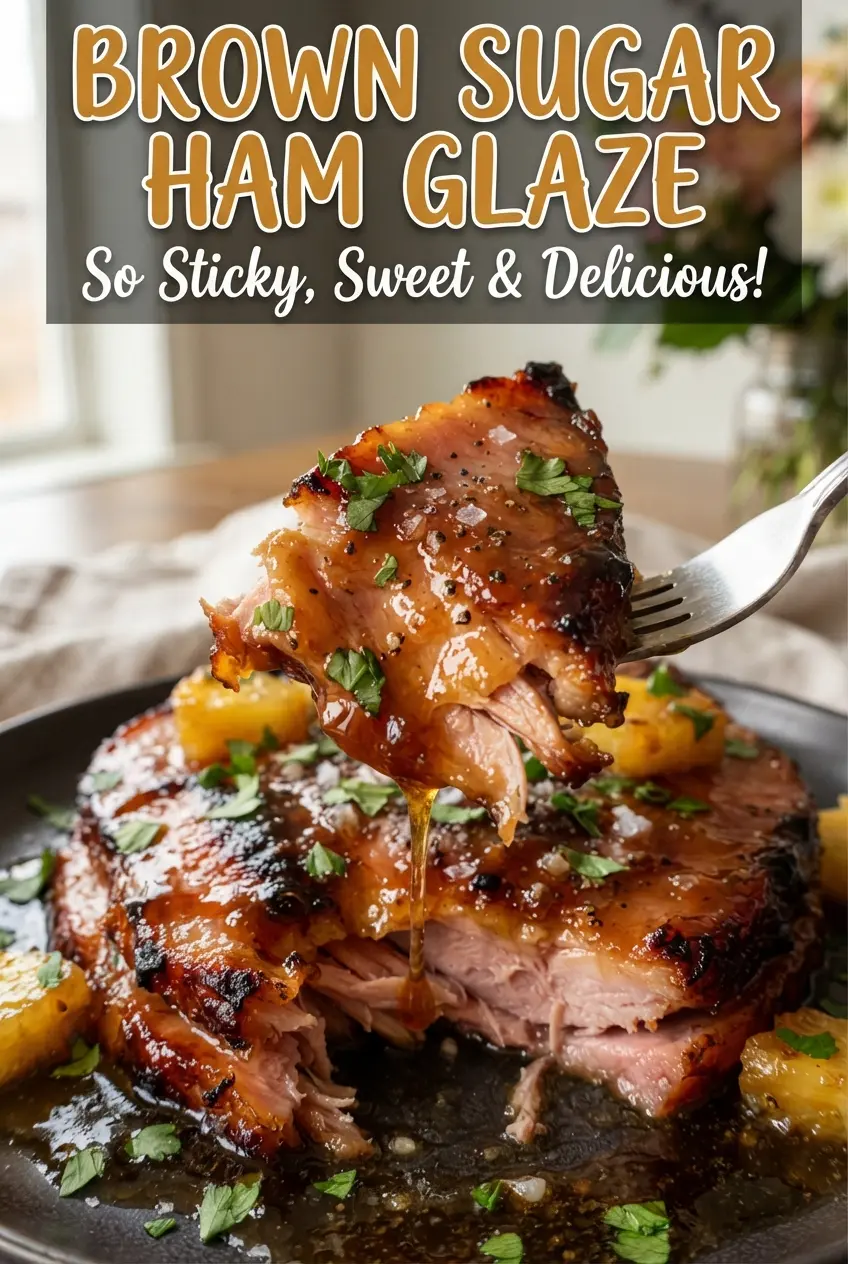
Brown sugar ham glaze turns a plain baked ham into something lacquered, sticky, and deeply savory-sweet at the same time. It settles into the scored cuts, clings to the surface, and bakes into a glossy finish that tastes like caramelized brown sugar with a little tang underneath. The best versions don’t just coat the ham; they build a real crust that slices cleanly and gives every bite a shiny, spoonable edge.
This glaze works because it balances sweetness with acid and spice. Brown sugar and honey give body, pineapple or orange juice loosens the mixture just enough to brush on smoothly, and Dijon plus apple cider vinegar keep it from tasting flat or one-note. Butter rounds everything out and helps the glaze look polished instead of grainy. Cinnamon and cloves are quiet, but they matter. They make the whole thing smell like it belongs on a holiday table without turning it into dessert.
Below, I’ve included the small details that keep the glaze smooth, the best way to brush it on so it doesn’t slide right off, and a few smart swaps if you need to work with what you’ve got.
The glaze turned thick and shiny in just a few minutes, and it actually stayed on the ham instead of pooling in the pan. The little bit of Dijon keeps it from being cloying.
Brush this brown sugar ham glaze on during the last 30 minutes for that glossy, caramelized finish.
The Part That Keeps Brown Sugar Ham Glaze From Sliding Off
The biggest mistake with ham glaze is dumping it on too early. Sugar burns before the ham finishes heating, which leaves you with dark, sticky patches instead of an even sheen. This glaze is built to go on during the last 30 minutes, in layers, so each brush-on has time to set before the next one hits the surface.
The other thing that matters is thickness. You want it simmered just long enough to coat a spoon and look glossy, not reduced into candy. If it gets too tight in the pan, it won’t brush well and it can seize on contact with the ham instead of glazing it evenly. A little looseness at the stove gives you better coverage in the oven.
What Each Ingredient Is Doing in This Ham Glaze
- Brown sugar — This is the backbone of the glaze. Packed brown sugar melts into a thick, caramel-like syrup and gives you that classic shiny finish. Light or dark brown sugar both work; dark brown sugar gives a deeper molasses note.
- Honey — Honey adds smooth sweetness and helps the glaze cling to the ham. If you need to swap it, maple syrup works, but the flavor shifts toward woodsy instead of floral.
- Pineapple or orange juice — This keeps the glaze from tasting heavy and helps the sugar dissolve cleanly. Pineapple gives a brighter tang; orange is softer and a little more rounded. Use the good stuff here, not a watered-down punch.
- Dijon mustard — Dijon cuts through the sweetness and gives the glaze its savory edge. Yellow mustard won’t taste wrong, but it’s sharper and less elegant.
- Butter — Butter smooths the glaze and helps it look polished when it bakes. Use real butter, not margarine, if you want the best shine and texture.
- Apple cider vinegar — This keeps the glaze lively and prevents it from turning sticky-sweet in a one-dimensional way. The acid matters more than it looks on the ingredient list.
- Cinnamon and cloves — These are small amounts, but they’re what make the glaze smell warm and classic. Don’t overdo them; they should support the ham, not turn it into spice cake.
How to Cook the Glaze Until It’s Thick, Glossy, and Brushable
Combining Everything in the Saucepan
Add all of the ingredients to a small saucepan before turning on the heat. The brown sugar won’t dissolve instantly, so it helps to stir well from the start and break up any clumps against the bottom and sides of the pan. A heavy saucepan gives you steadier heat and lowers the risk of scorching the sugar before the glaze comes together.
Bringing It to a Gentle Simmer
Set the pan over medium heat and stir until the butter melts and the mixture starts to steam. You’re looking for a calm simmer, not a hard boil. If it boils aggressively, the sugars can cook too fast and the glaze can turn gritty around the edges before the center thickens.
Waiting for the Right Texture
Let the glaze simmer for 3 to 4 minutes, stirring often, until it looks glossy and lightly thickened. It should coat the back of a spoon and drip in a slow ribbon, but it will still look looser than the final glaze on the ham. That’s correct, because it keeps thickening as it cools and as it bakes on the meat.
Brushing the Ham in Layers
Use the glaze on a fully cooked ham during the last 30 minutes of baking, brushing it on every 10 minutes. Those thin layers set better than one heavy coat, and the repeated brushing builds up that lacquered finish. If the glaze pools in the pan, your ham was too wet on the surface or the glaze was too thin, so pat the ham dry and simmer the glaze a minute longer next time.
How to Adapt This Glaze for Different Hams and Tastes
Dairy-Free Version
Swap the butter for a dairy-free baking stick or leave it out entirely. The glaze will still taste balanced and glossy, but it won’t have quite the same round finish. If you skip the butter, simmer the mixture an extra 30 seconds so it still brushes on cleanly.
Orange Glaze Instead of Pineapple
Orange juice gives the glaze a softer citrus note and a cleaner finish. It’s the better choice if you want the ham to taste classic and not too tropical. Pineapple is bolder and a little stickier on the palate.
Extra-Spicy Holiday Style
Add a pinch of black pepper or a tiny splash of hot sauce if you want more contrast against the sweetness. Don’t overdo it. The point is to sharpen the glaze, not make it taste spicy.
Storage and Reheating
- Refrigerator: Store leftover glaze in a sealed container for up to 5 days. It will thicken as it chills.
- Freezer: It freezes well for up to 2 months. Thaw in the refrigerator overnight before reheating.
- Reheating: Warm it gently on the stove or in short microwave bursts, stirring often. If it looks too tight, add a teaspoon of juice or water at a time until it brushes easily again.
Answers to the Questions Worth Asking
Brown Sugar Ham Glaze
Ingredients
Equipment
Method
- Combine brown sugar, honey, juice, Dijon, butter, vinegar, cinnamon, and cloves in a saucepan. Stir to evenly distribute the ingredients before heating.
- Bring the mixture to a simmer over medium heat, stirring until the sugar dissolves. Look for small steady bubbles along the edges and a smooth, uniform color.
- Simmer for 3-4 minutes until slightly thickened and glossy, stirring occasionally. The glaze should coat the back of a spoon and look shiny, amber-brown.
- Brush the warm glaze over a fully cooked ham during the last 30 minutes of baking, repeating every 10 minutes. Use a steady layer so it clings and turns glossy as it heats.
- Spoon the remaining warm glaze over sliced ham at the table. Serve while still warm for the richest, most glossy finish.


