
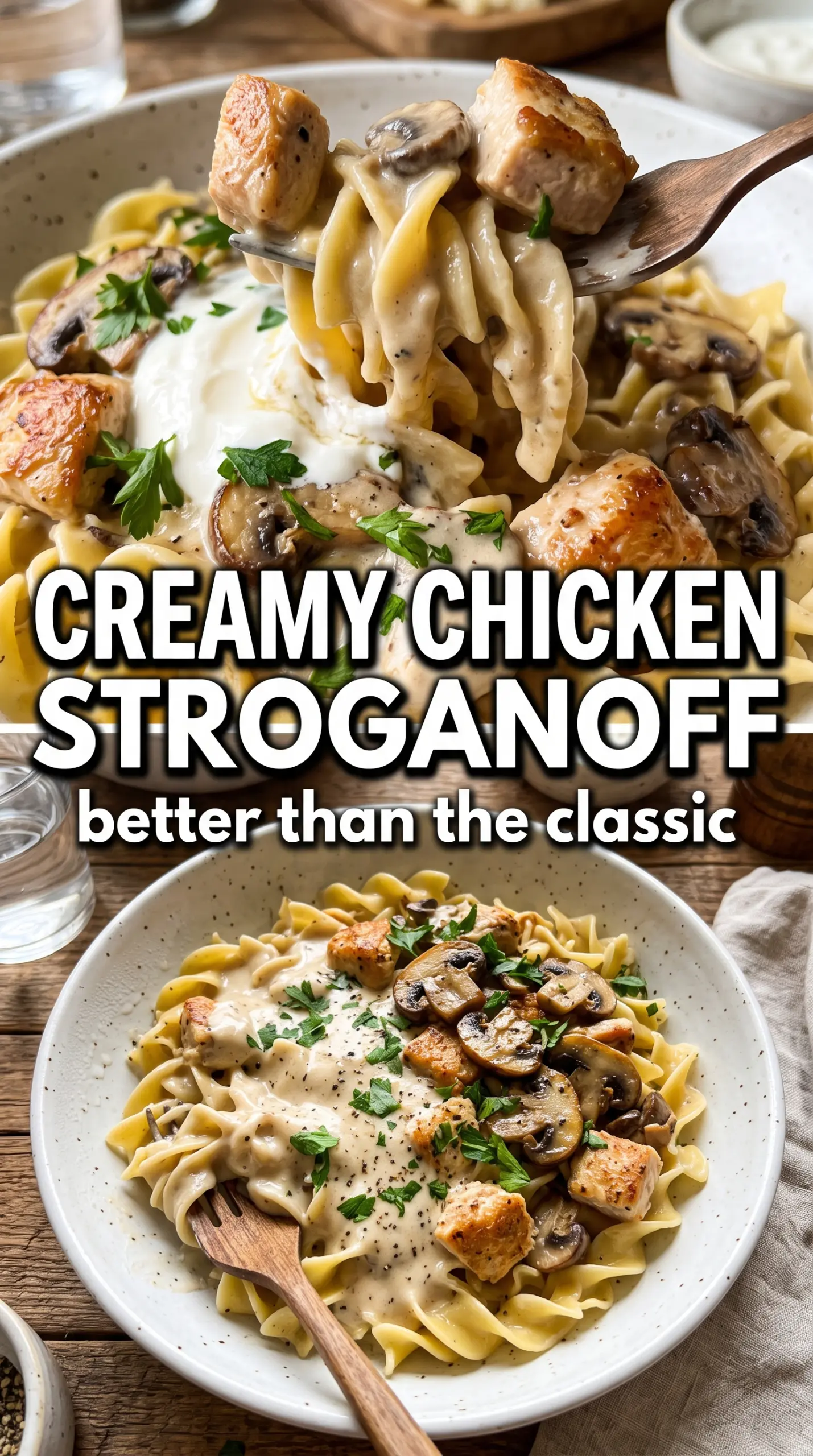
Wide egg noodles coated in a silky, tangy sour cream sauce are the whole reason chicken stroganoff earns a permanent spot in the dinner rotation. The chicken stays tender, the mushrooms turn deep and savory, and the sauce clings to every noodle instead of sliding off in a thin, glossy puddle. It’s the kind of skillet dinner that tastes like you spent a lot longer on it than you did.
What makes this version work is the order. The chicken gets browned first, then the onions and mushrooms pick up all those browned bits left in the pan, which gives the sauce its backbone. Flour cooks briefly with the vegetables before the broth goes in, so the sauce thickens without tasting raw. Sour cream goes in off the heat at the end, which keeps it smooth instead of grainy or split.
Below, you’ll find the small details that matter most: how to keep the sauce creamy, when to swap ingredients without losing the character of the dish, and the reheating trick that keeps leftover stroganoff from drying out.
The sauce turned out creamy and stayed smooth when I stirred in the sour cream off the heat. The mushrooms browned nicely and my husband kept going back for more noodles.
Save this creamy chicken stroganoff for the nights when you want a silky mushroom sauce and egg noodles in one skillet.
The Trick to Keeping Stroganoff Creamy Instead of Grainy
The most common stroganoff mistake is boiling the sour cream. Once dairy gets too much heat, it can turn grainy or separate, and no amount of stirring fixes it cleanly. This recipe avoids that by building the sauce first, letting it thicken with broth and flour, then taking the pan off the heat before the sour cream goes in.
The other thing that matters is scraping the pan when the broth goes in. Those browned bits from the chicken and mushrooms aren’t stuck-on mess; they’re the most flavorful part of the whole dish. If the bottom of the skillet looks too dark, a splash of broth and a wooden spoon will loosen it fast and turn it into a richer sauce instead of a burned note.
What Each Ingredient Is Actually Doing in This Recipe
- Primary ingredient (the star) — Quality matters most. Choose the best you can find.
- Cooking medium (oil, butter, or broth) — This carries flavors and prevents dryness.
- Seasonings (salt, pepper, spices, herbs) — Layer flavors so nothing overpowers. Build depth gradually.
- Aromatics (garlic, onion, herbs) — Cook with fat to bloom flavors. Become the foundation.
- Supporting ingredients — Complement the main ingredient without overpowering it.
- Sauce or liquid (if applicable) — Brings flavors together. Balance richness with acid.
- Acid (lemon, vinegar, wine, or other) — Brightens and prevents flat-tasting results.
- Final finish (garnish, glaze, or sauce) — Prevents one-dimensional taste and adds visual appeal.
What Each Ingredient Is Doing in This Chicken Stroganoff
- Chicken breasts — Sliced into strips, they cook quickly and stay tender if you pull them as soon as they’re done. Chicken thighs work too if you want a richer, juicier result, but the sauce will taste a little more robust.
- Cremini mushrooms — These bring the deep, savory backbone that makes stroganoff taste like stroganoff. White button mushrooms work in a pinch, but they’re milder and won’t brown with the same intensity.
- Sour cream — This is what gives the sauce its signature tang and creamy finish. Full-fat sour cream is the safest choice because it handles the heat better; if you use a lighter version, stir it in even more gently off the heat.
- Dijon mustard and Worcestershire sauce — They don’t make the sauce taste mustardy or saucy in a loud way. They sharpen the flavor and keep the cream from tasting flat.
- Egg noodles — Their soft, wide shape catches the sauce in every bite. If you swap in rice or mashed potatoes, the dish still works, but you lose that classic stroganoff feel.
Building the Sauce Without Breaking It
Brown the Chicken First
Season the chicken strips well before they hit the pan, then cook them in hot butter until they’re golden at the edges and just cooked through. You’re looking for color, not a long sear that dries them out. Pull them out as soon as they’re done; they’ll finish warming in the sauce later, and that keeps them tender.
Let the Mushrooms Take Their Time
Cook the onions and mushrooms in the same skillet until the mushrooms release their moisture and that liquid cooks off. At first they’ll look crowded and wet, then they’ll shrink and pick up color. That change matters, because pale mushrooms taste steamed, while browned mushrooms give the sauce its deep, savory base.
Thicken Before the Dairy Goes In
Stir the flour into the vegetables and let it cook for about a minute so the raw flour taste disappears. Then add the broth slowly while scraping the pan, which keeps the sauce smooth instead of lumpy. Once it starts to simmer, you’ll see it go from thin and cloudy to glossy and lightly thickened.
Finish Off the Heat
Take the skillet off the burner before stirring in the sour cream. That single move is what keeps the sauce velvety. If the pan is still screaming hot, the dairy can curdle, so let the heat drop and stir until the sauce looks uniform and creamy again.
How to Adapt This Stroganoff for the Pantry You Have
Make it with chicken thighs
Chicken thighs stay juicier and bring a little more richness to the sauce. They take about the same time to cook in strips, but they’re more forgiving if you leave them in the pan a minute too long.
Dairy-free version
Use a plain unsweetened dairy-free sour cream or a thick cashew-based alternative. The sauce won’t have quite the same tang, so the Dijon and Worcestershire matter more here for balance.
Gluten-free adjustment
Swap the flour for a gluten-free all-purpose blend or thicken the broth with a cornstarch slurry at the simmering stage. Serve it over gluten-free noodles or rice, and you still get that creamy stroganoff feel without the wheat.
Storage and Reheating
- Refrigerator: Store leftovers in an airtight container for up to 4 days. The noodles absorb sauce as they sit, so the dish will thicken in the fridge.
- Freezer: The sauce can be frozen, but sour cream-based sauces sometimes turn a little grainy after thawing. For the best result, freeze the chicken and sauce without the noodles, then cook fresh noodles later.
- Reheating: Warm it gently on the stove over low heat with a splash of broth or water. High heat is the fastest way to split the sauce, so keep the burner low and stir often until it loosens again.
Answers to the Questions Worth Asking

Easy Chicken Stroganoff
Ingredients
Equipment
Method
- Season the chicken strips with salt, pepper, garlic powder, and smoked paprika. Heat butter in a large skillet over medium-high heat and cook the chicken for 5-6 minutes until golden and cooked through, then remove to a plate.
- Add the onion and mushrooms to the same pan and cook over medium-high heat for 5-6 minutes until golden. Add the minced garlic and cook for 1 minute, stirring until fragrant and glossy.
- Sprinkle all-purpose flour over the vegetables and stir for 1 minute to coat. Gradually pour in the chicken broth while scraping up all browned bits from the pan so the sauce turns smooth.
- Stir in Worcestershire sauce and Dijon mustard. Simmer the sauce for 4-5 minutes until it visibly thickens and clings to the spoon.
- Remove the pan from the heat and stir in the sour cream until smooth. Return the cooked chicken to the pan and stir to coat the golden chicken strips in the creamy sauce.
- Serve the creamy chicken stroganoff over the cooked egg noodles. Garnish with fresh dill or parsley so the top looks bright and speckled with herbs.


