
Silky spaghetti, smoky bacon, and sweet charred corn turn this Elote Pasta Carbonara into the kind of dinner that disappears fast. The sauce clings to every strand without turning heavy, and the tajín gives each bite a bright, tangy edge that keeps the richness in check. It hits that sweet spot between comforting and sharp, with enough texture from the corn and bacon to keep every forkful interesting.
The trick is treating it like a real carbonara, not a cream sauce. The egg yolks and cheese go on the pasta off the heat, then hot pasta water loosens everything into a glossy coating instead of scrambled bits. Charred corn is the other piece that matters most; raw corn tastes flat here, but a few minutes in the bacon fat gives it the smoky depth that makes the whole dish taste intentional.
Below, you’ll find the little details that keep the sauce smooth, the easiest swaps if you need to work around what’s in your kitchen, and the best way to reheat leftovers without losing that silky finish.
The sauce went silky instead of clumpy, and the charred corn with the tajín gave it that elote flavor without overpowering the pasta. My family asked for seconds before I even sat down.
Save this Elote Pasta Carbonara for the nights when you want creamy pasta, charred corn, and bacon in one skillet.
The Part That Keeps This Carbonara Creamy Instead of Scrambled
Carbonara fails when the eggs hit direct heat too fast. That’s the whole game here. The pasta needs to be hot enough to melt the cheese and loosen the yolks, but not sitting over a burner when the egg mixture goes in. Once the pan is off the heat, the residual warmth does the work slowly, and that’s what gives you a glossy sauce instead of little ribbons of cooked egg.
The pasta water matters just as much as the yolks. It’s not there to make the dish watery; it’s there to help the cheese and egg emulsify into something that coats the noodles. Add it a splash at a time until the sauce looks like it’s clinging instead of pooling. If it gets too loose, let the pasta sit for a minute and toss again. It tightens fast.
What the Corn, Cheese, and Tajín Are Each Doing Here
The corn is the elote part, but only if it gets browned. Fresh kernels give you sweetness and pop, while the bacon fat adds a smoky edge that canned corn just can’t match as well. Cotija brings salt and crumble, Parmesan adds sharper depth, and the two together keep the sauce from tasting flat or one-note. Tajín doesn’t just add heat; it gives the dish the lime-chile brightness that makes the whole bowl wake up.
- Fresh corn — Best if you can get it. Frozen corn will work in a pinch, but cook it straight from frozen so the skillet keeps its heat and the kernels can still blister instead of steaming.
- Cotija — This gives you the salty, milky backbone that makes the dish taste like elote. If you can’t find it, use feta for a similar crumble and salt level, but expect a tangier finish.
- Parmesan — This sharpens the sauce and helps it melt smoothly with the yolks. Pre-grated can work, but freshly grated melts better and gives you a cleaner texture.
- Tajín — The seasoning is doing more than adding spice; it’s the acid and chile that make this feel like elote instead of just corn pasta. Use the full amount if you like that citrusy edge, or start with 1 tablespoon and finish with extra at the table.
- Bacon — It seasons the whole pan from the start. Turkey bacon won’t give you the same fat or smoke, so if you swap it, add a little olive oil and a pinch of smoked paprika.
How to Build the Sauce Without Breaking It
Cooking the Pasta to the Right Point
Cook the spaghetti until it’s al dente with a little bite in the center, because it will keep softening once it hits the skillet. Salt the water well; this dish depends on the pasta itself carrying some of the seasoning. Reserve a full cup of pasta water before draining, because you’ll want more than you think once the cheese starts tightening the sauce. If the pasta sits too long and cools off, the egg mixture won’t melt in as smoothly.
Rendering the Bacon and Charring the Corn
Start the bacon in a cold skillet and let the fat slowly render before the pieces crisp. That gives you a better cooking fat for the corn and keeps the bacon from burning before the pan is ready. Once the bacon comes out, add the corn to the hot fat and leave it alone long enough to pick up color before stirring. If you keep it moving constantly, it will steam instead of char, and you’ll lose the smoky sweetness that makes the dish taste like elote.
Finishing Off Heat
Turn off the burner before the eggs go in. Add the hot pasta to the corn first, then pour in the yolk mixture and toss fast so the cheese starts melting before it can cling in clumps. Add pasta water in small splashes until the sauce turns silky and coats the noodles. Finish with bacon, lime juice, salt, and pepper right at the end so the brightness stays sharp and the bacon stays crisp.
Ways to Bend This Recipe Without Losing the Point
Make It Gluten-Free
Use a sturdy gluten-free spaghetti that holds its shape after tossing. The sauce technique stays the same, but gluten-free pasta often needs a little more pasta water to turn glossy, so add it gradually and stop before it gets thin.
Make It Without Bacon
Swap in olive oil and a pinch of smoked paprika to replace some of the bacon’s savory depth. You’ll lose the rendered fat that helps the corn brown, so let the corn sit undisturbed in the pan a little longer to pick up color. It won’t taste exactly the same, but it will still have that charred elote feel.
Make It Vegetarian
Skip the bacon and use butter or olive oil to char the corn. Add a little extra Parmesan and a pinch of smoked paprika or chipotle powder to replace the smoky note, then keep the lime juice at the end so the dish still tastes bright and layered.
How to Store the Leftovers
This keeps best in an airtight container in the refrigerator for up to 3 days. Freezing isn’t a good option here because the egg-and-cheese sauce breaks and turns grainy after thawing. Reheat gently in a skillet over low heat with a splash of water, stirring constantly; high heat will scramble the sauce before the pasta loosens up.
Questions I Get Asked About This Recipe
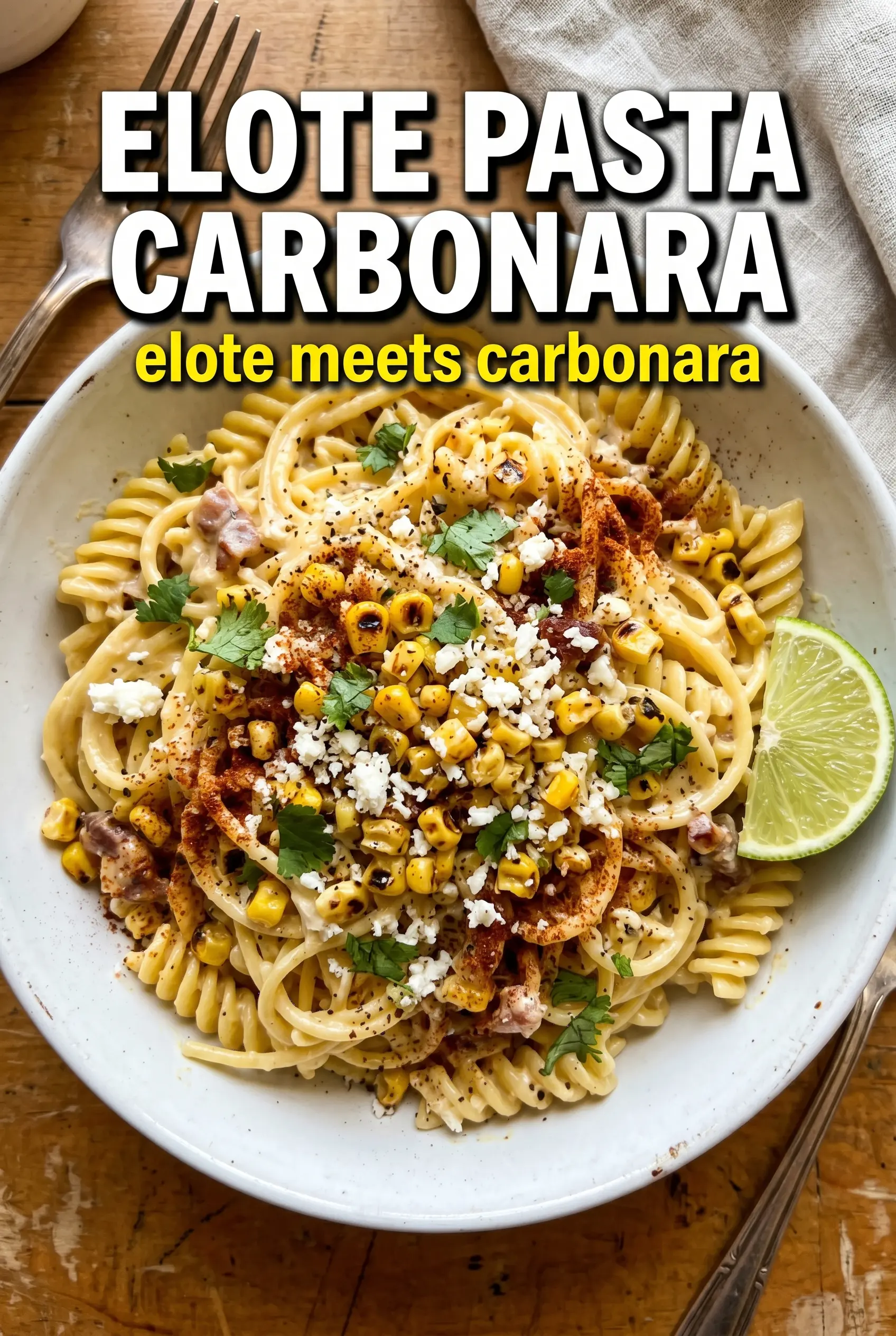
Elote Pasta Carbonara
Ingredients
Equipment
Method
- Bring a large pot of salted water to a rolling boil, then cook the spaghetti until al dente, stirring occasionally. Visual cue: the pasta should be tender but still firm in the center.
- Reserve 1 cup pasta water, then drain the spaghetti and set aside. Visual cue: keep the pasta water nearby for sauce thickening.
- Whisk together egg yolks, Cotija cheese, Parmesan cheese, tajín seasoning, and chopped cilantro until smooth. Visual cue: the mixture should look thick and evenly combined.
- Cook the chopped bacon in a large skillet over medium heat until crispy, then remove and set aside. Visual cue: the bacon should be browned and crisp with rendered fat in the pan.
- Add the corn kernels to the bacon fat and cook for 3-4 minutes, stirring occasionally, until charred. Visual cue: the corn should show darker blistered spots.
- Add the hot pasta to the corn mixture off heat and toss to coat. Visual cue: the pasta should look glossy from the corn and fat.
- Quickly stir in the egg mixture, adding reserved pasta water a little at a time until creamy. Visual cue: sauce should cling to pasta without scrambling.
- Toss in the crispy bacon, then season with lime juice, salt, and pepper, and serve immediately. Visual cue: the final pasta should have a silky, cohesive coating.


