
Greek chicken kabobs come off the grill juicy, charred at the edges, and loaded with that lemon-garlic-oregano flavor that makes people reach for a second skewer before they’ve finished the first. The vegetables pick up a little smoke and sweetness, the chicken stays tender, and the whole tray looks like it belongs at a backyard dinner where everyone lingers a little longer than planned.
The marinade does the heavy lifting here. Lemon juice brings brightness, olive oil keeps the chicken from drying out, and Dijon helps the mixture cling to every cube instead of sliding off the meat. Four hours is the sweet spot for marinating chicken breast in an acidic mix like this: long enough for flavor, short enough to keep the texture clean and supple. I also like to keep the vegetables cut large so they stay juicy and don’t burn before the chicken is done.
Below, I’ve included the timing I use for kabobs that actually cook evenly, plus the one small prep detail that keeps wooden skewers from scorching. If you’ve ever ended up with charred peppers and undercooked chicken, this version will save you from that mess.
The chicken stayed unbelievably juicy, and the lemon-oregano marinade gave it that real Greek restaurant taste. I grilled them for 12 minutes total and the peppers still had a little bite, which was perfect.
Save these lemon-garlic Greek chicken kabobs for the nights when you want smoky grill flavor, tender chicken, and tzatziki on the side.
The Marinade Window That Keeps Chicken Tender Instead of Mushy
With chicken breast, the biggest mistake is treating the marinade like a bath you can forget about overnight. Lemon juice is helpful, but it’s also acidic enough to start changing the texture if the chicken sits too long. Four to eight hours is the range that gives you flavor without turning the outside chalky or stringy.
The other thing people miss is the balance of fat and acid. Olive oil carries the garlic and oregano, keeps the surface from drying out on the grill, and helps the seasoning coat the meat evenly. Dijon is there for more than taste; it helps the marinade emulsify so the chicken gets a more even layer of flavor instead of greasy patches and bare spots.
What Each Ingredient Is Actually Doing in These Kabobs
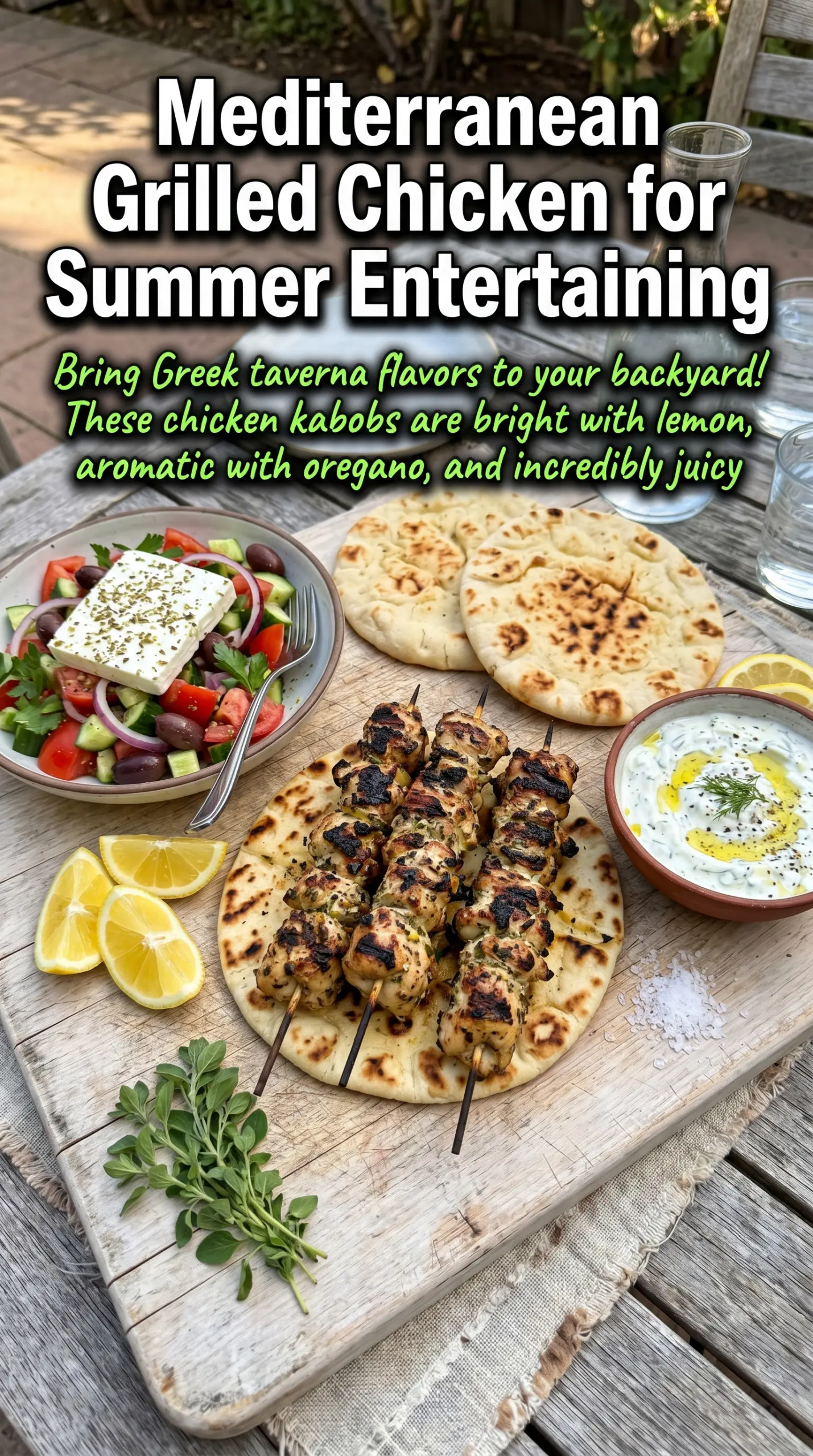
- Chicken breasts — They stay lean and cook quickly, which is why cube size matters. Cut them into even pieces so every skewer finishes at the same time. Thighs work too if you want a little more forgiveness and a richer bite.
- Olive oil — This keeps the marinade from tasting sharp and helps the chicken brown instead of drying out. Use a decent one here because there isn’t much else in the marinade to hide behind.
- Lemon juice — This is the bright, Greek-style backbone of the dish. Fresh lemon matters more than bottled juice because the flavor is cleaner and less flat.
- Fresh oregano — Fresh oregano gives the kabobs that unmistakable Mediterranean edge. Dried oregano can stand in if needed; use about one-third as much and rub it between your fingers before adding it so the oils wake up.
- Cherry tomatoes, red onion, and bell pepper — These add color, sweetness, and a little char. Keep the pieces large enough to survive the grill without collapsing or slipping through the grates.
- Tzatziki — Don’t skip it. The cool, garlicky yogurt sauce balances the smoke and lemon and makes the whole plate feel complete.
From Marinade Bowl to Grill Marks Without Drying the Chicken Out
Mixing the Marinade
Whisk the olive oil, lemon juice, garlic, oregano, Dijon, salt, and pepper until the mixture looks slightly thickened and glossy. If it separates a little, that’s fine; it will cling once the chicken goes in and gets tossed around. The garlic should be finely minced so it doesn’t burn harshly on the grill.
Marinating the Chicken
Coat the chicken cubes thoroughly and refrigerate them for 4 to 8 hours. Less than that and the flavor stays on the surface; much longer and the lemon starts to work against you. Stir the chicken once or twice if you can, because the marinade settles and the top pieces won’t pick up as much if they sit untouched.
Building Even Skewers
Thread the chicken and vegetables onto soaked wooden skewers, alternating pieces so the heat can circulate. Leave a little space between each piece instead of packing everything tight; crowded skewers steam instead of grill. If the vegetables are cut too small, they’ll cook ahead of the chicken and turn soft before you get any color on the meat.
Grilling to Juicy Doneness
Cook over medium-high heat for 5 to 6 minutes per side, turning once the first side has grill marks and the chicken releases without sticking. The safest finish is when the chicken reaches 165°F in the thickest piece, and the vegetables are blistered at the edges. If the outside is browning too fast, move the kabobs to a slightly cooler part of the grill instead of chasing them with higher heat.
Serving Them Hot
Let the kabobs rest for a few minutes after they come off the grill so the juices settle back into the meat. Serve with tzatziki, pita, and lemon wedges while the skewers are still hot enough to perfume the whole plate. That final squeeze of lemon sharpens everything and keeps the flavors from tasting heavy.
How to Make Greek Chicken Kabobs Work on Your Grill, Your Table, and Your Schedule
Dairy-Free by Default
These kabobs are already dairy-free as written. Keep the tzatziki separate and use a dairy-free yogurt version if you want the same cool finish without changing the rest of the dish.
Chicken Thighs for Extra Forgiveness
Boneless skinless thighs work well if you want juicier kabobs and a little more wiggle room on the grill. They take a touch longer to cook, but they’re less likely to dry out if your heat runs high.
No Grill, Use a Broiler
Set the skewers on a foil-lined sheet pan and broil them a few inches from the heat, turning once halfway through. You’ll still get char on the edges, but keep a close eye on them because the sugars in the vegetables can go from browned to burned fast.
Storage and Reheating
- Refrigerator: Store cooked kabobs in an airtight container for up to 3 days. The vegetables soften a bit, but the flavor holds well.
- Freezer: Freeze the cooked chicken off the skewers for up to 2 months. The vegetables don’t freeze as well, so I’d leave them out and add fresh ones next time.
- Reheating: Warm the chicken gently in a covered skillet over low heat or in a 300°F oven until heated through. High heat dries the chicken out fast, especially after it’s already been grilled once.
Answers to the Questions Worth Asking
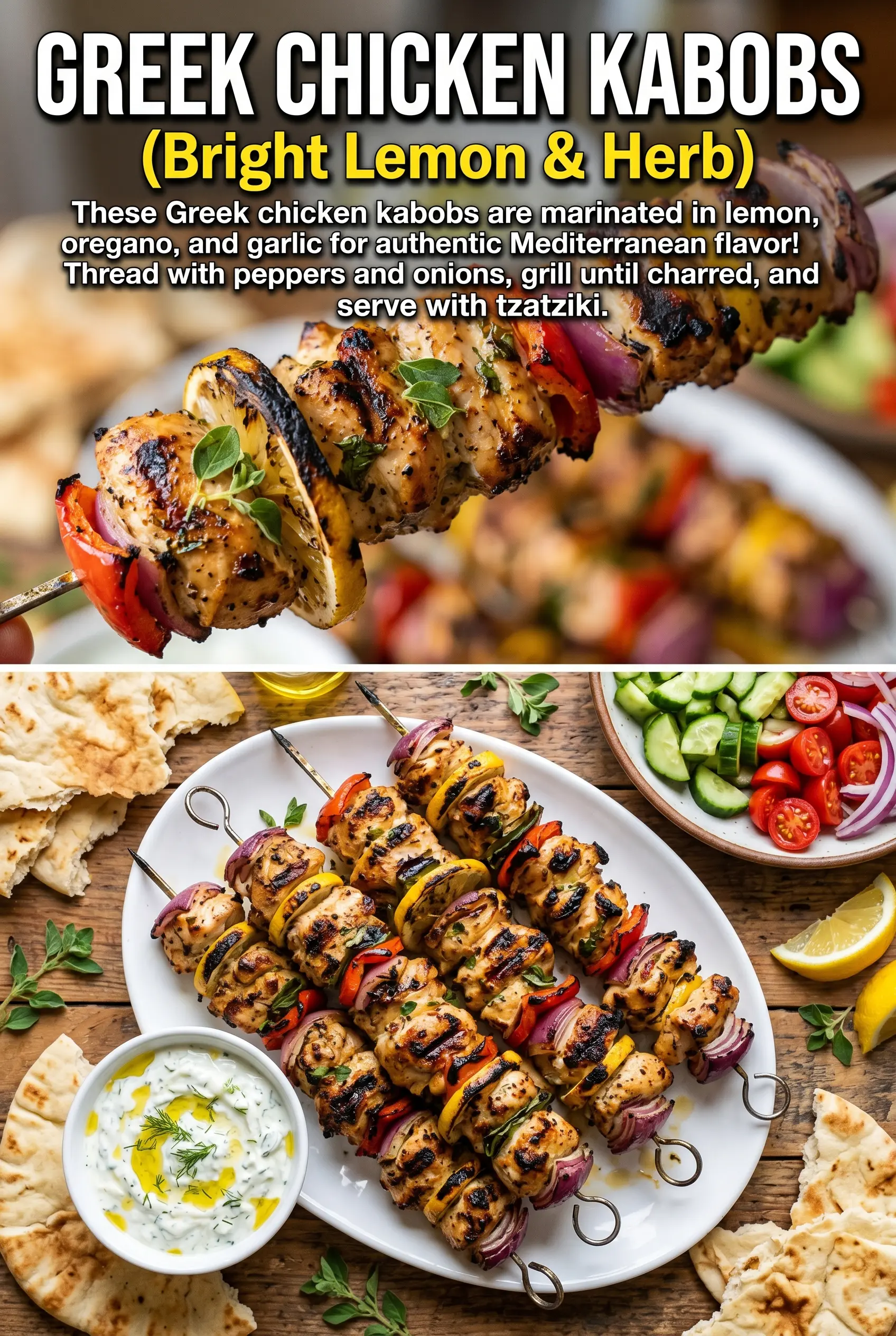
Greek Chicken Kabobs
Ingredients
Equipment
Method
- Whisk olive oil, lemon juice, garlic, oregano, Dijon mustard, salt, and pepper until smooth and evenly combined, then pour into a shallow dish.
- Add cubed chicken breasts to the marinade, turn to coat thoroughly, and refrigerate for 4-8 hours.
- Thread chicken and the cherry tomatoes, red onion chunks, and bell pepper chunks onto soaked wooden skewers, alternating pieces for even cooking.
- Grill the kabobs over medium-high heat for 5-6 minutes per side, turning once, until the chicken is cooked through and vegetables show grill marks.
- Serve the Greek chicken kabobs hot with tzatziki sauce, pita bread, and lemon wedges.


