
Perfectly grilled salmon earns its place in the regular dinner rotation because it gives you crisp skin, juicy flesh, and clean smoky flavor without much effort. The trick is not piling on more ingredients. It’s handling the fish gently, keeping the grill hot enough to sear the skin, and leaving the fillets alone long enough to develop those clean grill marks and that tender, flaky center.
This version leans on a short marinade of olive oil, lemon juice, garlic, and Dijon mustard. That combination does two jobs at once: it seasons the fish from the outside and helps the surface brown without turning harsh or bitter on the grill. A 15-minute rest is enough to add flavor without starting to cure the salmon, which keeps the texture soft instead of firming up too much before it ever hits the heat.
Below, I’ll walk through the one part that matters most with grilled salmon — how to keep it from sticking and overcooking before the skin has a chance to crisp. I’ve also included a few simple swaps and storage notes, since this is the kind of recipe you’ll want to use again when dinner needs to be fast but still feel complete.
The skin turned out crisp and the salmon stayed flaky all the way through. I usually overcook fish on the grill, but this came off perfectly at 7 minutes and the lemon-Dijon mix was spot on.
Like this grilled salmon? Save it for the nights when you want crisp skin, flaky fish, and a fast lemon-Dijon finish.
The Skin Is the Best Part, So Don't Start by Fighting It
Most grilled salmon goes sideways because people try to move it too soon. Skin-on fillets need uninterrupted contact with hot, oiled grates so the skin can release on its own once it crisps. If you force the flip early, the fish tears and you lose that clean, restaurant-style finish.
The other mistake is heat that’s too timid. Medium-high grill heat gives you enough intensity to brown the outside before the salmon dries out inside. You’re looking for the flesh to turn opaque around the edges while the center still looks slightly translucent when it’s time to flip.
What the Marinade Is Doing Besides Adding Flavor
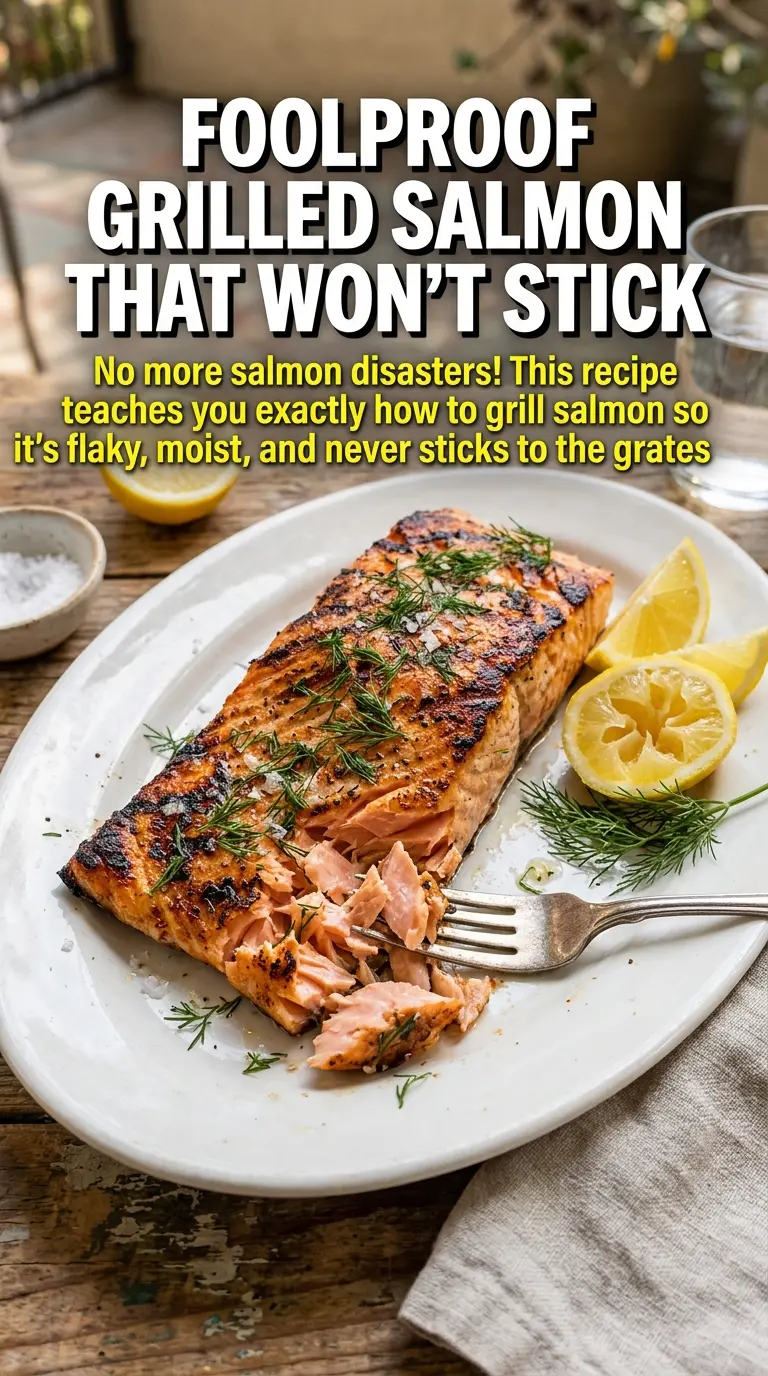
- Olive oil — This helps the marinade cling and protects the salmon surface from drying out. A standard olive oil is fine here; save the expensive finishing oil for serving.
- Lemon juice — This brightens the fish and cuts through the richness. Keep the marinating time short, though, because too much acid for too long can start to tighten the exterior before the grill even heats up.
- Dijon mustard — Dijon acts like an emulsifier, helping the oil and lemon stay combined while adding a sharp, savory edge. Yellow mustard won't give the same depth, and you'll notice the difference in the finished flavor.
- Skin-on salmon fillets — Skin-on fillets are the key to grilling success because the skin shields the flesh and helps the fish hold together. If you buy skinless salmon, grill it on oiled foil or a grill basket instead, since it's much more likely to fall apart on the grates.
- Fresh dill and lemon wedges — These don't just garnish the plate. Dill echoes the salmon's clean flavor, and a fresh squeeze of lemon right at the end wakes everything up after the heat softens the marinade's sharpness.
How to Grill Salmon Without Tearing the Skin
Mixing the Marinade
Stir the olive oil, lemon juice, garlic, Dijon, salt, and pepper until the mixture looks glossy and slightly thickened. That small emulsion helps it coat the fish instead of running straight off. If the garlic is too coarse, it can burn on the grill, so mince it finely.
Giving the Fish a Short Rest
Brush the salmon lightly with the marinade and let it sit for 15 minutes. That timing is enough to season the surface without curing the flesh. If you leave it much longer, the lemon starts to change the texture and the outside can turn firmer than you want.
Starting Skin-Side Down
Oil the grates well and set the salmon skin-side down over medium-high heat. Press it gently for a second with a spatula so the skin makes full contact, then leave it alone. The salmon will tell you it's ready to release when the skin looks crisp and the fillet lifts without resistance.
Finishing the Flip
Flip the fillets only once, then grill for 2 to 3 minutes more until the center reaches your preferred doneness. The fish should flake with a fork but still look moist in the middle. If you wait until it looks completely opaque on the grill, it's usually already a little overdone by the time it hits the plate.
How to Adapt This for Different Grills and Different Tables
Grill basket version for delicate fillets
If your fillets are thin or uneven, use a grill basket so you can still get char and smoke without risking a broken piece of fish. You’ll lose a little of that crisp skin-on contact, but you gain control, which matters more for smaller fillets.
Dairy-free and naturally gluten-free as written
There’s no dairy or gluten in this recipe, so it already works for both without changes. The important part is checking your Dijon mustard if you’re cooking for someone who needs a strict gluten-free label, since brands can vary.
Extra lemon and herbs for a brighter finish
If you want a fresher, lighter plate, add a little lemon zest to the marinade and shower the finished salmon with extra dill. That changes the dish from quietly savory to sharply bright, which works especially well with rice, potatoes, or a simple green salad.
Storage and Reheating
- Refrigerator: Store leftovers in an airtight container for up to 3 days. The skin won't stay crisp, but the salmon will still be good cold or gently reheated.
- Freezer: Cooked salmon freezes, but the texture softens after thawing. Wrap it tightly and freeze for up to 2 months if you plan to flake it into salads or pasta later.
- Reheating: Warm it low and slow in a covered skillet over low heat or in a 275°F oven just until heated through. High heat dries salmon out fast, which is the mistake that turns leftovers chalky.
Questions I Get Asked About This Recipe
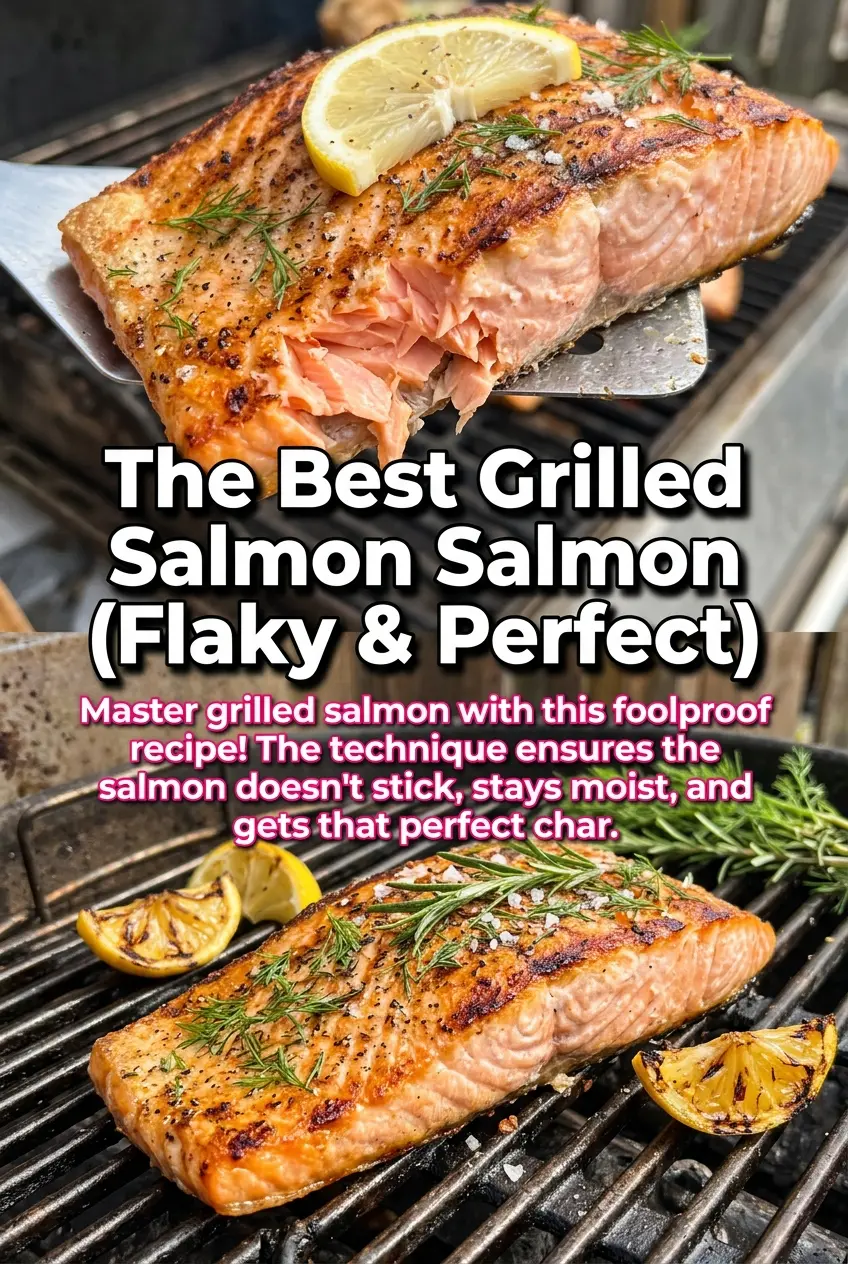
The Best Grilled Salmon
Ingredients
Equipment
Method
- In a bowl, mix olive oil, lemon juice, minced garlic, Dijon mustard, salt, and pepper until evenly combined.
- Stir until the mixture looks smooth and glossy, then set it aside so it’s ready to coat the salmon.
- Brush the marinade over the salmon fillets, ensuring the skin surface is well coated.
- Let the salmon sit for 15 minutes at room temperature while you prepare the grill.
- Preheat the grill to medium-high heat and oil the grates well right before cooking.
- Place the salmon skin-side down on the grill.
- Grill for 6-8 minutes skin-side down without moving, until the skin is crisp and the edges look set.
- Carefully flip the fillets and grill for 2-3 minutes, until cooked to your desired doneness and flakes easily.
- Serve immediately with fresh dill and lemon wedges.


