
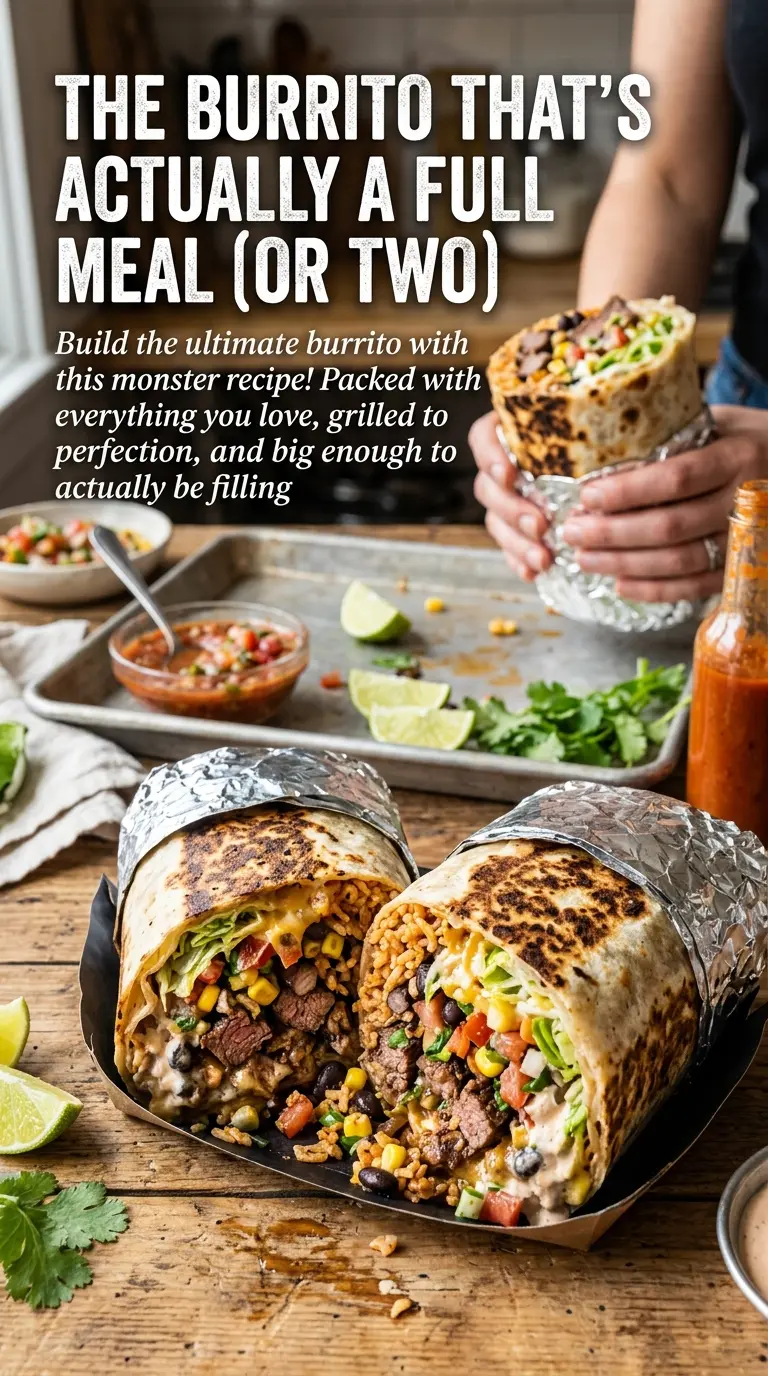
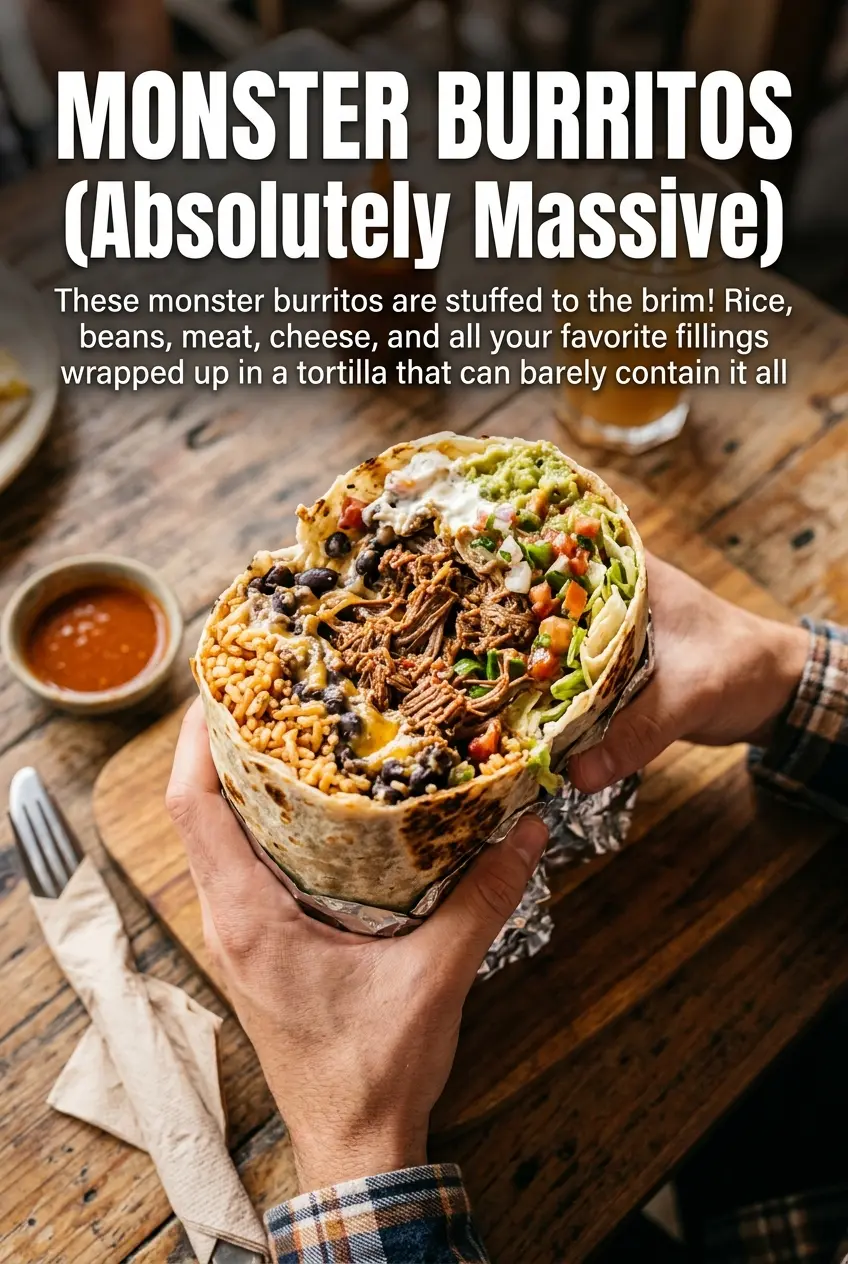
Monster burritos earn their name the second you slice into one and the filling spills out in thick, stacked layers of beef, eggs, beans, rice, and melted cheese. The tortilla gets crisp and golden on the outside while the center stays hearty and satisfying, which is exactly why these disappear fast at the table. They work for breakfast, brunch, or dinner, and they eat like a full meal all by themselves.
The trick is keeping the fillings hot, dry enough to roll, and balanced in the right order. If the burrito turns soggy or splits, it usually means the fillings were too wet or the tortilla was overloaded before it hit the griddle. Warming the tortillas first and crisping the seam side last gives you that tight, bakery-style finish instead of a soft wrap that falls apart halfway through the first bite.
Below, I’ll walk through the layering order that keeps these burritos sturdy, plus the one griddle move that gives the outside its best crunch. If you like burritos with a serious cross-section, this version is worth keeping close.
The burritos held together perfectly after that quick griddle toast, and the layers stayed distinct instead of turning into a mushy pile. My husband said the crispy seam side was the best part.
Love these monster burritos? Save them to Pinterest for the mornings or dinners when you want a giant griddle burrito with a crisp shell and stacked filling.
The Reason These Burritos Stay Tight Instead of Falling Apart
The biggest mistake with oversized burritos is overfilling them before the tortilla has any structure. A cold tortilla cracks. A wet filling slides. A burrito packed too heavily never seals cleanly, which is why the seam opens the moment it hits the griddle. Warming the tortillas first gives you flexibility, and cooking the seam side down first sets the closure before the burrito ever gets a chance to unwind.
The other thing that matters here is moisture control. The beans, rice, beef, and eggs should all be cooked and ready, but not loose or runny. Salsa and sour cream belong inside in moderation or on the side, because too much liquid turns the center soft and makes the tortilla steam instead of crisp.
What Each Layer Is Doing in the Burrito
- Extra-large flour tortillas — These need to be soft and flexible enough to hold the fillings without tearing. The extra-large size matters here; smaller tortillas won’t seal around this much filling without splitting. Warm them on the griddle until they bend easily, or they’ll crack at the fold.
- Ground beef — This gives the burrito its savory base and enough heft to stand up to the rice, beans, and eggs. Use 80/20 if you can; a little fat helps the filling taste fuller and keeps it from drying out after it’s seasoned. Drain off excess grease if the pan looks glossy.
- Refried beans — Beans act like the glue that helps everything stay in place. If yours are stiff, loosen them with a splash of water or broth so they spread instead of clumping. Thick beans seal better than thin, soupy ones.
- Cooked rice — Rice adds bulk and helps the burrito feel like a full meal without becoming greasy. Day-old rice works especially well because it’s drier and less likely to make the tortilla soggy. Keep it plain or lightly seasoned so it doesn’t fight the taco filling.
- Scrambled eggs — The eggs bring softness and make these especially good for breakfast or brunch. Cook them just until set and still tender; dry, overcooked eggs make the filling crumbly instead of plush. Pull them a touch early because they’ll finish warming inside the burrito.
- Shredded cheese — Cheese helps everything melt together once the burrito goes back on the griddle. A good melting cheese matters more than an expensive one, so cheddar, Monterey Jack, or a blend all work well. Shred it yourself if you want the smoothest melt.
How to Stack, Roll, and Crisp the Burritos on the Griddle
Build the Base With the Heaviest Fillings First
Lay the tortilla flat and spread the beans in a strip slightly below center, then add the rice, beef, eggs, cheese, and just enough salsa to season the filling without flooding it. The order matters because the beans help anchor the other ingredients and the cheese melts through the warm layers. Keep the filling centered and leave enough bare tortilla on the sides to fold cleanly. If you pile it too close to the edges, the ends split when you roll.
Roll Tightly Before the Tortilla Cools
Fold the sides in first, then pull the bottom edge over the filling and tuck it back toward you to tighten the roll. Use both hands to keep the seam snug while you finish rolling. The burrito should feel full but not stretched to the breaking point. If it starts to burst, you’ve overfilled it or let the tortilla cool too much before rolling.
Toast the Seam Side First for a Clean Finish
Set the burrito seam-side down on the hot griddle and leave it alone long enough for the seam to seal and the tortilla to turn golden. After 2 to 3 minutes, rotate it so the other side crisps too. You’re listening for a light sizzle, not aggressive frying; if the heat is too high, the outside browns before the center warms through. Slice on the bias only after the crust is set and the burrito holds its shape.
How to Adapt These Monster Burritos for Different Pans and Eaters
Make Them Vegetarian Without Losing the Heft
Swap the ground beef for seasoned black beans, pinto beans, or a plant-based crumble. Keep the beans thicker than usual so the burritos still hold together, and add a little extra cheese for richness. You’ll lose the deep browned meat flavor, but the burrito stays satisfying and sturdy.
Dairy-Free Version That Still Rolls Well
Skip the cheese and sour cream, then add extra avocado or guacamole for creaminess. The burrito will taste a little less rich, so lean harder on the seasoned beef and salsa. Keep the filling dry enough to roll, because dairy-free substitutes can sometimes add more moisture than you expect.
Breakfast-Heavy Version
Use chorizo or breakfast sausage in place of the taco-seasoned beef, and add extra eggs. This leans more toward a diner-style breakfast burrito, with a softer, richer center and less of the classic taco flavor. It’s a good move if you want these for brunch instead of dinner.
Storage and Reheating
- Refrigerator: Store wrapped burritos for up to 3 days. The tortilla softens a bit, but the filling stays solid.
- Freezer: These freeze well. Wrap each burrito tightly in foil, then place in a freezer bag for up to 2 months.
- Reheating: Reheat in a skillet over medium-low heat or in a 350°F oven until the center is hot. The common mistake is blasting them in the microwave, which turns the tortilla chewy and the seam weak.
Answers to the Questions Worth Asking
Monster Burritos
Ingredients
Equipment
Method
- Heat a griddle to medium-high and cook the ground beef until browned, breaking it up as it cooks. Stir in the taco seasoning and cook according to the packet directions until the mixture looks evenly coated and slightly thickened.
- On the same griddle, scramble the eggs over medium heat, stirring until fluffy and set, then transfer to a plate to keep warm.
- Warm the tortillas on the griddle over medium heat until pliable, about 20–30 seconds per side, and stack them to prevent drying out.
- Layer each tortilla with refried beans, cooked rice, seasoned beef, scrambled eggs, shredded cheese, and salsa. Add diced onions, jalapeños, guacamole, and hot sauce as desired so every burrito gets a similar amount of filling.
- Fold in the sides and roll each tortilla tightly, then place seam-side down on the griddle. Cook for 2-3 minutes per side until golden and crispy, then slice each burrito in half and serve with sour cream.


