
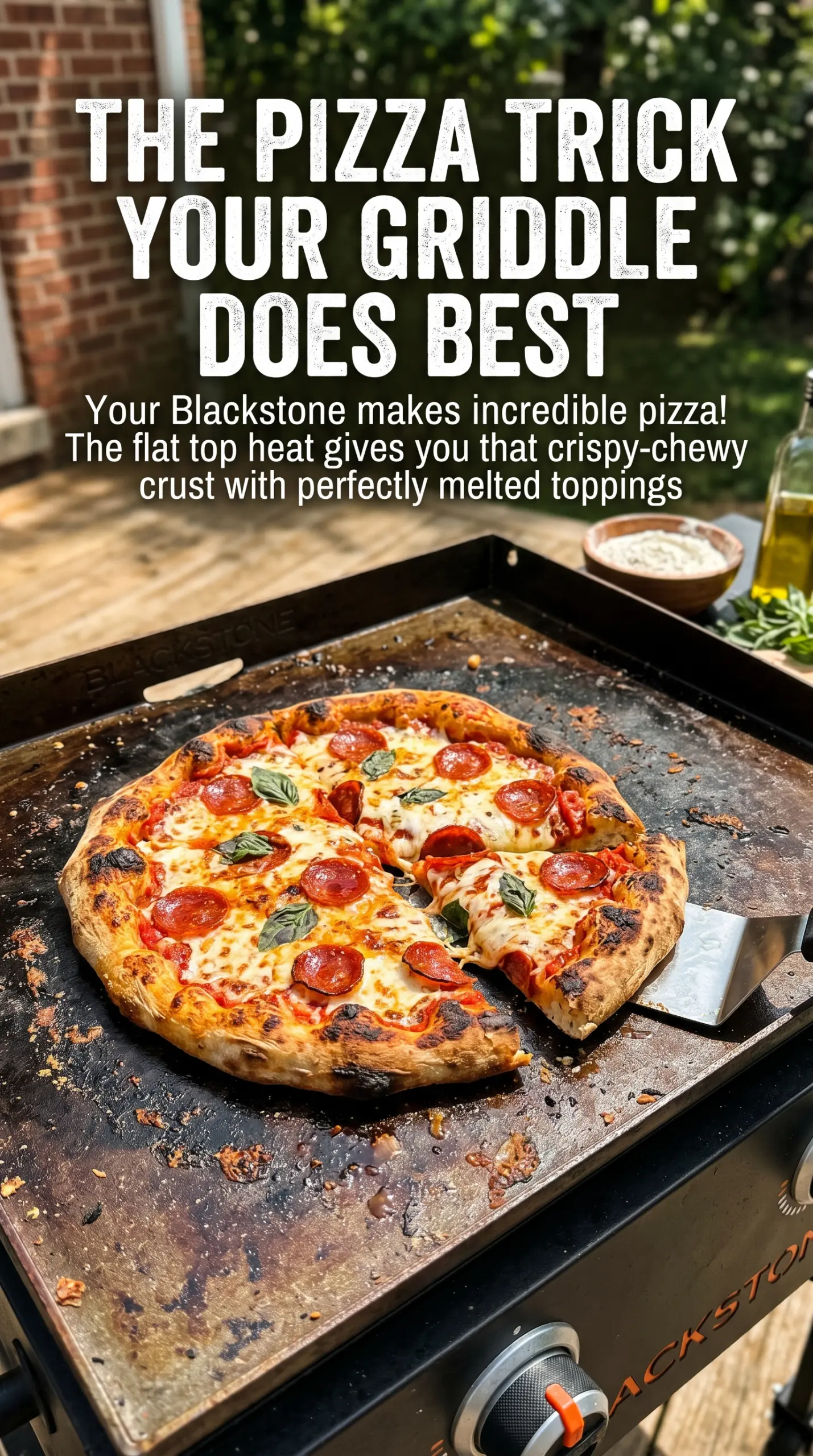
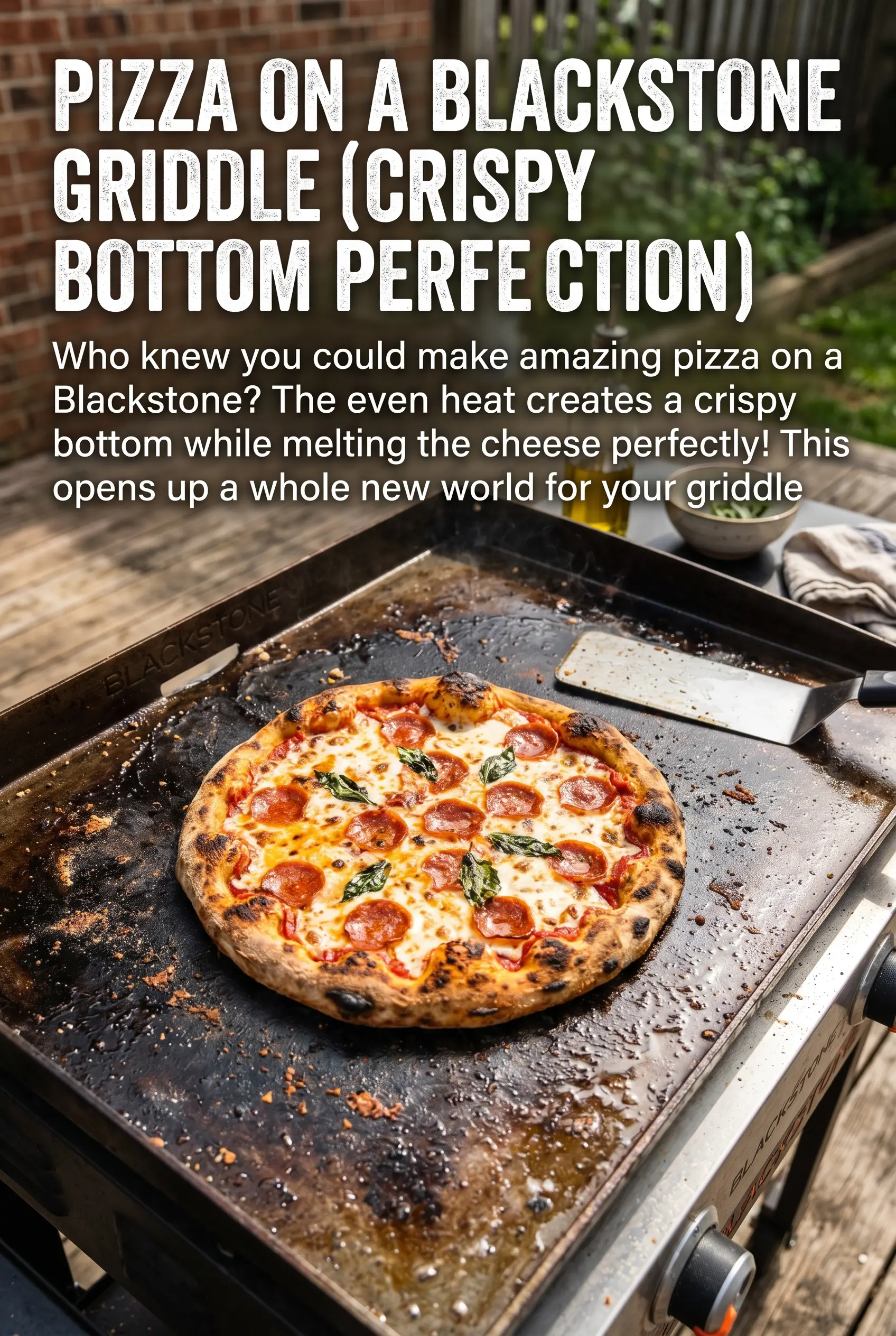
Pizza on a Blackstone griddle gives you the part everyone fights over: a thin crust with real char on the bottom and cheese that melts into the sauce instead of sliding off in a heap. The heat from the flat-top moves fast, so the dough cooks into something crisp at the edges, chewy in the middle, and sturdy enough to hold a generous pile of toppings.
The trick is cooking the first side of the dough before you add the sauce. That sets the structure and keeps the crust from turning soggy once the toppings go on. A light hand with sauce matters too; too much and the center softens before the cheese can melt. A dome or large pan traps heat over the pizza, which gives you that oven-style melt without drying out the crust underneath.
Below, I’ll walk through the timing that keeps the crust from burning, the ingredients that matter most, and a few ways to adapt this for different toppings or dietary needs. If you’ve ever wanted griddle pizza that tastes deliberate instead of improvised, this is the version worth keeping.
The crust crisped up underneath but stayed chewy in the middle, and the cheese melted all the way through under the dome in just a few minutes. My husband said it tasted like a backyard pizzeria.
Save this Blackstone pizza for the night you want charred crust, bubbling cheese, and outdoor pizza without a pizza oven.
The Part Most People Get Wrong on a Griddle Pizza
Blackstone pizza fails for one main reason: the dough gets topped before the crust has enough structure to stand up to the sauce. On a hot griddle, the bottom can brown quickly, but the center still needs that first brief cook to tighten up. If you add sauce too early, the dough steams under the toppings and turns soft instead of crisp.
The other mistake is running the heat too high from the start. Medium heat gives the dough time to cook through without scorching before the cheese has melted. You want a golden underside, not a dark brown one that tastes bitter by the time the toppings are done.
- First-side cook: This is what gives you a peelable crust and keeps the finished pizza from collapsing when you slice it.
- Medium heat: High heat burns the bottom before the cheese can finish. Medium heat gives you control.
- Dome cover: Traps heat so the cheese melts evenly and the toppings warm through without needing a long cook.
- Thin stretch: A thinner round cooks faster and stays balanced under sauce and cheese.
What Each Ingredient Is Actually Doing in This Pizza
- Pizza dough: Fresh dough gives you the best stretch and chew. Store-bought dough works fine as long as it’s rested enough to relax before shaping; cold dough snaps back and tears.
- Olive oil: This helps the griddle release cleanly and gives the crust better browning. Don’t skip it, especially if your surface isn’t perfectly seasoned.
- Pizza sauce: Use a thick sauce, not a watery one. Thin sauce leaks into the crust and makes the center soggy before the cheese melts.
- Mozzarella: Shredded mozzarella melts evenly and gives that classic stretch. Pre-shredded is convenient, but block cheese grated at home melts a little smoother if you have it.
- Flour for dusting: You need just enough to keep the dough from sticking while you stretch and move it. Too much flour on the dough will burn on the griddle and leave a bitter taste.
- Basil and Parmesan: Add these after cooking. Basil stays bright, and Parmesan gives a salty finish that cuts through the richness of the cheese.
Getting the Crust Cooked Before the Cheese Goes On
Heating the Griddle Properly
Bring the Blackstone to medium heat and let the surface come up evenly before the dough touches it. If the griddle is still patchy hot, one side of the pizza will cook faster than the other and you’ll chase hot spots the whole time. A light coat of oil should shimmer, not smoke.
Shaping the Dough
Divide the dough into four portions and stretch each one into a thin round with floured hands and a lightly dusted surface. Don’t press all the air out of the center; you want a little lift in the dough so the crust doesn’t turn cracker-thin. If the dough keeps springing back, let it rest for a few minutes and try again.
The First Side on the Griddle
Lay the dough directly on the griddle and cook until the bottom is golden, about 2 to 3 minutes. You’re looking for a firm underside that lifts cleanly with a spatula, not a soft pale round that drags when you flip it. If it’s already deep brown before the flip, the heat is too high.
Finishing Under the Dome
Flip the crust so the cooked side is up, then work fast with the sauce, cheese, and toppings. Cover it with a dome or large pan so the heat circulates and melts the cheese in 3 to 5 minutes. Pull it as soon as the cheese is bubbling and the crust edges are set; leaving it too long dries out the toppings and toughens the bottom.
Gluten-Free Griddle Pizza
Use a gluten-free pizza dough that’s meant to be shaped and cooked on a hot surface. It won’t stretch quite the same way as wheat dough, so pat it gently into rounds instead of pulling it thin. The result is a little more delicate, but the crust can still get crisp if you keep the toppings light.
Dairy-Free Version
Use your favorite meltable dairy-free mozzarella and brush the crust with olive oil for browning. The cheese won’t brown exactly like dairy mozzarella, but covering it with a dome helps it soften and melt without drying out the toppings. Keep the sauce thick, since some dairy-free cheeses release extra moisture.
Meat Lover’s Topping Combo
Pepperoni, cooked sausage, or chopped bacon work well here, but pre-cook anything fatty first. Raw sausage or greasy toppings can dump moisture onto the crust and keep it from crisping. Add the meat after the sauce and cheese go on so the pizza stays balanced.
Make It Bigger for a Crowd
Cook the dough as individual pizzas instead of one oversized round. That’s the easiest way to keep the timing even on a griddle and gives everyone their own topping choice without dragging the cook time out. Smaller pizzas also finish faster under the dome, which keeps the crust from overbrowning.
Storage and Reheating
- Refrigerator: Store leftovers in an airtight container for up to 3 days. The crust softens in the fridge, but it firms back up when reheated.
- Freezer: Freeze slices wrapped tightly for up to 2 months. Thawing before reheating helps the center warm evenly.
- Reheating: Reheat in a skillet, toaster oven, or air fryer at moderate heat until the crust crisps again and the cheese melts. The common mistake is microwaving, which turns the crust rubbery and the toppings limp.
Questions I Get Asked About This Recipe
Pizza on a Blackstone Griddle
Ingredients
Equipment
Method
- Heat the Blackstone griddle to medium heat and oil the surface to prevent sticking.
- Keep the heat steady so the crust can brown in 2-3 minutes and the cheese will melt quickly under the cover.
- Divide the pizza dough into 4 portions and stretch each into a thin round, dusting with flour as needed to keep it workable.
- Place the dough directly on the griddle and cook for 2-3 minutes until the bottom is golden.
- Flip the crust and quickly add the pizza sauce, mozzarella cheese, and your choice of toppings to the cooked side.
- Cover with a dome or large pan and cook for 3-5 minutes until the cheese melts and the toppings are hot.
- Remove the pizza from the griddle and top with fresh basil and grated Parmesan cheese.
- Slice and serve immediately while the cheese is bubbling and the crust stays crisp at the edges.


