
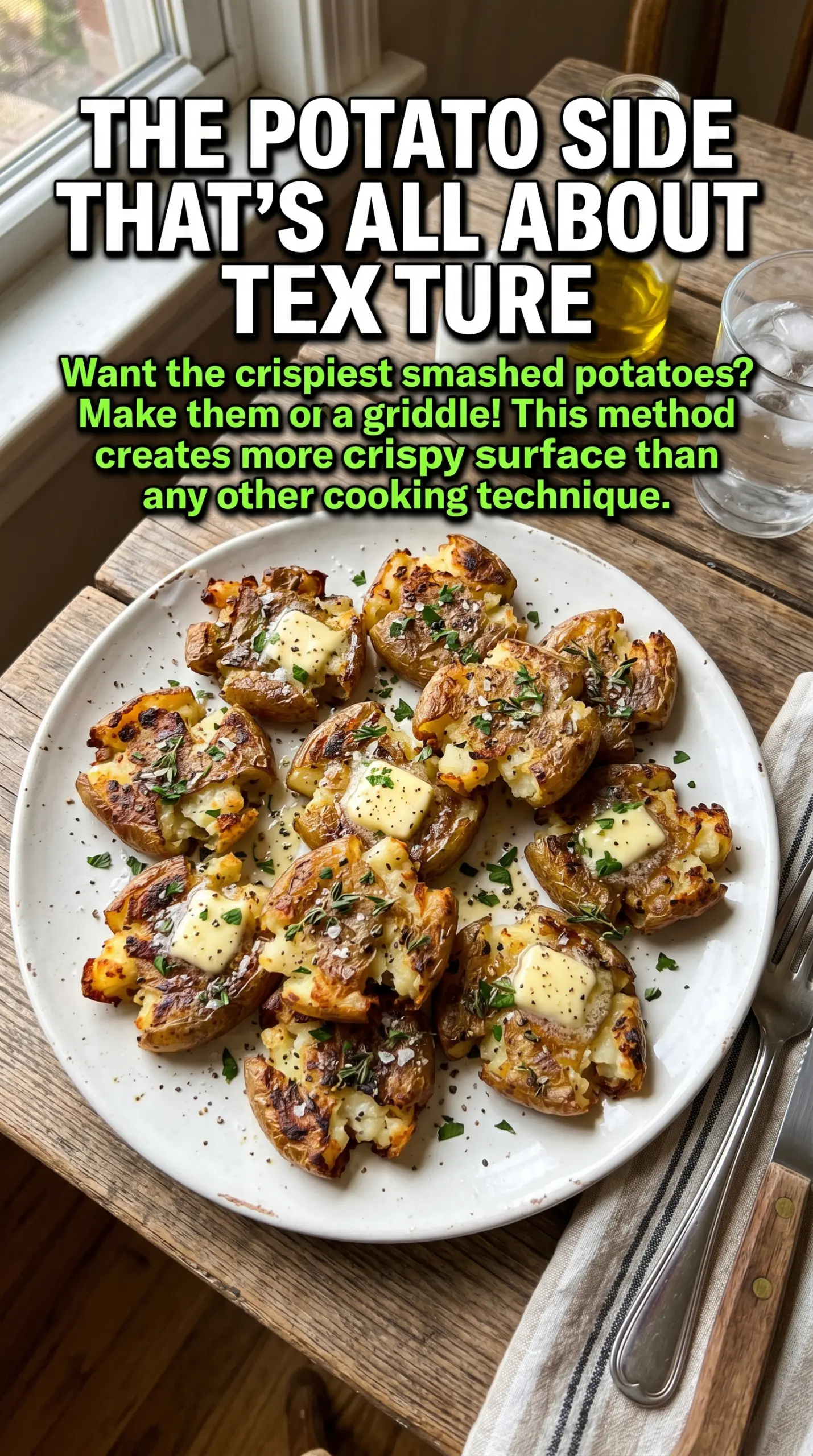
Griddle smashed potatoes hit that sweet spot between a crisp skillet potato and a loaded baked potato. The edges go shatteringly crunchy while the centers stay fluffy, and the whole tray disappears fast once the cheese melts into the hot potato crust. That combination of texture is what makes this version worth keeping in the rotation.
The trick is giving the potatoes a head start in boiling water so they collapse easily on the griddle without falling apart. A mix of oil and butter handles the high heat better than butter alone, and the garlic goes in around the potatoes instead of underneath them so it flavors the pan without burning before the crust has a chance to form.
Below you’ll find the timing that keeps the potatoes intact, the little detail that helps them crisp instead of steam, and a few smart ways to change up the toppings without losing that crunchy finish.
The potatoes got those crispy, lacy edges on the griddle and the garlic butter soaked in without burning. I topped them with bacon and cheddar, and they were gone before the rest of dinner hit the table.
Save these griddle smashed potatoes for the nights when you want crispy edges, melty cheddar, and almost no cleanup.
The Secret to Crispy Griddle Potatoes Without Breaking Them Apart
The difference between crispy smashed potatoes and a pile of torn-up potato bits comes down to two things: how tender they are before they hit the griddle and how much surface contact you create when smashing. If the potatoes are still firm in the center, they resist and split. If they’re boiled until a fork slides in easily, they flatten into wide rounds that can brown instead of shred.
The other mistake is crowding. Potatoes need space on the griddle so the steam can escape. When they sit on top of each other, or when the heat is too low, the bottoms soften before they ever crisp. Medium-high heat gives you the aggressive browning you want without scorching the garlic or burning the butter.
- Baby potatoes — These hold their shape better than larger potatoes and give you a naturally creamy interior. Yukon golds are the best substitute if you need to shop from what’s on hand.
- Oil and butter — Oil keeps the griddle hot enough for crisping, while butter adds the flavor that makes the potatoes taste like more than just browned starch. Using only butter invites burning before the crust is set.
- Garlic — Fresh minced garlic turns the pan into a built-in seasoning bath. Add it around the potatoes, not directly under them, so it toasts gently in the fat instead of turning bitter.
What Each Topping Is Doing Once the Potatoes Come Off the Heat
These toppings are not just decoration. Cheddar melts into the hot cracks and seals in the savory edges, bacon adds salt and smoke, sour cream cools the richness, and chives cut through everything with a sharp green bite. If you skip the cheese, the potatoes still work, but the whole dish reads more like a crisp side than a loaded plate.
Quality matters most with the cheddar. Pre-shredded cheese works in a pinch, but it melts a little more cleanly if you grate it yourself. The bacon can be cooked ahead of time and crumbled, and the sour cream should go on at the end so it stays cool and tangy instead of melting into the potatoes before you serve them.
- Cheddar cheese — Sharp cheddar gives the best contrast against the buttery potatoes. Mild cheddar melts fine, but it loses some of the punch that makes loaded potatoes stand out.
- Bacon — Cook it until crisp enough to crumble cleanly. Soft bacon turns chewy on the hot potatoes and muddies the texture.
- Sour cream and chives — Add them after the potatoes leave the griddle so the sour cream stays cool and the chives stay bright. If you want a lighter finish, plain Greek yogurt works, though it tastes a little tangier.
Getting the Smash, Sear, and Finish in the Right Order
Boil Until the Centers Give Up
Boil the potatoes until a knife slides in without resistance, then drain them well and let the surface steam off for a minute or two. Wet potatoes hit the griddle with too much moisture, which keeps the bottoms from crisping. If they’re still dripping, they’ll sizzle, then soften.
Press Them Flat on a Hot Griddle
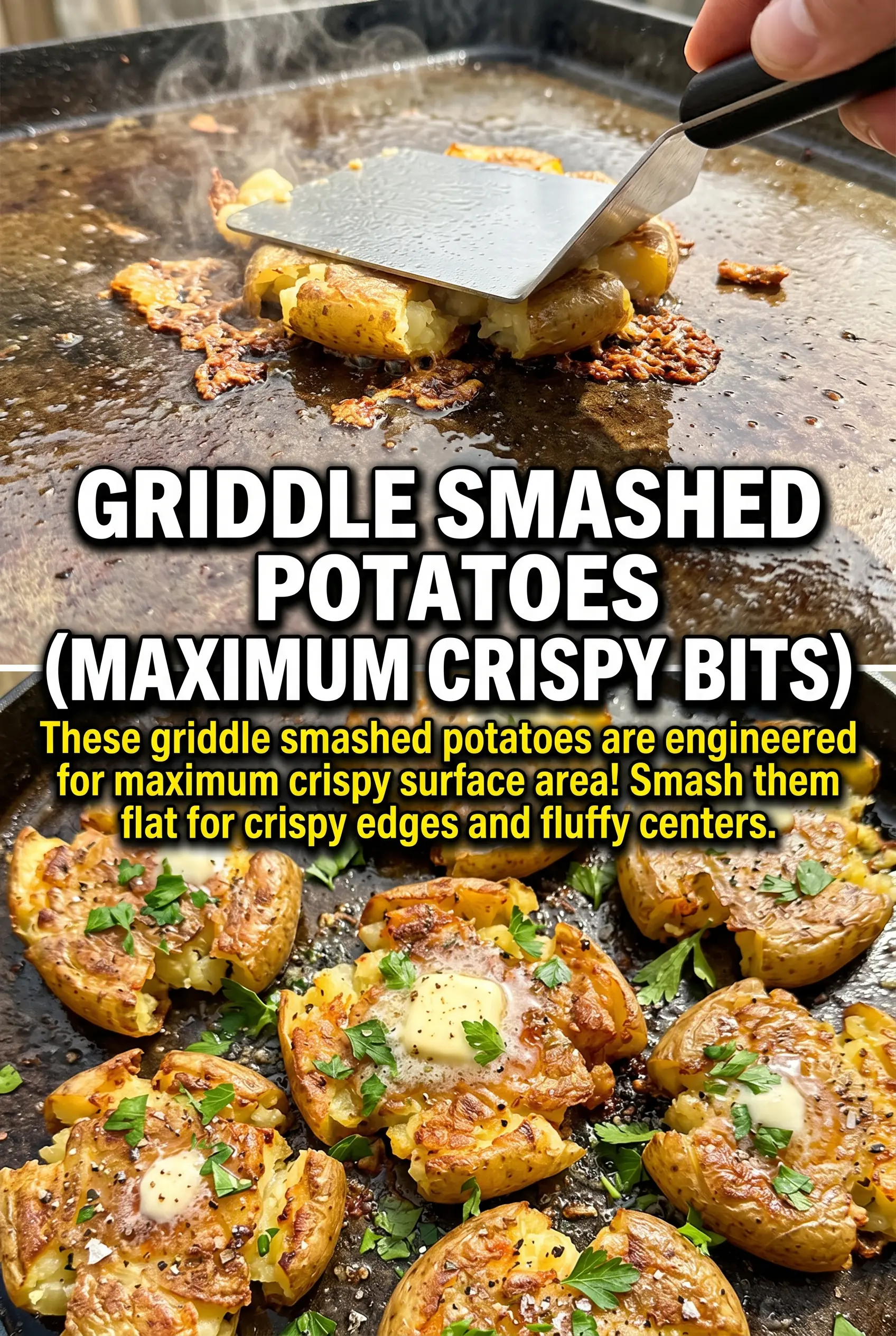
Heat the griddle with the oil and butter before the potatoes go down. The fat should shimmer, not smoke. Lay the potatoes down in a single layer and smash them firmly with a heavy spatula until they spread into thick rounds; if they cling to the tool, let them sit a few seconds and try again. That initial contact is what starts the crust.
Let the First Side Brown Undisturbed
Leave the potatoes alone for 6 to 7 minutes so the bottoms can form a deep golden crust. If you move them too soon, they tear and stick. The right moment to flip is when the edges look crisp and the underside releases with a thin, clean edge.
Finish With the Cheese While They’re Still Screaming Hot
Flip and cook the second side until crisp, then add the cheddar right away so it melts from the residual heat. Bacon goes on next, followed by sour cream and chives just before serving. If you wait too long, the potatoes lose that fresh-off-the-griddle crunch that makes the whole dish work.
How to Change the Toppings Without Losing the Crunch
Make them vegetarian with green onions and extra cheese
Skip the bacon and add more cheddar plus chopped green onions for a loaded-potato feel without the meat. You lose the smoky bite, so a pinch of smoked paprika over the hot potatoes helps fill that gap.
Keep it dairy-free with olive oil and a cashew topping
Use all olive oil instead of the butter and finish with a dairy-free sour cream or cashew cream. The potatoes will still crisp well, but they’ll taste a little cleaner and less rich than the buttered version.
Use Yukon golds when baby potatoes aren’t available
Cut the Yukon golds into 1 1/2-inch chunks before boiling so they cook evenly and still smash into sturdy rounds. They’re a little creamier than baby potatoes, which makes the centers especially soft once the edges crisp.
Storage and Reheating
- Refrigerator: Store leftovers in an airtight container for up to 3 days. The crust softens, but the flavor holds up.
- Freezer: These freeze poorly once loaded with toppings. If you want to freeze them, do it before adding cheese, sour cream, or chives.
- Reheating: Reheat in a hot skillet, griddle, or oven so the edges crisp back up. The biggest mistake is microwaving them, which makes the potatoes soft and the bacon chewy.
Questions I Get Asked About This Recipe
Griddle Smashed Potatoes
Ingredients
Equipment
Method
- Boil baby potatoes until tender, about 15-20 minutes, then drain and cool slightly so they’re easy to handle.
- Heat a griddle to medium-high and add olive oil and butter, letting the butter melt and foam lightly.
- Place the warm potatoes on the griddle and smash completely flat with a heavy spatula.
- Scatter minced garlic around the potatoes and cook for 6-7 minutes until a crispy golden crust forms.
- Flip the potatoes and cook another 5-6 minutes until both sides are crispy and browned.
- Top the hot crispy potatoes with shredded cheddar cheese, then add cooked and crumbled bacon, sour cream, and chopped chives before serving.


