
Charred edges, juicy thighs, and that unmistakable lemony perfume from fresh lemongrass make this grilled Vietnamese lemongrass chicken the kind of dinner that disappears fast. The marinade clings to the chicken and turns sticky on the grill, giving you deep savory-sweet flavor with just enough smoke to keep every bite interesting. Served with rice, herbs, and lime, it lands right in that sweet spot between weeknight practical and cookout special.
The trick is in the balance. Lemongrass brings brightness and aroma, fish sauce brings salt and depth, and brown sugar helps the chicken caramelize instead of drying out over the fire. I like boneless thighs here because they stay tender and take on the marinade better than lean cuts, but the real payoff comes from giving the chicken time to soak. Four hours is the minimum I’d use; overnight gives you the most flavor without making the meat mushy.
Below, I’ll walk through the one part that matters most for good color on the grill, what each ingredient is doing in the marinade, and a few smart swaps if you need to adjust for what’s in your kitchen.
The chicken picked up that lemongrass flavor all the way through, and the marinade caramelized instead of burning. I served it over rice with herbs and lime, and my husband asked if we could put it in the regular dinner rotation.
Grilled Vietnamese lemongrass chicken with caramelized edges and fresh herb brightness.
The Secret to Grilled Lemongrass Chicken That Stays Juicy, Not Dry
The biggest mistake with lemongrass chicken is treating it like a quick grill-and-go cut of meat. Boneless thighs can handle heat, but they still need a marinade with enough sugar and oil to protect the surface while the lemongrass and fish sauce do their job. If the grill is too hot, the sugar will scorch before the chicken cooks through, which leaves you with bitter edges and a pale middle.
I keep the heat at medium-high and cook the thighs just long enough to get dark grill marks and a lightly sticky crust. The chicken should release from the grates when it’s ready to turn. If it sticks hard, give it another minute; forcing it early usually tears the surface and leaves the best caramelization behind.
What Each Ingredient Is Actually Doing in the Marinade
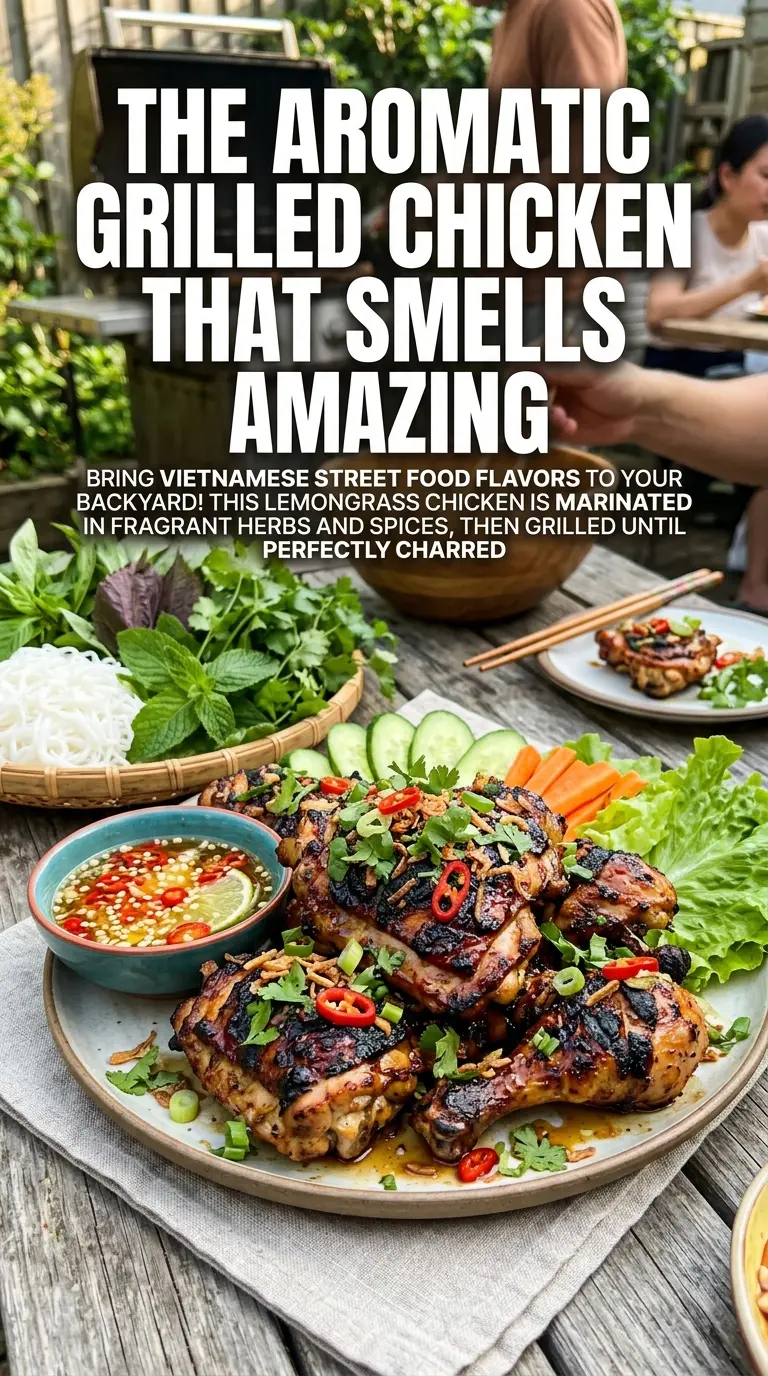
- Lemongrass — This is the backbone of the dish, and fresh is worth chasing down. Mince the tender inner stalks very finely so the flavor spreads through the marinade instead of staying in tough little fibers. If you only have paste, use it, but the aroma won’t be quite as bright.
- Fish sauce — This gives the chicken its savory depth and salty backbone. There isn’t a great stand-in for the exact flavor, but soy sauce can cover part of the job if you need a pescatarian-free version. It won’t taste the same, but it will still season the meat well.
- Brown sugar — It balances the salt and helps the chicken char without drying out. White sugar works in a pinch, but brown sugar gives a fuller, rounder finish that tastes more at home with the fish sauce and lemongrass.
- Chicken thighs — Thighs stay juicy over high heat and hold up better to the sweet-salty marinade than breasts. If you use breasts, cut them into thicker pieces and pull them sooner so they don’t turn stringy.
- Garlic, shallot, soy sauce, and pepper — These round out the marinade and add the familiar savory edge you want under the citrusy lemongrass. The pepper matters more than it seems; it gives the finished chicken a little bite that keeps the sweetness in check.
Building the Marinade and Grill Marks Without Burning the Sugar
Mix the marinade until the sugar dissolves
Stir the lemongrass, fish sauce, brown sugar, oil, garlic, shallot, soy sauce, and pepper together until the sugar is mostly dissolved. You want a wet, glossy marinade that coats the chicken evenly, not grainy sugar sitting at the bottom of the bowl. If the sugar stays clumped, it tends to burn in streaks on the grill.
Let the chicken soak long enough to matter
Add the chicken thighs and turn them until every piece is coated. Four hours in the refrigerator gives you good flavor, but overnight is even better if you have the time. Don’t push it much past 24 hours; the texture starts to get a little soft from the salt and acid in the marinade.
Grill over medium-high heat, not raging heat
Preheat the grill well before the chicken goes on. The grates should be hot enough to sear on contact, but not so hot that the sugar in the marinade blacks out immediately. Grill for 6 to 7 minutes per side, and look for a deep golden-brown char with some dark spots, not a fully blackened surface.
Rest before slicing
Let the chicken rest for a few minutes before you cut into it. That pause keeps the juices from running all over the cutting board. Slice it against the grain and serve with rice, fresh herbs, and lime wedges so the sharp, herbal finish can lift the richer grilled meat.
Three Ways to Make This Grilled Lemongrass Chicken Work for Your Kitchen
For a gluten-free version
Use a gluten-free soy sauce or tamari in place of standard soy sauce. The flavor stays close, and you won’t lose the savory backbone that helps the marinade taste rounded instead of flat.
For a lighter, less sweet version
Cut the brown sugar down to 1 tablespoon. The chicken will still caramelize, but the glaze won’t be as sticky and the lemongrass will come through more sharply.
For oven or broiler cooking
If you don’t have a grill, broil the chicken on a lined sheet pan close to the heat source and flip once. You’ll lose a little smoky flavor, but the marinade still browns well and the chicken stays juicy if you watch it closely.
Storage and Reheating
- Refrigerator: Store cooked chicken in an airtight container for up to 4 days. The flavor holds well, though the surface softens a little after chilling.
- Freezer: Freeze cooked chicken for up to 2 months. Slice it first if you want quicker thawing, then wrap tightly so the lemongrass aroma doesn’t fade.
- Reheating: Reheat gently in a covered skillet over low heat with a splash of water, or warm it in the oven at 300°F. High heat dries out the thighs fast and can make the sugars on the surface taste bitter.
Questions I Get Asked About This Recipe
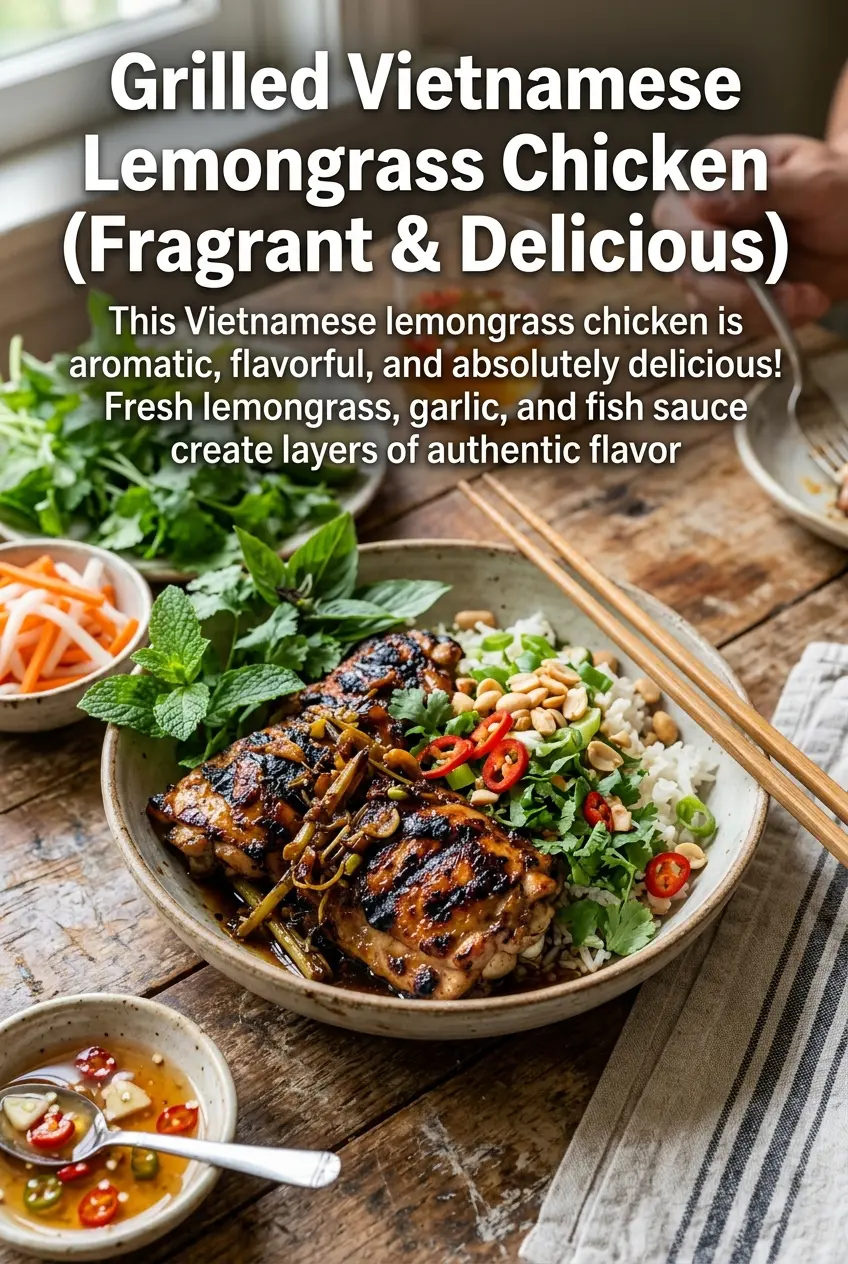
Grilled Vietnamese Lemongrass Chicken
Ingredients
Equipment
Method
- Combine minced lemongrass, fish sauce, brown sugar, vegetable oil, minced garlic, minced shallot, soy sauce, and black pepper in a bowl until evenly blended. The mixture should look glossy and thickened slightly from the sugar.
- Add the boneless chicken thighs to the marinade, coat well, and cover. Refrigerate for 4-24 hours so the flavors penetrate and the surface becomes fragrant.
- Preheat the grill to medium-high heat. Aim for a steady sizzle so the chicken can char quickly without drying out.
- Grill the marinated chicken for 6-7 minutes per side until charred and cooked through. Turn once per side for strong grill marks and caramelized edges.
- Let the grilled chicken rest for about 4 minutes before slicing. This helps the juices redistribute for tender pieces.
- Serve the sliced chicken with rice, fresh herbs, and lime wedges. Finish with extra lime juice to brighten the caramelized lemongrass flavor.


