
Juicy Greek chicken earns its keep the moment it comes off the grill with crisped edges, a lemony aroma, and meat that stays tender all the way through. The marinade does the heavy lifting here, but the real payoff is in the balance: bright citrus, garlic, oregano, and olive oil working together so the chicken tastes seasoned all the way to the center, not just on the surface.
What makes this version work is restraint. Lemon juice gives the chicken that classic Greek bite, but too much acid for too long can turn the texture chalky, so the olive oil helps cushion the marinade and keep the meat supple. Fresh oregano brings a cleaner, greener flavor, though dried oregano still works if that’s what you have. A short rest after grilling matters too. It keeps the juices in the meat instead of running out onto the cutting board.
Below you’ll find the small details that make this chicken come out juicy instead of dry, plus the best way to handle the marinade timing if you want to cook it later in the day.
The marinade gave the chicken a clean lemon-garlic flavor, and after grilling it stayed juicy instead of drying out. I let it go overnight and the edges picked up the nicest little char.
Save this juicy Greek chicken for the nights when you want lemon, oregano, and charred grill flavor without a lot of work.
The Marinade Timing That Keeps Greek Chicken Juicy Instead of Sharp
The biggest mistake with lemon-based marinades is leaving the chicken in them too long without enough oil. Acid starts to tighten and change the proteins on the surface, which is fine for flavor, but past a point it can make the texture dry and a little mealy. Four to six hours is the sweet spot for most pieces. If you want to marinate overnight, keep it closer to 12 hours than 24, especially with smaller cuts.
This is also a recipe where chicken pieces matter. Thighs stay forgiving on the grill, while breasts need a little more attention because they go from juicy to dry fast once they pass temperature. The goal is not to blast them over high heat and hope for the best. It’s to get a clean sear, then pull them at 165°F and let the carryover finish the job.
What the Lemon, Garlic, and Oregano Each Bring to the Pan
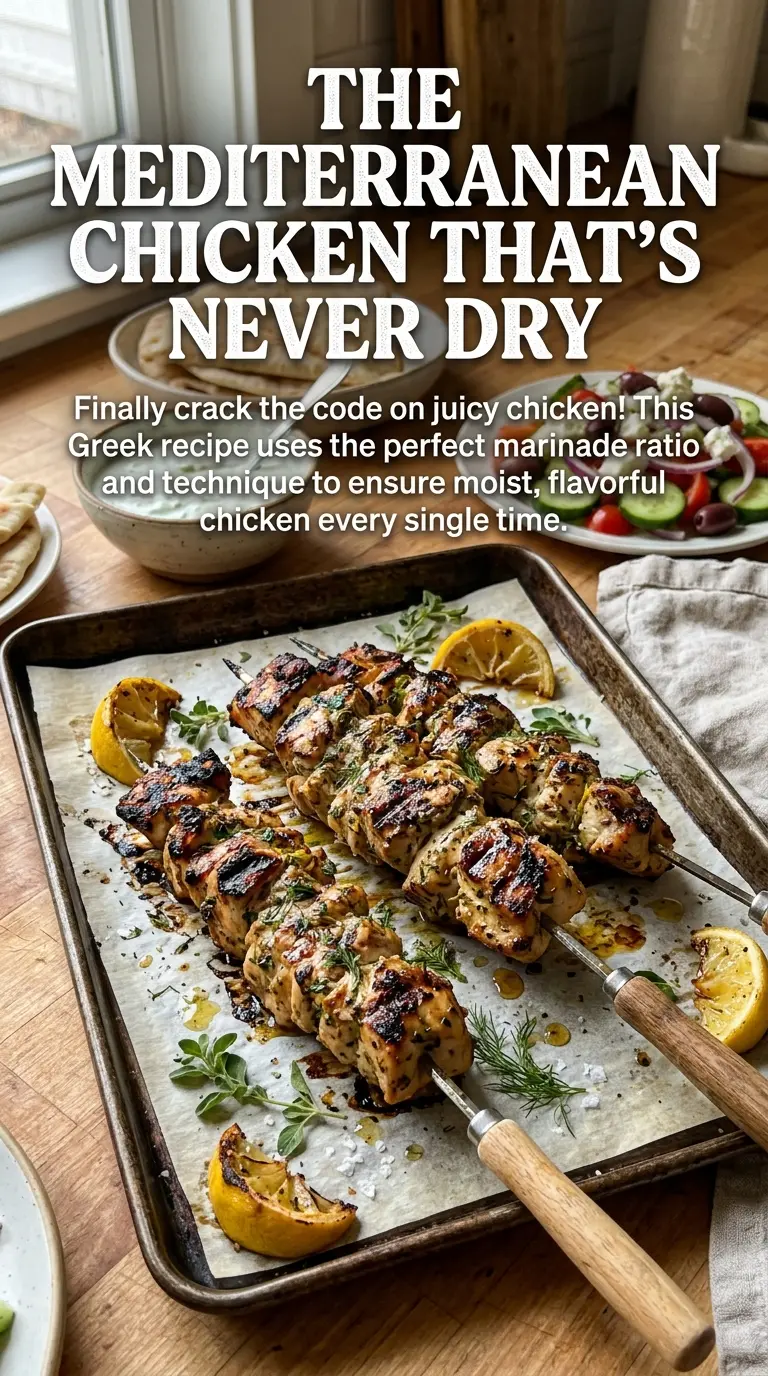
- Chicken pieces — Thighs give you the most forgiving, juicy result, but breasts work well if you watch the grill closely and pull them the moment they hit temperature. If you’re using bone-in pieces, plan on a little more time and be patient with the center.
- Olive oil — This is what carries the garlic and herbs across the meat and helps the chicken brown instead of drying out. Use a decent extra-virgin olive oil here because the flavor comes through, especially since there aren’t many ingredients to hide behind.
- Lemon juice and zest — Juice gives the sharp, bright marinade; zest gives the perfume. That combination matters because juice alone can taste flat and overly acidic, while zest brings the sunny, floral part that makes the chicken taste distinctly Greek.
- Fresh oregano — Fresh oregano tastes cleaner and less dusty than dried, and it’s the ingredient that really makes the marinade pop. If all you have is dried oregano, use half the amount and crush it between your fingers before whisking it in so it wakes up a little.
- Garlic — Minced garlic adds the savory backbone, but it can burn on a very hot grill if it’s clinging to the outside of the chicken. Shake off excess marinade before cooking so the garlic flavors the meat without scorching on the grates.
Getting the Grill Marks Without Losing the Juices
Building the Marinade
Whisk the olive oil, lemon juice, zest, garlic, oregano, thyme, salt, and pepper until the mixture looks slightly emulsified, not separated into a slick on top and watery liquid below. That helps the herbs and garlic cling to the chicken more evenly. If you taste the marinade, it should seem a touch saltier and sharper than you want the finished chicken to be. Some of that gets left behind in the bowl.
Marinating with Purpose
Coat the chicken well and refrigerate it in a covered dish or bag for at least 4 hours. Turn it once or twice if you can, but don’t obsess over it. The main failure here is over-marinating, especially with thin chicken breasts. Past 24 hours, the texture can get loose and unpleasant from all that acid.
Grilling to the Right Point
Grill over medium-high heat until the chicken has good color and the thickest part reaches 165°F. If the outside is browning too fast, move the pieces to a cooler part of the grill and finish them there. Chicken that sticks to the grates usually isn’t ready to flip yet, so let it release on its own instead of forcing it. That patience is what keeps the coating from tearing off and leaving the meat behind.
The Rest Before Serving
Let the chicken rest for 5 minutes before slicing or serving. This is the part people skip, then wonder why the cutting board turns into a puddle. Resting lets the juices settle back into the meat, and it also gives the surface a chance to finish relaxing after the heat. The result is chicken that slices cleaner and eats juicier.
Three Ways to Work This Greek Chicken Into Your Week
Dairy-Free and Naturally Gluten-Free
This recipe already fits both diets as written, which is part of why it’s such an easy weeknight option. Serve it with rice, potatoes, or a Greek salad and you’ve got a full meal without changing the marinade at all.
Swap the Grill for the Oven
If grilling isn’t an option, roast the chicken on a sheet pan at 425°F until it reaches 165°F. You won’t get the same smoky char, but you’ll still get browned edges and a juicy center, especially if you use thighs.
Make It Ahead for Meal Prep
Cook the chicken, cool it, and slice it for bowls, pitas, or salads during the week. The flavor holds up well cold, and a quick warm-up in a skillet with a splash of water keeps the meat from drying out.
Use Bone-In Chicken for Extra Flavor
Bone-in pieces take longer, but they stay juicy and pick up a deeper grilled flavor. Keep the heat at medium-high, then lower it if the skin or marinade starts to char before the center is done.
Storage and Reheating
- Refrigerator: Store cooked chicken in an airtight container for up to 4 days. It stays flavorful, though the texture is best in the first two days.
- Freezer: Freeze cooked chicken for up to 2 months, tightly wrapped and sealed. Slice it first if you plan to use it in salads or wraps later.
- Reheating: Warm it gently in a skillet over low heat with a splash of water or broth, or cover and reheat in the oven until just hot. High heat is what dries out lean chicken and makes the edges tough.
Answers to the Questions Worth Asking
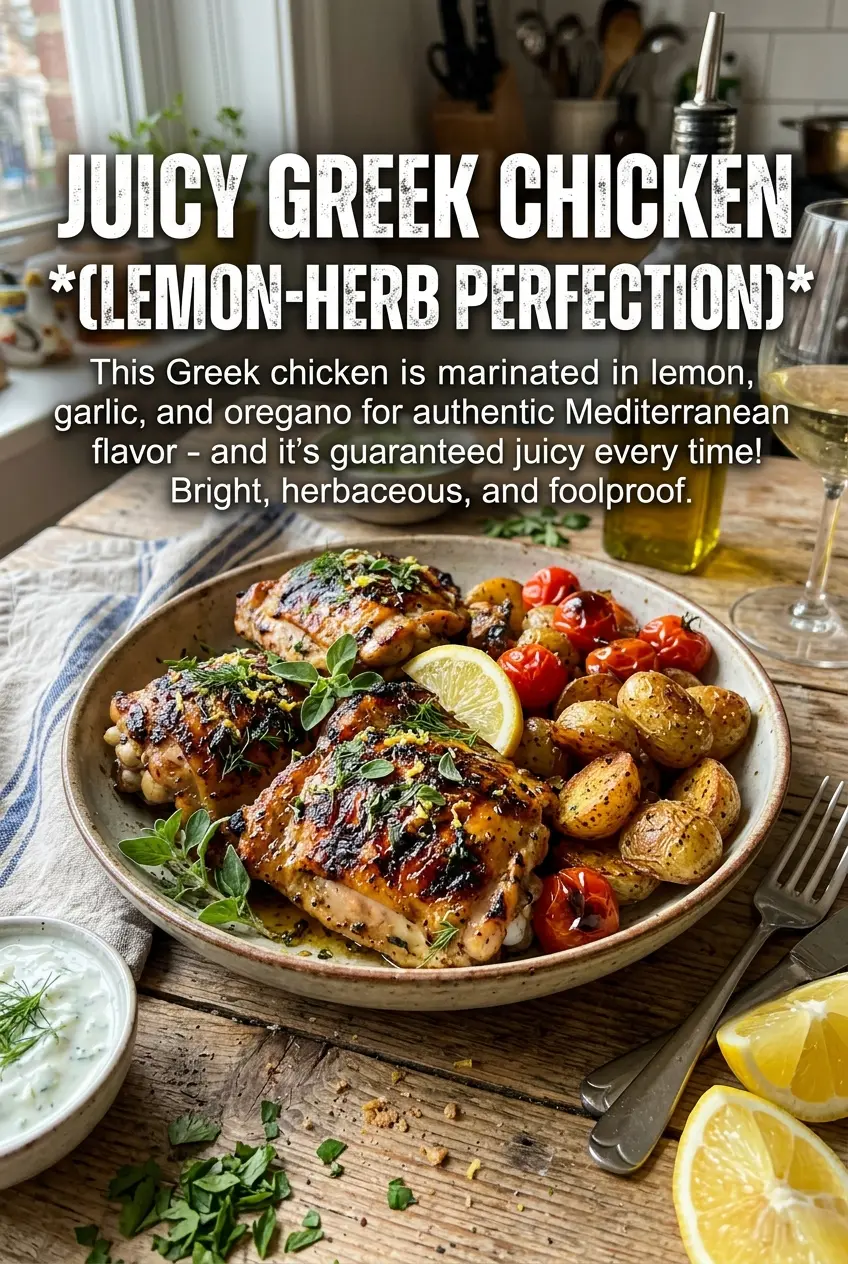
Juicy Greek Chicken
Ingredients
Method
- Whisk together olive oil, lemon juice, lemon zest, minced garlic, fresh oregano (or dried), dried thyme, salt, and pepper until the marinade looks evenly combined with a glossy sheen.
- Pat the chicken pieces dry and place them in a non-reactive bowl or container, then pour the marinade over and turn the chicken to coat all surfaces.
- Cover and marinate the chicken for 4-24 hours in the refrigerator so the flavors soak in and the meat stays juicy.
- Preheat the grill to medium-high heat, then grill the chicken pieces until the internal temperature reaches 165°F, turning as needed for even browning (about 25 minutes total).
- Let the grilled chicken rest 5 minutes before serving so the juices redistribute and each bite stays tender.


