
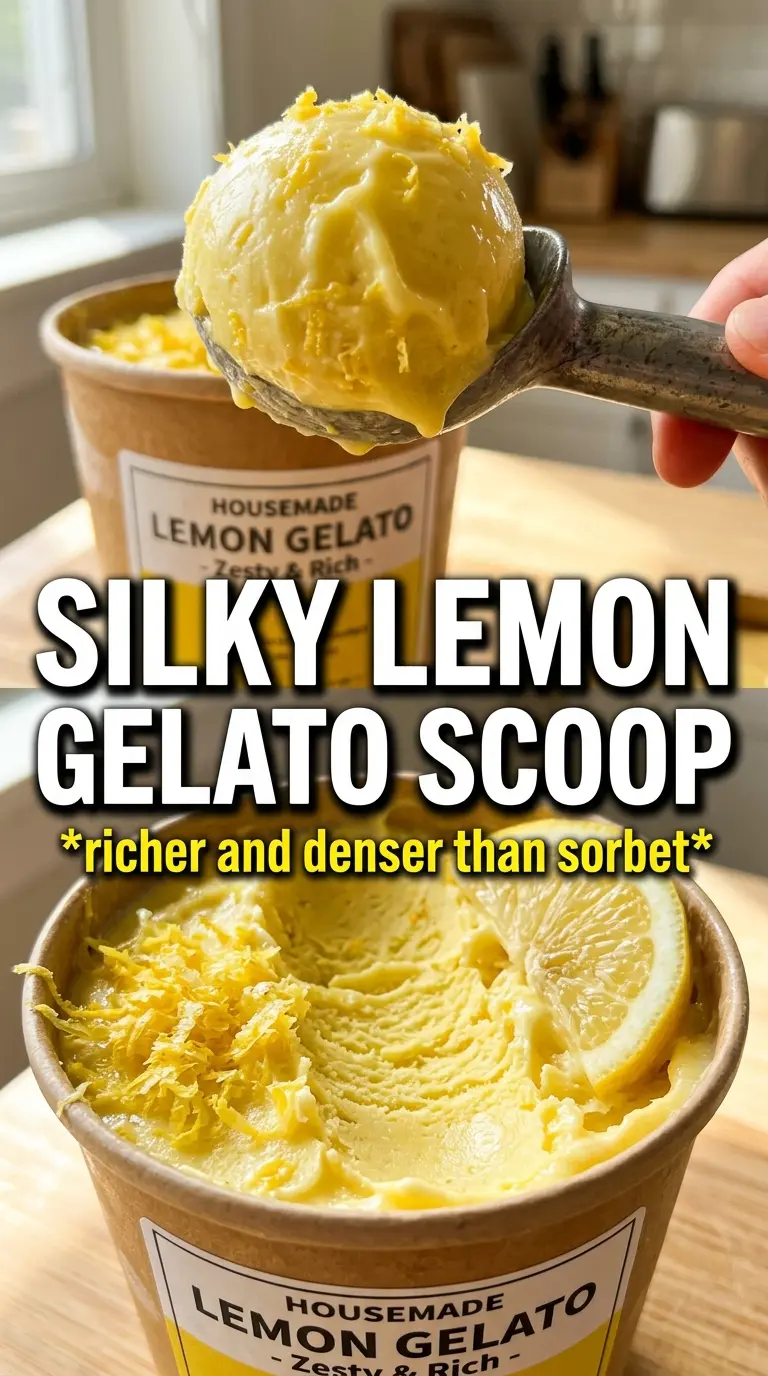
Lemon gelato lands somewhere between citrus custard and frozen silk. It’s brighter than ice cream, denser than sorbet, and it keeps that clean lemon snap without turning icy or sharp. The first spoonful tastes vivid; the second is where the creamy base starts to show its work.
What makes this version hold together is the balance of egg yolks, a little cornstarch, and enough dairy to carry all that lemon juice without breaking. The yolks bring body, the cornstarch steadies the custard, and the lemon goes in after cooking so the acidity doesn’t fight the thickening process. That order matters. If you add the citrus too early, the mixture can thin out or curdle before it ever reaches the churn.
Below, you’ll find the exact point where the base should look like pudding, why chilling longer than you think is worth it, and how to keep the finished gelato scoopable instead of hard as a brick.
The custard thickened up exactly when you said it would, and the lemon flavor stayed bright instead of tasting cooked. I churned it on the lowest setting and it came out dense and smooth, not airy like ice cream.
Save this creamy lemon gelato for the kind of dessert that turns sharp citrus into a dense, scoopable frozen custard.
The Difference Between Lemon Gelato and an Ice Cream Base That Turns Flat
The mistake most lemon frozen desserts make is loading in too much acid before the custard has set. Lemon juice is the last thing that goes in here because acidity can thin the base and dull the texture if it meets raw dairy too early. Cooking the milk, cream, yolks, sugar, and cornstarch first gives you a stable custard that can take the citrus without collapsing.
The other thing that matters is density. Gelato isn’t churned as airy as standard ice cream, so the base should be thick before it ever hits the machine. If it still looks loose and pale like sauce, it will freeze softly but taste weak. You want it to coat a spoon in a smooth layer and leave a clean line when you drag a finger through it.
- Egg yolks — They give the gelato its custardy body and help keep the finished texture supple instead of icy. There isn’t a true substitute here if you want this exact richness.
- Cornstarch — This is the quiet insurance policy. It helps the base thicken without needing a heavy egg custard, and it keeps the texture from going chalky after freezing.
- Fresh lemon juice and zest — Bottled juice won’t give you the same brightness, and the zest carries the perfume that makes the flavor taste alive. If you only have lemons for one thing, spend them here.
- Whole milk and heavy cream — The milk keeps the flavor clean and light; the cream adds roundness. Swapping in low-fat dairy makes the gelato icy faster and flattens the lemon.
What Each Ingredient Is Actually Doing in This Ice Cream
- Base ingredient (cream, milk, or custard) — This provides the foundation and richness. Quality matters.
- Sweetener (sugar, honey, or condensed milk) — This sweetens and prevents ice crystals. The ratio is critical.
- Flavor element (vanilla, fruit, chocolate, or other) — This defines the ice cream personality. Use quality ingredients.
- Egg yolks (if making custard base) — These create richness and silky texture. Optional but elevates ice cream.
- Churning (if using ice cream maker) — This incorporates air and prevents ice crystals. Critical for smooth texture.
- Freezing temperature and time — Proper freezing prevents rock-hard texture. Store at 0°F or below.
- Mix-ins (chocolate, cookies, fruit, or swirls) — These add texture and prevent one-dimensional flavor. Add near end of churning.
- Serving temperature (slightly soft, not rock hard) — This provides creamy mouthfeel. Remove from freezer 5 minutes before serving.
Building the Custard Without Scrambling the Yolks
Warming the Dairy First
Heat the milk and cream until they’re steaming, not boiling. You want the mixture hot enough to temper the yolks, but not so hot that it scalds and picks up a cooked-milk taste. Tiny bubbles around the edge are enough. Pull it off the heat the moment it steams strongly.
Tempering the Yolks Slowly
Whisk the yolks, sugar, and cornstarch until the mixture turns pale and thick, then stream in the hot dairy a little at a time. If you pour it all in at once, the yolks can seize and turn grainy. Slow whisking keeps the eggs moving and brings the temperature up gently, which is what gives you a smooth base.
Cooking to the Right Pudding Texture
Return everything to the saucepan and stir constantly over medium heat until the custard thickens enough to coat the spoon. It should look like loose pudding, not runny cream, and when you drag the spoon across the bottom, the trail should hold for a second before filling in. If the heat is too high, the edges will thicken first and the yolks can curdle before the center is ready.
Finishing With Lemon at the End
Take the pan off the heat before adding the lemon juice, zest, vanilla, and salt. The citrus wakes the base up immediately, but it also loosens the texture a little, which is normal. Stir until the mixture looks glossy and even. The vanilla won’t taste like vanilla here; it just rounds off the sharp edge so the lemon reads as bright instead of harsh.
Make It Dairy-Free With Full-Fat Coconut Milk
Replace the milk and cream with full-fat coconut milk, but know that the flavor shifts toward coconut and the finished gelato won’t taste as cleanly citrusy. The texture will still be creamy, especially if you chill the base fully before churning, though it won’t be quite as dense as the dairy version.
Use Meyer Lemons for a Sweeter, Softer Citrus Note
Meyer lemons make a gentler gelato with less bite and a floral edge. If you use them, keep the zest generous and don’t reduce the sugar unless you want the dessert to taste noticeably sharper and less rounded.
Make It Egg-Free, Knowing the Tradeoff
You can leave out the yolks and lean on cornstarch for thickening, but the gelato will be lighter and a little more icy after freezing. It still works for a bright lemon dessert, just not with the same custardy finish or richness.
Storage and Reheating
- Refrigerator: The base keeps for up to 2 days before churning, tightly covered. It may thicken a touch more as it chills.
- Freezer: Finished gelato keeps for about 1 week with the best texture. After that, it starts to pick up ice crystals and loses some of its clean lemon finish.
- Serving: Let it sit at room temperature for 5 to 10 minutes before scooping. The common mistake is trying to dig in too early, which makes the top crumbly and the scoop ragged instead of smooth.
Questions I Get Asked About This Recipe
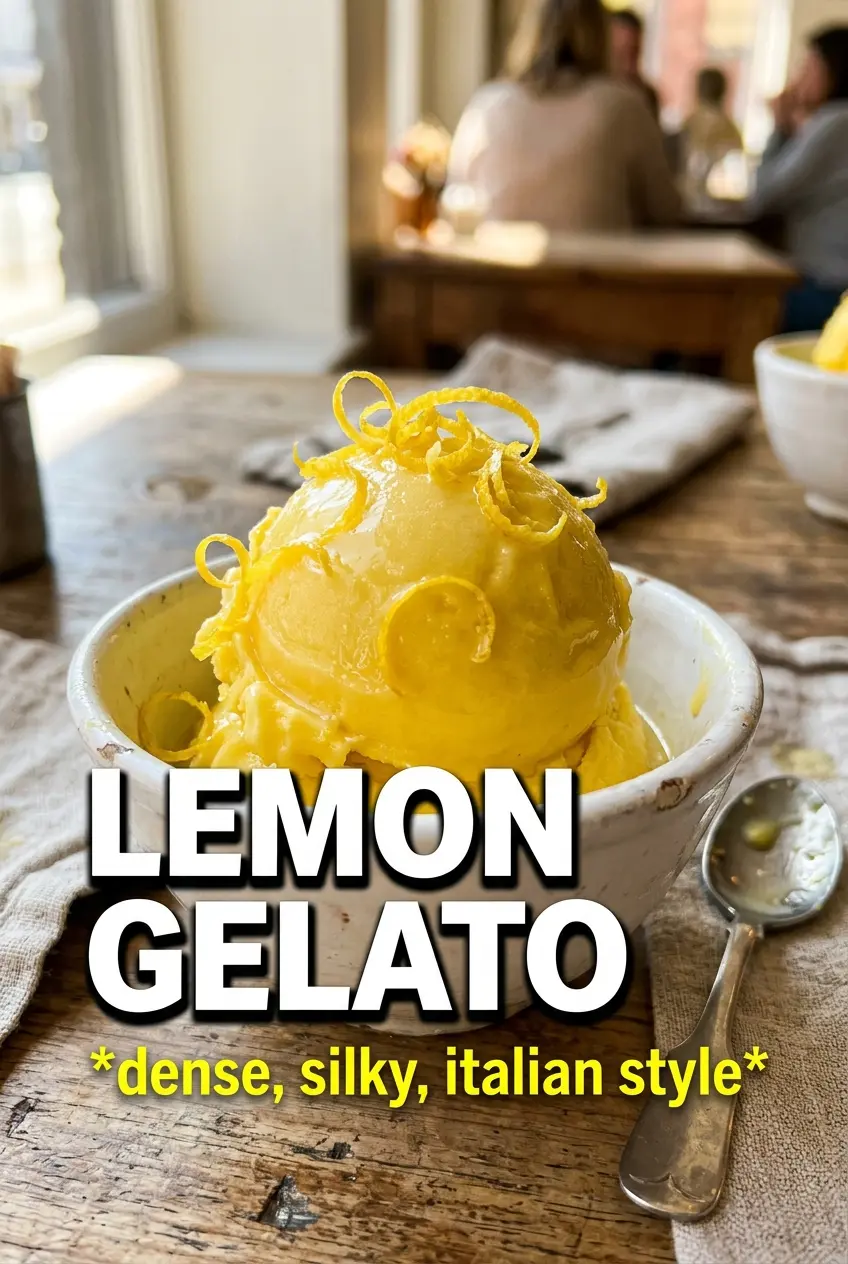
Lemon Gelato
Ingredients
Equipment
Method
- Heat whole milk and heavy cream together in a saucepan over medium heat until steaming, with small bubbles forming at the edges. Keep it hot but do not boil.
- Whisk egg yolks, granulated sugar, and cornstarch in a bowl until pale and thick. The mixture should look smooth and slightly heavier.
- Slowly whisk the hot milk mixture into the egg yolk mixture to temper. Pour gradually while whisking to prevent scrambling.
- Return the mixture to the saucepan and cook over medium heat, stirring constantly, until thickened to a pudding consistency, about 10–15 minutes. Visual cue: it should coat the back of a spoon and hold a line when you draw a finger through it.
- Remove the saucepan from heat, then stir in fresh lemon juice, lemon zest, vanilla extract, and salt until fully combined and glossy. The aroma should turn bright and strongly lemony.
- Cool completely over an ice bath for 10–15 minutes, stirring occasionally, until the custard is no longer hot to the touch. Visual cue: it should feel cool and slightly thickened.
- Refrigerate the custard at least 4 hours until very cold. Visual cue: the surface should be chilled and the mixture should pour slowly.
- Churn the chilled custard in an ice cream maker on the lowest setting until dense and scoopable, about 20–30 minutes. Visual cue: it should look pale yellow and creamy, not watery.
- Serve immediately for a softer texture, or freeze 1–2 hours to firm up before serving. Visual cue: the gelato becomes denser and holds an oval quenelle shape.


