
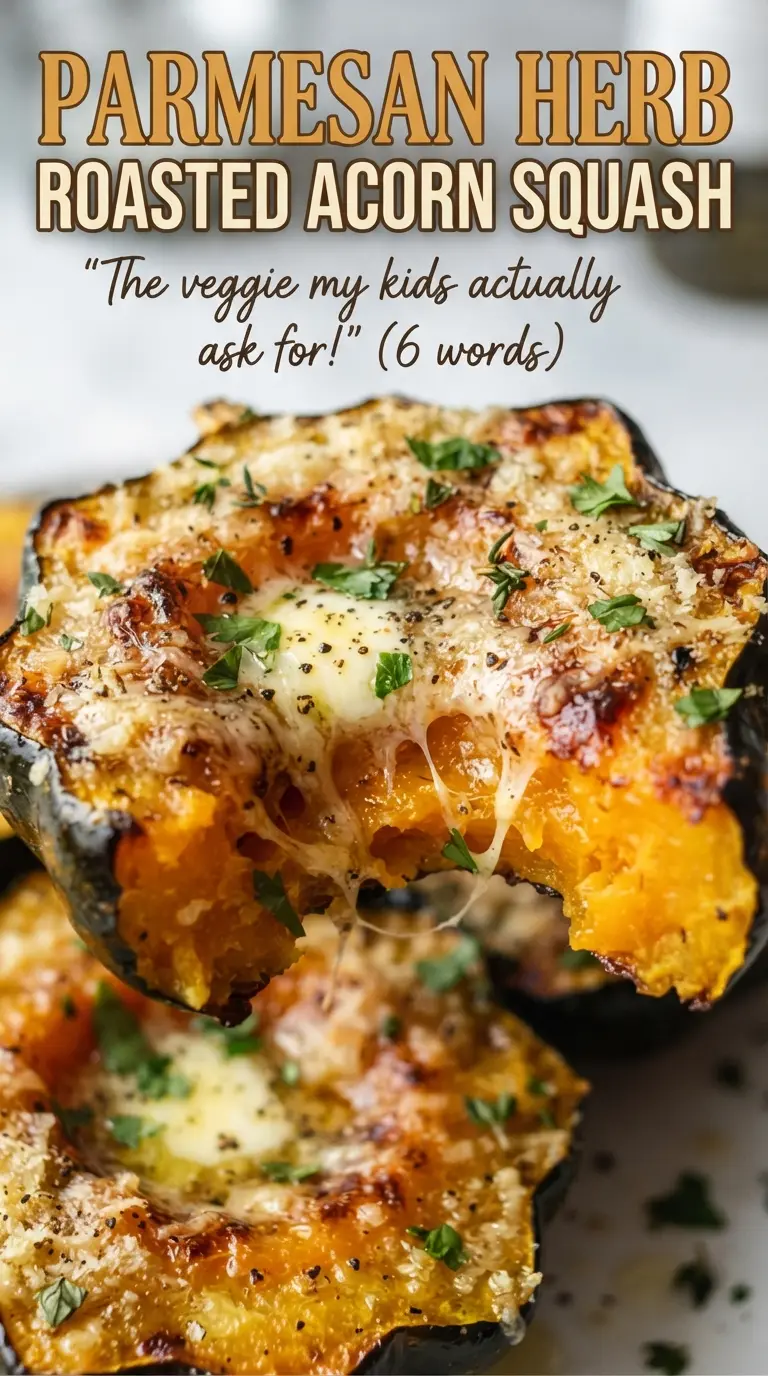
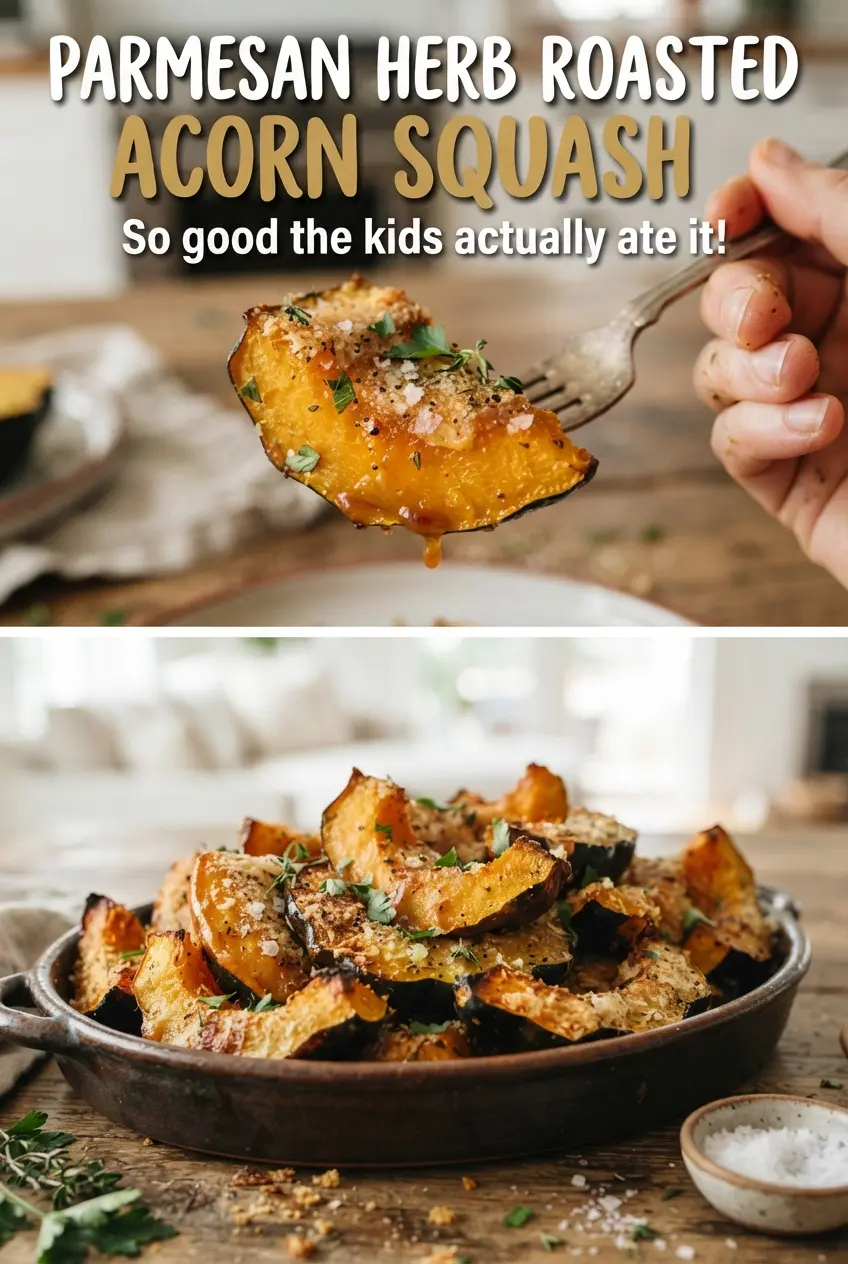
Parmesan herb roasted acorn squash brings the kind of contrast that makes a side dish disappear fast: tender, sweet squash underneath and a salty, crisp cheese crust on top. The rings roast into neat little rounds with caramelized edges, and the Parmesan turns deeply golden where it hits the hot pan. It looks elegant on the table, but the method is straightforward enough for a weeknight.
The key here is giving the squash enough space to roast instead of steam. A single layer on a lined sheet pan lets the edges brown, and flipping before the cheese goes on keeps the Parmesan from burning before the squash is tender. Fresh garlic, thyme, and rosemary do more than season the surface; they perfume the oil so every bite tastes layered, not just salty.
Below, I’ve included the timing cues that matter most, plus a few swaps for when you need to work with what’s in the kitchen. The details are simple, but they’re what keep the squash from turning soft and the cheese from going limp.
The squash stayed tender without getting mushy, and the Parmesan got this crisp, lacy edge that my kids kept picking off the pan before dinner even started.
Save these crispy Parmesan herb acorn squash rings for the side dish that brings golden edges and a salty herb crust to the table.
The Trick to Keeping the Squash Tender Before the Parmesan Goes On
Acorn squash can go from perfectly tender to watery if it’s crowded on the pan. The first roast is about driving off moisture and softening the flesh enough that it can finish under the cheese without drying out. If the slices overlap, the steam gets trapped and the edges never caramelize, which is exactly what you don’t want with a topping this good.
The flip matters here. Once the first side has had time to brown, turning the rings gives the exposed surface a chance to take on heat directly, and that’s what helps the Parmesan crisp instead of sliding off in a melted blanket. The garlic and herbs bloom in the oil from the start, so the flavor gets into the squash instead of sitting on top of it.
What Each Ingredient Is Actually Doing in This Dish
- Acorn squash — The squash needs enough structure to hold its ring shape through two rounds of roasting. Slice it into even 1/2-inch rings so the centers turn tender at the same pace as the edges. Thinner slices can collapse; thicker ones can stay firm in the middle.
- Olive oil — This coats the squash so the surface browns instead of drying out. A decent olive oil matters here because it’s carrying the garlic and herbs across every slice, but it doesn’t need to be your fanciest bottle.
- Garlic, thyme, and rosemary — These herbs bring the savory backbone that keeps the squash from tasting one-note. Fresh is worth using if you have it because dried rosemary can turn sharp and woody in a short roast. If you only have dried herbs, cut the amount in half and crush them in the oil first.
- Parmesan — Grated Parmesan is what gives the top its salty crust and crispy edges. Use finely grated or small-grate cheese so it melts and browns evenly; big shreds tend to sit on top without forming that lacy crust. Pre-shredded works in a pinch, but it usually won’t crisp as cleanly.
Roasting the Rings So the Cheese Gets Crisp, Not Greasy
Season the squash before it hits the oven
Toss the squash with oil, garlic, thyme, rosemary, salt, and pepper until every ring looks lightly coated. The goal is not a pool of oil at the bottom of the bowl; too much extra oil keeps the Parmesan from clinging later. If the garlic is left in clumps, it can scorch, so spread the seasoning evenly across the slices.
Roast once before you add the cheese
Arrange the rings in a single layer on parchment and roast until they’re starting to soften and the bottoms are taking on color. This first stage is what builds flavor and prevents the final cheese layer from overcooking before the squash is done. If the pan looks crowded, split everything onto two pans; packed slices steam instead of brown.
Flip and finish under the Parmesan
Turn each slice and sprinkle the Parmesan generously over the top. Roast again until the cheese is golden and crisp at the edges and the squash gives easily when pierced with a fork. If the cheese is browning too fast, the oven is running hot or the pan is too close to the top element, so move it down a rack for the last few minutes.
Dairy-Free with a Savory Finish
Skip the Parmesan and use a dairy-free Parmesan-style topping or a mix of nutritional yeast and finely ground walnuts. You’ll lose some of the sharp, salty bite of real Parmesan, but the topping still gives you a toasted, savory finish that works well with the sweet squash.
Gluten-Free as Written
This recipe is naturally gluten-free, so there’s nothing to change. The only thing worth checking is the Parmesan packaging if you’re using a specialty brand, since some pre-grated cheeses include anti-caking additives that can affect how evenly they crisp.
Swap in Delicata Squash for Smaller, Edible-Rind Rings
Delicata squash works well if you want a sweeter result and don’t want to peel anything. The slices roast a little faster than acorn squash, so start checking early; the skin stays tender and the finished dish has a softer, more caramelized bite.
Storage and Reheating
- Refrigerator: Keep leftovers in an airtight container for up to 4 days. The Parmesan will soften in the fridge, but the flavor holds up well.
- Freezer: Freezing isn’t ideal here. The squash turns watery after thawing and the cheese loses its crisp edge.
- Reheating: Warm on a sheet pan in a 375F oven until hot and the edges crisp again, about 8 to 10 minutes. The biggest mistake is using the microwave, which makes the squash soft and the topping rubbery.
Questions I Get Asked About This Recipe
Parmesan Herb Roasted Acorn Squash
Ingredients
Equipment
Method
- Preheat oven to 400°F and line a sheet pan with parchment, so the squash rings roast without sticking. Arrange the pan in the middle rack position for even browning.
- Toss the acorn squash rings with olive oil, minced garlic, fresh thyme leaves, chopped fresh rosemary, salt, and black pepper until evenly coated. The herbs should cling to the oil for a fragrant roast.
- Arrange the squash in a single layer on the sheet pan, leaving space between rings for caramelization. Roast for 20 minutes, until the edges begin to soften.
- Flip the squash slices so both sides can brown, then sprinkle generously with grated Parmesan. The topping should look thick enough to crisp.
- Roast 12–15 minutes more at 400°F until tender and the Parmesan is golden and crisp. Look for toasted, lacy spots on the surface before removing the pan.


