
Bacon-wrapped pork tenderloin comes off the pellet grill with everything working in its favor: smoky edges, crisped bacon, and juicy pork that stays tender instead of drying out. The bacon does more than add flavor here. It shields the lean tenderloin just enough to keep the surface from overcooking while the smoke builds a deep, savory crust.
The rub is simple on purpose. Brown sugar helps the bacon brown and gives the pork a little lacquered finish, while paprika, garlic powder, and onion powder push the whole thing into BBQ territory without drowning out the meat. Pork tenderloin cooks fast and can go dry in a narrow window, so the best part of this method is that you can track it by temperature instead of guessing.
Below, I’ll walk through the small details that matter most: how to wrap the bacon so it stays put, when to pull the pork off the grill, and what to do if you want a little more smoke or a little more color.
The bacon got crisp on the outside and the tenderloin stayed juicy all the way through. I pulled it at 145 and after the 10-minute rest the slices were perfect.
Save this bacon-wrapped pork tenderloin for the next time you want smoky BBQ flavor, crisp bacon, and juicy slices from the pellet grill.
Why the Bacon Stays Crisp Instead of Steaming
The biggest mistake with bacon-wrapped tenderloin is rushing the heat. If the grill runs too hot, the bacon tightens before it has time to render, and you end up with chewy strips around overcooked pork. Low-and-slow at 225°F gives the bacon time to render while the pork climbs gently to temperature, which is what keeps the interior pink and juicy.
Another thing worth knowing: the sugar in the rub is there for color, not sweetness alone. It helps the surface take on a deeper bark and encourages the bacon to brown. If your bacon is thick-cut, it may need a little extra time; if it’s very thin, watch it closely so the edges don’t burn before the tenderloin reaches 145°F.
What Each Ingredient Is Actually Doing in This Tenderloin
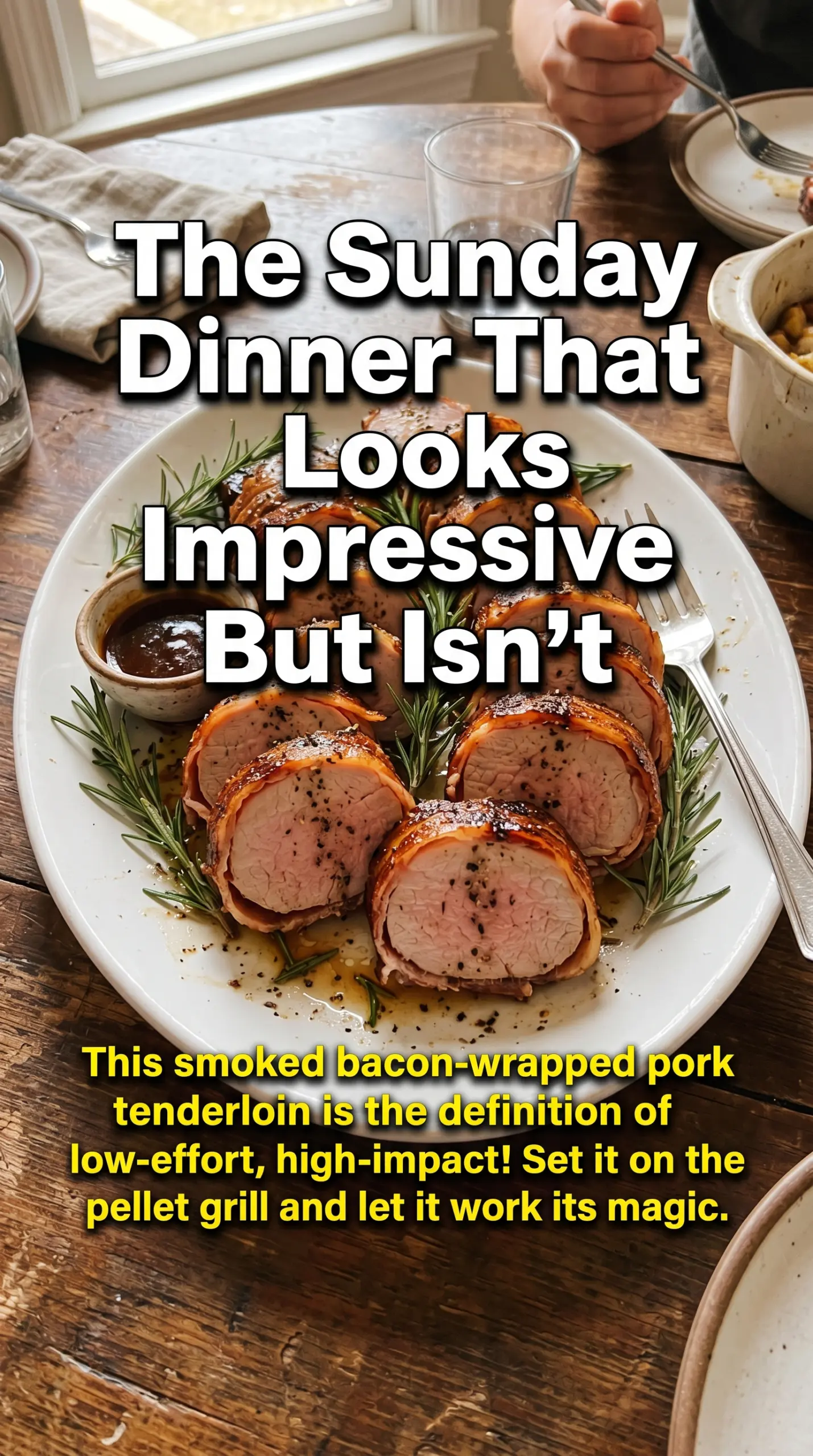
- Pork tenderloin — This cut is lean, tender, and fast to cook, which makes it a natural fit for the pellet grill. It doesn’t have the fat of pork shoulder, so temperature control matters. Use a meat thermometer; guessing is how tenderloin turns dry.
- Bacon — Bacon is the armor here. It adds smoke, salt, and fat, and it helps protect the lean meat underneath. Standard sliced bacon works best because it wraps tightly and renders more evenly than thick-cut bacon.
- Brown sugar — This helps the rub cling and gives the bacon a better finish. It also balances the smoke and salt without turning the pork sweet. If you skip it, you’ll lose some browning on the outside.
- Paprika, garlic powder, and onion powder — These are the backbone of the BBQ flavor. Paprika brings color and a gentle smokiness, while the garlic and onion powders make the pork taste seasoned all the way through instead of just salty on the surface.
- Apple or hickory pellets — Apple gives a milder, slightly sweet smoke that works especially well with pork. Hickory is stronger and more classic BBQ. Either one works; use apple if you want a softer smoke, hickory if you want a bigger hit of it.
Smoking the Pork Without Drying Out the Center
Mix and Coat the Rub
Stir the brown sugar, paprika, garlic powder, onion powder, salt, and pepper together first so the seasoning spreads evenly instead of clumping. Rub it all over the tenderloins, pressing it into the meat so it sticks. If the surface looks patchy, keep going until every side is covered, because the bacon will mute the seasoning a little once it goes on.
Wrap the Bacon Tightly
Lay the bacon slices over the tenderloins with just a slight overlap so the seams hold during cooking. Tuck the ends underneath whenever you can. Loose bacon shrinks and pulls away as it renders, which leaves bare spots that brown too fast and dry out.
Smoke at 225°F Until the Thermometer Says 145°F
Set the pellet grill for steady low heat and keep the lid closed as much as possible. The tenderloins usually need 60 to 90 minutes, but the real guide is internal temperature, not the clock. Pull them when the thickest part reads 145°F; if you wait for the bacon to look fully crisp before pulling, the pork will overcook by the time it’s done.
Rest Before Slicing
Let the meat sit for 10 minutes before you cut into it. That pause keeps the juices from running out the second the knife goes in. Slice across the grain into thick pieces, and you’ll see the pink center framed by the bacon right away.
How to Change the Smoke, the Sweetness, or the Diet
Make It Gluten-Free
This recipe is naturally gluten-free as written, as long as your bacon and spices are free of hidden fillers. That’s worth checking on the package, especially with seasoning blends. Nothing in the method changes.
Swap the Wood for a Stronger or Milder Smoke
Apple pellets give a softer pork flavor, while hickory adds more campfire depth. If you want the bacon to stand out without dominating, choose apple. If your crew likes a bolder BBQ finish, hickory is the better call.
Cut the Sugar Back
You can reduce the brown sugar or leave it out if you want a more savory bark, but the bacon will brown a little less and the crust will be darker rather than glossy. The pork still works; it just tastes less like classic BBQ and more like straight smoked pork with bacon.
Use Thick-Cut Bacon Only If You Have More Time
Thick-cut bacon can work, but it renders slower and can leave the exterior soft by the time the pork is done. If that’s what you have, give the wrapped tenderloin a little extra time on the grill and watch the temperature closely. The tradeoff is a meatier bite and less crispness.
Storage and Reheating
- Refrigerator: Store leftovers in an airtight container for up to 3 days. The bacon softens a bit after chilling, but the pork stays tender.
- Freezer: Freeze sliced portions tightly wrapped for up to 2 months. Thaw in the fridge overnight before reheating so the bacon doesn’t turn rubbery.
- Reheating: Warm slices gently in a 300°F oven, covered loosely with foil, until just heated through. High heat dries out tenderloin fast, so avoid blasting it in the microwave unless you’re only heating one quick bite.
Answers to the Questions Worth Asking
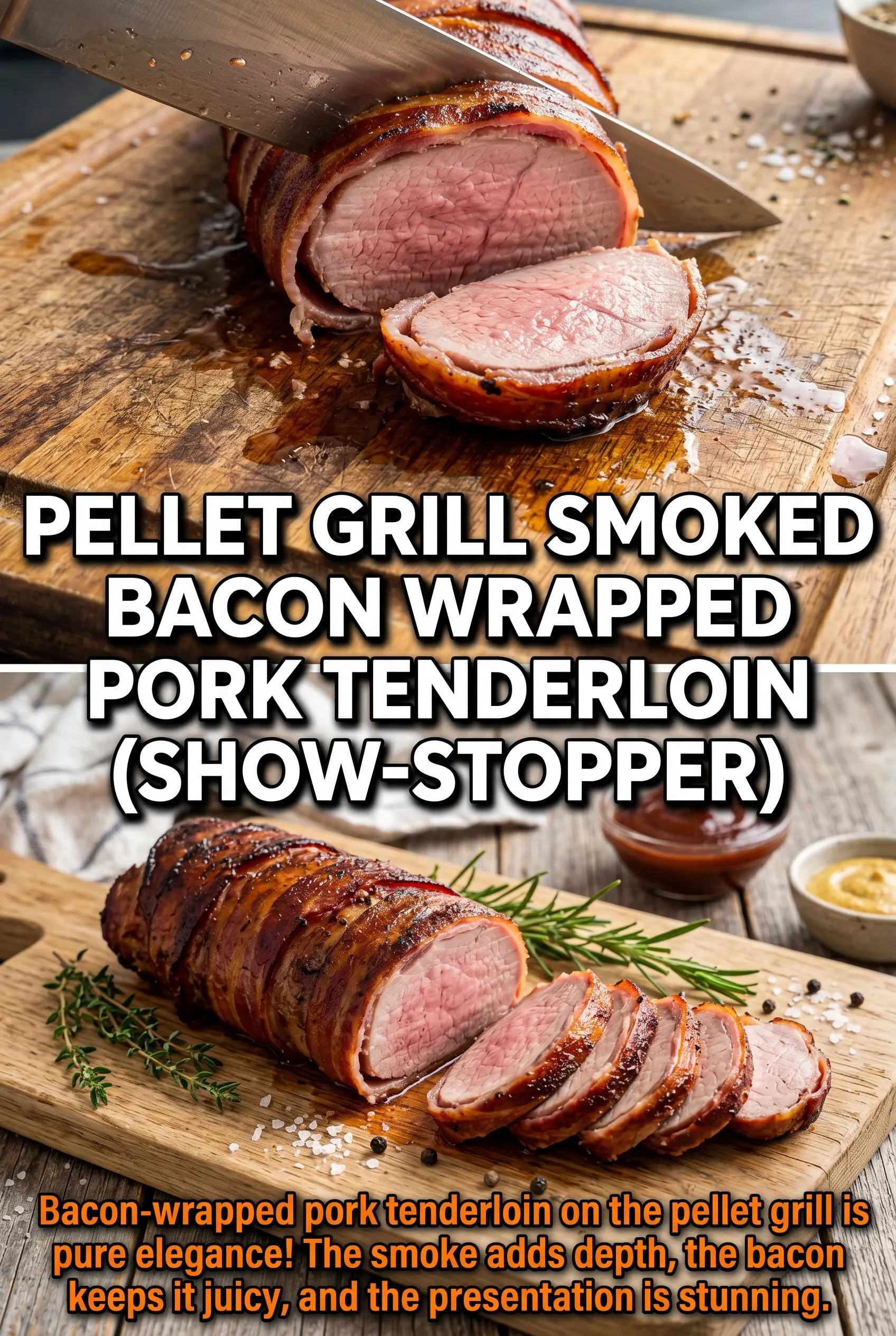
Pellet Grill Smoked Bacon Wrapped Pork Tenderloin
Ingredients
Equipment
Method
- Mix brown sugar, paprika, garlic powder, onion powder, salt, and pepper in a bowl until evenly combined, forming a uniform spice mix. Set aside so the rub coats cleanly.
- Rub the spice mixture all over the pork tenderloins, covering all sides with an even layer. Press lightly so the rub adheres during smoking.
- Wrap each tenderloin with bacon slices, overlapping slightly as you go to fully cover the surface. Keep the wrap snug so it stays in place while the bacon renders.
- Preheat the pellet grill to 225°F using apple or hickory pellets, aiming for steady smoke before cooking. Close the lid to stabilize temperature.
- Smoke the tenderloins for 60-90 minutes until the internal temperature reaches 145°F, checking with a probe toward the end. Smoke continues until the pork is just done, with bacon beginning to crisp.
- Let the bacon-wrapped pork tenderloins rest 10 minutes before slicing. This helps the juices redistribute for cleaner cuts and a juicy interior.


