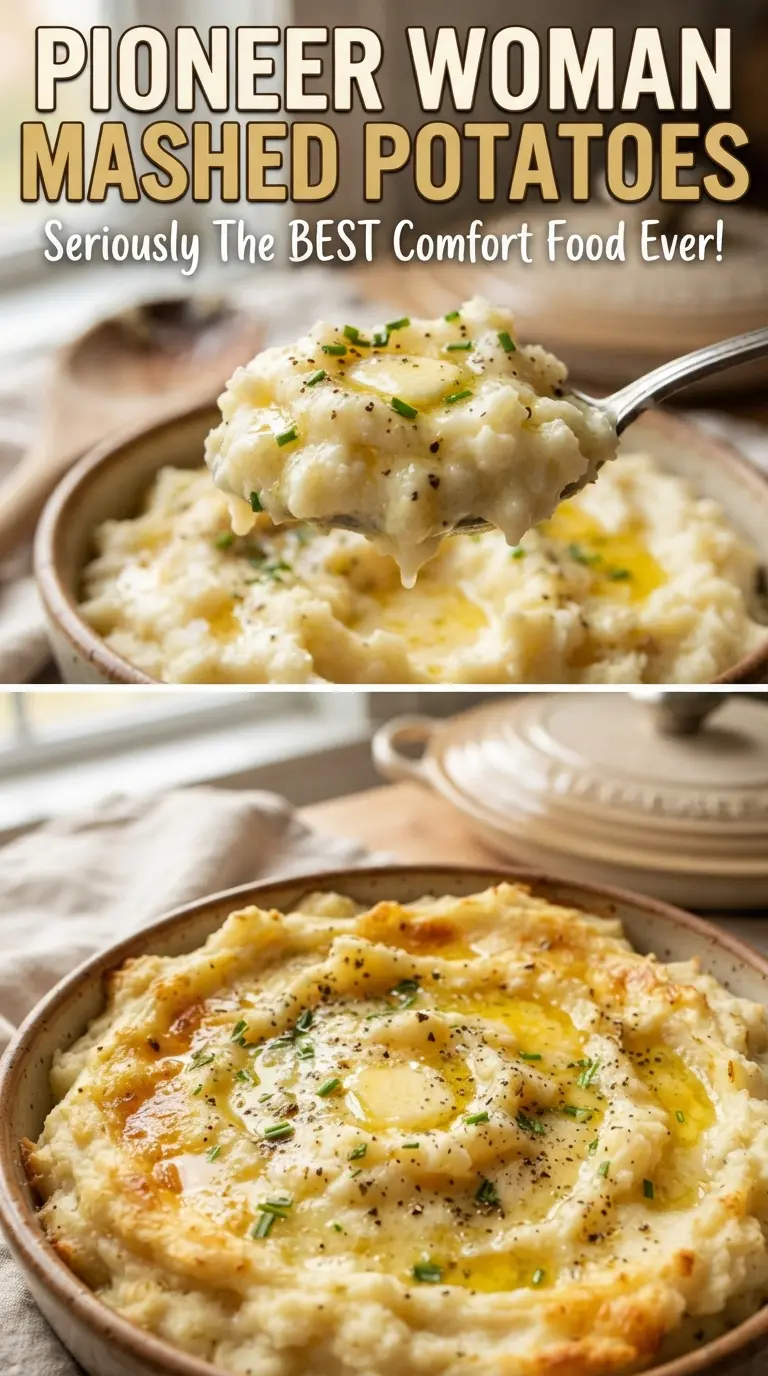
Pioneer Woman mashed potatoes land on the table thick, buttery, and spoon-soft, with just enough structure to hold those golden pools of melted butter on top. They’re the kind of side dish that doesn’t sit quietly beside dinner; they take over the plate in the best way, creamy in the middle with a baked finish that gives the top a gentle set.
The reason this version works is the mix of russet potatoes, cream cheese, and half-and-half. Russets mash up light and fluffy, while cream cheese adds body and a faint tang that keeps the potatoes from tasting flat. Baking them after they’re mixed is the part that makes this recipe stand out: the edges stay tender, the top turns glossy, and the butter melts down into every ridge.
Below, you’ll find the small details that matter most here — how to keep the potatoes from turning gluey, why the dairy goes in at the right temperature, and what to do if you want to make these ahead for a crowd.
The cream cheese made the potatoes silky without turning them soupy, and the baked top picked up the butter in the best way. I served these with roast chicken and the whole dish was scraped clean.
These creamy baked mashed potatoes hold their shape, finish glossy, and taste even better with those butter pools on top.
The Trick to Keeping These Mashed Potatoes Fluffy Instead of Gluey
Mashed potatoes turn heavy when they’re worked too hard or started in too little water. Russets need plenty of room to move while they cook, and they need to be drained thoroughly before any dairy goes in. If you leave them wet, the potatoes loosen too much and the finished dish can taste thin instead of rich.
The other part that matters is the mashing itself. A hand masher gives you control and keeps the texture soft with some body left in it. An electric mixer can push the starch too far and make the potatoes stretchy, which is the fastest way to ruin an otherwise good batch.
- Russet potatoes — These are the right choice because they break down into a fluffy mash instead of a waxy paste. Yukon Golds work in a pinch, but they’ll give you a denser, more buttery result.
- Drain time — Let the potatoes sit in the colander for a minute or two after boiling so steam can escape. That little pause keeps excess water from diluting the cream cheese and butter.
- Softened cream cheese — Cold cream cheese leaves little bits behind and makes the mash uneven. Bring it to room temperature first so it melts in smoothly.
What the Butter, Cream Cheese, and Half-and-Half Are Really Doing
- Butter — Half goes into the potatoes for richness, and the rest melts on top in the oven. Use unsalted butter so the seasoned salt and added salt stay balanced.
- Cream cheese — This is what gives the mash that plush, stable texture. It adds tang and body that plain milk can’t match, and it helps the potatoes stay creamy after baking.
- Half-and-half — This loosens the mash without watering it down. Whole milk works, but the final potatoes won’t feel as lush.
- Seasoned salt — It adds a rounded savory note that plain salt alone doesn’t bring. If you don’t have it, use regular salt plus a pinch of garlic powder and paprika.
Building the Creamy Base and Baking It Until the Top Turns Glossy
Boiling Until the Potatoes Collapse Cleanly
Start the potatoes in well-salted water and cook them until a fork slides through without resistance. If the center still feels a little firm, keep going; undercooked potatoes leave little hard bits in the mash that never disappear. Drain them well and give them a minute to steam dry before mashing. That’s the difference between rich potatoes and a bowl of diluted starch.
Mashing in the Dairy Without Overworking the Potatoes
Add the butter, cream cheese, and half-and-half while the potatoes are still hot enough to melt everything smoothly. Mash until the mixture looks creamy and thick, with no dry pockets left at the bottom of the bowl. Stop as soon as the texture turns cohesive. If you keep going after that, the potatoes can take on a gummy, paste-like feel.
Seasoning and Finishing in the Oven
Stir in the salt, seasoned salt, and pepper after the base is smooth so you can taste the texture first, not fight it while you season. Spread the potatoes into a buttered baking dish and lay the remaining butter across the top in small pats. Bake just until heated through and the butter has melted into shiny golden pools. The oven isn’t there to cook the potatoes again; it’s there to finish the dish and give it that inviting, slightly set top.
How to Adapt These Mashed Potatoes for Different Tables
Make-Ahead Mashed Potatoes for a Holiday Spread
Assemble the potatoes in the baking dish, cover tightly, and refrigerate before the final bake. When you’re ready to serve, let the dish sit at room temperature for about 30 minutes so it heats evenly. Cold potatoes straight from the fridge can take much longer to warm through and dry out before the center is hot.
Dairy-Free Version
Use a good dairy-free butter and a plain, unsweetened dairy-free cream cheese-style spread. The texture will still be creamy, though the flavor will be a little less rich and tangy than the original. Choose a thicker non-dairy milk or creamer so the potatoes don’t loosen too much.
Lighter, Less Rich Potatoes
Cut the butter back a little and replace some of the cream cheese with warm milk. The potatoes won’t have the same plush finish, but they’ll still be smooth and comforting. Keep the seasoning steady, because reduced fat often means the flavor needs a firmer hand with salt.
Baking Dish to Slow Cooker Transfer
If oven space is tight, move the finished mash to a buttered slow cooker on warm. The texture stays soft and scoopable for serving, though you’ll lose the buttery browned top. Stir once or twice during a long hold so the edges don’t dry out.
Storage and Reheating
- Refrigerator: Store covered for up to 4 days. The potatoes will firm up as they chill, which is normal.
- Freezer: They freeze fairly well for up to 1 month, though the texture gets a little softer after thawing. Freeze in a tightly sealed container and thaw overnight in the fridge before reheating.
- Reheating: Reheat covered in the oven at 325F with a splash of milk or half-and-half stirred in. The common mistake is blasting them uncovered at high heat, which dries the edges before the middle warms through.
Answers to the Questions Worth Asking

Pioneer Woman Mashed Potatoes
Ingredients
Equipment
Method
- Preheat the oven to 350F and butter a large baking dish so the potatoes don’t stick.
- Boil the peeled, cubed russet potatoes in salted water for 20 minutes, until fork-tender, then drain well.
- Mash the potatoes with 1/2 cup of the butter, cream cheese, and half-and-half until smooth and creamy.
- Stir in the seasoned salt, salt, and black pepper until evenly distributed.
- Spread the mashed potatoes into the buttered dish and top with pats of the remaining butter.
- Bake for 20 to 25 minutes at 350F until heated through and the butter melts into golden pools across the top (visual cue: glossy, golden areas).