
Roasted butternut squash and Brussels sprouts earn their place on the table when the edges go dark and crisp, the centers turn tender, and the whole tray tastes bigger than the short ingredient list suggests. The squash brings sweetness and softness, the Brussels sprouts bring a little bite and plenty of caramelized edges, and the cranberries and pecans finish the dish with contrast instead of turning it into a mushy medley.
The trick is giving the vegetables enough space and heat to roast instead of steam. A hot oven and a single layer on the pan matter more than anything else here. The maple-balsamic toss goes on after roasting, which keeps the vegetables from scorching and lets the glaze cling instead of disappearing into the pan.
Below, I’ve included the part that makes this side dish dependable: how to get the vegetables browned without overcooking them, which ingredients are doing the real work, and the small adjustments that make it fit a weeknight or a holiday table without changing the spirit of the dish.
The Brussels sprouts got those crisp, browned edges I always hope for, and the maple-balsamic drizzle tied everything together without making it soggy.
Like this roasted butternut squash and Brussels sprouts side? Save it for the dinners where you want caramelized vegetables, maple-balsamic gloss, and a little crunch from pecans.
The part that keeps these vegetables crisp instead of soft
The biggest mistake with sheet-pan vegetables is crowding. When the squash and Brussels sprouts sit too close together, they release steam and you lose the browned edges that make this dish worth making. Spread everything out in a single layer, use a hot oven, and toss once halfway through so the cut sides get a chance to meet the pan again.
Brussels sprouts need direct contact with the pan to caramelize, and the squash needs enough time to soften without collapsing. Cutting both vegetables into similar-sized pieces keeps them done at the same time. If your sprouts are very small, watch them near the end so the outer leaves don’t go too far while the squash catches up.
What the maple-balsamic finish is doing here
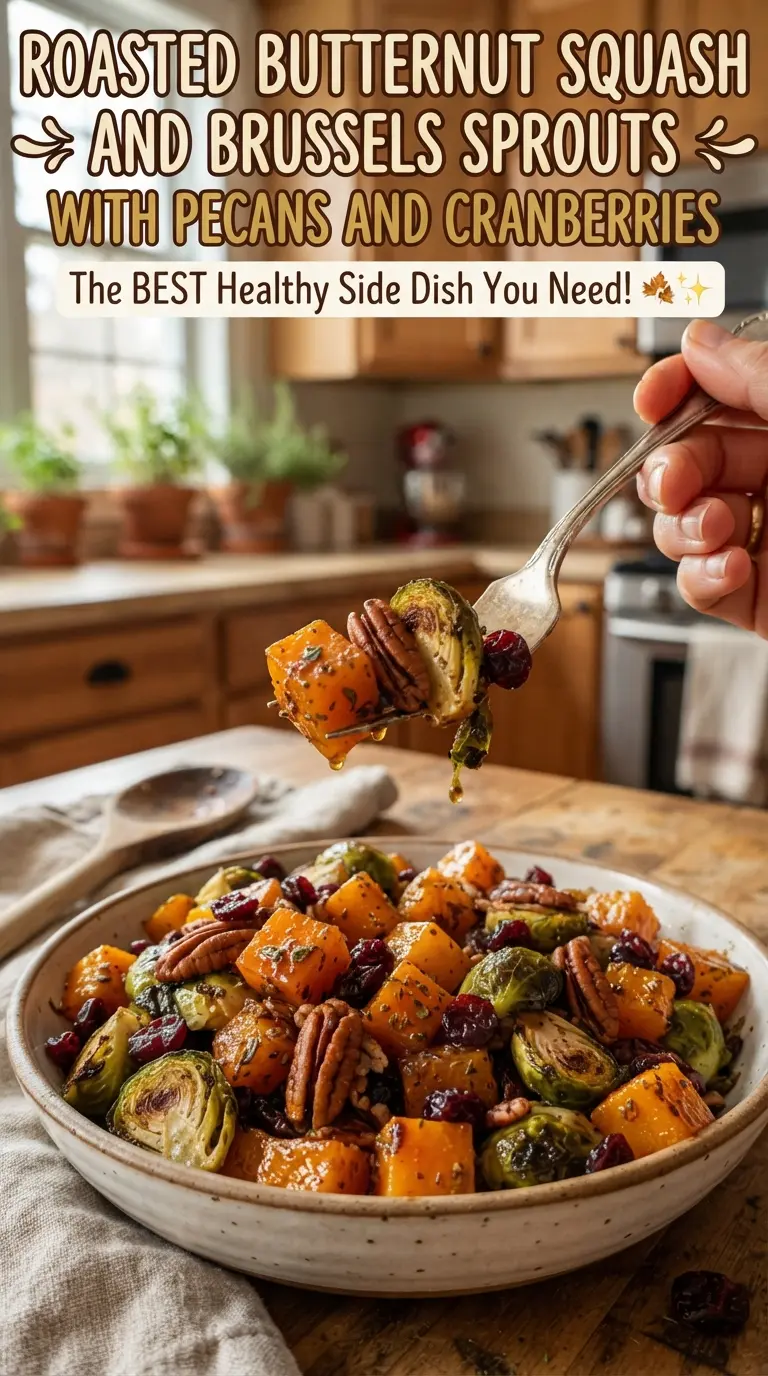
- Butternut squash — This gives the dish its soft, sweet base. Fresh squash is worth the peeling and cubing because it roasts up with creamy edges that frozen squash won’t match. Keep the cubes around 3/4-inch so they cook through before the outside dries out.
- Brussels sprouts — Halving them gives you cut sides that brown deeply in the oven. Smaller sprouts can be left as halves, but large ones should be cut again through the stem end if you want even roasting. The stems hold the leaves together during cooking.
- Olive oil — This helps the vegetables roast instead of drying out. Use enough to coat every piece lightly; too little oil leads to patchy browning, while too much makes the pan greasy and softens the edges.
- Maple syrup and balsamic vinegar — This is the glaze that wakes up the whole dish. Stir them together after roasting so the sugar in the maple doesn’t burn in the oven. If you only have honey, use a little less because it’s sweeter and can take over fast.
- Pecans and dried cranberries — Add these at the end so they stay distinct. The pecans bring crunch and a toasted note, while the cranberries cut through the richness with chew and tartness. Toasted pecans are worth using if you have them already, but raw ones can be warmed briefly in a dry skillet.
How to roast and finish it so every bite has contrast
Coating the vegetables evenly
Toss the squash and Brussels sprouts with olive oil, salt, and pepper on the sheet pan or in a bowl until every cut surface looks lightly slicked. If the seasoning sits only on the outside, the vegetables taste flat after roasting. The oil is what helps the browning happen, so don’t leave dry patches behind.
Roasting until the edges caramelize
Slide the pan into a 425F oven and roast until the squash is tender and the sprouts have deep brown spots on their cut sides, about 25 to 30 minutes. Tossing halfway through keeps one side from burning while the other stays pale. If the vegetables are soft but still look blond, give them a few more minutes — color is what brings the flavor here.
Adding the glaze, cranberries, and pecans
Whisk the maple syrup and balsamic vinegar together, then toss it through the hot vegetables with the cranberries and pecans. The heat on the pan helps the glaze cling without cooking it down too far, and the nuts stay crunchy instead of softening in the sauce. Serve it warm so the contrast between the tender squash, crisp sprouts, and chewy cranberries stays clear.
How to adapt this when you need to change the pan or the ingredients
Make it nut-free
Leave out the pecans and add toasted pumpkin seeds or sunflower seeds at the end for crunch. You lose the buttery richness of pecans, but you keep the contrast that keeps the dish from feeling one-note.
Swap in a different winter squash
Acorn squash or delicata can stand in for butternut, though both soften a little faster and may brown sooner. Delicata doesn’t need peeling, which saves time, but it gives a slightly less silky bite than butternut.
Make it vegan and gluten-free without changing a thing
This recipe already fits both. Just check that your dried cranberries don’t include any added ingredients you don’t want, and keep the glaze simple with maple and balsamic so nothing else needs adjusting.
Storage and Reheating
- Refrigerator: Store leftovers in an airtight container for up to 4 days. The sprouts soften a bit, but the flavor holds up well.
- Freezer: Freezing isn’t ideal. The squash and Brussels sprouts both lose their roasted texture once thawed, and the cranberries can get leathery.
- Reheating: Warm leftovers on a sheet pan in a 400F oven until hot. The oven brings back some of the edges; the microwave softens everything and flattens the texture.
Answers to the questions worth asking
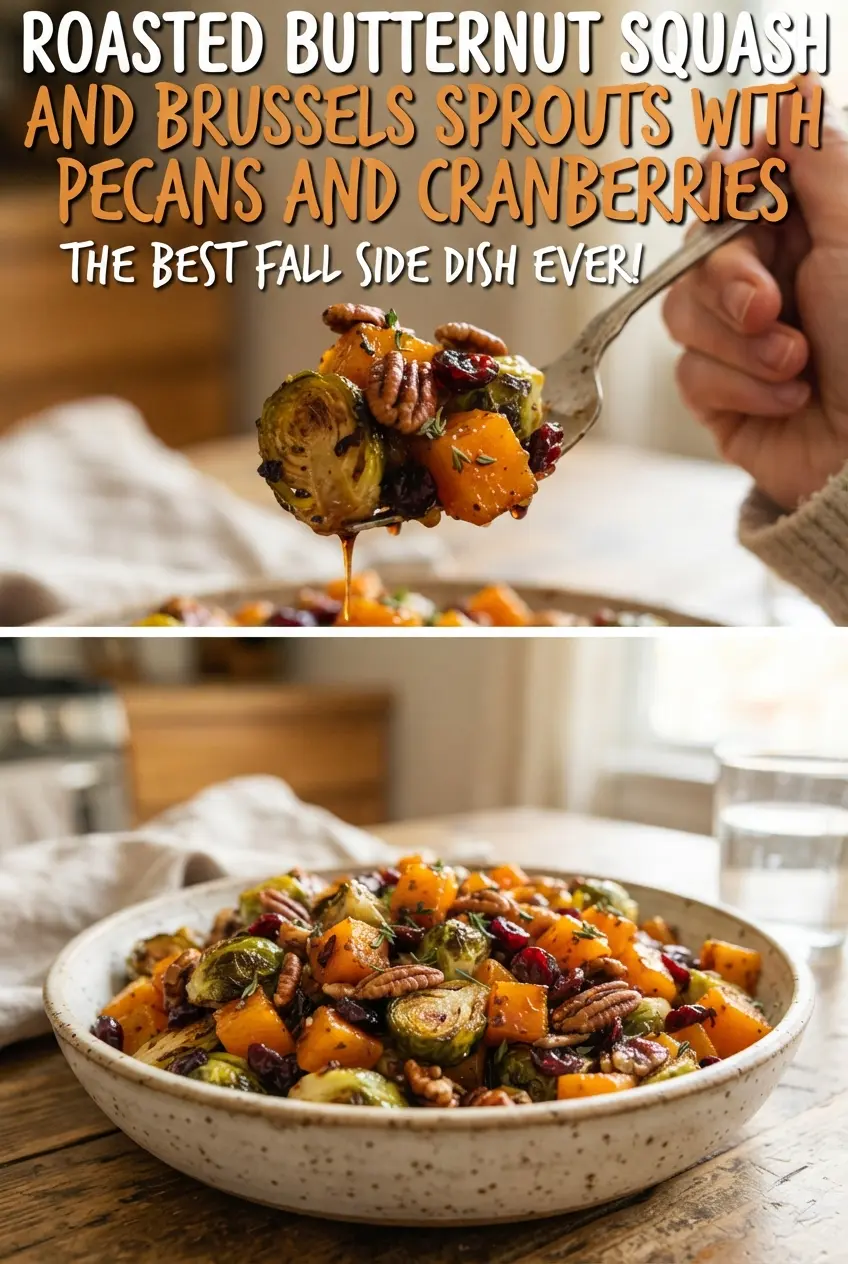
Roasted Butternut Squash and Brussels Sprouts with Pecans and Cranberries
Ingredients
Equipment
Method
- Preheat oven to 425F and position a rack in the middle for even browning.
- Toss butternut squash and Brussels sprouts with olive oil, salt, and black pepper on a large sheet pan until evenly coated, with a light sheen on the vegetables.
- Roast for 25-30 minutes, tossing halfway, until butternut squash is tender and caramelized and Brussels sprouts are browned at the cut sides.
- Whisk maple syrup and balsamic vinegar together until glossy and smooth.
- Toss the roasted vegetables with the maple balsamic mixture, dried cranberries, and toasted pecans until everything is evenly coated and the cranberries look lightly plumped, then serve warm.


